


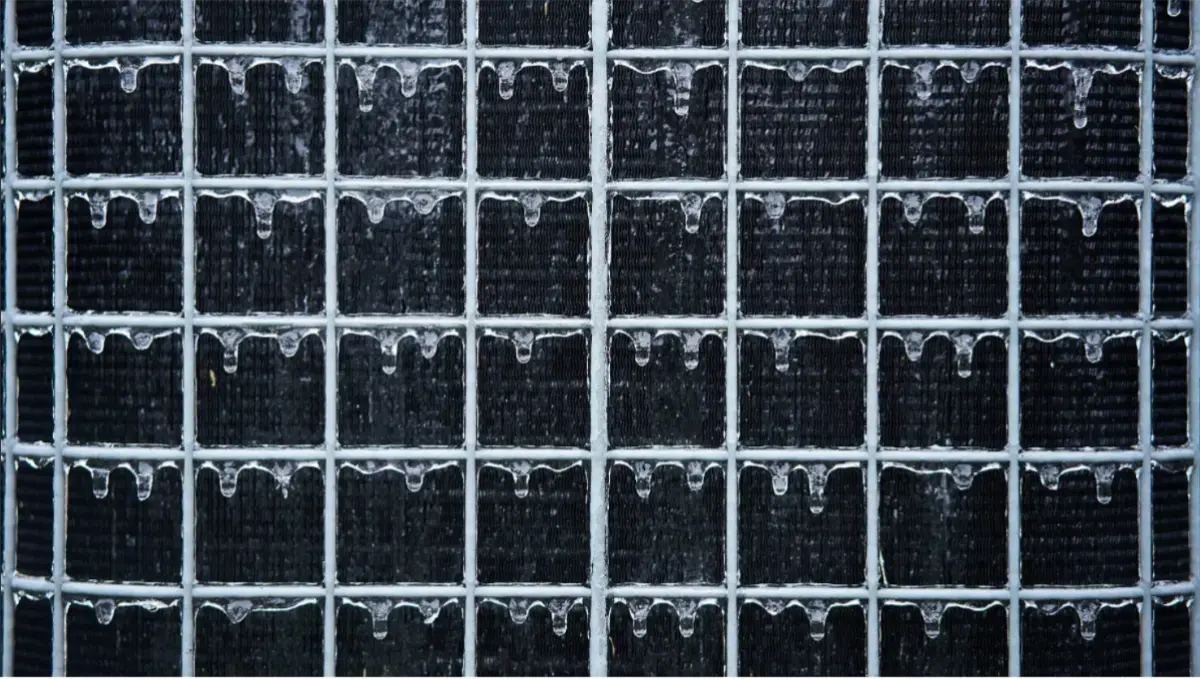
Call me and say, “Serg, my AC is covered in ice in the middle of summer,” and the first thing I’m going to tell you is to turn the cooling off. The ice is not the actual problem. It is a symptom that the evaporator coil is getting colder than it should. Let’s figure out why the coil got that cold before we turn the AC back on.
Quick Takeaways:
- A dirty filter, blocked vents, or debris buildup can restrict airflow and make the coil become too cold
- Turn cooling off and let the ice melt completely; run the indoor fan only if the blower is operating normally
- Call an HVAC technician if the AC freezes again or you suspect low refrigerant, a blower problem, or a control malfunction
Common Causes: Why Does an AC Freeze Up?
The causes can vary a lot and often require a professional, so here are just seven that can cause the problem and hopefully help you understand the bigger picture.
Cause 1: Cooling Operation in Low Outdoor Temperatures
There’s no universal temperature rule, so check your system’s approved outdoor operating range before running the AC when it’s too cold outside to help avoid problems.
Cause 2: A Dirty Air Filter (Restricted Airflow)
The filter is one of the few useful things you can see without opening the equipment. When the filter becomes restrictive, less warm household air moves across the evaporator coil. Under the wrong conditions, the coil can then fall below freezing and start building ice.
We see the boring version of this all the time. We’ll open up a system and find a filter that has been sitting there for years. Sometimes the homeowner did not even know where it was. By then the system has been trying to pull air through something that looks more like a dusty blanket than a filter.
Cause 3: Blocked Vents or Dirty Coils
Airflow can also drop because of blocked vents or a dirty coil. A dirty coil is especially bad because it both blocks airflow and makes it harder for the coil to work properly.
Cause 4: A System Control Problem
A bad expansion valve or problems with the sensors and controls can also cause the coil to freeze, and recurring airflow issues are a sign the system needs professional testing.
Cause 5: Restricted or Damaged Ductwork
The ductwork is another possible cause, and it’s worth checking if the filter is clean and the vents are open but you’re still getting very little airflow.
Dan’s house in North Bend is a good example of what bad airflow can look like before anybody ever sees ice. His upstairs bedrooms were barely getting enough air, while the main floor behaved completely differently. The equipment was not simply “too old.” The duct system itself had been wrong for the house from the original installation. Dan did not call us for a frozen coil, so I’m not pretending that was his symptom. I’m showing you the job because a clean filter does not prove the airflow side of the system is okay. Sometimes the restriction is farther downstream.
Cause 6: A Failing Blower Fan
A clean new filter doesn’t mean everything is fine. If the blower has a problem, the coil can still freeze.
Cause 7: Low Refrigerant Levels
This is another specific reason the coil can freeze, and it’s not something I’d recommend handling yourself because it may be caused by a refrigerant leak and require professional service.
Carla in Marysville is why I get annoying about the words “low refrigerant.” Another company had already told her she needed a new evaporator coil. Devon actually went looking for the leak. The coil was fine. The refrigerant was escaping from a damaged section of suction line outside the air handler, and he also found the TXV sensing bulb mounted incorrectly. If the refrigerant is low, I want somebody to show you where it went before they start selling you parts.
How to Thaw a Frozen AC
Ice is one of the times where I do want you to stop the cooling before we diagnose anything else:
- Turn off your AC at the thermostat.
- Set the thermostat fan to ON only if the indoor blower is operating normally. Moving room-temperature air across the coil can speed thawing, but if the blower does not run, runs intermittently, or may have caused the freeze-up, leave the system off and call for service.
- Give it time to thaw. A fully frozen coil can take a few hours to melt completely.
- A badly clogged filter may give you an obvious airflow reason for the freeze.
- A full thaw plus an obvious airflow problem gives us a reasonable explanation to test. Ice that starts coming back means that explanation was incomplete, and I don’t want the system repeatedly restarted while we guess.
Never try to speed things up by scraping ice off the coil. The fins bend and puncture easily, and a damaged coil means a bigger repair.
When a Frozen Coil Needs More Than an Airflow Check
Hissing near the refrigerant lines gets my attention. So does weak airflow with a clean filter, a blower that sounds wrong, or a coil that keeps freezing after a full thaw. Those symptoms tell me we need measurements rather than another round of guessing.
An HVAC professional should figure out why the evaporator is freezing instead of treating the ice itself as the repair. That may mean measuring airflow, checking blower operation, inspecting the coil, verifying refrigerant-side operation, or testing controls depending on what the system is actually doing.
Marysville Case: Why Low Refrigerant Needs a Diagnosis
Carla’s AC repair in Marysville wasn’t about a frozen coil, and I’m not saying every frozen AC has the same cause. The point is simple: if the refrigerant is low, find out why before adding more.
Another contractor had told her the evaporator coil needed to be replaced. When Devon tested the system, the coil was not the problem. A proper leak search found the refrigerant leak in a damaged section of the suction line outside the air handler. He also found that the TXV sensing bulb had been mounted incorrectly. You can see the complete diagnosis and repair in our Marysville AC refrigerant leak case.
AC Freezing Again After You Let It Thaw?
I hope this helped you understand why simply scraping the ice off a freezing AC is not a solution, and now you know at least seven reasons why it can happen. The problem needs a closer look if it keeps coming back and you don’t know why. Give us a call, and we’ll find the cause and explain what’s going on.
Product Air provides AC repair and diagnostics across King, Snohomish, Skagit, and Island counties, including Seattle, Bellevue, Issaquah, Marysville, Everett, Arlington, Lake Stevens, Mukilteo, Sammamish, and nearby communities.
Call 425-340-3576 or schedule online.
FAQ
Q: Why is my AC freezing up?
A: An AC freezes when the evaporator coil gets too cold and moisture in the air turns to ice. Common causes include restricted airflow and refrigerant-side problems that allow the evaporator coil to run too cold. Restricted airflow may come from a clogged filter, blocked return vents, dirty evaporator coil, closed supply registers, collapsed ductwork, or a failing blower motor. Low refrigerant reduces pressure inside the coil and can drop its temperature below freezing. Refrigerant is not normally consumed during operation. A low charge often points to a leak, although incorrect installation or previous service can also leave a system undercharged.
Q: How do I stop my air conditioner from freezing up?
A: The first thing to do with a frozen air conditioner is turn the cooling off. A frozen coil cannot diagnose itself while the compressor keeps running. The indoor fan can help thaw the coil when the blower itself is operating normally. A clogged filter or obviously blocked airflow may explain the freeze. Ice that returns after a complete thaw tells me there is still another problem in the cooling system.
Q: Can I fix a frozen AC myself?
A: A simple airflow problem is about as far as I’d take the homeowner side of this. A badly clogged filter or an obvious obstruction may give you the answer without opening any equipment. You cannot safely repair low refrigerant, a refrigerant leak, a failed blower motor, damaged ductwork, or a faulty control component yourself. Do not open the refrigerant circuit, remove electrical panels, or attempt to add refrigerant.
Q: Will my AC freeze if it runs all day or at night?
A: A properly operating air conditioning system should not freeze simply because it runs for many hours. Long runtime is common during very hot weather. Freezing during long cycles usually points to poor airflow, low refrigerant, a dirty coil, or a blower problem. At night, icing can also occur if the system is operating in cooling mode below the manufacturer’s approved outdoor-temperature range, particularly on equipment without low-ambient controls.
Q: What are the most common causes of an AC freezing up?
A: Common causes include:
- A clogged or overly restrictive air filter
- Blocked return grilles or closed supply vents
- A dirty evaporator coil
- An undercharged refrigerant system, often because of a leak
- A weak or failed blower motor
- Incorrect blower speed
- Collapsed, disconnected, or undersized ductwork
- Running the AC when outdoor temperatures are too low
- A metering-device, fan-control, sensor, or other control malfunction
A dirty filter gives you something obvious to see. Low refrigerant, motor problems, and control faults do not, which is why those need actual measurements before anybody tells you what failed.
Q: What should I do immediately if my AC unit freezes up?
A: Turn cooling off. Do not keep lowering the thermostat, because that will not melt the ice or restore cooling. Set the fan to On only if the indoor blower is operating normally, then check the filter and look for blocked vents. Place towels near the indoor unit if melting ice could overflow the drain pan. Do not break the ice with a tool, pour hot water over the coil, or use a hair dryer or heat gun. These methods can damage the coil, wiring, or drain pan.
Q: How can I prevent my AC from freezing in the future?
A: The common thread is airflow. A filter that gets heavily loaded, blocked returns, or too many closed supply vents can all reduce the warm air crossing the evaporator coil. The rest is equipment condition. Coil cleanliness, blower performance, refrigerant operation, and duct airflow are things maintenance can show us before they announce themselves with another block of ice.
Q: How long does it take for a frozen AC to thaw?
A: A frozen evaporator coil can take several hours to thaw completely, and heavy ice buildup may take considerably longer. Do not use the clock alone to decide when the system is ready to restart. A normally operating indoor blower can help the thaw by moving room-temperature air across the coil while cooling stays off. Do not restart the AC until all visible ice has melted and airflow has returned to normal.
Q: When should I call a professional for a frozen AC?
A: A second freeze after the obvious airflow problems are gone tells me the system needs more than another filter check. Hissing or oily residue pushes refrigerant higher on my list. Weak airflow with a clean filter makes me think about the blower, coil, ducts, or controls. A frozen coil with a clean filter and normal-looking vents is exactly where measurements become more useful than assumptions.
Q: Can I run my AC with frozen coils?
A: No. Running an AC with frozen coils reduces airflow and prevents proper heat transfer. It can also cause the compressor to overheat, allow liquid refrigerant to return to the compressor, and create water damage when the ice melts. Turn cooling off and let the system thaw completely. If freezing returns after basic airflow checks, leave the AC off until it has been inspected.
PLAN YOUR NEXT STEP
Need help with your home comfort?
Explore Product Air’s air conditioning services or contact the team.
Share this guide