


Location: 18th St SE corridor, Lake Stevens, WA 98258
Call Date: June 8, 2026
First Visit: June 11, 2026
Project Completion: June 16, 2026
Lead Technician: Brandon J., licensed 02 residential electrician, 10+ years of electrical experience
System Before: Downstairs rec room and bath circuit dead, power confirmed leaving the main panel but never reaching the outlet, with heat discoloration at the receptacle’s wire connections
System After: Wire break located and repaired, faulty receptacle replaced, full-house electrical inspection completed
Final Project Cost: $2,076.70
Tonya’s downstairs had gone dark, and the strange part wasn’t that it happened: outlets fail, circuits act up, that’s ordinary enough. The strange part was what the breaker panel told her when she went to check it. Nothing was tripped. Every switch sat exactly where it was supposed to sit, in the “on” position, and yet the outlet in the downstairs rec room read as dead as if someone had cut the power at the street. “Downstairs is without power,” was how she put it when she called, and that single sentence carried more urgency than it might have in a house without a tenant depending on that space to work from home. The downstairs wasn’t a spare room for Tonya’s household. It was where someone needed to be able to plug in a laptop and stay online every day, and it had simply stopped working.
A Tenant Working From Home, a Facebook Search, and the First Call to an Electrician in Lake Stevens, WA 98258
Tonya found Product Air through a Facebook post. She was a new customer, and there hadn’t been another contractor or before Product Air. This was the first call she made, which meant there was no baseline of “well, the last guy said” to compare anything against. Just a downstairs with no power, and a household that needed it fixed correctly the first time, since the tenant living there needed full use of the space to keep working.
The visit landed on the books as a diagnostic visit, which is exactly the right way to think about what this job actually was. Nobody knew yet what was wrong. They just knew what wasn’t working.
Inside a 2016 Home That Shouldn’t Have Had This Problem
The house itself argued against the kind of electrical trouble Tonya was describing. Built in 2016, 2,005 square feet, five bedrooms across two levels. A home this age should have wiring that’s barely broken in. That’s precisely what made the diagnosis worth taking seriously rather than assuming a quick fix would cover it.
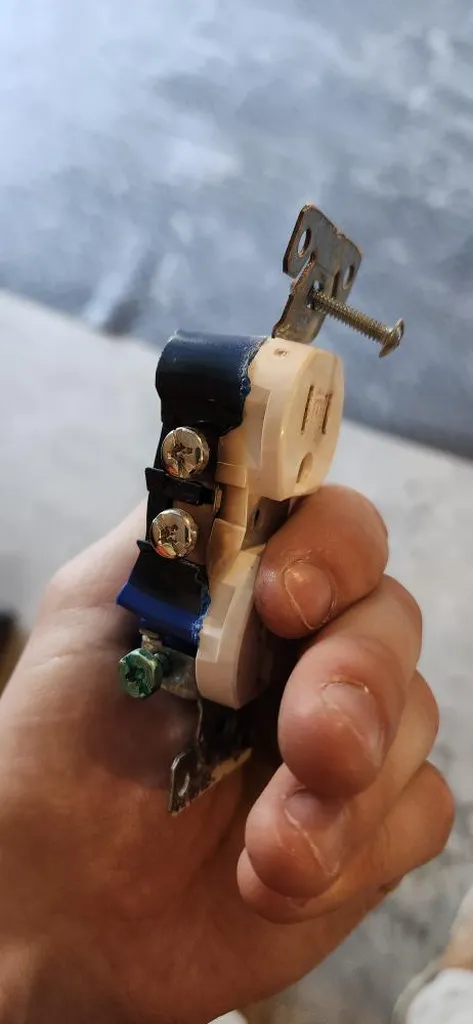
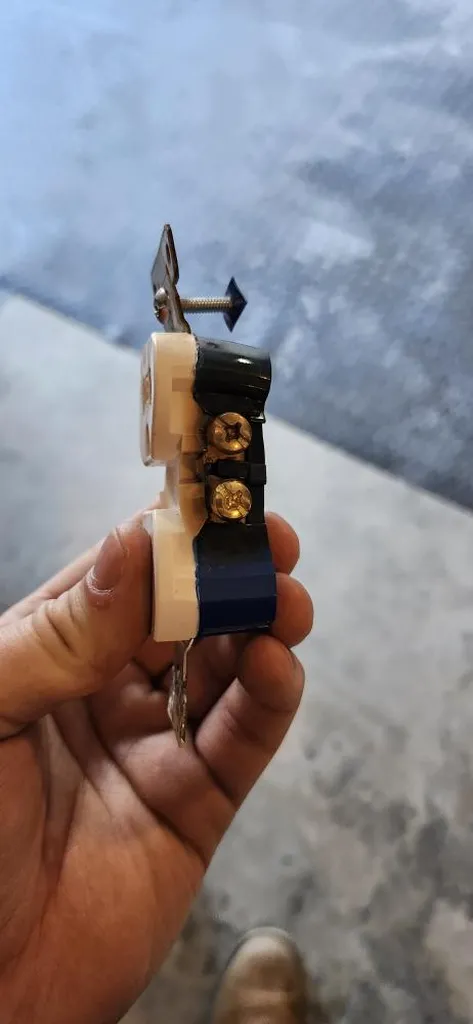
Brandon confirmed the basic shape of the problem quickly: power was leaving the main electrical panel exactly as it should, but it never arrived at the downstairs outlet. Somewhere between those two points, the circuit had an actual break in it: not a tripped breaker, a blown fuse, a simple loose connection at the outlet itself, but a physical interruption in the wire’s path. When Brandon pulled the faulty receptacle to look closer, the evidence was right there in his hand: the plastic around the wire terminals showed heat discoloration, and the screws carried the kind of browning that only comes from a connection that’s been arcing rather than conducting cleanly.
A break in a wire doesn’t just stop current from flowing. Where the conductor is still making partial or intermittent contact, it can generate heat and small electrical arcs at exactly the point of failure: the textbook mechanism behind an electrical fire that starts inside a wall with no visible warning sign until it’s too late. Brandon’s read on the cause was straightforward: poor installation practices, likely dating back to the original build, had left a connection or a length of wire more vulnerable than it should have been, and years of normal use had finally pushed it to failure.
One Option, Two Jobs: Fix the Break and Inspect the Whole House
Brandon didn’t write Tonya three tiers of pricing the way a bigger equipment replacement might call for. He wrote one option, and it did two jobs at once: locate the wire break and repair it, and inspect the rest of the home’s electrical system while he was already inside the walls. The estimate itemized the work under the downstairs rec room and bath circuit, fixing the break and the crackling that had been reported alongside the dead outlet, replacing the faulty receptacle, and confirming the breaker would hold under normal load once the repair was complete.
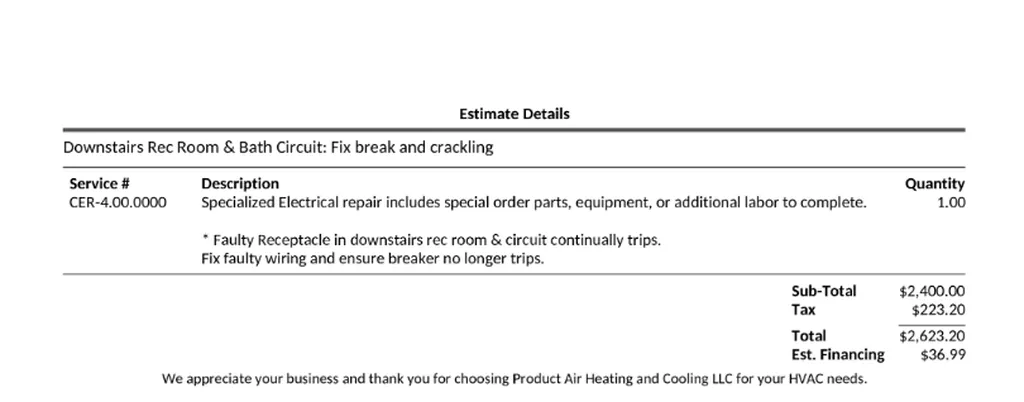
The subtotal came to $2,400.00, with tax bringing the total to $2,623.20, and 0% APR financing available at roughly $36.99 a month if Tonya wanted to spread out the cost. She didn’t need three options to compare, because the option in front of her already answered both problems she had: get the power back on downstairs, and find out whether this was an isolated failure or a sign of something broader in a home that was only ten years old.
Why Does My Outlet Have No Power Even Though the Breaker Isn’t Tripped?
This is the question that made Tonya’s situation feel unsolvable before Brandon ever showed up, and it’s worth explaining plainly because it comes up constantly whenever half the house has no electricity but nothing at the panel looks wrong. A breaker trips in response to overcurrent: too much load pulling through a circuit, or a short circuit sending current somewhere it shouldn’t go.
A wire break is a completely different failure mode. It’s a physical interruption in the conductor itself, caused by a nicked wire, a loose or corroded splice, a connection that was never made properly at installation, or damage from something as simple as a nail or staple driven through a wall years earlier. None of that pulls extra current. It just stops the current from completing its path, which means the breaker sits there in the “on” position, perfectly content, while the outlet on the other end of the broken wire reads completely dead. That’s the core difference between a wire break and a tripped breaker: one is an overcurrent safety response, and the other is a physical gap in the circuit that never trips anything at all.
Finding that gap without tearing out every wall in the house is a specific skill, and it’s the reason electrical troubleshooting in Snohomish County homes like Tonya’s calls for an electrician with real diagnostic experience rather than someone who starts guessing. Brandon’s approach started at the panel, confirming voltage was present and leaving the breaker exactly where it should be. From there, he worked outward along the circuit, checking accessible points like outlets, switches, and junction boxes with the same testing equipment, narrowing the dead zone down between the last point that showed power and the first point that didn’t. That narrowing process is what lets an experienced electrician isolate a hidden wire break to a specific section of wall or a specific connection, instead of opening drywall at random and hoping to get lucky.
Should You Get a Full House Inspection If Only One Area Has No Power?
Tonya’s downstairs was the only area reporting a problem, and a narrower, cheaper fix would have been to locate that one break, patch it, and call the job done. That’s not the option Brandon recommended, and it’s not the option Tonya chose. “A break in the wire is a serious issue, and I want to create a safe home for you and your family,” he told her while laying out the plan. “Also get you to be able to use the downstairs. With this option I will make sure to find the break in the wire and also do a full house inspection so that you do not see anything else like this happen anytime soon.”
The logic behind that recommendation is simple once you sit with it. A single wire failure in a home this age isn’t really a single, isolated event. It’s evidence that something about how this house was wired in 2016 fell short of what it should have been. If poor installation practices produced one hidden break, the same crew, the same materials, and the same shortcuts could plausibly have left other weak points elsewhere in the house that just haven’t failed yet. A spot repair fixes the symptom Tonya could see. A full-house inspection answers the question she couldn’t yet ask: is this the only problem, or just the first one to show itself?
What Brandon Actually Did: Tracing a Hidden Break Without Opening Every Wall
The repair itself came down to finding the exact point of failure in the downstairs circuit, replacing the damaged receptacle that had been arcing at its connections, and re-terminating the wiring so the circuit carried a clean, complete path from panel to outlet again. Because this was a repair to an existing circuit rather than new wiring or a panel modification, it didn’t require the kind of permitting that a service upgrade or new circuit installation would call for: the work stayed within the scope of standard electrical repair.
| Component | Detail |
| Circuit | Downstairs rec room and bath circuit: wire break located and repaired |
| Receptacle | Faulty, heat-damaged receptacle replaced |
| Diagnostic Method | Voltage tracing from the panel outward to isolate the break without opening every wall |
| Scope Added | Full-house electrical inspection, beyond the single reported circuit |
| Result | Circuit restored to full power, breaker holds under normal load |
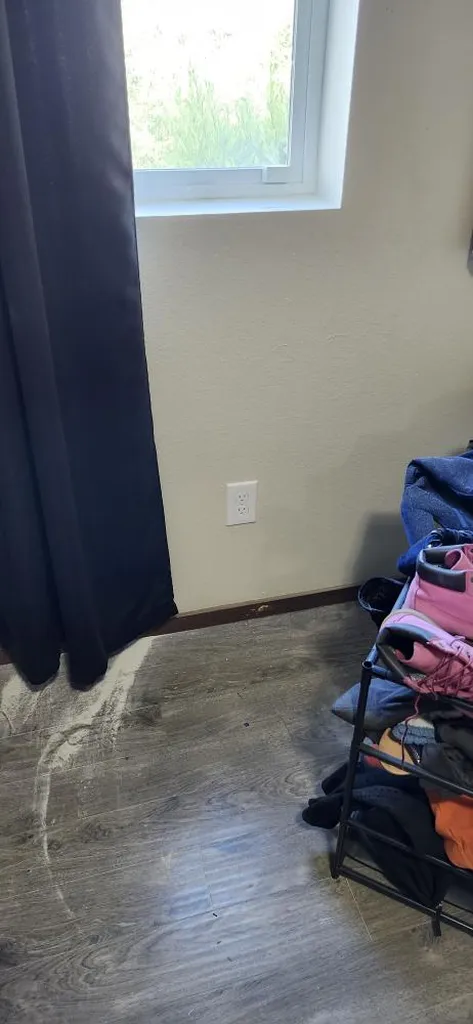
Once the outlet was restored and tested, the rooms it served went back to looking like ordinary rooms: no exposed wiring and signs anything had ever been wrong, just a working outlet in a bedroom corner and a tidy space ready for use again.
One Visit on 18th St SE: How the Repair Came Together
Tonya’s call came in on June 8, and Brandon made the first diagnostic visit on June 11 to confirm what she already suspected: power leaving the panel, nothing reaching the outlet. The repair and inspection work itself was scheduled for June 16, and both were completed in a single visit: locating the break, replacing the receptacle, re-terminating the circuit, and walking the rest of the home’s electrical system to check for anything else that might be showing early warning signs. Because the job turned out to move faster than originally scoped, Product Air didn’t bill Tonya for time that wasn’t spent, a decision that ended up mattering more than a courtesy gesture, as the next section shows.
The Real Numbers: $2,623.20 Quoted, $2,076.70 Final
The original estimate for locating and fixing the wire break, replacing the receptacle, and completing the full-house inspection came to $2,400.00 before tax, or $2,623.20 with tax included. When the job wrapped up faster than the estimate had accounted for, Product Air applied a $547.00 discount to reflect the actual time on site.
| Item | Amount |
| Base Estimate | $2,400.00 |
| Tax | $223.20 |
| Original Total | $2,623.20 |
| Discount (job completed faster than scoped) | −$547.00 |
| Final Cost | $2,076.70 |
No utility rebates or manufacturer incentives applied here, and there wasn’t a reason to expect any: rebate programs are built around equipment upgrades like heat pumps and panel replacements, not repair labor to fix an existing circuit. Tonya financed the balance at 0% APR over 12 months rather than paying the full amount up front.
What a Clean Bill of Health Means for a Family Depending on This House
The wire break itself was a small physical thing, a single point of failure in a circuit that otherwise had years of normal life ahead of it. But the risk it represented wasn’t small. Arcing at a damaged connection can sit undetected inside a wall for a long time before it turns into something worse, and the only warning sign in Tonya’s case was a dead outlet, not smoke or heat or any of the more obvious red flags people wait for. That’s exactly why the full-house inspection mattered as much as the repair itself. It turned an isolated, unnerving symptom into a confirmed, closed question: this was the problem, it’s fixed, and nothing else in the house is quietly heading toward the same failure.
For a household where the downstairs wasn’t optional, where a tenant’s ability to work from home depended on that circuit functioning normally, getting it back online meant getting the full use of the house back, not just one outlet. Tonya’s reaction after the work was finished was short and direct: “Thank you for getting all my circuits functioning correctly.” Not just the one that had failed. All of them.
Frequently Asked Questions: Electrical Repair and Wire Breaks in Lake Stevens, WA
Why does my outlet have no power even though the breaker isn’t tripped?
This almost always points to a physical break somewhere in the wire between the panel and the outlet, rather than a breaker problem. A breaker trips in response to overcurrent or a short circuit, but a broken or disconnected conductor doesn’t pull extra current. It simply stops the circuit’s path completely, so the breaker has no reason to trip even though the outlet is dead. In a Lake Stevens home built in 2016, an electrician confirmed power was leaving the main panel normally but never reaching the downstairs outlet, which meant the wire itself had failed somewhere along its run rather than the breaker doing its job.
Is a broken wire in the wall dangerous?
Yes, even when there are no visible signs of damage. A break or a failing connection in a wire can cause arcing at the point of failure, generating heat inside a wall where it’s completely hidden from view until it becomes a fire risk. In one Lake Stevens case, the damaged receptacle removed during the repair showed clear heat discoloration around its wire terminals, physical evidence of arcing that had been happening with no outward symptom other than a dead outlet. Any circuit that loses power without a tripped breaker should be treated as a possible fire risk, not just an inconvenience.
How much does it cost to find and fix a wire break in a house?
In a recent Lake Stevens repair, locating and fixing a hidden wire break in a single circuit, including a full-house electrical inspection, was quoted at $2,400 before tax, or $2,623.20 with tax included. Because the job was completed faster than originally scoped, the final cost came down to $2,076.70. Costs vary depending on how difficult the break is to locate, how much of the circuit needs to be accessed, and whether the repair also includes replacing damaged components like a receptacle, so an accurate number requires an in-person diagnostic visit.
How do electricians locate a hidden wire break without opening every wall?
Electricians trace the circuit systematically rather than guessing, starting at the panel to confirm voltage is present and working outward through every accessible point on the circuit (outlets, switches, and junction boxes), using testing equipment to check for power at each stop. This process narrows the dead zone down to the specific section of wire between the last point that shows power and the first point that doesn’t, which lets an experienced electrician isolate the break to a small, targeted area instead of opening drywall throughout the house. In one Lake Stevens repair, this method identified a failed connection well before any wall needed to be opened.
Should I get a full house electrical inspection if only one area has no power?
It’s worth strongly considering, especially in a newer home where a single wiring failure suggests an underlying installation issue rather than simple old age. A wire break caused by poor installation practices during original construction can exist in more than one location, even if only one has failed so far. In a Lake Stevens case, the homeowner chose a full-house inspection alongside the single repair specifically for this reason: one confirmed problem raised a legitimate question about whether others existed elsewhere in a home only ten years old.
What’s the difference between a wire break and a tripped breaker?
A tripped breaker is a safety device doing exactly what it’s designed to do, cutting power in response to overcurrent or a short circuit, and it can be reset once the underlying issue is resolved. A wire break is a physical interruption in the conductor itself (from a nicked wire, a failed splice, or a damaged connection) that stops the circuit from completing its path without ever triggering an overcurrent event. That’s why a home can have a completely dead outlet with every breaker sitting normally in the “on” position, which is exactly the scenario one Lake Stevens homeowner faced before an electrician traced the actual break.
What does a whole-house electrical inspection include?
A whole-house electrical inspection typically covers the main panel and breakers, the condition and type of wiring throughout the home, connections at outlets and switches, grounding, and the presence of AFCI or GFCI protection where it’s required. The goal is to catch signs of poor installation practices, aging components, or hidden damage before they cause a failure, rather than waiting for another outlet or circuit to go dead. In a Lake Stevens home, this kind of inspection was added onto a single circuit repair specifically to rule out other hidden issues from the original 2016 construction.
How much does a whole-house electrical inspection cost in Lake Stevens?
Inspection costs vary depending on whether it’s bundled with an active repair or requested as a standalone diagnostic visit, and on the size and age of the home. In one recent Lake Stevens case, a full-house inspection was included alongside a wire break repair as part of a combined $2,400 base estimate, which came down to $2,076.70 after the work was completed faster than scoped. Homeowners requesting an inspection on its own should expect pricing to reflect the size of the home and the depth of access needed to check panels, circuits, and connections throughout the property.
Key Takeaways
- A dead outlet with a breaker that hasn’t tripped almost always means a physical break somewhere in the wire itself, not a problem with the breaker.
- Broken or failing wire connections can arc and generate heat inside a wall with no visible warning sign other than a loss of power, making them a legitimate fire risk even in newer homes.
- A Lake Stevens repair to locate and fix a hidden wire break, including a full-house inspection, cost $2,400 before tax and came down to $2,076.70 after the job was completed faster than originally scoped.
- Electricians locate hidden wire breaks by tracing voltage systematically from the panel outward through accessible points on the circuit, narrowing the failure down without opening every wall.
- A single wiring failure in a home built as recently as 2016 can be a sign of poor installation practices affecting more than one location, which is why a full-house inspection is often worth adding to a single-circuit repair.
- Repairs to existing circuits generally don’t qualify for utility or manufacturer rebates, since those programs are built around equipment upgrades rather than repair labor.
Not every job that comes through our door is a big installation with rebates and multi-day timelines attached to it. Sometimes it’s one outlet, one family, and one afternoon spent tracing a problem back to its actual source instead of patching what’s visible and hoping the rest holds. Those are the calls that matter just as much, because a house that looks fine on the surface can still be hiding something that needed a trained eye to find.
— Serge Nikolin, Co-Founder, Product Air Heating, Cooling and Electric
Marysville · Issaquah · Seattle · Western Washington
PLAN YOUR NEXT STEP
Need help with your home comfort?
Explore Product Air’s electrical services or contact the team.
Share this guide