


Location: Greenwood Ave N corridor, Seattle, WA 98103
Call Date: April 16, 2026
First Visit: April 17, 2026
Project Completion: June 8, 2026
Lead Technician: Kevon, licensed electrician, 14 years of industry experience
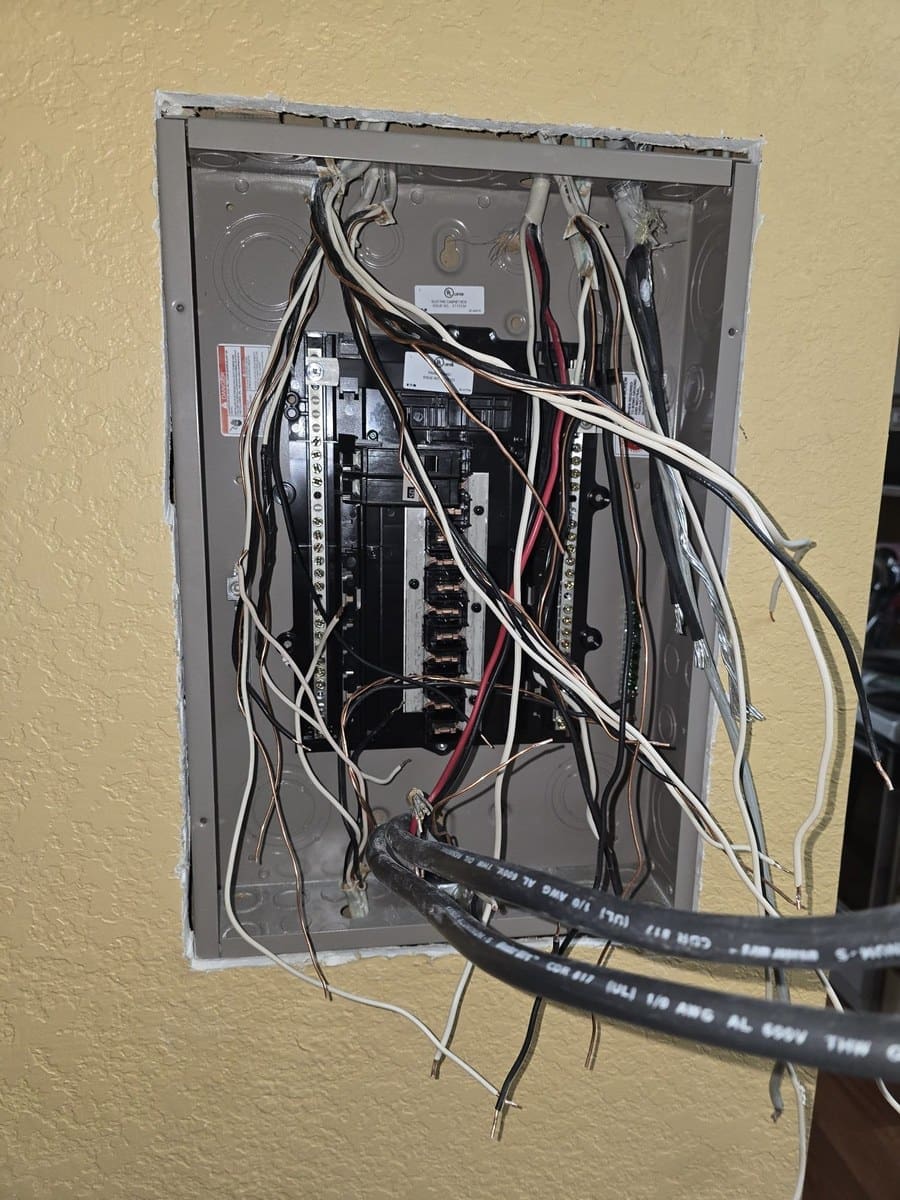
Panel Before: Murray 100A main breaker panel, original to 1985 building
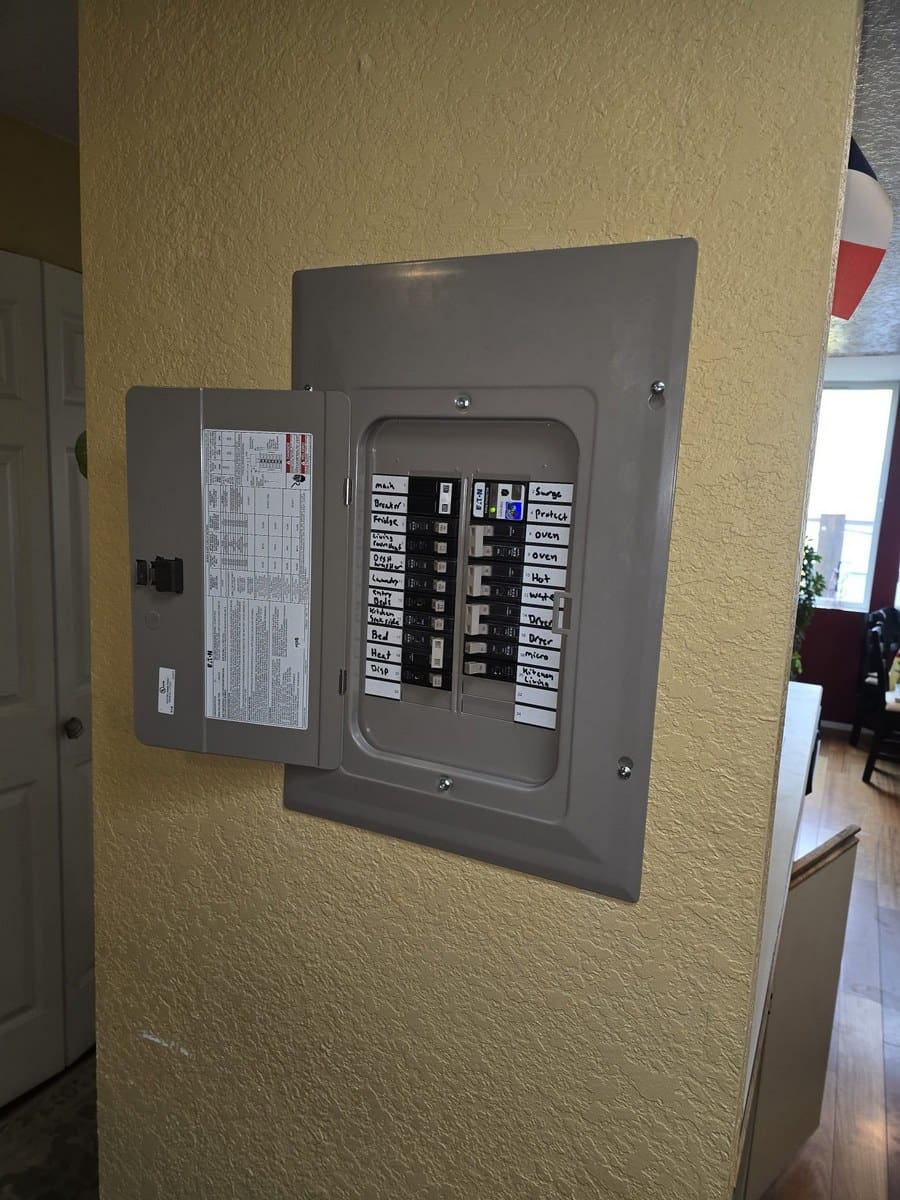
Panel After: Eaton 100/125A main breaker panel, 24 circuits, whole-home surge protection
Final Project Cost: $4,500
(1985 Murray Panel Replacement) Why Was This Seattle Homeowner Replacing Their Electrical Panel?
Bunny’s condo on Greenwood Ave N is 665 square feet: one bedroom, one bathroom, a 1985 build in Seattle’s 98103 ZIP code. She wasn’t having an emergency in the visible sense. The lights were on. The outlets worked. The refrigerator was running. What she had was a sound, and the sound was coming from the electrical panel on the wall.
A low, persistent noise from inside the breaker box that shouldn’t be making any noise at all.
She found Product Air on Google, called on April 16, and Kevon arrived the next morning.
Why Was the Electrical Panel Buzzing? What Kevon Found and How He Said It
Fourteen years of electrical work teaches you what a buzzing panel means before you open the cover. It means resistance where there shouldn’t be any. Resistance in an electrical system generates heat. Heat, inside a sealed panel box full of aged wiring and insulation that has been there since 1985, means fire risk, not theoretical fire risk, but the kind of fire risk that electricians see in incident reports.
When Kevon opened the Murray panel, what he found confirmed what the sound had already told him. The panel was original to the building: over 40 years of continuous service, no maintenance record, the connections between the breakers and the busbar worn to the point where they couldn’t hold a clean contact. A degraded breaker-to-busbar connection creates resistance in the circuit. Resistance generates heat. Sustained heat in an aged panel creates arcing. And arcing, in a residential panel full of deteriorated insulation, is where house fires start.
Kevon sat down with Bunny and said: “Bunny, I know this isn’t what you want to hear, and this is my least favorite part of the day: breaking bad news. As an electrician in service work, all I talk about is: if we don’t do this, it can burn your house down. So would you like a repair that brings us out next week, or a repair that will be good for the next 20 to 30 years?”
No alarm manufactured for effect. No urgency designed to close a sale. Just the honest assessment, delivered the way you’d deliver it to someone you cared about clearly, directly, and with the full picture laid out so she could make her own decision.
Bunny’s response, word for word or close to it: she said it was a lot of money, but she would spend it to keep herself and her cat safe.
Why Electrical Panels Fail and When Buzzing Becomes an Emergency
A residential electrical panel is not a piece of equipment that announces its deterioration loudly. It doesn’t knock or throw an error code. What it does is hum quietly for years, and then eventually buzz and if the buzzing goes unaddressed long enough, the sequence that follows is thermal failure: an arcing connection, insulation that ignites, a fire that starts inside a wall or a panel enclosure without any other warning.
Murray panels from the 1985 era carry specific concerns that experienced electricians know by name. The brand passed through several ownership changes and inconsistent manufacturing periods before eventually being absorbed into Siemens’ product line. More broadly, any residential panel operating for 35 to 40 years without a service inspection is operating on accumulated risk. Breaker contacts degrade through normal use. Busbar connections loosen through the thermal expansion and contraction of thousands of heating and cooling cycles over decades. The insulation on wiring inside the panel becomes brittle.
The buzzing Bunny heard was the sound of a connection that had degraded to the point where electrical current was producing audible arcing noise. That sound is the panel telling you something before it does something worse.
At this stage, there is no repair that restores the system to a sound condition. Tightening a connection in an aged panel brings it from “degraded” to “slightly less degraded,” not to “safe for another decade.” The busbar is aged. The breakers are aged. The panel enclosure itself has been through 40 years of Seattle weather cycles. The right answer is replacement, and Kevon said so without hedging.
How Much Did This Electrical Panel Replacement Cost? What We Offered
One option, clearly described:
Eaton 100/125A Main Breaker Panel, 24 circuits, whole-home surge protection, fully permitted and inspected: $4,500
Kevon didn’t construct a low-end repair option alongside a premium replacement to engineer a comparison. There was no “patch it for now” that would have been honest to present. The panel had exceeded its service life, the fire risk was real, and the right path was a full replacement with equipment Bunny could rely on for the next 20 to 30 years. She had the full picture. She made the call.
What Is Included in a $4,500 Electrical Panel Replacement? What We Installed
The Eaton 100/125A main breaker panel, indoor configuration, up to 24 circuits, is one of the panels that licensed electricians specify by choice, not default. Eaton, alongside Square D and Siemens, sits in the tier of residential panel manufacturers whose breakers are designed and tested for their own bus systems, with the UL listing compliance and dimensional precision that eliminates the compatibility problems that plagued some of the older Murray production runs. It is a panel built for the long run, and with standard maintenance, the industry service life estimate for modern panels in this class is 25 to 40 years.
The whole-home surge protector Kevon specified is installed at the panel level, not at an outlet. That distinction matters: a device at the outlet protects whatever is plugged into that outlet. A device at the panel intercepts voltage spikes before they reach any of the branch circuits in the home: the refrigerator, the laptop, the television, the phone charger, every outlet in every room. Eaton backs the surge protector with a connected home warranty: if the device fails to protect connected appliances during a qualifying surge event, Eaton covers the replacement cost of those appliances up to the warranty limit. For a Seattle condo resident with the full complement of modern household electronics, that warranty is not a formality.
| Component | Detail |
| Panel Brand | Eaton |
| Capacity | 100/125A Main Breaker |
| Circuits | Up to 24 (indoor configuration) |
| Surge Protection | Whole-home device at panel level; Eaton connected home warranty |
| Replaces | Murray 100A, original 1985 panel |
How Long Did This Electrical Panel Replacement Take? Installation Timeline
Product Air handles all electrical permitting in Seattle. A panel upgrade of this scope requires an electrical permit through Seattle DCI; Product Air pulls the permit and coordinates the inspection on the same timeline as the work.
June 8, Day 1 — Panel Replacement
Before Kevon’s crew opened the old panel, they set up the portable generator. In a panel swap, the home loses power for the duration of the work and in a 665-square-foot condo with one resident, “for the duration of the work” means hours without lights, without the refrigerator, without the ability to charge a phone or make a cup of coffee. Product Air’s standard approach on panel replacements is to arrive with a generator and keep the customer connected to the essentials. Bunny could move around her home normally while the work happened behind the panel enclosure.
The Murray panel came out. The Eaton went in: properly mounted, every circuit wired cleanly to its breaker, the surge protector installed and connected at the panel, every circuit tested before the cover closed, every breaker labeled.
Inspection
Permits were signed off the following day. No corrections.
One day of work. One day of inspection. Done.
When it was finished, Bunny said she was impressed by the generator, specifically, that she hadn’t needed to sit in the dark or leave her home while the crew worked. And she said the whole process, from the first call through the permit clearance, had been more streamlined than she expected.
Electrical Panel Replacement Cost in Seattle: Real Customer Example (What Bunny Paid)
Eaton 100/125A panel with whole-home surge protection, all labor, removal of the old Murray panel, electrical permit, and inspection: $4,500
No rebates applied. Utility rebate programs for electrical work in Seattle are structured around heat pump installations and qualifying energy efficiency upgrades, a standalone panel replacement does not trigger Seattle City Light rebate programs.
Bunny financed through GreenSky at 0% APR.
How Long Will the New Eaton Electrical Panel Last?
The Eaton panel installed in June 2026 has a realistic service life, with standard maintenance, of 25 to 40 years. What that means in practical terms: Bunny is done with this decision for the foreseeable future. The next time an electrician opens that panel, whether it’s to add an EV charger circuit, run a dedicated line for a heat pump, or simply do a periodic inspection, they’re going to find a clean, organized, properly labeled Eaton enclosure with capacity to grow, not a 40-year-old Murray with no room and no maintenance history.
The surge protector operates invisibly in the background. Seattle’s grid experiences voltage spikes from utility switching events, from lightning, from the fluctuations that accompany major weather systems. Without whole-home surge protection at the panel, those spikes ride into the home on every branch circuit simultaneously. With it, they are stopped at the source. The Eaton warranty means that if the device fails and a surge reaches the appliances anyway, the replacement cost is covered.
For $4,500, one of the more accessible projects in residential electrical work, Bunny received a panel that eliminates the specific fire risk Kevon identified, extends the electrical infrastructure of her condo by 25 to 40 years, and adds a layer of appliance protection that doesn’t require her to think about it.
The fire risk that arrived as a buzzing sound on a Tuesday morning in April is gone.
Key Takeaways
- A buzzing sound from a residential electrical panel is not background noise to dismiss. It is the audible symptom of a degraded breaker-to-busbar connection, which generates heat, which in an aged panel enclosure is a documented path to a residential fire. That sound warrants a call, not a search for reassurance.
- Murray 100A panels original to 1985 buildings in Seattle’s 98103 ZIP code are operating at or past their designed service life; an electrician who tells you a panel of that age and maintenance history is fine for another decade is not giving you the honest picture.
- A full panel replacement in a Seattle condo at this scope (Eaton 100/125A, whole-home surge protection, permit, inspection, old panel removal) runs $4,500. That is the real number, not a range.
- Eaton’s whole-home surge protector is installed at the panel level and intercepts voltage spikes before they reach any branch circuit; if the device fails to protect during a qualifying surge event, Eaton’s connected home warranty covers appliance replacement costs up to the warranty limit.
- Product Air brings a portable generator on panel replacement jobs so the customer maintains power to lights and light appliances throughout the work: the home does not go dark for the duration of the installation.
- No utility rebate programs apply to a standalone panel upgrade in Seattle; rebate programs for electrical work here are tied to heat pump installations and specific energy efficiency upgrades, not general panel replacement.
What Gets Built One Panel at a Time
A 665-square-foot condo on Greenwood Ave N is not the largest job we run. Kevon works at every scale, from panel replacements like Bunny’s to full rewires on century-old homes with electrical infrastructure going back to the 1910s. What does not change at any scale is the moment where he has to tell a customer something they weren’t expecting to hear.
He told Bunny the truth in the most useful possible form: here is what I found, here is what it means, here is the decision you’re facing, and here is what I would do if this were my house. He did not manage her toward an answer. He gave her the full picture and let her make the call.
She decided she would spend the money to keep herself and her cat safe.
That is what the entire job is, stated plainly by the person who needed it done. Not the Eaton model number, not the permit timeline, not the efficiency rating. Just: the person in that home is safe now in a way she wasn’t the morning Kevon knocked on the door.
Everything else is details.
Frequently Asked Questions About Electrical Panel Replacement in Seattle
How Long Will the New Eaton Electrical Panel Last?
An Eaton 100/125A panel, properly installed and maintained, has an industry service life of 25 to 40 years. The key word is maintained: a professional inspection every 5 to 10 years keeps connections tight and catches anything that develops. The Murray it replaced had run 40 years; this one should run at least as long, and better.
Was Replacing the Electrical Panel Worth It?
For Bunny, the calculation was simple: a buzzing panel with a documented fire risk versus $4,500 and a 25-to-40-year solution. Once Kevon explained what the buzzing actually meant ( degraded connections, heat buildup, real fire risk), the question answered itself. When the alternative is a house fire, a panel upgrade is not a hard call.
What Are the Long-Term Benefits of Replacing an Electrical Panel?
A modern Eaton panel gives you safe, organized infrastructure for the next 25 to 40 years, with capacity to add circuits as your home’s electrical needs grow. It eliminates the fire risk from aged connections, and future work (EV chargers, heat pumps, additional circuits) becomes straightforward. Whole-home surge protection adds another layer if you specify it at installation.
How Does a New Electrical Panel Improve Home Safety?
The primary gain is eliminating the fire risk from degraded breaker-to-busbar connections. A new panel also brings properly sized breakers, current wiring standards inside the enclosure, and when you add a surge protector, protection against voltage spikes that can damage appliances or ignite wiring. It removes what was already wrong and prevents what wasn’t yet a problem.
What Happens After an Electrical Panel Upgrade?
The inspector signs off on the permit, typically the day after installation, and that’s the end of it. The new panel works without needing attention. We recommend a professional inspection every 5 to 10 years to keep connections tight and catch anything that develops. No short-term follow-up required; just normal, reliable electrical service from day one.
Can I Repair an Old Electrical Panel Instead of Replacing It?
Occasionally, yes, a newer panel with a specific failed component can sometimes be repaired. But a panel that has exceeded its service life, like the 40-year-old Murray in Bunny’s condo, is not a repair candidate. Tightening an aged connection restores it to “slightly better,” not “safe.” At that point, replacement is the only honest answer.
Does a New Electrical Panel Increase Home Value?
It typically does, and more importantly, it removes a deal-breaker. An aged or flagged panel, especially a Murray or Federal Pacific, can kill a sale or force a price reduction when it appears in a buyer’s inspection. A modern Eaton panel with current permits on record is a clean line item, not a negotiating liability.
Will My Power Be Off During an Electrical Panel Replacement?
Yes, the home loses power for the duration of the panel swap, typically four to six hours. Product Air brings a portable generator on panel replacement jobs so you have power to lights and light appliances throughout the work. You don’t have to leave your home or sit in the dark while the installation happens.
Can a Buzzing Breaker Cause a House Fire?
Yes. A buzzing sound from a panel is the audible symptom of a degraded connection between a breaker and the busbar. That degraded connection creates resistance, which generates heat. Sustained heat in a panel enclosure leads to arcing, and arcing in aged insulation is a documented cause of residential fires. It is not a sound to wait on.
Is a Murray Electrical Panel Still Safe?
Murray panels original to the 1980s and earlier are operating at or past their designed service life. That doesn’t mean they fail immediately, but the connections, insulation, and breaker contacts are aged in ways a visual inspection can’t fully capture. If yours is buzzing, running warm, or has never been inspected, have a licensed electrician look at it now.
How Much Does It Cost to Upgrade from a 100-Amp to a 200-Amp Panel?
In Seattle, a 200-amp panel upgrade typically runs $6,000 to $10,000, depending on whether the utility service entrance needs upgrading and how much work the house requires inside. A 100-to-125-amp replacement like Bunny’s, same amperage tier, no service entrance change, is less involved and runs closer to $4,000 to $5,500 fully installed and permitted.
Can I Finance an Electrical Panel Replacement?
Yes. Product Air offers GreenSky financing, including 0% APR for 12 months on qualifying projects with a $1,000 minimum. A $4,500 panel replacement financed at 0% for 12 months works out to roughly $375 per month is more manageable than paying for the whole project upfront.
Can I Stay in My Home During the Installation?
Yes, and Product Air’s standard practice makes that straightforward. We bring a generator so you have power to lights and light appliances throughout the installation. You don’t need to leave or arrange accommodations. The panel comes out, the new one goes in, and you’re back on grid power by the end of the day.
Does Homeowners Insurance Pay for Electrical Panel Replacement?
In most cases, no. Homeowners insurance typically covers damage caused by an electrical event such a fire or a surge, but not the cost of replacing equipment that has aged out of safe operation. Deterioration from age and deferred maintenance is generally excluded. Some policies have exceptions for sudden accidental damage, so check your specific policy language before assuming either way.
Will a New Electrical Panel Lower My Insurance Premium?
It can. Some insurers apply a surcharge or decline coverage entirely for homes with certain aged panels like Murray, Federal Pacific, and Zinsco are commonly flagged. Replacing those panels can remove that surcharge or open better coverage options. The impact varies by insurer and policy, so ask your agent directly after the replacement is permitted and inspected.
How Often Should an Electrical Panel Be Inspected?
A licensed electrician should inspect your panel every 5 to 10 years under normal use, more frequently if the panel is over 25 years old, if you’ve noticed buzzing or warmth, or if you’ve added major loads like an EV charger or heat pump. Most homeowners wait until something goes wrong. That is the wrong approach, and it’s avoidable.
What Brands of Electrical Panels Are the Most Reliable?
Eaton, Square D (Schneider Electric), and Siemens are the three manufacturers licensed electricians consistently specify for residential work. Their breakers are designed and tested for their own bus systems, meet current UL standards, and have long track records in the field. Panels to avoid: Federal Pacific Stab-Lok, Zinsco/Sylvania, and older Murray production runs from the 1980s and earlier.
Can I Add an EV Charger to My Existing Panel?
It depends on the panel and available capacity. A Level 2 EV charger requires a dedicated 240V circuit, typically on a 40 to 50-amp breaker. If your panel is near capacity, has space constraints, or is an older model with compatibility concerns, an upgrade may be necessary before the charger can be added safely and legally permitted.
— Serge Nikolin, Co-Founder, Product Air Heating, Cooling and Electric
Marysville · Issaquah · Seattle · Western Washington
PLAN YOUR NEXT STEP
Need help with your home comfort?
Explore Product Air’s electrical services or contact the team.
Share this guide