

Location: 245th Way NE, Redmond, WA 98053
Call Date: July 8, 2026, 2:47 PM
First Visit: July 8, 2026, 2:47 PM
Work Start: July 10, 2026, 8:00 AM
Project Completion: July 10, 2026, 4:00 PM
Service Type: HVAC diagnostic and full system replacement
Lead Technician: Devon Raysbrook, 8 years of HVAC experience
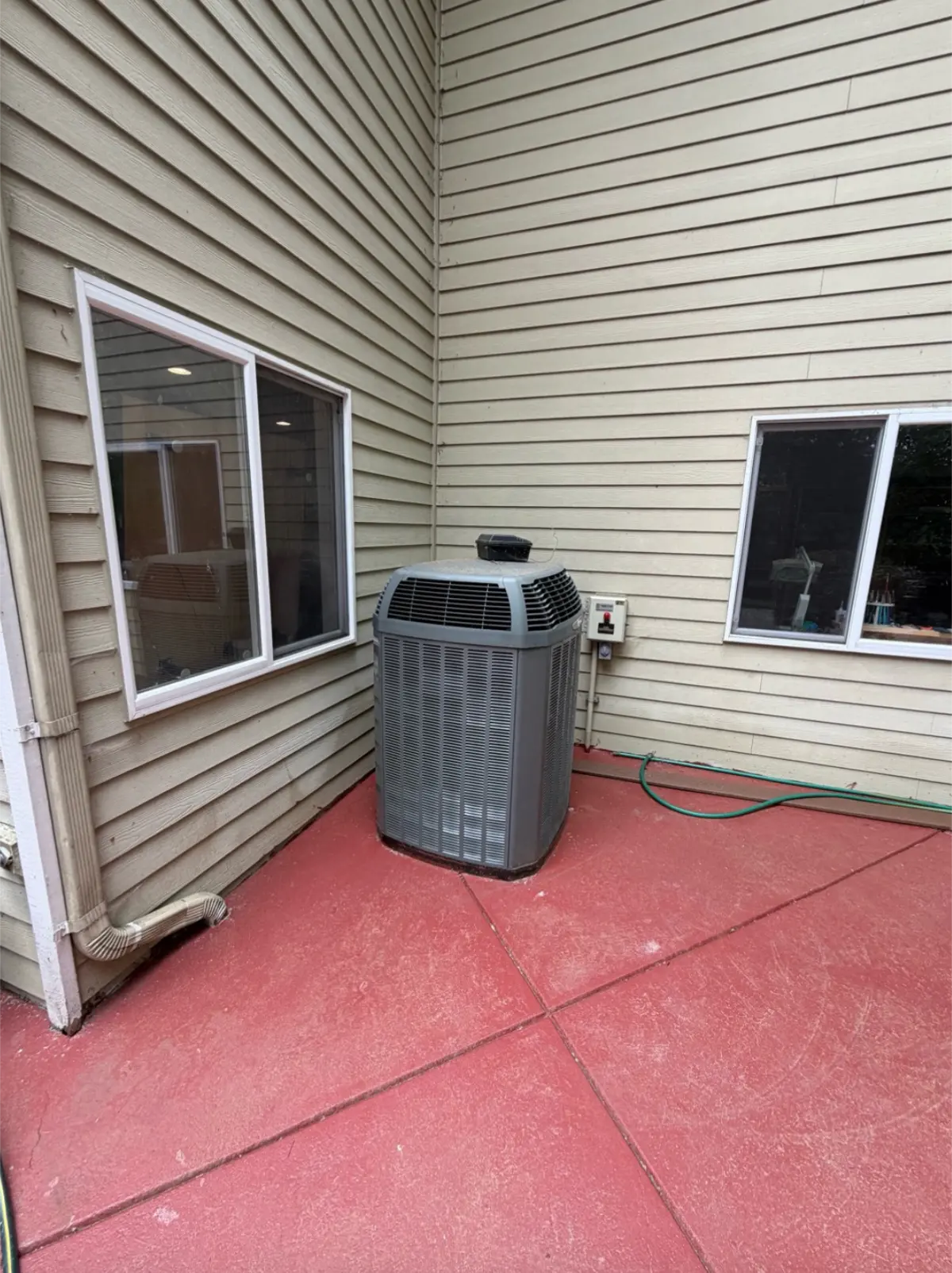
System Before: Approximately 20-year-old Bryant furnace and Trane AC with a failed blower wheel and overheating blower motor
System After: Trane 5-ton two-stage gas furnace paired with a Midea EVOX G2 inverter-driven heat pump and matched evaporator coil
Final Project Cost: $19,864 before tax after a $1,000 Energy Smart Eastside rebate
Furnace and Heat Pump Replacement in Redmond, WA: A Failed Blower Wheel on a 20-Year-Old System
Amy knew this was more than a thermostat acting up. She had dealt with HVAC trouble before and initially thought this might be another repair along the same lines. Devon found a much bigger failure inside the 20-year-old Bryant furnace: the blower wheel had broken apart, and the blower motor was overheating. Once the wheel can no longer move air properly, the furnace and AC lose the airflow they depend on to carry heating and cooling through the house, so this was not something Amy could solve by resetting the system and hoping it made it through another season.
Amy was already a Product Air customer, so Devon did not need to turn the visit into a pitch for replacement. He showed her both paths.
The Home and Existing HVAC System
Amy’s home is a two-story house with a basement and is about 20 years old. The HVAC equipment was in the same age range. She had an approximately 20-year-old Bryant furnace paired with an approximately 20-year-old Trane AC. That age mattered once Devon found the blower failure, but age by itself was not enough reason to tell Amy she needed a new system.
What Devon Found During the Diagnostic
Devon found a failed blower wheel inside the 20-year-old Bryant furnace, and the blower motor was already showing signs of overheating. The blower wheel is the part that actually moves air through the furnace and into the ductwork, while the motor provides the force that spins it. A damaged wheel can become unbalanced, make a loud mechanical noise, move far less air than the system was designed for, and put extra load on the motor. That lines up with what Amy had been hearing when the system tried to run.
The airflow problem affects both sides of a traditional furnace-and-AC setup. The furnace needs the blower to move heated air away from the heat exchanger and through the house, and the AC needs the same blower assembly to move indoor air across the evaporator coil and distribute cooled air through the ducts. A failed wheel therefore does not just mean “the fan is noisy.” It can leave the whole house without normal heating or cooling even when other parts of the system are still capable of operating.
Devon did not have enough information at that point to call the rest of the 20-year-old system good or bad, and the case notes record its remaining condition as unknown. The confirmed problem was the blower assembly, so that is where the diagnosis stayed before Amy compared repair with replacement.
What Can Cause a Furnace Blower Wheel to Fail?
A furnace blower wheel spends its life accelerating from a stop and spinning fast enough to move the system’s designed airflow through the ductwork. After enough years, the wheel itself can fatigue, the hub can loosen, or the assembly can develop enough imbalance that it no longer spins smoothly. Dirt buildup matters too. Dust that makes it past the filter can collect on the curved blades of the wheel, reducing how efficiently it moves air and sometimes creating an uneven load as the wheel rotates. Restricted filtration can also change the static pressure the blower has to work against, which affects how the motor operates and how much airflow actually makes it through the system.
Amy’s furnace had about 20 years of service behind it, and the diagnostic notes also identify air filtration as a contributing factor. Devon confirmed the blower wheel had failed and the blower motor was overheating. We cannot say from those notes that one specific filter problem caused the wheel to fail, or that the failed wheel alone caused the motor to overheat. What we can say is that age, airflow conditions, and the mechanical condition of the blower assembly all matter when a wheel reaches this point. A damaged or badly imbalanced wheel can create vibration and additional mechanical load, while poor airflow can leave the blower working outside the conditions the system was designed around. On a 20-year-old furnace, those pieces deserve to be looked at together rather than replacing one broken part and assuming everything around it is still fine.
Repair the Blower or Replace the System?
A broken blower wheel did not mean Amy had only one option. Devon priced both paths.
| Option | Quoted Price | What It Addressed |
| Replace blower wheel and motor | $2,156.38 | Repair the immediate failure in the existing HVAC system |
| Replace the HVAC system | $18,864.85 quoted option | Replace the aging furnace and AC with new heating and cooling equipment |
A $2,156.38 blower repair and a full HVAC replacement solve very different problems. Amy could see what the repair would accomplish, what replacement would change, and then decide how much she wanted to put into equipment that was already about 20 years old.
Devon did not start by asking which system she wanted to buy. He asked:
“What are your goals? If it’s to have reliable heating and cooling, with peace of mind and warranties…”
That changed the conversation from “What part broke?” to “What does Amy want from the house going forward?” Repairing the blower would get the existing system back into service. Replacement meant starting over with new equipment and new warranty coverage instead of putting more money into a furnace and AC that were already around 20 years old. Amy could compare those two outcomes directly. Amy chose replacement.
What Product Air Installed
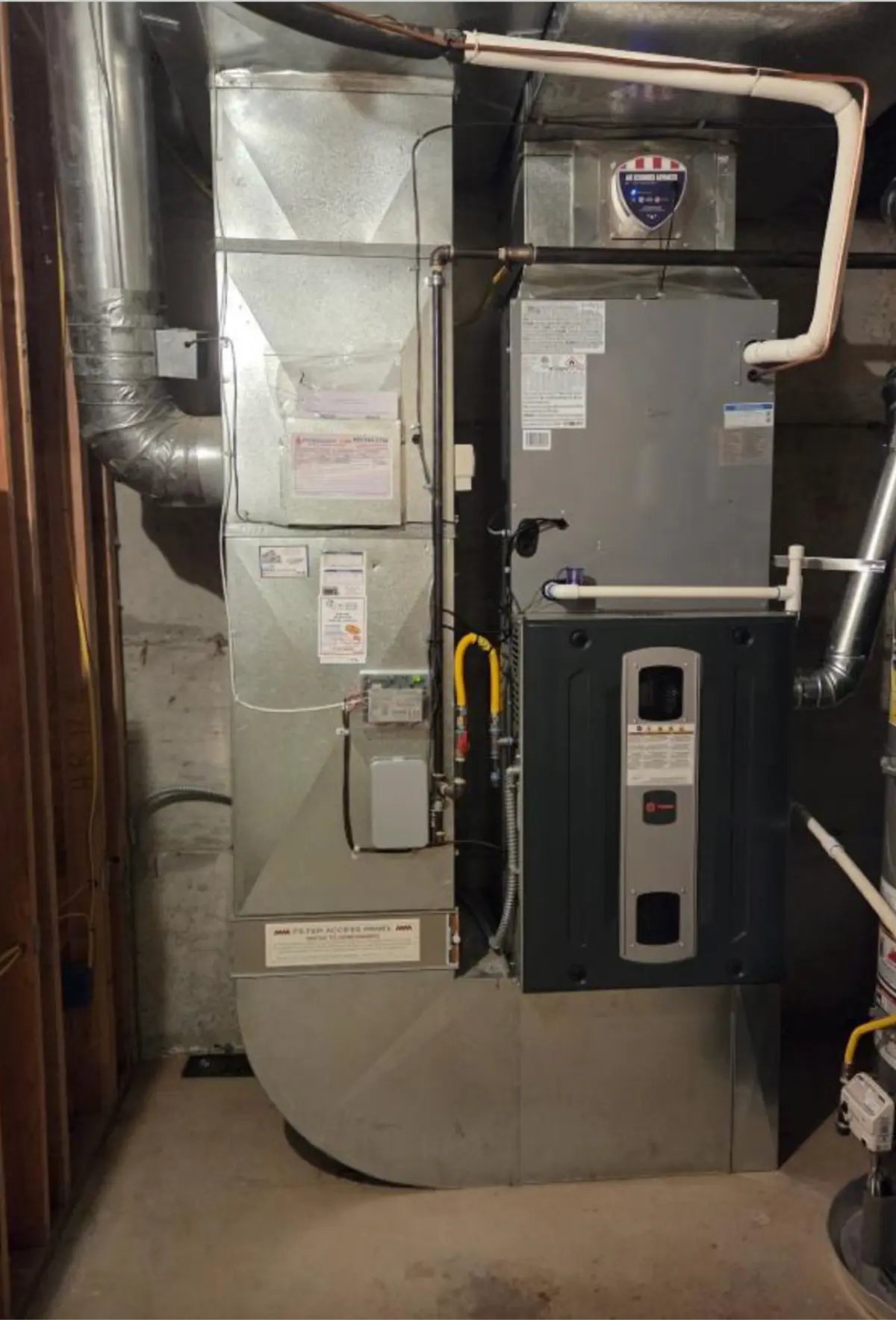
Amy’s 20-year-old Bryant furnace and Trane AC were replaced with a hybrid furnace-and-heat-pump setup. The new furnace is a Trane S8X2D120M5PSCA, a 5-ton, 120,000 BTU, 80% AFUE two-stage gas furnace. Two-stage operation gives the furnace a lower heating stage for lighter loads and a higher stage when the house needs more heat, instead of asking the burners to operate at full output on every call.
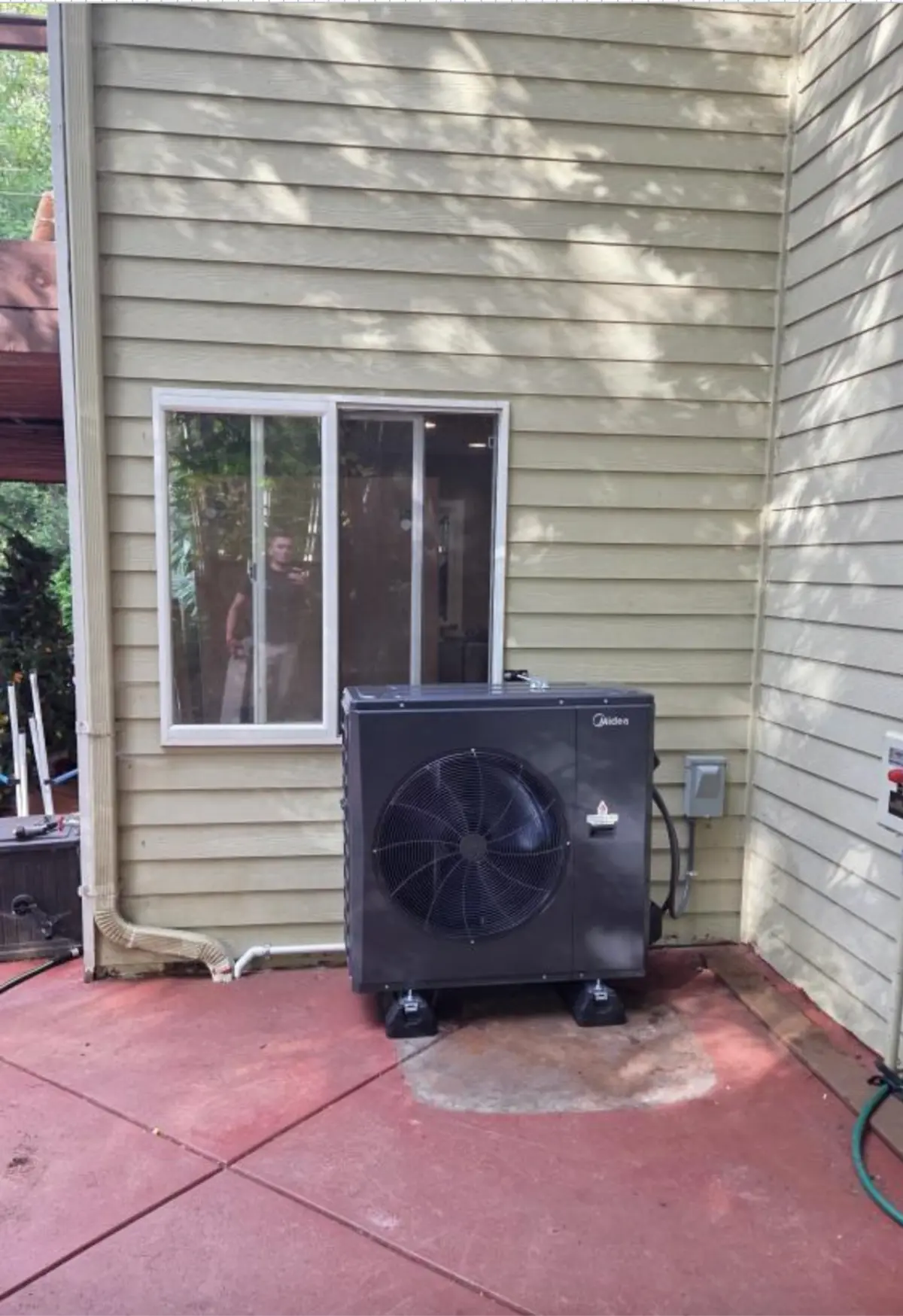
Cooling and heat-pump heating now come from a 5-ton Midea EVOX G2, model MO1BE-H60B-2A. The outdoor unit uses an inverter-driven compressor, so it can vary capacity instead of operating only in a basic on-or-off pattern. That matters for comfort because the system can spend more time running closer to the actual load of the house, which can mean longer cycles and steadier indoor temperatures than a fixed-capacity system. The side-discharge cabinet also moves condenser air horizontally rather than straight up, giving the outdoor equipment a different footprint from a traditional top-discharge condenser.
Product Air paired the heat pump with a Midea MAAHE H60B CA 4-to-5-ton indoor evaporator coil designed for R-454B refrigerant. The coil is the indoor refrigerant heat exchanger, so matching it correctly to the outdoor heat pump matters for refrigerant flow, heat transfer, capacity, and overall system performance. Amy now has heat-pump heating and cooling working through the same duct system, with the Trane gas furnace still available as the gas-heating side of the system. This was a much bigger change than replacing the failed blower assembly. It replaced both pieces of 20-year-old HVAC equipment and gave the house a new matched heating-and-cooling platform instead of building a major repair around the old one.
Why Pair a Heat Pump With a Gas Furnace?
Amy did not move to an all-electric HVAC setup. The new system includes both a heat pump and a gas furnace. That type of configuration gives the home two available heating technologies while also replacing the old AC with equipment that can both heat and cool.
How much each heat source runs depends on the controls, system setup, outdoor conditions, and operating strategy. Amy’s case notes do not document those settings, so I would not claim that the heat pump always handles a specific percentage of the heating load or that the furnace runs only during the coldest days.
What Product Air Did on Installation Day
The crew started at 8:00 AM on July 10 and had Amy’s new system running by 4:00 PM the same day. Product Air removed the 20-year-old Bryant furnace and Trane AC, then installed the new Trane two-stage gas furnace, Midea EVOX G2 inverter heat pump, and matched R-454B indoor coil in the existing HVAC locations.
Keeping the equipment in the same locations meant the project did not need a major mechanical-room redesign or a new outdoor-unit location. The important work was making the new furnace, coil, heat pump, duct system, controls, and refrigerant circuit operate as one system. A furnace-and-heat-pump replacement is not finished just because the new cabinets fit where the old ones sat. Airflow still has to match the equipment, the indoor coil has to be integrated correctly with the furnace, and the controls have to manage when the house uses heat-pump heating versus gas heat. Amy went from a failed blower assembly and two pieces of 20-year-old equipment to a complete hybrid system in one working day without moving the HVAC footprint around the house.
How Much Did Amy’s Furnace and Heat Pump Replacement Cost?
This case has two different replacement numbers, and they need to stay separate. The initial replacement option documented during the decision process was $18,864.85. The final selected project had a base price of $20,864. Amy then received a $1,000 Energy Smart Eastside rebate, which brought the final project total to $19,864 before tax.
Amy’s project received a $1,000 Energy Smart Eastside rebate. That incentive reduced the documented $20,864 base project price to $19,864 before tax.
Rebates can change by program, equipment, project, and date, so I would not treat Amy’s $1,000 incentive as something every Redmond heat pump replacement automatically receives. For this project, though, it made a real difference to the final number.
Warranty Coverage on Amy’s New HVAC System
The new equipment came with a 10-year manufacturer warranty. Product Air provided a 3-year labor warranty on the installation.
Warranty coverage was one of the differences Amy could weigh against the $2,156.38 repair. The repair addressed the failed blower wheel and motor in the equipment she already had. Replacement started over with new equipment and new warranty coverage.
What Amy Got From the Replacement
Amy called because the system had stopped working and the blower sounded bad enough to tell her this was not a normal cycle. Devon found the failed blower wheel and an overheating motor inside equipment that was already about 20 years old. Repair was still a real option. Replacing the wheel and motor would have cost $2,156.38 and addressed the immediate blower failure, but it would have left Amy with the same 20-year-old Bryant furnace and Trane AC around that repair.
Amy chose to replace the system instead. The new setup gives her a two-stage gas furnace for colder-weather heating and an inverter-driven heat pump for cooling and heat-pump heating, all built around new equipment with new warranty coverage instead of one major repair inside an aging system. Product Air completed the replacement in one day, and a $1,000 Energy Smart Eastside rebate reduced the project from $20,864 to $19,864 before tax.
Tech Brother Rule: Don’t Replace What You Can Repair
A repair can be the smart choice even on an older system. I’d only move toward replacement when the extra money buys enough useful life to make starting over worthwhile.
Frequently Asked Questions: Furnace and Heat Pump Replacement in Redmond, WA
Can a broken furnace blower wheel be repaired?
Yes. Amy was quoted $2,156.38 to replace the failed blower wheel and motor in her existing system. Full system replacement was a separate option.
Does a failed blower wheel mean I need a new furnace?
No. The failed part may be repairable. The larger decision depends on the age and condition of the equipment, the repair cost, and what the homeowner wants from the system going forward. Amy chose replacement because her HVAC equipment was around 20 years old and her goals included reliability, longevity, and warranty coverage.
What causes a blower wheel to fail?
Age and airflow conditions can contribute to blower problems. Amy’s case notes specifically identify age and air filtration as contributing factors. They do not give enough information to assign a precise percentage of the failure to either one.
What is the difference between a two-stage furnace and a variable-speed heat pump?
A two-stage furnace has two heating output stages. An inverter-driven heat pump can vary compressor operation over a broader range. These are different technologies serving different parts of Amy’s new HVAC system.
Can a heat pump work with a gas furnace?
Yes. Amy’s new system combines a Midea inverter-driven heat pump with a Trane gas furnace rather than eliminating gas heat entirely. The exact operating strategy depends on how the system is configured and controlled.
How long did Amy’s HVAC replacement take?
Product Air started work at 8:00 AM on July 10 and completed the installation by 4:00 PM the same day.
How much did Amy’s HVAC replacement cost?
The final project base price was $20,864. A $1,000 Energy Smart Eastside rebate reduced Amy’s final price to $19,864 before tax.
What warranty came with Amy’s new system?
The project documentation lists a 10-year manufacturer warranty and a 3-year Product Air labor warranty.
Key Takeaways
- A failed blower wheel can take both heating and cooling out of service because the same blower assembly moves conditioned air through the duct system.
- A broken blower wheel does not automatically mean the furnace has to be replaced if the failed parts can still be repaired.
- Repair versus replacement becomes a different decision when the surrounding HVAC equipment is already around 20 years old.
- Airflow problems can increase stress on a blower assembly, so filtration and static-pressure conditions are worth checking when a wheel or motor fails.
- A heat pump can be paired with a gas furnace to provide electric heating without giving up gas heat entirely.
- A two-stage furnace and an inverter-driven heat pump control capacity in different ways, so both can contribute to steadier comfort in the same hybrid system.
— Serg Nikolin, Co-Founder, Product Air Heating, Cooling and Electric
Marysville · Issaquah · Seattle · Western Washington
PLAN YOUR NEXT STEP
Need help with your home comfort?
Explore Product Air’s heat pumps services or contact the team.
Share this guide