

Mike called us about adding central air conditioning to his home in Bothell. He had lived there since 1986, and his gas furnace dated to 1990. His plan was to keep the furnace and add cooling. After we explained what that would mean for the rest of the system, he chose a Mitsubishi heat pump and air handler to replace the furnace and provide both heating and air conditioning.
The house was built in 1979 and has about 2,138 square feet of living space. Mike came to us through a referral, and Eli handled the proposal. Our installation team carried out the equipment replacement and enlarged a return-air duct in the garage to accommodate the new system's airflow needs.
Why the Existing Furnace Mattered
I understand why a homeowner would want to keep an existing furnace when the immediate goal is summer comfort. The question is whether the equipment being kept makes sense as part of the new installation. At 36 years old, Mike's furnace deserved a careful look before he invested in central AC that would still depend on it.
Age does not tell you the date a furnace will fail. It does, however, matter when you are deciding how much new equipment and labor to build around it. Our recommendation was to consider the cooling purchase together with the next stage of his home's heating needs.
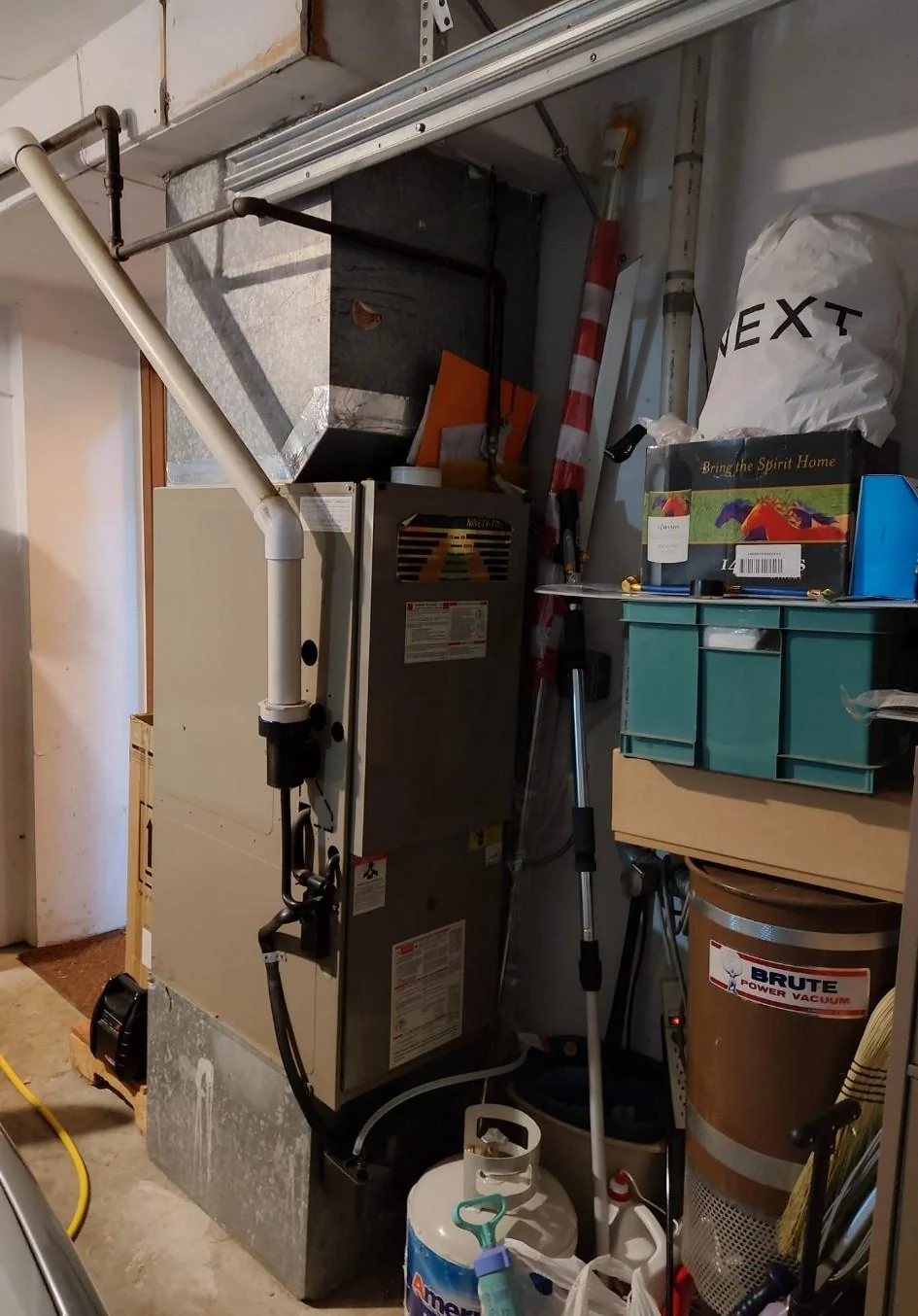
The existing gas furnace and duct connections in the garage before replacement.
How Mike Decided to Replace the Full System
Adding central AC to a furnace involves more than setting an outdoor unit beside the house. The indoor cooling coil needs adequate airflow, and the furnace blower and duct system have to support it. Keeping the furnace also means keeping its older components in service. If the furnace needs replacement later, the homeowner faces another installation and may need changes to the coil connections, duct transitions, or controls.
That was the issue we explained to Mike. He could evaluate the cost of adding cooling now alongside the possibility of another heating project later. A full replacement offered a way to address both at once. He ultimately chose the Mitsubishi system, giving the home central cooling while replacing the decades-old heating equipment.
If my brother were making this decision, I would want him to understand what he was buying and what he was choosing to keep. That is the approach of Your Tech Brother From Another Mother. I should be able to explain my recommendation without making the homeowner feel rushed into it. With Mike, we took an educational approach and left the equipment decision with him.
Heating and Cooling Through the Existing Ducts
The new system uses an outdoor Mitsubishi heat pump and an indoor air handler connected to the home's ductwork. The air handler contains the indoor coil and blower. In heating mode, the system moves heat into the house; in cooling mode, it carries heat out. Air continues to reach the rooms through the duct system, without separate wall-mounted units in each space.
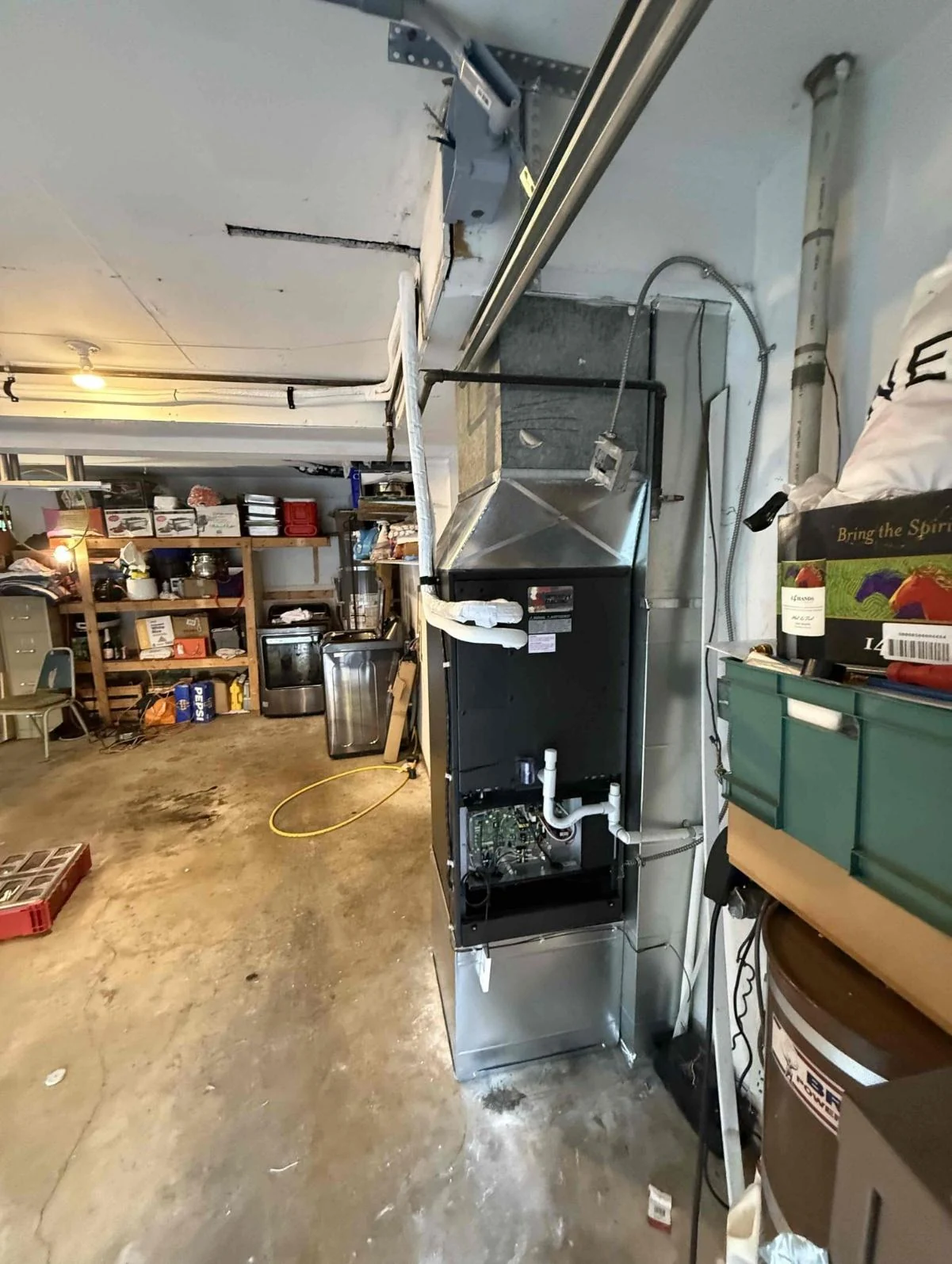
The new air handler during installation, with its service panel open and new sheet metal transitions in place.
Enlarging the Return Duct for the New Equipment
Our team enlarged the return-air duct in the garage from 7 by 23 inches to 8 by 25 inches. The return carries air from the house back to the indoor unit. Its capacity matters because the blower needs a suitable path to bring air back through the equipment as well as send conditioned air into the rooms.
A restrictive return can limit system performance and contribute to noise. Installing a new heat pump does not remove that restriction. On this project, modifying the return was part of adapting the existing house to the new equipment. The crew also fitted sheet metal transitions to connect the new air handler to the duct system.
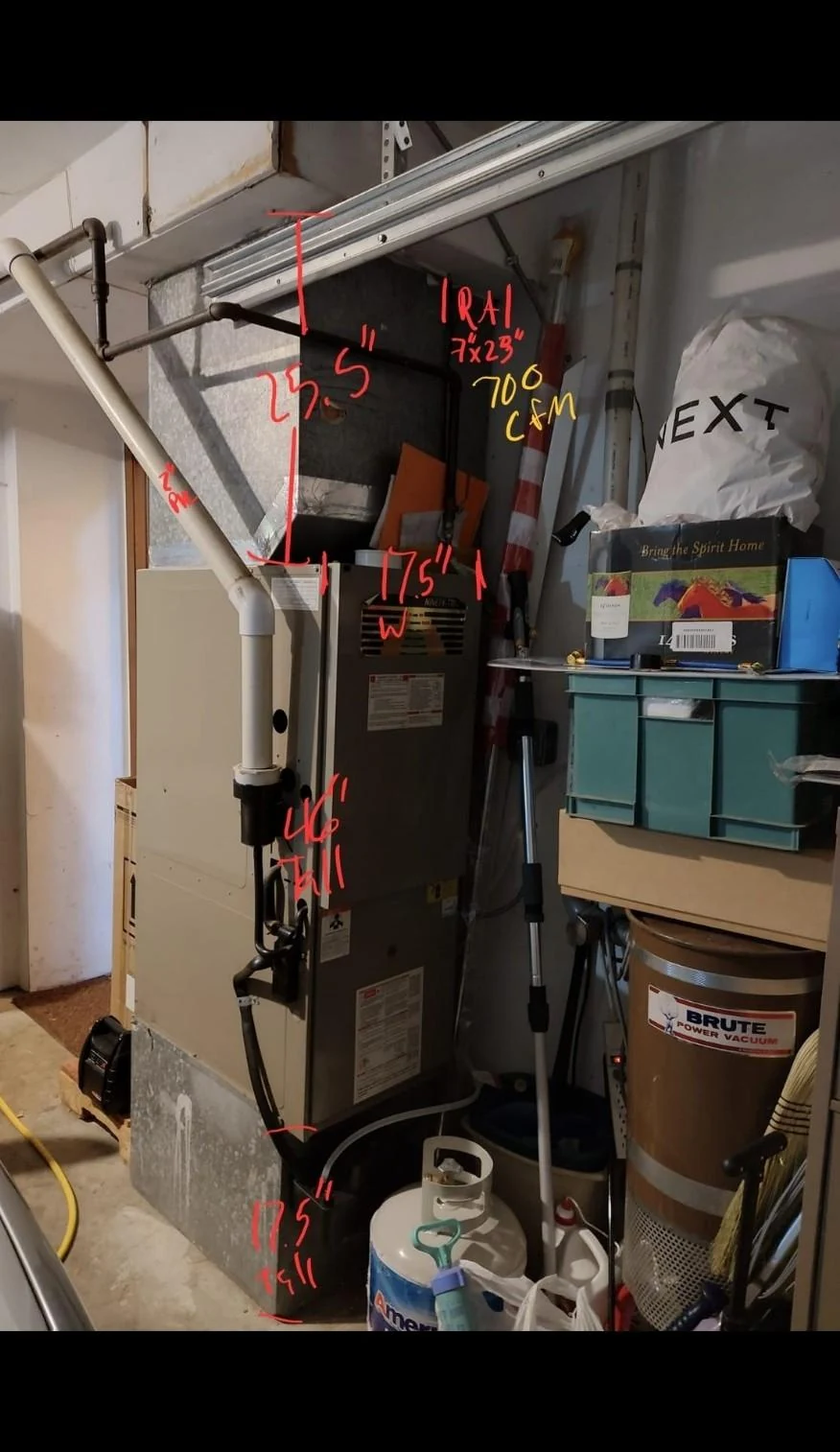
Measurements on the original installation identify the 7 by 23 inch return duct that was enlarged for the new system.
For homeowners, this is a useful question to ask during an estimate: how will the existing ducts work with the proposed equipment? The answer should account for the filter, return path, supply ducts, and the airflow the selected system requires. A larger duct opening alone does not establish a particular increase in airflow; the rest of the system still affects the result.
Equipment sizing deserves the same attention. Floor area helps describe a house, but windows, insulation, air leakage, and layout affect its heating and cooling needs. A proposal should explain why the selected system fits the home, including its heating capability in cold weather and any supplemental heat it requires.
Installing the Equipment Inside and Outside
The air handler went into the garage where the furnace had been. Working in an existing garage means accounting for the duct layout, nearby storage, and garage-door hardware. It also means preserving practical access to the equipment. A homeowner needs to reach the filter, and a service technician needs room to open panels and work on the unit.
Outside, our team set the heat pump on a pad with support feet beside the house. A protective cover encloses the exterior line route along the siding. The outdoor location needs to account for airflow, service clearances, stability, and water released during defrost. These details should be considered together when planning the installation.
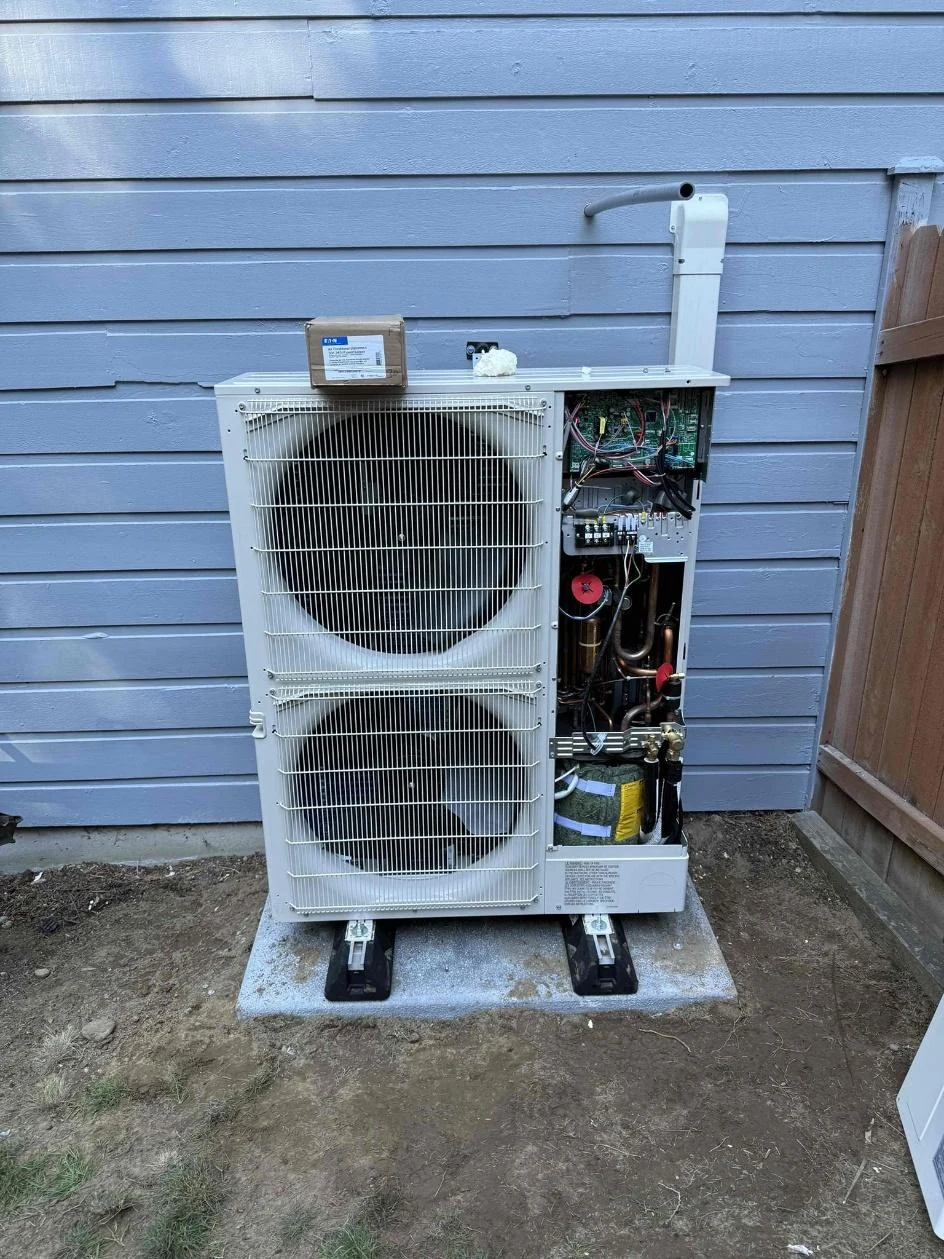
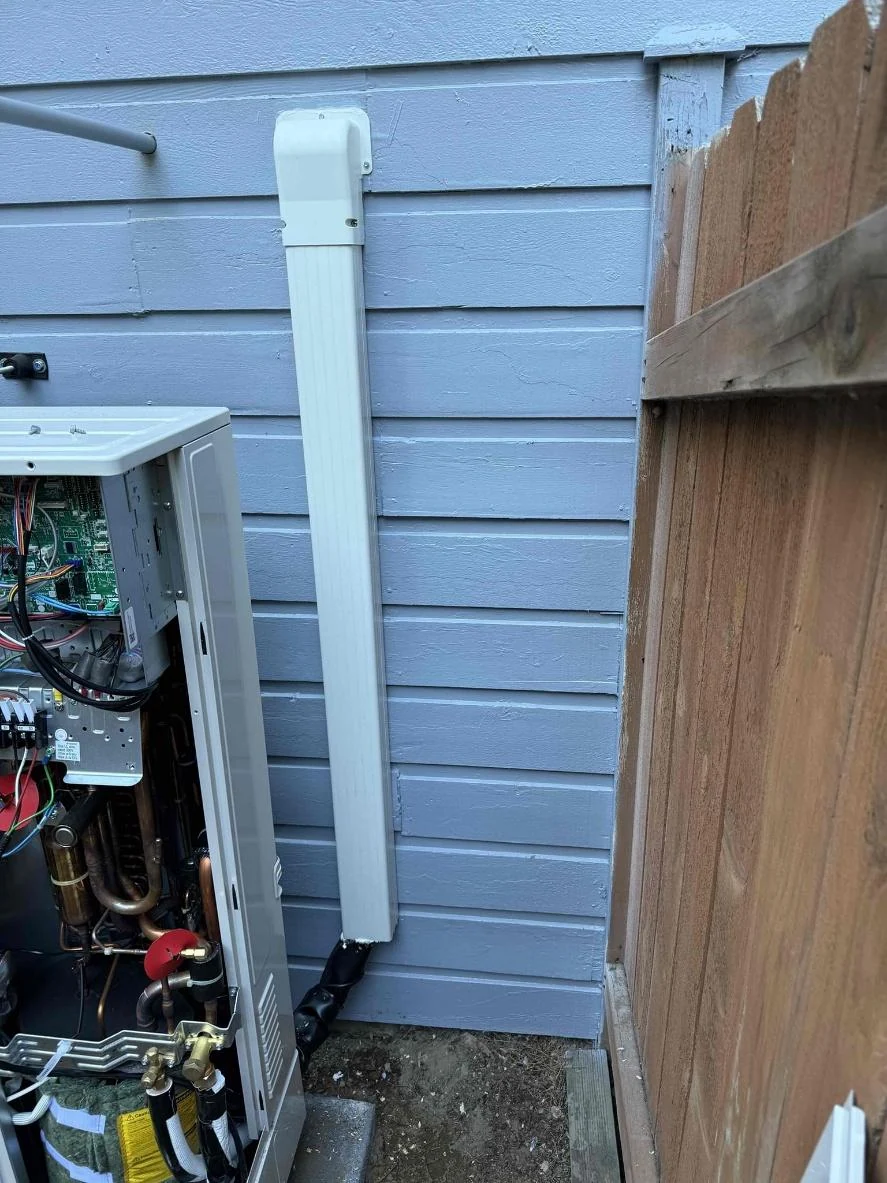
Outdoor installation in progress. Left: the heat pump on its pad and support feet. Right: the covered line route beside the unit.
Electrical Work and the Project Schedule
The project included electrical work and mechanical and electrical permits. A conversion from gas heat requires an assessment of the new electrical loads and the home's existing service. A panel upgrade is a separate decision based on that assessment; it is not automatically part of every heat pump installation.
Mike's call came in on October 7, 2026, and we completed the installation on October 8. The work brought together the equipment replacement, return-duct modification, and electrical portion of the project. Each needs to be included in planning so the homeowner understands the scope before installation begins.
The Project Invoice and PSE Rebate Applications
The project invoice totaled $13,190.23. The installation replaced the gas furnace with a Mitsubishi heat pump and air handler, added central cooling, and included the return-duct modification. That scope is why I encourage homeowners to compare complete installation proposals. The price of an outdoor unit by itself does not describe the cost of putting a working system into an existing home.
We submitted two rebate applications for Mike's project: $4,000 through PSE Fuel Switch and $400 through PSE Distributor Midstream, for a total of $4,400 in submitted incentives. Handling the applications was part of helping him through the conversion.
Rebate programs can have different payment arrangements. Midstream incentives pass through the equipment supply chain and may already be reflected in the price. I want homeowners to see how each applicable incentive appears in their written agreement, who receives the payment, and what amount they are responsible for. Eligibility and program terms also need to be checked for the individual project.
Mike Was Looking Forward to His First Summer With AC
After the work was done, Mike told us he loved the new setup and could not wait to try the cooling in summer. That response brings the project back to the reason he called. He wanted air conditioning, and the system he selected also replaced his 36-year-old furnace. With an October installation, his first summer using the new cooling was still ahead.
We registered the equipment for warranty coverage. I also encourage homeowners to understand the distinction between the manufacturer's equipment warranty and the contractor's labor coverage. Knowing how to operate the controls, care for the filter, and contact the installer for help is part of owning the new system comfortably.
What to Ask Before Adding AC to an Older Furnace
Start with an assessment of the furnace and the proposed cooling setup. Ask whether the existing blower and ducts can support the new equipment, what would remain in service, and what could need to change if the furnace were replaced later. Keeping an existing furnace can be reasonable when its condition and compatibility support that decision.
If a full replacement is recommended, ask for the reason and the complete scope. Electrical work, duct changes, permits, startup, and written warranty terms all deserve attention. For a heat pump, discuss cold-weather performance and expected energy use. Heating costs depend on the house, equipment, rates, weather, and operating habits; new summer cooling also adds electricity use in exchange for comfort.
Mike chose to address heating and cooling together after we explained how the age of his furnace affected the decision. Our team then installed his selected Mitsubishi system and adapted the return duct to its needs. My goal is for the homeowner to understand that choice well enough to feel comfortable making it, and for our crew to deliver the work that was agreed upon.
PLAN YOUR NEXT STEP
Need help with your home comfort?
Explore Product Air’s heat pumps services or contact the team.
Share this guide