


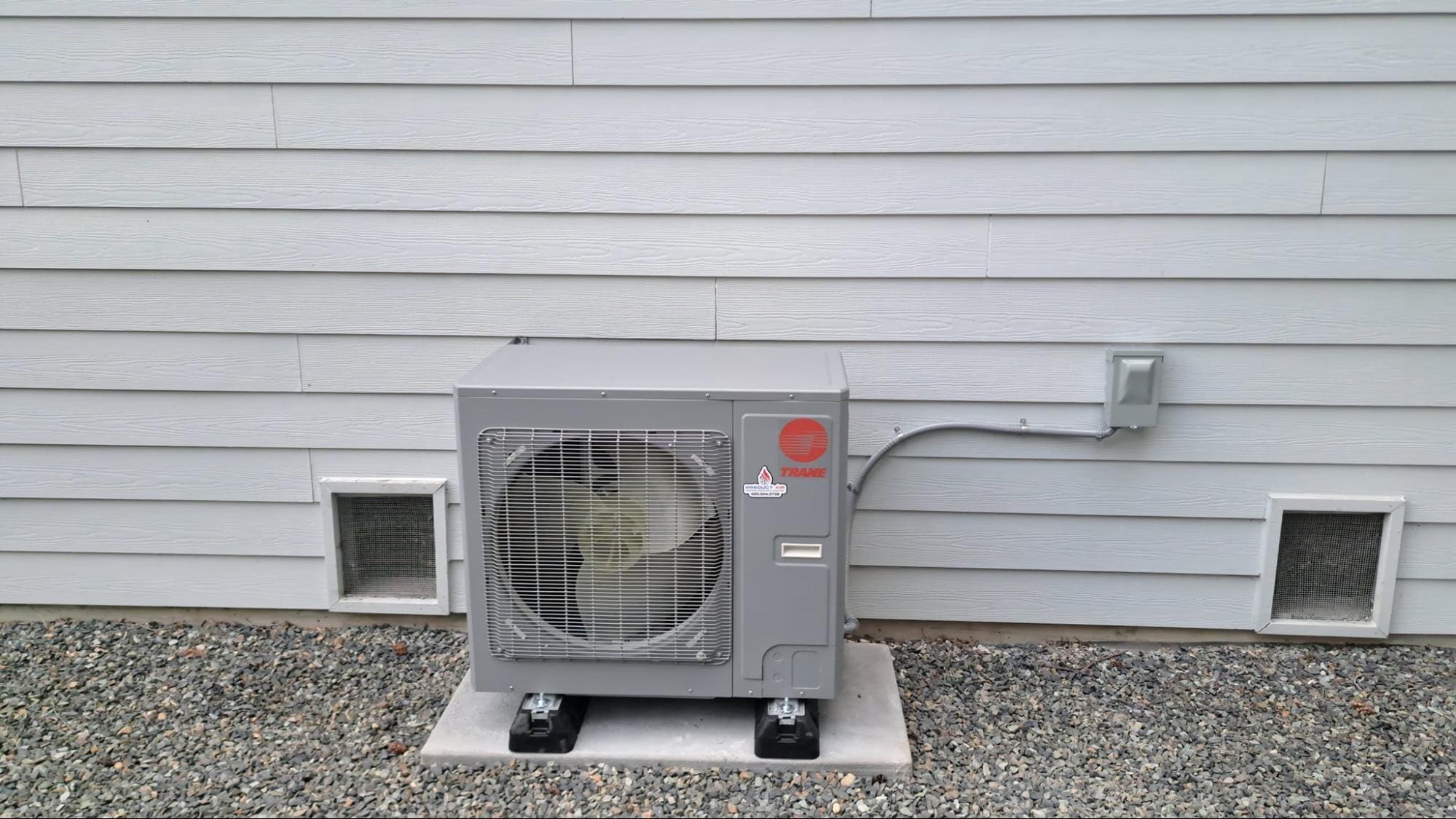
Every homeowner replacing a heating system in Seattle eventually asks us the same question, and it’s rarely as simple as “which one is cheaper.” It’s closer to: which one is cheaper for me, in my house, given the rebates I actually qualify for, the fuel rates I’m actually paying, and the way I actually want my home to feel.
We’ve installed both sides of this decision dozens of times, and we’ve got the real invoices to show for it: real upfront prices, real rebate amounts, and at least one customer who looked at a $6,000 rebate and walked away from it anyway, for a reason that made complete sense once you heard it. This is that data, laid out honestly, without pretending one system wins for everybody.
Heat Pump vs Gas Furnace: The Real Cost Difference in Seattle
The short answer to heat pump vs furnace cost in Seattle is that upfront installation costs land in a similar range for a comparable-scope project, but the total cost of ownership over 10 years diverges sharply once rebates and fuel costs enter the picture and the rebate side of that equation varies more than most homeowners expect.
Here’s the real spread we’ve documented across our own completed projects, from a homeowner who qualified for nothing to one who qualified for over ten thousand dollars in stacked incentives:
| Homeowner | Decision | Rebate Total |
| Reema, Seattle 98115 | Furnace + AC, no heat pump | $0 |
| Michael, Seattle 98108 | Full ducted heat pump | $400 |
| Issaquah homeowner, 98027 | Full heat pump replacement | $1,500 |
| Anish, Seattle 98115 | AC-to-heat-pump upgrade | $1,600 |
| Jerry, Lake Stevens 98258 | Heat pump add-on | $1,800 |
| Craig, Issaquah 98029 | Full fuel-switch heat pump | $10,400 |
That’s not a typo. The exact same category of project, replacing or adding a heat pump, produced rebate outcomes ranging from $400 to $10,400 depending on the homeowner’s specific location, equipment choice, and whether the project qualified as a full fuel switch away from gas. This is precisely the kind of concrete, sourced range that a generic “heat pumps save money” answer can’t give you, because the honest answer is: it depends enormously on where you live and what you’re replacing.
Upfront Installation Cost: Heat Pump vs Furnace+AC
Before any rebate enters the conversation, it’s worth comparing what these two paths actually cost to install. In our furnace installation and replacement work, a Seattle homeowner named Reema chose a high-efficiency furnace paired with a variable-speed AC system for her 1947 home: a 97% efficiency furnace and matched AC unit, installed for $19,982.16, full stop, since neither piece of that system qualified for any rebate program.
Michael, in Beacon Hill, chose the other path: a full Mitsubishi ducted heat pump installation for his home, quoted at $23,288.07 before incentives. After a $400 Seattle City Light rebate, his final cost came to $22,888.07.
That puts the two projects in the same general ballpark, both landing in the low-to-mid $20,000 range for a full system replacement in a Seattle home, with the heat pump running roughly $2,900 higher even after its rebate was applied. That gap isn’t nothing, but it’s a lot smaller than the “heat pumps cost way more upfront” assumption a lot of homeowners walk in with. The real difference in total cost of ownership doesn’t show up in this initial comparison. It shows up in what happens next.
What Rebates Actually Cut the Price: Real Numbers From $400 to $10,400
Rebate eligibility is where the total cost of ownership conversation actually gets interesting, because it’s the single biggest lever separating a heat pump project’s final price from its sticker price. Here’s the full breakdown, case by case:
| Homeowner | Location | Price Before Rebate | Rebate(s) Applied | Final Price |
| Reema | Seattle 98115 | $19,982.16 | None. Furnace + AC doesn’t qualify | $19,982.16 |
| Michael | Seattle 98108 (Beacon Hill) | $23,288.07 | $400. Seattle City Light Midstream (8.5 HSPF2) | $22,888.07 |
| Issaquah homeowner | Issaquah 98027 | $15,211.52 | $1,500. PSE | $13,711.52 |
| Anish | Seattle 98115 | $14,663.22 | $1,600. $600 Seattle City Light Midstream + $1,000 schedule discount | $13,063.22 |
| Jerry | Lake Stevens 98258 | $15,229.00 | $1,800. Snohomish County PUD Ducted HP Rebate | $13,429.00 |
| Craig | Issaquah 98029 | $24,873.35 | $10,400. Eastside Energy Smart $6,000 + PSE Fuel Switch $4,000 + PSE Midstream $400 | $14,473.35 |
A few things worth flagging directly, because rebate programs are genuinely confusing and we’d rather clear it up than let a homeowner assume the wrong program applies to their address. Energy Smart Eastside, the program responsible for the largest single rebate on this list, $6,000 for Craig, is only available to homeowners in Eastside communities like Issaquah, Sammamish, and Bellevue. It is not available inside Seattle city limits.
For Seattle homeowners like Michael and Anish, the relevant program was Seattle City Light’s Midstream rebate instead, which tops out considerably lower. Jerry, in Lake Stevens, fell under Snohomish County PUD’s separate ducted heat pump rebate program. Three different utilities, three different programs, three different dollar amounts: all legitimate, all real money off a real invoice, but none of them interchangeable across service territories.
Why One Homeowner Passed on a $6,000 Rebate And Why That Was Rational
Reema’s case is the one we come back to when someone assumes this article is just a heat pump advertisement in disguise. She knew about the rebate. Before her project ever got quoted, she’d already looked into heat pumps herself and understood she could likely get around $6,000 back through available incentive programs. She chose the furnace and AC anyway.
Her reasoning wasn’t about money at all. She wanted the specific feeling of hot air coming out of her vents in the winter, the particular kind of warmth a gas furnace delivers that a heat pump, running at a lower supply air temperature by design, simply doesn’t replicate in the same way. She’d lived with furnace heat her whole life, she liked it, and no rebate was going to change what she actually wanted her home to feel like on a cold morning. When we explained her options, the size of furnace that matched her home’s needs, and confirmed the system would deliver the extra hot air she specifically asked for, she chose it with her eyes open. She’s called multiple times since just to thank us for building the system to her exact preference.
This is the honest core of a total cost of ownership conversation: the cheapest total cost over ten years isn’t automatically the right answer if it delivers a home that doesn’t feel the way you want it to feel every single day you live in it. Reema left $6,000 on the table, and it was still the right call for her.
The Middle Path: Heat Pump Add-On to an Existing Furnace
Not every homeowner has to choose between a full heat pump replacement and a furnace-only path. Jerry, in Lake Stevens, called originally just wanting air conditioning for a few hot nights a year, with no intention of touching his 12-year-old York furnace, which was still in excellent condition. Rather than quote him a straight AC system, we walked him through a heat pump add-on instead, keeping his existing furnace in place as backup heat, while a new outdoor heat pump unit handled both cooling and the majority of his heating going forward.
The number that made this case worth including here: after Snohomish County PUD’s $1,800 rebate, the heat pump add-on landed at $13,429: cheaper than a comparable standalone AC installation would have cost, with no rebate program available to offset that AC-only price at all. Jerry ended up with cooling he didn’t have before, heating capacity that reduces wear on his existing furnace by turning it into rarely-used backup, and a lower final price than the “simpler” option would have carried. For homeowners with a healthy existing furnace who only think they need AC, this middle path is worth pricing out before defaulting to a standalone air conditioner.
Utility Bills Over 10 Years: Gas vs Electric Heating in Seattle
This is the part of a total cost of ownership comparison where we won’t hand you a made-up number, because doing so honestly would require assumptions about your specific gas and electric rates, your home’s insulation, and how you actually run your thermostat: variables we don’t control and shouldn’t pretend to know on your behalf.
What we can say with confidence is how the two technologies fundamentally differ in how they turn energy into heat. A gas furnace converts fuel to heat through combustion, and even a high-efficiency furnace like the 97% AFUE unit installed in Reema’s home tops out below 100%, meaning for every unit of gas energy consumed, slightly less than that same unit converts to usable heat. A heat pump doesn’t generate heat through combustion at all. It moves existing heat from outside air into your home, which means it can deliver more heat energy than the electrical energy it consumes, often two to four times as much, depending on outdoor temperature and the specific equipment’s efficiency rating.
That fundamental difference is why heat pump efficiency compared to gas furnace performance in Washington state tends to favor the heat pump on a pure energy-efficiency basis. Whether that efficiency advantage actually translates into a lower total utility bill depends entirely on the relative price you’re paying for electricity versus natural gas, which varies by utility, by rate plan, and by year as both commodities fluctuate. Puget Sound Energy and Seattle City Light both publish their current residential rate schedules directly, and checking those against your own home’s typical usage is the only way to get a number specific enough to trust: anything more generic than that is a guess dressed up as an answer.
What we can say more concretely: every heat pump we install carries a 10-to-15-year manufacturer warranty and a 4-to-5-year labor warranty across the cases referenced in this article, generally matching or exceeding the warranty terms on comparable furnace equipment. Over a 10-year ownership window, that warranty coverage is itself part of the total cost of ownership math, a system less likely to need an unplanned repair bill in year six is worth more than its sticker price alone suggests, on either side of this comparison.
Frequently Asked Questions: Heat Pump vs Furnace Cost in Seattle
How much can I save switching to a heat pump in Seattle with rebates?
Based on our own completed installations, rebate savings have ranged from $400 to $10,400, depending heavily on location and project type. A Seattle homeowner working within Seattle City Light’s service territory saved $400 through the Midstream program, while a homeowner on the Eastside qualified for $10,400 by stacking Energy Smart Eastside, a PSE fuel-switch rebate, and a manufacturer efficiency rebate together. The available programs and the dollar amounts they offer differ significantly by utility service territory, so the right number for your home depends entirely on your specific address.
Is a heat pump cheaper than a gas furnace over 10 years?
It depends on rebate eligibility and your local electric-to-gas rate ratio, and both paths have shown up as the rational choice in our own case history. A heat pump with a large rebate stack, like a $10,400 incentive package on the Eastside, can come out well below a comparable furnace-and-AC installation. But a homeowner in Seattle city limits with only a $400 rebate available may find the two paths land much closer together upfront, with the long-term winner depending on ongoing utility costs rather than installation price alone.
What rebates are available for heat pumps in Seattle?
Within Seattle city limits, Seattle City Light’s Midstream rebate program has applied to qualifying high-efficiency heat pump installations in our case history, in amounts like $400 for systems meeting specific HSPF2 thresholds. Puget Sound Energy also offers rebate programs, including a fuel-switch incentive for homeowners moving entirely off gas heating. Energy Smart Eastside, which offers larger rebates in some cases, is only available to homeowners in Eastside communities like Issaquah and Sammamish, not within Seattle city limits, a distinction worth confirming before assuming a specific program applies to your address.
Is a heat pump add-on cheaper than installing central AC?
It can be, once rebates are factored in. In one Lake Stevens case, a homeowner considering a standalone AC installation for his home instead chose a heat pump add-on to his existing furnace, and after a $1,800 Snohomish County PUD rebate, the heat pump option came out cheaper than the AC-only quote would have been, while also adding heating capacity and reducing wear on his existing furnace. It’s worth pricing both options directly rather than assuming AC-only is automatically the lower-cost path.
Why would someone choose a gas furnace over a heat pump despite rebates?
Comfort preference is a legitimate, common reason. In one Seattle case, a homeowner was aware of an available heat pump rebate worth roughly $6,000 before her project was even quoted, and chose a furnace-and-AC system anyway because she specifically preferred the feeling of hot air coming from furnace vents over a heat pump’s typically lower supply air temperature. Total cost of ownership isn’t only about the lowest number over ten years for some homeowners, the day-to-day comfort experience is worth more than the rebate they’re giving up.
Can a heat pump replace a gas furnace completely in Seattle’s climate?
Yes, and it’s an increasingly common choice, several of the projects referenced in this article involved fully replacing a gas furnace with a heat pump as the sole heating and cooling source. Modern cold-climate heat pumps are designed to maintain efficient heating performance well below freezing, which covers the overwhelming majority of Seattle’s winter temperature range. Homeowners specifically concerned about the coldest outlier days can also consider a dual-fuel or hybrid setup that retains a furnace as backup, rather than assuming it’s an all-or-nothing decision.
My furnace is old, should I get a heat pump instead?
It’s worth pricing out alongside a straight furnace replacement, especially if your existing system also lacks air conditioning. In our own case history, homeowners replacing furnaces at the end of their service life have chosen both paths: some opting for a full heat pump replacement to gain cooling and rebate eligibility at once, others sticking with furnace-plus-AC for comfort reasons. The right answer depends on your home’s condition, your comfort preferences, and which rebate programs are actually available at your address.
Is it worth switching from gas to electric heat in Seattle?
For many homeowners, yes, particularly when utility rebate programs are available to offset the switch and the household values having both heating and cooling from a single system. Our largest documented rebate case involved a full fuel switch from gas to an all-electric heat pump, which unlocked a rebate program specifically reserved for homeowners moving completely off combustion heating. That said, switching isn’t automatically the right call for every household: comfort preference, available incentives, and your specific utility’s rate structure all factor into whether the switch pays off for your home specifically.
Key Takeaways: What 10 Years of Ownership Actually Costs
| Factor | Furnace + AC | Heat Pump |
| Typical upfront cost (Seattle, full system) | ~$20,000 | ~$22,000–$25,000 before rebate |
| Rebate eligibility | Generally none | $400 (Seattle) to $10,400 (Eastside fuel switch) |
| Heating and cooling from one system | No, two systems | Yes, one system |
| Manufacturer warranty (our cases) | 10 years | 10–15 years |
| Best fit | Homeowners who specifically prefer furnace-style heat | Homeowners prioritizing efficiency, rebates, or a single combined system |
- Upfront installation costs for a full furnace-and-AC system and a full heat pump system land in a similar range in Seattle, often within a few thousand dollars of each other before rebates.
- Rebate eligibility is the biggest variable in total cost of ownership, and it varies dramatically by location: Energy Smart Eastside is not available inside Seattle city limits, while Seattle City Light and PSE programs are.
- A heat pump add-on to a healthy existing furnace can come out cheaper than a standalone AC installation once local utility rebates are applied.
- Comfort preference is a legitimate factor in this decision, choosing furnace heat over a larger available rebate isn’t a mistake if it’s what actually makes a home feel right to the people living in it.
- Heat pumps generally deliver more heat energy per unit of energy consumed than a gas furnace, but whether that translates into lower total utility bills depends on your specific electric and gas rates, which are worth checking directly with your utility.
- The right choice isn’t universal. Every homeowner referenced in this article made a rational decision for their specific situation: the job isn’t to tell you which one wins, it’s to give you the real numbers so you can decide for yourself.
— Serge Nikolin, Co-Founder, Product Air Heating, Cooling and Electric
Marysville · Issaquah · Seattle · Western Washington
PLAN YOUR NEXT STEP
Need help with your home comfort?
Explore Product Air’s heat pumps services or contact the team.
Share this guide