


Location: W Mercer Way, Mercer Island, WA 98040
Call Date: May 11, 2026
First Visit: May 18, 2026
Work Start: June 5, 2026
Project Completion: June 5, 2026
Service Type: HVAC maintenance, diagnostic, and heat pump replacement
Lead Technician: Robert, 8 years of HVAC experience, Trane and Mitsubishi certified
System Before: 2013 Trane AC system, model 4TTB3060D1000CA, with a failed compressor
System After: Trane 5-ton, 16.0 SEER2, 9.0 HSPF2 two-stage heat pump with matched Trane evaporator Robert laid out both paths clearly: $5,039 to replace the compressor and keep the existing system going, or move that money toward a new heat pump that better matched what Ole and his family wanted from the house.coil, paired with the existing furnace
Final Project Cost: $16,690.42
Heat Pump Replacement on Mercer Island, WA: A Maintenance Visit That Found a Failed Compressor
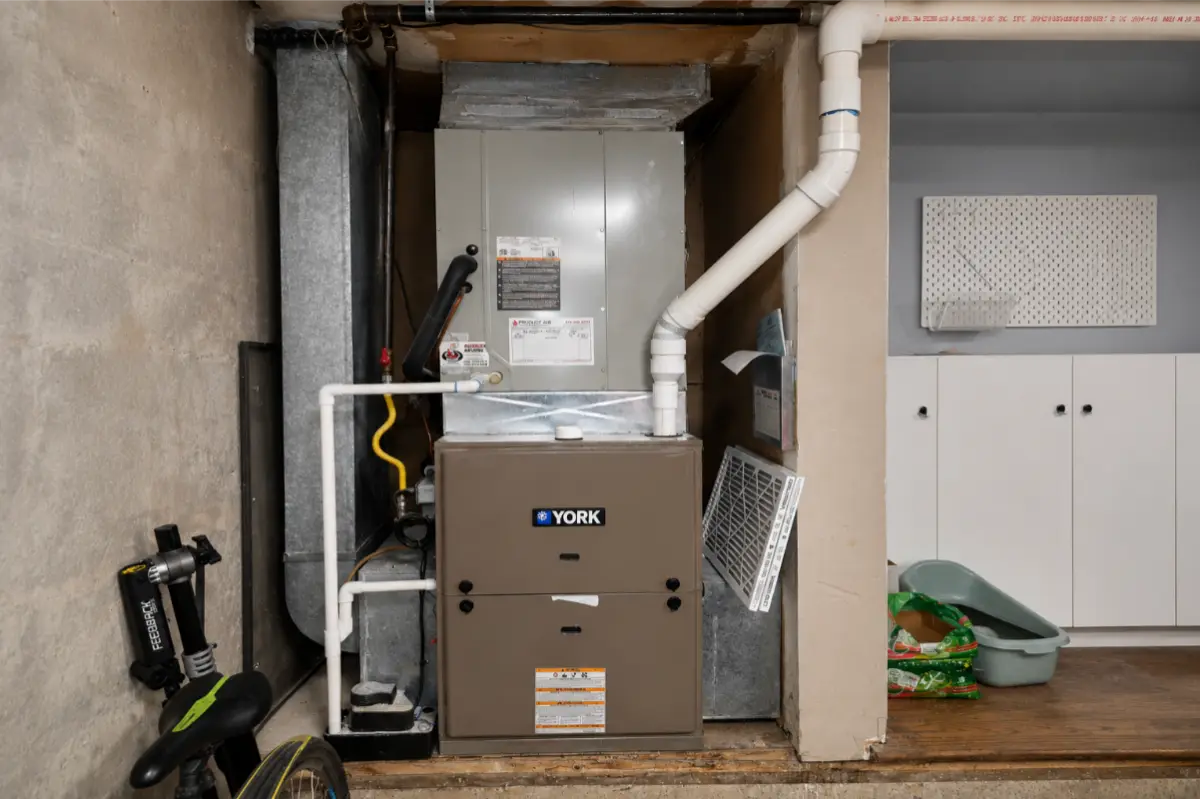
Ole and his family had just moved into the house and were still figuring out the HVAC system they inherited with it. They were not shopping for new equipment. They wanted a proper maintenance visit, an explanation of what they had, and an answer to two things that were already bothering them: the AC would not come on, and the breaker kept tripping. Ole found Product Air because our sticker was still on the furnace from service performed before he owned the home, so when Robert came out on May 18, the appointment started as a routine maintenance and diagnostic call.
The House on Mercer Island
Ole’s home is a 4,430-square-foot single-family house built in 1978. It has two stories and five bedrooms. The existing Trane equipment dated to 2013, putting it at roughly 13 years old when Robert inspected it. Ole and his family had just bought the home, so they did not have years of firsthand history with the HVAC system. They wanted to know what they had, what condition it was in, and whether they could rely on it. The outdoor unit sits close to the room where Ole’s mother stays, so noise was part of the replacement decision too.
Why Would an AC Keep Tripping the Breaker?
A breaker that trips every time the AC tries to start is telling you the system has a problem, but it is not telling you which part failed. Resetting it over and over does not solve anything. The issue could be tied to the compressor, the wiring, or another electrical component, and each of those points to a very different repair.
Robert treated the breaker as a symptom and kept diagnosing the system. The maintenance visit confirmed the bigger issue: the compressor had failed. At that point, the question was no longer how to get the AC running again with a quick fix, but whether it made sense to invest in a compressor replacement on a 2013 system that was already 13 years old.
What Robert Found During the Maintenance Visit
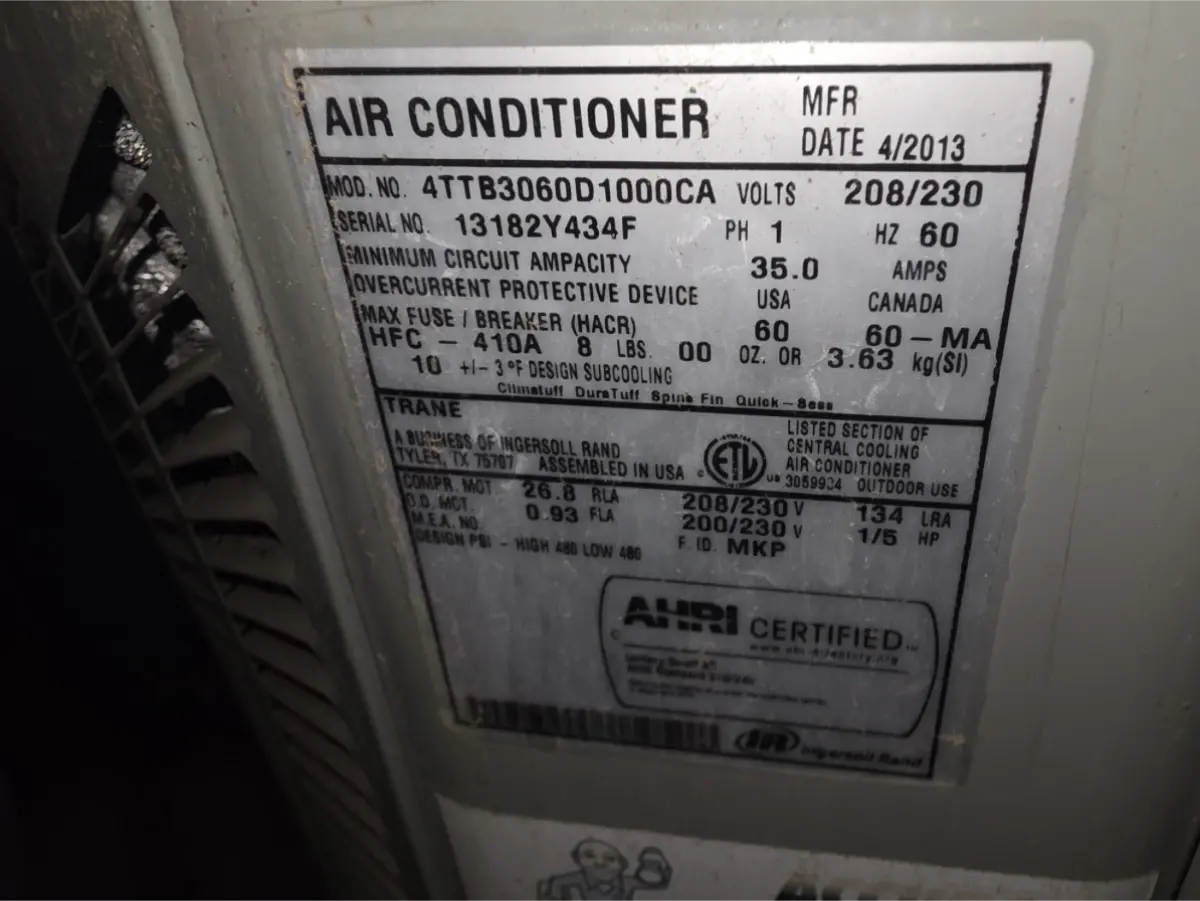
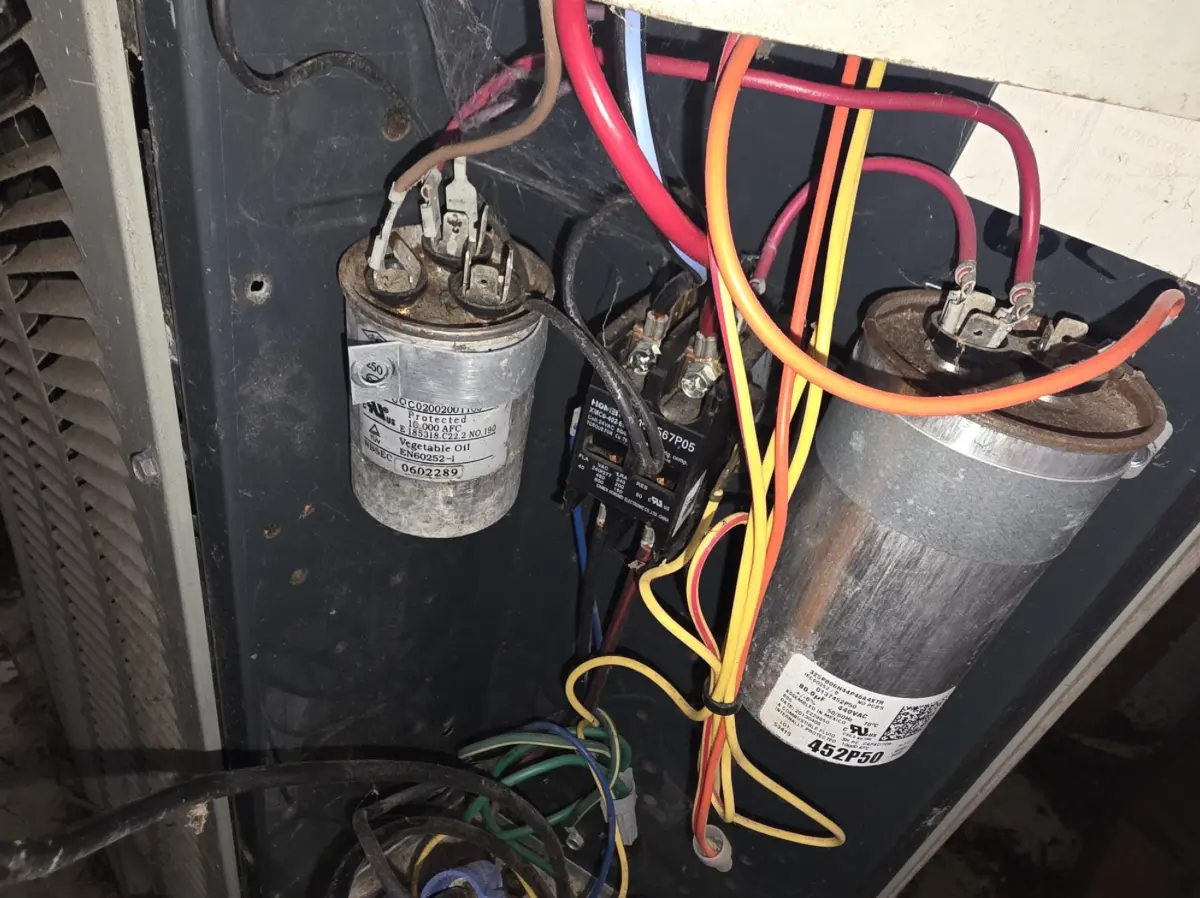
Robert spent about 1.5 hours on the maintenance and diagnostic.
The existing system had not been maintained consistently, and the case notes specifically identify poor filter replacement as part of that history. Robert ultimately confirmed that the compressor had failed. Ole had expected a visit that would help him understand a system in a home he had just purchased. Instead, he was suddenly looking at a major HVAC decision.
Robert told him directly:
“I’m sorry to inform you, but the lack of maintenance and filter replacement has destroyed the compressor.”
That was Robert’s assessment of this particular system after inspecting it. I would not turn it into a rule that missing a filter change automatically destroys a compressor. Poor airflow and neglected maintenance can put extra stress on equipment, but the failed compressor still has to be diagnosed in the context of the actual system. In Ole’s case, Robert documented the maintenance history as part of what contributed to the failure.
Repair the Compressor or Replace the AC With a Heat Pump?
A failed compressor did not automatically mean Ole had to replace the entire system.
Robert gave him both paths.
| Option | Price |
| Replace the failed compressor | $5,039 |
| Replace the AC with a heat pump | $18,590.42 before rebates |
That was a big jump from the maintenance visit Ole thought he was booking. He had gone from trying to understand the equipment in his new house to comparing a $5,039 repair with a five-figure replacement. He told Robert:
“Wow, this is a big investment when we were just looking to understand our system. We appreciate all the details and we will be in contact soon.”
And that was fine. We did not need an answer from him while Robert was still standing in the house.
Why Ole Chose the Heat Pump Instead of the $5,039 Compressor Repair
Replacing the compressor would have repaired the immediate failure. The heat pump option addressed more of what Ole wanted from the house going forward. Ole and his family were looking beyond the immediate compressor repair. The existing equipment was already about 13 years old, and they wanted to think about long-term reliability, a more electric approach to heating, and better climate control. Noise mattered too because of where the outdoor equipment sits in relation to his mother’s room. The new equipment was selected in part to provide quieter operation than what they had before.
Robert explained the options around those goals instead of presenting replacement as the only reasonable answer. Ole eventually chose the heat pump.
Ole’s New Trane Heat Pump System
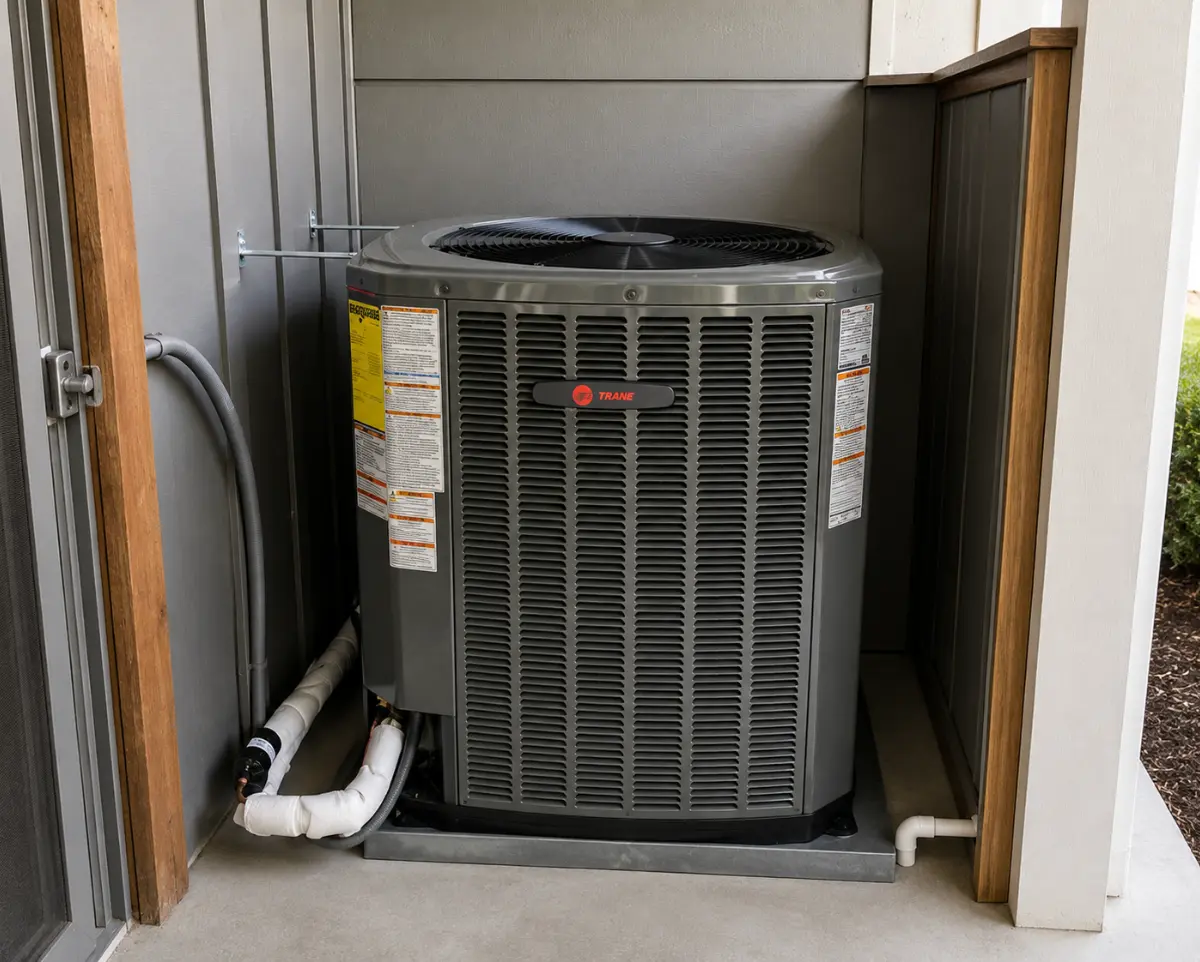
Product Air installed a Trane 5-ton two-stage heat pump using R-454B refrigerant.
The equipment is rated at:
- 16.0 SEER2
- 9.0 HSPF2
- 5-ton capacity
- Two-stage operation
The outdoor heat pump is a Trane model 5TWR7060A1000A. It was paired with a matched Trane 3-to-5-ton evaporator coil, model 5PXCC007AS3HAA, also designed for R-454B refrigerant. The important distinction here is that Product Air did not remove the furnace and convert the home to an all-electric setup. The new heat pump was paired with the home’s existing furnace, creating a hybrid heating configuration.
What Is a Hybrid Heat Pump System?
A hybrid system combines a heat pump with a furnace instead of asking one piece of equipment to replace the other completely. The heat pump adds efficient electric heating while also handling air conditioning. The existing furnace remains part of the home’s HVAC system.
For Ole, keeping the furnace changed what replacement could look like. He could add heat-pump heating and new cooling without automatically removing equipment that could still remain part of the system. That configuration also affected the final economics of the project because it qualified for one of the PSE rebates applied to the installation.
What Product Air Did
The replacement happened on June 5, with two Product Air HVAC technicians handling the new heat pump and indoor coil in a single day. The old cooling setup was replaced with a 5-ton Trane two-stage heat pump rated at 16.0 SEER2 and 9.0 HSPF2, paired with a new Trane indoor coil designed for R-454B refrigerant. This was not just an outdoor-unit swap. The new system now had to handle both cooling and heat-pump heating, so the installation included making sure the indoor coil, outdoor equipment, and electrical supply were set up to work together.
The electrical side needed its own attention. Two Product Air electricians spent about two hours modifying the circuit for the new equipment. A heat pump can have different electrical requirements from the AC it replaces, so the existing circuit cannot simply be assumed to be correct because it powered the old condenser. The circuit has to match the requirements of the equipment being installed. Ole originally called because his AC would not run, but once the replacement changed what the house was asking the electrical system to support, that became part of doing the job properly rather than something to leave for later.
Why Electrical Work Can Be Part of a Heat Pump Replacement
An existing AC circuit was designed around the electrical requirements of the equipment already installed. A replacement heat pump may have different requirements. That does not mean every AC-to-heat-pump conversion needs the same electrical work. The electrician has to look at the actual equipment and circuit.
At Ole’s home, the installation required a circuit modification. Two Product Air electricians completed that portion of the project in about two hours. That gave the new HVAC equipment the electrical setup required for the installation rather than trying to force new equipment onto the old configuration.
How Much Did This Heat Pump Replacement Cost?
The project price before rebates was $18,590.42.
Two incentives were applied to the project.
The first was a $1,500 PSE hybrid heat pump rebate. This program applies to qualifying ducted heat pumps paired with a new or existing natural gas furnace, along with PSE’s system-design and control requirements.
The second was a $400 PSE Midstream efficiency rebate. The qualifying tier requires at least 15.2 SEER2 and 8.5 HSPF2. Ole’s system is rated at 16.0 SEER2 and 9.0 HSPF2, meeting both thresholds.
The rebates were submitted through the distributor and reduced the project from $18,590.42 to $16,690.42. The rebates did not change the diagnosis and they did not decide whether Ole should repair or replace. They changed the math on one of the options. In this case, $1,900 came off the heat-pump project Ole had already chosen.
Warranty Coverage on Ole’s New System
The new equipment came with a 10-year manufacturer warranty. Product Air also provided a 5-year labor warranty on the installation, along with our lifetime craftsmanship guarantee. Those warranties cover different parts of ownership.
The manufacturer warranty applies to the equipment under its warranty terms. The Product Air labor warranty covers our labor for the specified period, while the craftsmanship guarantee backs the quality of the installation work itself.
What Ole Got From the Replacement
Ole expected the first visit to help him understand the HVAC system that came with his new house. Instead, he learned that the compressor in the 2013 Trane system had failed and that getting the AC running again meant making a real investment. Robert laid out both paths clearly: spend $5,039 to replace the compressor and keep the existing system going, or move that money toward a new heat pump that better matched what Ole and his family wanted from the house.
Ole took time to think through the cost and what he wanted from the system long term, then chose the replacement. The new setup gave the family a 5-ton Trane two-stage heat pump rated at 16.0 SEER2 and 9.0 HSPF2, paired with a matching indoor coil and the existing furnace as part of the heating setup. That gave them cooling again, heat-pump heating for a more efficient way to handle much of the year, and a quieter system near the room where Ole’s mother stays.
Ole summed it up best himself:
Outstanding experience from start to finish! We recently upgraded our old AC system to a multi-stage heat pump to save on heating costs and reduce our reliance on gas. Rob was our primary contact, and he was incredibly helpful, providing all the information we needed to make an informed decision. Since noise was a primary concern for us, we opted for their top-tier, multi-stage model, and it was worth every penny.
The installation itself was flawless. The crew worked incredibly hard the entire day, even manually carrying the heavy unit up a steep hill due to difficult access to our install site. They didn’t complain once and did a phenomenal job.
We are absolutely thrilled with the outcome. The unit fits perfectly into our custom hiding enclosure, and the noise levels are remarkably low. In just the first couple of weeks, we’ve already tested it for both heating and cooling (including a blast of 90°F+ weather), and it performed beautifully. To top it off, Rob has been super helpful with our follow-up questions. We truly feel well taken care of and highly recommend this team!
Tech Brother Rule: Make the Replacement Earn Its Price
A $5,000 repair can still make sense if the system around it is worth keeping. I’d compare the repair with what replacement actually gives me before spending either way. A new system should solve more than the broken part.
Frequently Asked Questions: Heat Pump Replacement on Mercer Island, WA
Can a failed AC compressor be replaced without replacing the whole system?
Yes. Ole was quoted $5,039 to replace the failed compressor in his existing system. Full replacement was a separate option, not the only option Product Air offered.
Why did Ole replace the AC instead of repairing the compressor?
Ole and his family wanted more than simply restoring the existing 2013 system. Reliability, greener heating, improved climate control, and quieter operation near his mother’s room were all documented goals. He chose the heat pump replacement after reviewing both options.
Can I keep my furnace when I install a heat pump?
Yes, some systems pair a heat pump with an existing furnace. That is the configuration used at Ole’s home. Product Air installed the new heat pump and matched evaporator coil while retaining the furnace as part of the HVAC system.
What is the difference between a two-stage and a modulating heat pump?
A two-stage heat pump has two defined operating stages. A modulating or variable-capacity system can adjust output across a broader range. Ole’s installed Trane heat pump is documented as a two-stage system, not a fully modulating system.
Does a heat pump replacement require electrical work?
Sometimes. It depends on the existing circuit and the requirements of the new equipment. Ole’s installation required a circuit modification, which two electricians completed in about two hours.
How much did Ole’s heat pump replacement cost?
The project was $18,590.42 before rebates. Two rebates totaling $1,900 reduced Ole’s final cost to $16,690.42.
What efficiency ratings does Ole’s new heat pump have?
The installed Trane system is rated at 16.0 SEER2 for cooling efficiency and 9.0 HSPF2 for heating efficiency.
What warranty came with the new heat pump?
The project documentation lists a 10-year manufacturer warranty, 5-year labor warranty, and Product Air’s lifetime craftsmanship guarantee.
Key Takeaways
- A repeatedly tripping AC breaker is a symptom that needs diagnosis, not something to keep resetting until the system runs
- A failed compressor does not automatically mean the whole system has to be replaced, especially when repair is still technically possible
- Repair versus replacement should be compared against the age of the existing equipment and what the homeowner wants from the system long term
- A heat pump can often be paired with an existing furnace instead of requiring a complete conversion to all-electric heating
- Replacing an AC with a heat pump may require electrical changes because the new outdoor equipment can have different circuit requirements
- Utility rebates can materially change the replacement cost, but they should change the math rather than drive the diagnosis
- Manufacturer coverage and contractor labor coverage protect different parts of a heat pump installation, so homeowners should understand both before the job is finished
— Serg Nikolin, Co-Founder, Product Air Heating, Cooling and Electric
Marysville · Issaquah · Seattle · Western Washington
PLAN YOUR NEXT STEP
Need help with your home comfort?
Explore Product Air’s heat pumps services or contact the team.
Share this guide