


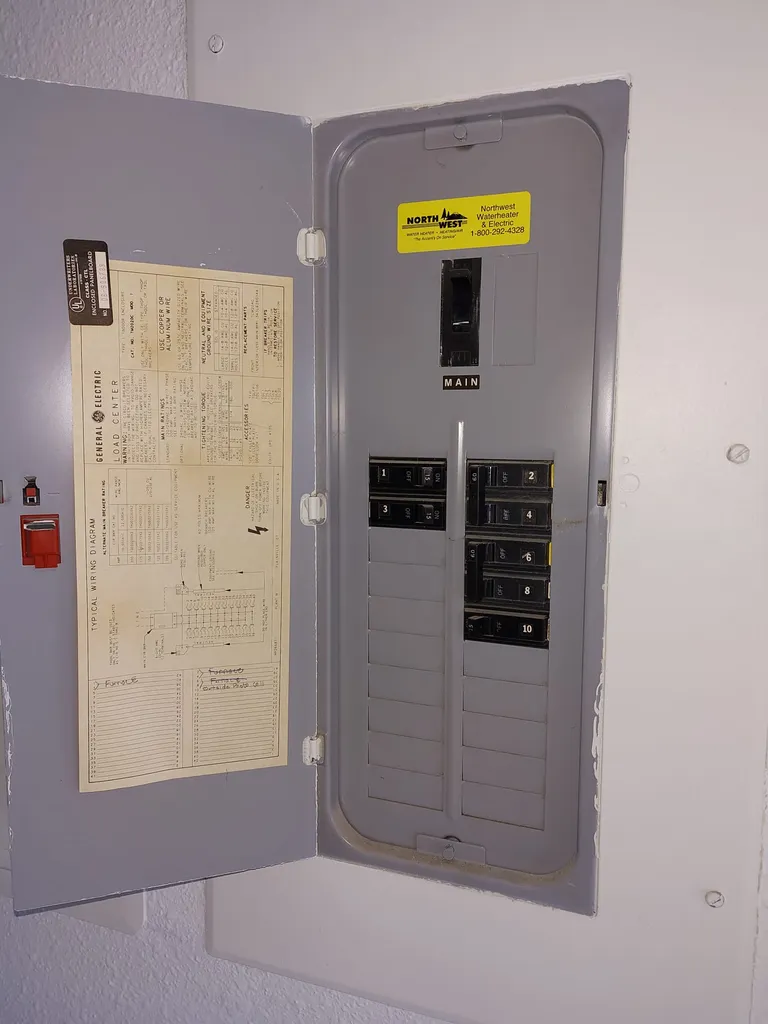
Andrea’s outlet melted with every breaker in her panel still sitting calmly in the “on” position, and by the time Brandon got into the panel behind it, he found seven separate things wrong with a system that had passed through decades of ownership and, apparently, decades of hands that had no business being in there. That’s usually how this question comes up for homeowners, not as a hypothetical about who’s “allowed” to touch a wire, but as the aftermath of someone who already did, without asking first. So let’s answer it plainly, because the honest answer has three separate parts, and most of the confusion out there comes from treating them as one question instead of three.
Can a Handyman Do Electrical Work in Washington? The Direct Answer
No. In Washington state, a general handyman license does not cover electrical work, regardless of how small the job looks. Replacing an outlet, swapping a light fixture, adding a switch. None of it falls under general handyman work once you’re being paid to do it on someone else’s property. Electrical work is specifically carved out and regulated separately by the state’s Department of Labor & Industries, which requires a specialty electrical contractor license and a certified electrician actually performing the work. Scope doesn’t change the answer.
A ten-minute outlet swap and a full panel rebuild both require the same underlying licensure, even though they clearly don’t require the same skill or risk in practice.
Can a Homeowner Do Their Own Electrical Work in Washington State?
Yes, but with real conditions attached, and it’s worth understanding them before assuming this exemption covers more than it does. Washington’s owner/occupant exemption allows a homeowner to perform electrical work on their own single-family residence, provided they actually live there, aren’t doing it for pay on someone else’s behalf, and pull the required permit for the work. That permit triggers an L&I inspection once the work is complete, which is the part of this exemption people most often skip and shouldn’t.
The exemption exists because the state trusts a homeowner to take reasonable care with their own home and accepts the risk that comes with that, but it still requires the same code compliance and inspection sign-off a licensed electrician’s work would go through. It doesn’t apply to rental property you own but don’t live in, and it doesn’t apply to doing electrical work for a friend or neighbor, paid or not.
Can I Install an AC Myself?
This is where the question gets more interesting than most homeowners expect, because the barrier isn’t primarily electrical code at all. The mechanical and electrical portions of installing an AC or heat pump (mounting equipment, running a dedicated circuit, wiring a disconnect) fall under the same licensing rules as any other electrical or HVAC work. But the refrigerant side of the job is governed by a completely separate, federal requirement: EPA Section 608 certification, required under the Clean Air Act for anyone purchasing, handling, or servicing equipment containing regulated refrigerant.
That certification has nothing to do with your status as a homeowner and nothing to do with Washington state licensing at all. It’s a federal rule that applies uniformly, and it’s specifically why refrigerant work, evacuating a system, charging it, recovering refrigerant during a repair, isn’t something the owner/occupant exemption realistically opens the door to, even on your own home.
What Happens When Electrical Work Isn’t Done Right: A Real Example
Andrea’s Seattle home is the clearest illustration we have of what accumulates behind a wall over decades of a house passing through different owners, some of whom clearly didn’t call a licensed electrician for every change they made. When she called us after an exterior outlet melted, with every breaker in her panel still sitting normally in the “on” position, our electrical repair and troubleshooting team found seven separate issues in a single visit: an unlabeled original panel with no way to verify its rated capacity, wiring still inside the panel but connected to nothing on the other end, no surge protection anywhere in the system, knob-and-tube wiring still live and feeding basement receptacles, no ground rods, no 200-amp main disconnect between the meter and the panel, and a panel directory that didn’t match the actual circuits it claimed to.
None of that happened in one project. It’s the visible residue of a house that had been touched, repeatedly, by work that either skipped permitting entirely or was never inspected closely enough to catch what was accumulating. Brandon’s read on the cause was straightforward: age, and multiple different owners each making their own changes without necessarily documenting or maintaining what came before them.
Hiring a Licensed Electrician vs a Handyman: The Real Risk Comparison
The practical difference isn’t really about who’s more skilled with a screwdriver. It’s about accountability and verification. A licensed electrician’s work gets pulled under a permit, which means an independent L&I inspector checks it against code before it’s considered complete: a second set of eyes with no financial stake in whether the work passes. A handyman working outside that system has no equivalent check. The work might be perfectly fine. It might also be exactly the kind of thing that sits invisible inside a wall for fifteen years until an outlet melts and nobody understands why the breaker never tripped.
Why AC Installation Isn’t Just an Electrical Question
Carla’s case matters here because it complicates the tidy assumption that “professional installation” automatically means “correct installation” and it’s worth understanding precisely why, since it’s not really an electrical story at all. Her Goodman AC system had been installed by a licensed original contractor, and the leak she eventually discovered wasn’t traced to a wiring problem or an electrical fault. It came from a TXV sensing bulb, the component that reads refrigerant temperature to regulate flow into the evaporator coil, mounted in the wrong position on the line during the original installation. That single detail put uneven, ongoing stress on the refrigerant circuit for years before it finally produced a leak.
This is the part of HVAC work that has nothing to do with electrical licensing at all, and everything to do with refrigerant-specific training. Getting a compressor, a coil, and a line set physically connected is one skill. Understanding exactly how a thermostatic expansion valve regulates refrigerant flow, and where its sensing bulb needs to sit to read temperature correctly, is a different and more specialized one, precisely the kind of detail EPA 608 certification and manufacturer-specific training are built to cover. Carla’s case is proof that even work performed by someone with a license can fall short on the refrigerant side specifically, which is exactly why it’s worth asking about that certification directly rather than assuming any HVAC-adjacent credential covers it.
What Homeowners Should Check Before Hiring Anyone for Electrical or HVAC Work
A few concrete things are worth asking before anyone starts work in your home, electrical or HVAC. Ask for their Washington L&I electrical contractor license number, and check it against L&I’s public license lookup rather than taking their word for it: the license should be active, not expired or suspended. Confirm the specific individual doing the hands-on work holds the appropriate specialty electrician certification, since a company can hold a contractor license while an unlicensed employee does the actual work unsupervised. For any job involving refrigerant (AC, heat pump, or ductless mini split work), ask specifically whether the technician carries EPA 608 certification; it’s a distinct credential from general HVAC experience.
Confirm they intend to pull a permit for work that requires one, and ask directly whether an inspection is part of the process rather than assuming it is. And get the scope of work in writing before anything starts, so there’s a clear record of what was actually agreed to if a question comes up later.
None of this is about distrust for its own sake. It’s about the fact that a licensed, permitted, inspected job leaves a paper trail that protects you during the work, and years later if you ever sell the house.
Frequently Asked Questions: DIY and Handyman Electrical Work in Washington
Can a handyman do electrical work in Washington?
No. Washington’s general handyman licensing does not cover electrical work of any scope, a specialty electrical contractor license from the state Department of Labor & Industries is required regardless of how small the job appears. This applies to something as minor as replacing a single outlet just as much as it applies to a full panel rebuild, since the licensing requirement is tied to the type of work, not the size of it.
Can a homeowner do their own electrical work in Washington state?
Yes, under Washington’s owner/occupant exemption, a homeowner can perform electrical work on their own single-family residence, provided they actually live in it, aren’t doing the work for pay on someone else’s behalf, and pull the required permit for an L&I inspection once the work is finished. This exemption doesn’t extend to rental property the owner doesn’t personally occupy, and it doesn’t cover doing electrical work for a friend or neighbor, whether paid or not.
Can I install an AC myself?
The mechanical and electrical portions fall under standard state licensing requirements, but the refrigerant-handling side of an AC or heat pump installation is governed separately by federal EPA Section 608 certification, required for anyone purchasing or handling regulated refrigerant. That federal requirement applies regardless of homeowner status and isn’t something Washington’s owner exemption addresses, which is why refrigerant-related steps like charging or recovering refrigerant realistically require a certified technician, even on your own home.
What are the risks of unlicensed electrical work?
Unlicensed or unpermitted work skips the independent inspection that would normally catch code violations before they become hazards, which means problems can sit invisible for years. In one Seattle case, decades of accumulated changes by different owners left a home’s panel with no ground rods, no main disconnect, live knob-and-tube wiring, and abandoned circuits and the first visible symptom was an exterior outlet that melted without ever tripping a breaker, since the actual fault wasn’t the kind an overcurrent breaker is designed to catch.
Does installing an AC require an electrical permit in Washington?
Generally, yes, if the installation requires a new electrical circuit or a new disconnect for the outdoor unit, which most AC and heat pump installations do. The mechanical work itself may also require separate permitting depending on scope. A licensed contractor should handle permit submission and scheduling as a standard part of the installation, and a homeowner should confirm this is included before work begins rather than assuming it’s optional.
Is it worth the risk to do your own AC installation?
For most homeowners, the refrigerant-handling requirements alone make this impractical, since purchasing and handling regulated refrigerant legally requires federal EPA 608 certification that most homeowners don’t hold. Beyond the legal requirement, refrigerant charging and component placement like a thermostatic expansion valve’s sensing bulb require specific technical knowledge; even professionally installed systems have failed years later due to a single misplaced component, which underscores how much precision this work actually demands.
What happens if unlicensed electrical work is found during a home sale?
Unpermitted or unlicensed electrical work discovered during a home inspection can complicate a sale in several ways. It may need to be disclosed to the buyer, a lender or insurer may require it be brought up to code before closing, and it frequently becomes a negotiating point on price or repair credits. Because permitted work leaves an inspection record and unpermitted work doesn’t, sellers with unknown electrical history in their home are often better off having a licensed electrician assess the system proactively rather than finding out what’s inside the walls during a sale’s inspection period.
Key Takeaways for Washington Homeowners
- A general handyman license never covers electrical work in Washington, regardless of how minor the job looks: a specialty electrical contractor license is required for all of it.
- Washington’s owner/occupant exemption allows homeowners to do electrical work on their own occupied home, but only with a permit and a completed L&I inspection, and it doesn’t extend to rental property or unpaid favors for someone else.
- Installing an AC or heat pump involves two separate regulatory questions: standard state electrical licensing for the mechanical and wiring work, and federal EPA 608 certification for anything involving refrigerant.
- Unlicensed or unpermitted electrical work can sit invisible for years, accumulating into serious safety issues that only surface once something fails as shown by a real Seattle case where decades of amateur changes left a panel with no grounding and no main disconnect.
- Even professionally installed HVAC equipment can have refrigerant-specific defects, since certified refrigerant handling is a distinct skill from general electrical or mechanical competence.
- Before hiring anyone for electrical or HVAC work, verify their license directly with L&I, ask specifically about EPA 608 certification for refrigerant work, and confirm permitting and inspection are part of the process rather than assuming they are.
The question homeowners actually mean to ask, most of the time, isn’t “am I allowed to do this myself.” It’s “will this be safe in fifteen years, when I’m not the one thinking about it anymore.” That’s what licensing, permitting, and inspection are actually for, not paperwork for its own sake, but a record that someone with no stake in the outcome looked at the work and confirmed it was done right.
— Serge Nikolin, Co-Founder, Product Air Heating, Cooling and Electric
Marysville · Issaquah · Seattle · Western Washington
PLAN YOUR NEXT STEP
Need help with your home comfort?
Explore Product Air’s electrical services or contact the team.
Share this guide