

Location: Vernon Road corridor, Lake Stevens, WA 98258
Call Date: June 5, 2026
First Visit: June 6, 2026
Project Completion: June 9, 2026
Lead Technician: Eli Nikolin, systems advisor, 10 years of industry experience (installer, then service technician, now systems advisor)
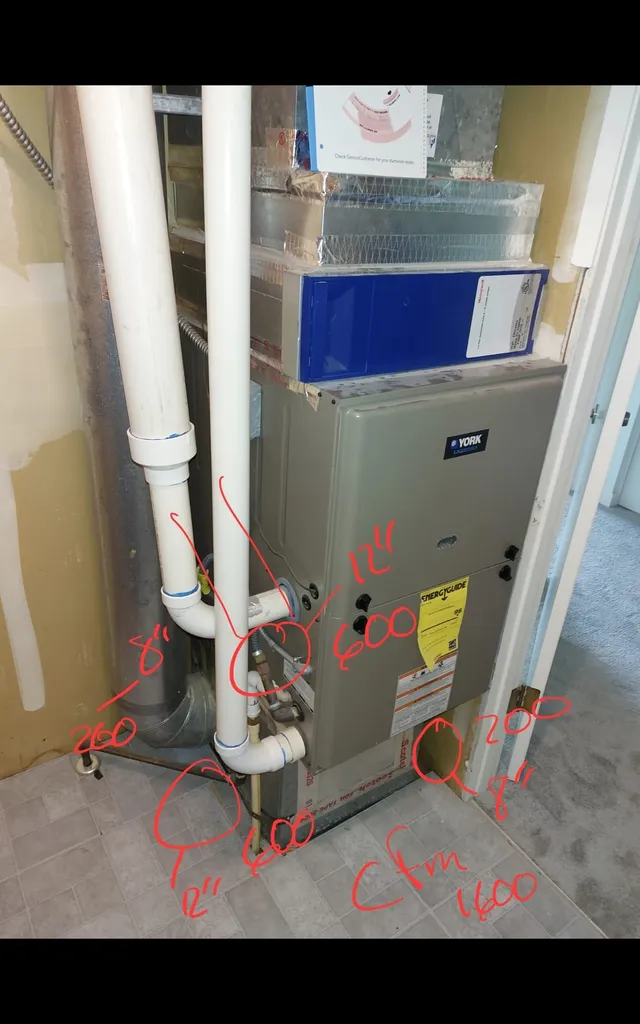
System Before: 2014 York gas furnace, model TM9V100C16MP11A, furnace-only setup with no cooling
System After: Coleman 4–5 Ton, 18 SEER2, 9.0 HSPF2 variable-speed side-discharge heat pump, model HH848E2S11, paired with the existing York furnace in a dual-fuel setup
Final Project Cost: $13,429.00
Jerry had already made up his mind about air conditioning by the time he called Product Air Heating, Cooling and Electric on June 5, 2026. His single-story home on Vernon Road in Lake Stevens, 98258, had never had it, just the York furnace in the utility closet that had kept the family warm since 2014, and after enough nights spent choosing between a stuffy bedroom and a bedroom full of pollen, cracking a window had stopped being a real option. Seasonal allergies had turned an old compromise into a problem worth solving. “Would like to have cooling for the few hot nights,” he told the dispatcher, and that was the whole ask, at least at first.
Jerry found Product Air through a referral, a friend or neighbor vouching for a contractor carries a different kind of weight than a five-star review from a stranger. He wasn’t a returning customer, and he wasn’t shopping blind either. Before he called Product Air, he’d already had a bid from Cascade Energy, a Snohomish County outfit with a reasonable reputation. Nothing about that estimate had been wrong, exactly. It just hadn’t been built around what Jerry actually said he wanted, which is a distinction that turns out to matter a great deal in this story.
Why Jerry Called Product Air Instead of Going Back to Cascade Energy
What Jerry wanted was narrow and specific: cooling for a handful of hot nights a year, and relief from allergy season without having to gamble on open windows. He wasn’t looking to touch the furnace. It was 12 years old, it had never given him trouble, and as far as he was concerned it wasn’t part of the conversation. That’s a completely reasonable position for a homeowner to take, and it’s also exactly the kind of assumption that a good systems advisor is trained to test rather than accept at face value.
Eli Nikolin came out for the first visit on June 6. Ten years in the trade, and a career path that runs installer to service technician to systems advisor, the kind of progression that means he’s spent time on both ends of a job, first turning the wrenches and now designing the systems other people install. That background shows up in how he approached Jerry’s house: not as an AC quote to write up, but as a whole-home question to answer.
What Eli Found Inside a Very Healthy 2014 York Furnace
The house itself was built in 1977: single-story, three bedrooms, three bathrooms, 3,454 square feet, the kind of Snohomish County home where the ductwork has usually been reworked at least once by the time a system this age is still running. The furnace inside it was a York TM9V100C16MP11A, installed in 2014, which put it right around the 12-year mark most homeowners start eyeing warily. Is a 12-year-old furnace still good, or is it quietly circling the drain the way old equipment tends to before it fails? That’s the question a furnace inspection before adding a heat pump is supposed to answer, and Eli didn’t skip it just because Jerry hadn’t asked for it.
The answer, in this case, was refreshingly simple. Eli checked the components that actually tell you something: heat exchanger, blower motor, wiring, the condition of the cabinet itself and came away with nothing to report. No cracks, no soot, no red flags. “A very healthy furnace, just a little older,” is how the visit got logged, and replacement wasn’t on the table because replacement wasn’t warranted. A York furnace built in the TM9V series, well maintained and running clean at 12 years old, still has a realistic shot at 15 to 20 years of total service life. That’s not a guess born out of hope. It’s the ordinary lifespan for a two-stage furnace of this caliber that hasn’t been abused, and Jerry’s hadn’t been.
This is the part of the visit that separates a company writing up a customer’s request from a company diagnosing a customer’s house. Cascade Energy had priced an AC unit. Eli was looking at a furnace with another decade of life left in it and asking a different question: what’s the smartest way to get this family cooling without wasting any of that remaining life?
Two Estimates, One Question: AC Installation in Lake Stevens WA 98258, or Something Better
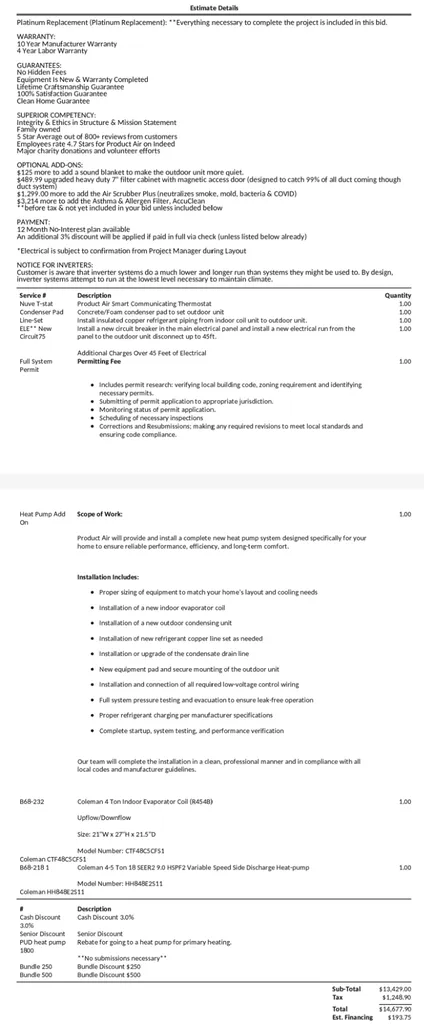
Eli wrote Jerry two options, both structured as full replacements of the outdoor half of the system, both sharing the same backbone of line items: a Nuve smart communicating thermostat, a new concrete or foam condenser pad, insulated copper refrigerant line-set run from the indoor coil to the outdoor unit, a new dedicated electrical circuit with a run from the panel to the outdoor disconnect up to 45 feet, and a full-system permit: code research, submission to the jurisdiction, inspection scheduling, and any corrections along the way, all handled by Product Air rather than left for Jerry to chase down.
Where the two options split was in what sat outside the house and what it was actually capable of doing.
Silver Replacement. AC Add-On: a complete new central air conditioning system sized to the home, with a new indoor evaporator coil, a new outdoor condensing unit, and refrigerant line-set as needed. Backed by a 10-year manufacturer warranty and a 2-year Product Air labor warranty.
Platinum Replacement. Heat Pump Add-On: a complete new heat pump system, same core installation scope, but with a unit that can move heat in both directions instead of only removing it. Backed by a 10-year manufacturer warranty and a 4-year Product Air labor warranty, double the labor coverage of the AC-only bid.
Jerry had come in asking about AC installation in Lake Stevens WA 98258. What he was looking at now was a second bid for essentially the same footprint of work (same thermostat, same pad, same electrical run, same permit) that did more, cost less after incentives, and came with twice the labor protection. That’s not a typical upsell dynamic, where the bigger number buys you more house. This was the bigger scope costing less money, and it’s worth sitting with why that’s true before getting to what Jerry chose.
Do You Need to Replace a Healthy Furnace to Add AC? What Snohomish County Homeowners Should Know
Here’s the part of the visit that turned into the actual pitch, and it’s worth explaining plainly because it answers a question that comes up constantly across ducted heat pump installation projects in Snohomish County: do you need to replace a healthy furnace to add air conditioning? You don’t. A furnace and an air conditioner are, mechanically, two separate systems sharing the same ductwork and the same air handler cabinet. Adding AC to a good furnace means adding an evaporator coil and an outdoor condenser, the furnace itself doesn’t change, and it doesn’t need to.
But if you’re already opening up the cabinet to add a coil and running new electrical to an outdoor pad, the honest question isn’t just “AC or nothing.” It’s “AC or heat pump,” because a heat pump uses that exact same footprint (same coil location, pad, line-set, electrical run) to install a unit that does everything an AC does in the summer and also handles a meaningful share of the heating load the rest of the year. This is how adding a heat pump to an existing furnace actually works: the heat pump becomes the primary source for both cooling and moderate heating, and the furnace gets promoted to backup, kicking in only when outdoor temperatures drop low enough that the heat pump’s efficiency curve starts to fall off. That’s the essence of a dual fuel heat pump system: two heat sources, one control logic, and a setup smart enough to hand the job to whichever source is cheaper and more efficient at that outdoor temperature.
For a customer like Jerry, whose furnace already had a decade of healthy life left in it, this is close to a strict upgrade. The furnace keeps its full lifespan on the shelf as backup heat instead of burning through hours as the only heat source. The rebate programs available for heat pumps in Snohomish County, funded through the Snohomish County PUD, routinely make the heat pump option price out lower than a standalone AC bid once the incentive lands. And the family gets year-round comfort and allergy-season relief without opening a window, instead of a system that only solves half the problem.
Eli’s Recommendations to Add Heat Pump to Existing Furnace Snohomish County, and Why Jerry Said Yes
Eli didn’t lead with the rebate. He led with what Jerry had actually told him he wanted.
“Jerry, you had very clear goals,” Eli said, laying out the options at the kitchen table. “I want to be able to cool my home and I’m not looking to replace my furnace. So I do want to support you in exactly that, but not limit you. Your furnace is 12 years old and an average furnace lasts 15 years. Your furnace will probably last longer. It’s very well maintained. The only thing I did differently is I suggested adding a heat pump instead. An outdoor unit that can heat and cool. Giving your furnace the ability to last longer, since it will only be back-up heat and the wear will be reduced to almost none. As you see, adding a heat pump is cheaper with the rebates than adding AC. Plus it gives your furnace the ability to live longer.”
Jerry chose the Platinum option: the heat pump. Not because Eli talked him out of what he wanted, but because Eli showed him a version of what he wanted that also protected the furnace he’d already told them not to touch.
What Product Air Installed: A Ducted Heat Pump Built to Work With Jerry’s Furnace
The unit going in outside was a Coleman 4–5 Ton heat pump, 18 SEER2 and 9.0 HSPF2, variable-speed with a side-discharge configuration, model HH848E2S11, efficient enough to run at partial capacity most of the year rather than cycling on and off at full power, which is both quieter and gentler on the equipment than a single-stage unit. Indoors, a new evaporator coil went in above the existing York furnace, tying the new outdoor unit into the same ductwork the furnace had always used. A Honeywell Home control board was wired in to manage the hand-off logic between the two systems, the piece of hardware that actually decides, moment to moment, whether the heat pump or the furnace is doing the work of heating the house.
| Component | Detail |
| Heat Pump (outdoor unit) | Coleman 4–5 Ton, 18 SEER2, 9.0 HSPF2, variable-speed, side-discharge |
| Model Number | HH848E2S11 |
| Existing Furnace (retained) | York TM9V100C16MP11A, installed 2014, now serving as backup heat |
| Indoor Coil | New evaporator coil, matched to the heat pump, installed above the furnace |
| Control Board | Honeywell Home dual-fuel control, manages heat pump/furnace hand-off |
| Thermostat | Nuve Smart Communicating Thermostat |
| Electrical | New dedicated circuit and run from panel to outdoor disconnect |
| Condenser Pad | New concrete/foam pad for outdoor unit |
| Line Set | Insulated copper refrigerant line-set, indoor coil to outdoor unit |
| Manufacturer Warranty | 10 years |
| Product Air Labor Warranty | 4 years |
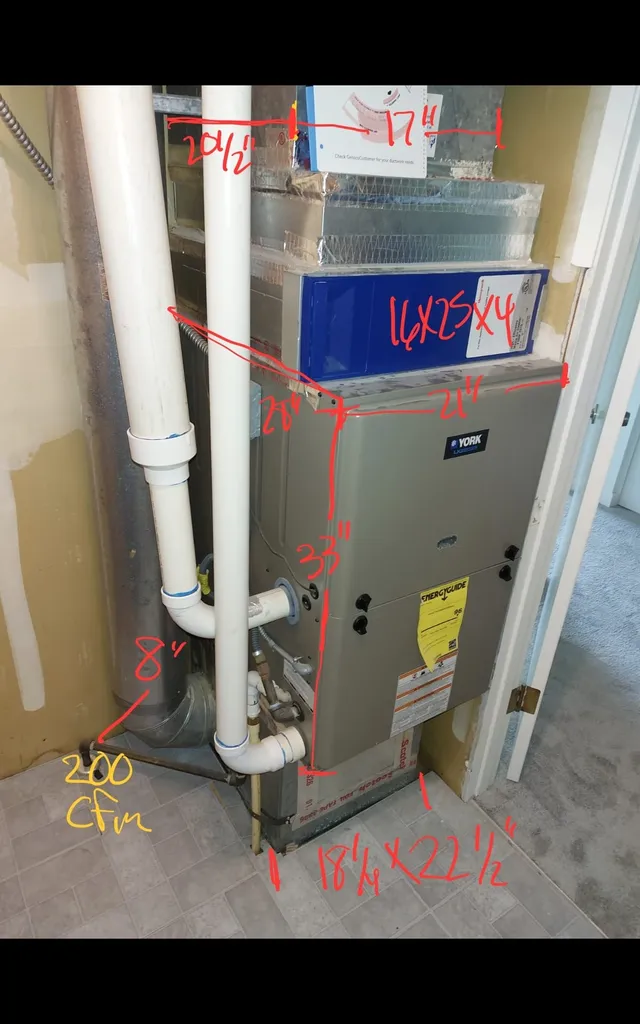
“Eli’s team measured clearances around the York furnace before ordering the matched indoor coil — the furnace itself needed nothing but a new component stacked on top of it.”
One Day on Vernon Road: How the Heat Pump Installation in Lake Stevens WA Came Together
Eli spent two hours at the kitchen table before a single tool came out, walking Jerry through both bids line by line. That conversation is where this project actually got decided.
Work started and finished on June 9, 2026, a single day from start to final walkthrough. The crew set the new indoor evaporator coil above the York furnace, ran the insulated copper line-set out to a new concrete pad on the side of the house, and set the Coleman outdoor unit in place. A new electrical circuit was pulled from the main panel (general electric, original to the house, with room left for exactly this kind of addition) and run along the exterior wall in conduit to a new disconnect box mounted near the outdoor unit. Back at the panel, two new breakers went in, labeled for the outdoor unit’s compressor and fan and its disconnect. The Honeywell control board was wired in last, tying the new heat pump and the existing furnace together under one set of switching logic.
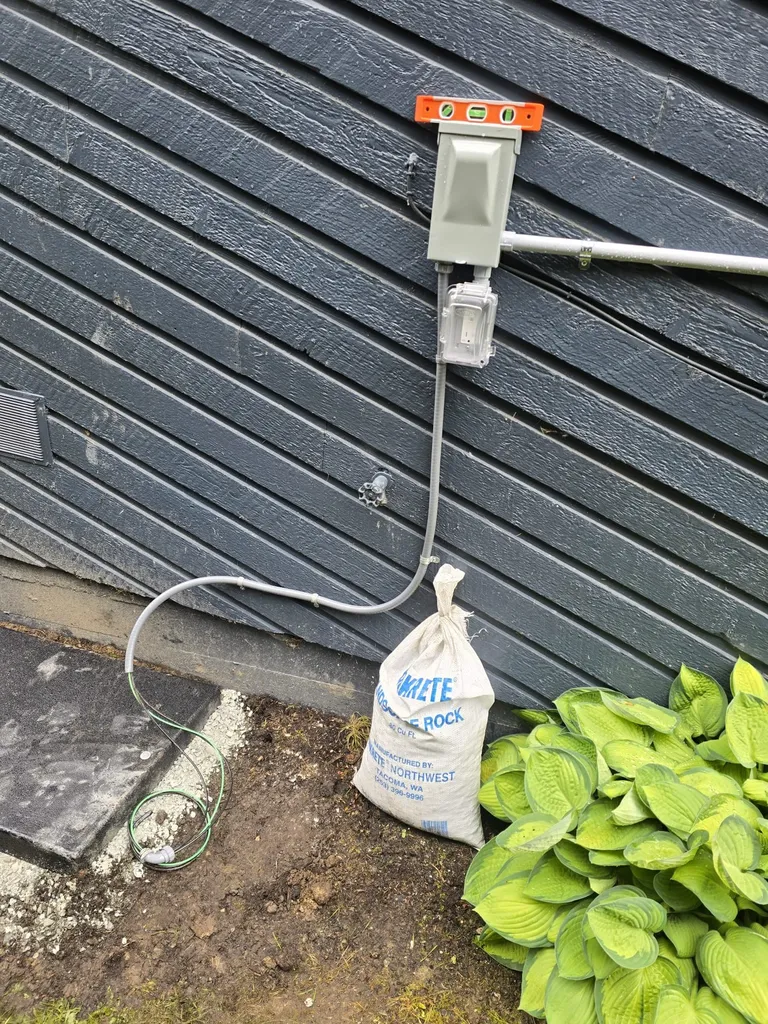
“The new 45-foot electrical run from the main panel to the outdoor disconnect, installed as part of both the AC and heat pump bids.”
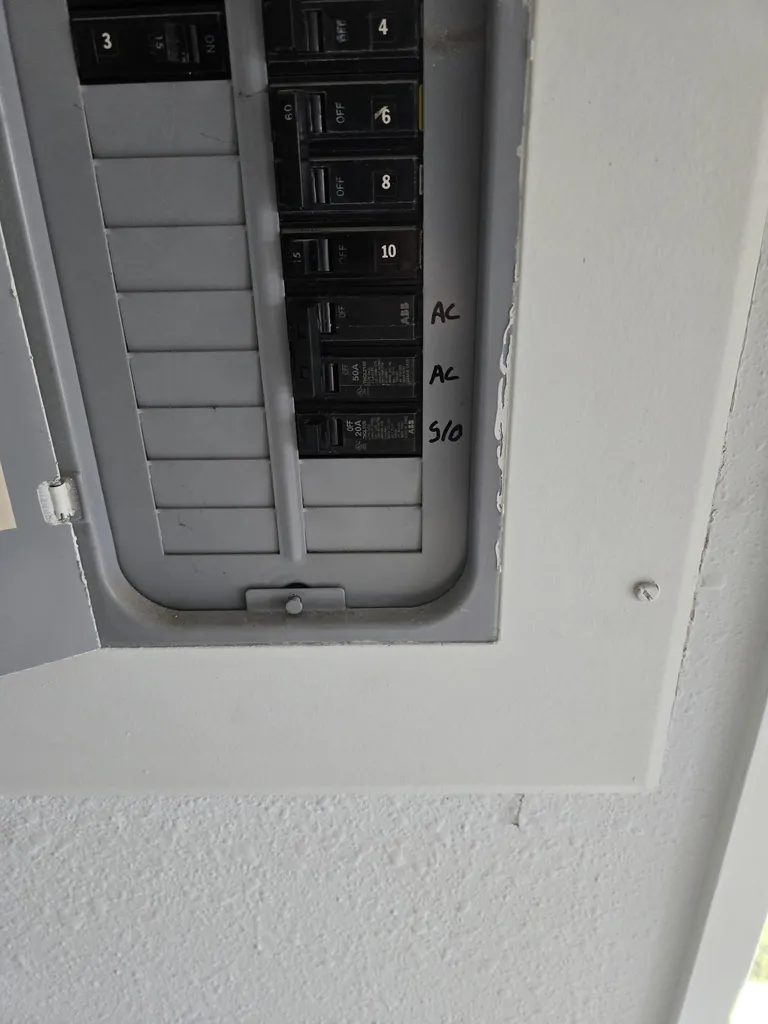
“The same panel Jerry already had, now carrying two new breakers for the heat pump’s outdoor disconnect — no panel upgrade required.”
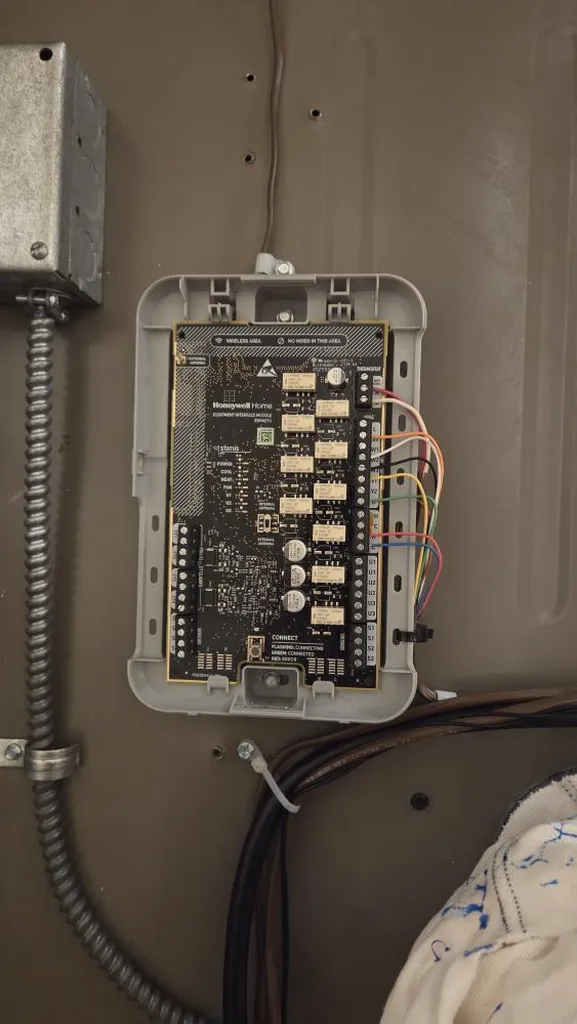
“The control board that decides, hour to hour, whether the heat pump or the York furnace handles the heating load — the piece of hardware behind the phrase ‘dual fuel system.'”
Product Air handled the permitting from end to end, the same way it does on every job, verifying Snohomish County’s requirements, submitting the application, tracking its status, and scheduling the inspection that signed the work off as code-compliant. Jerry didn’t have to make a single call to the county.
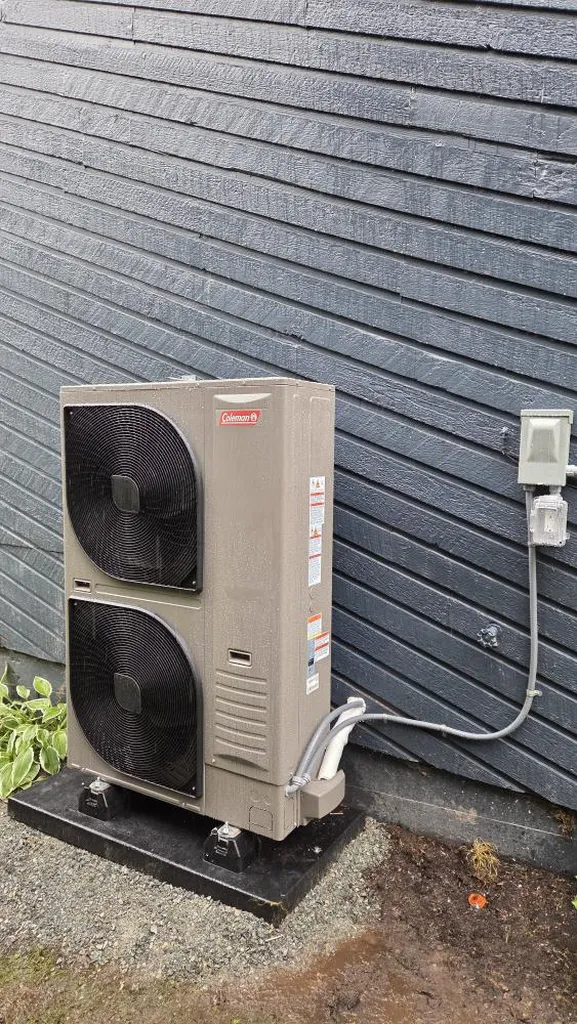
“The Coleman 4–5 Ton, 18 SEER2 heat pump, set and running on Vernon Road — the unit that gave Jerry’s home its first cooling season.”
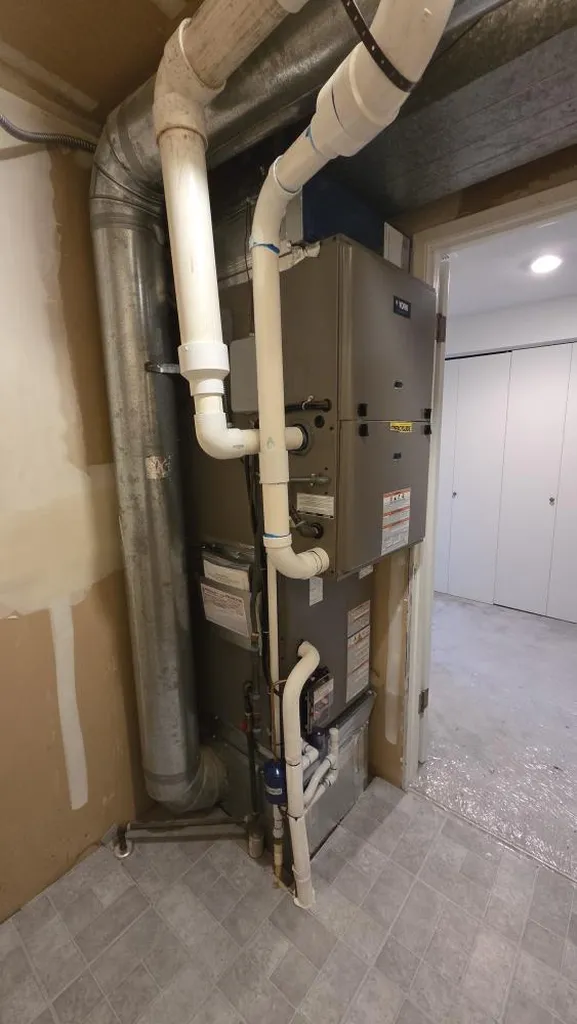
Caption: “The finished indoor installation — Jerry’s original 2014 York furnace, unchanged, with the new heat pump’s evaporator coil added directly above it.”
The Real Numbers: $15,229 Before the PUD Rebate, $13,429 After
The Platinum heat pump option priced out at $15,229.00 before incentives: equipment, installation, removal of nothing (since the furnace stayed in place), and permitting all included. A Ducted Heat Pump Rebate through the Snohomish County PUD brought that down by $1,800.00.
| Program | Amount |
| Ducted HP Rebate (Snohomish County PUD) | $1,800 |
| Total Rebates | $1,800 |
Base price: $15,229.00
Final cost after rebates: $13,429.00
Jerry paid out of pocket, no financing involved. And here’s the number that actually mattered to the decision: once that $1,800 PUD rebate applied, the heat pump option landed lower than tThe Silver AC-only bid, the same electrical run, pad, permit, for less money than cooling alone would have cost, while also picking up winter heating capacity and doubling the labor warranty from two years to four.
What a Dual Fuel Heat Pump System Means for a 12-Year-Old Furnace’s Lifespan
The honest way to think about what changed at Jerry’s house isn’t “he got a heat pump.” It’s that his furnace’s job description changed. For 12 years, that York TM9V100C16MP11A had been the only heat source in a 3,454-square-foot home, cycling through every heating degree-day of every Western Washington winter on its own. Now it’s backup. The Coleman heat pump handles cooling entirely and carries the heating load down to whatever outdoor temperature the control board is set to hand off at, which in most Snohomish County winters covers the vast majority of heating hours. The furnace fires only when temperatures drop cold enough that gas heat becomes the more efficient choice: a handful of days a year, not a full season.
That’s a furnace running a fraction of the hours it used to run. Wear on a heat exchanger, a blower motor, an ignitor: all of it scales roughly with runtime, and a furnace logging a tenth of its previous annual hours is a furnace with a real shot at outliving the 15-to-20-year window that would otherwise have been the ceiling. Eli’s line about “the wear will be reduced to almost none” wasn’t a sales flourish. It’s what happens mechanically when a healthy furnace stops being the only thing standing between a family and a cold house.
On the cooling side, the family finally has an answer for the hot nights and the allergy season that started this whole conversation, a sealed, filtered, air-conditioned house instead of an open window. And on the utility side, a variable-speed 9.0 HSPF2 heat pump doing most of the heating work in place of a gas furnace typically brings down seasonal heating costs in a home this size, on top of whatever the furnace saves by running less.
Jerry didn’t get any of that by asking for it. He got it because a systems advisor took a request for air conditioning and asked what would actually be best for the whole house. The reaction afterward said as much. Jerry called more than once just to say he appreciated how much thought had gone into an option built around his exact situation, not a generic bid.
Frequently Asked Questions: Heat Pump and AC Installation in Lake Stevens, WA
Is a heat pump cheaper than AC installation after rebates?
It can be, and it was in this case. A Lake Stevens homeowner’s ducted heat pump quote came in at $15,229 before incentives and $13,429 after an $1,800 Snohomish County PUD rebate, lower than the standalone AC bid for the same home, which carried no comparable rebate. Heat pump incentive programs through utilities and manufacturers routinely close or invert the price gap between cooling-only and heating-and-cooling systems, so it’s worth pricing both before assuming AC is the cheaper path.
Can I add a heat pump to my existing furnace without replacing it?
Yes. A furnace and a heat pump are separate systems that can share the same ductwork and air handler cabinet. In one Lake Stevens case, a 2014 York furnace was inspected, found to be in excellent condition, and left in place entirely, the heat pump was added as a new outdoor unit with a matched indoor coil, and the furnace kept its full working life as a backup heat source.
Does adding a heat pump extend the life of an existing furnace?
It can, because the furnace runs far fewer hours once a heat pump takes over most of the heating load. In a Lake Stevens installation, the homeowner’s system advisor explained it directly: once the heat pump becomes primary heat and the furnace becomes backup, “the wear will be reduced to almost none,” since a furnace’s mechanical wear scales with runtime, not just age.
How much is the PUD heat pump rebate in Snohomish County?
In a recent Lake Stevens project, the Ducted Heat Pump Rebate through the Snohomish County PUD was $1,800, applied directly against a $15,229 installed price to bring the final cost to $13,429. Exact rebate amounts vary by program and by the specific equipment installed, so it’s worth confirming current PUD offerings at the time of your estimate.
What’s the difference between adding a heat pump and just installing central AC?
Central air conditioning only removes heat from a home, so it solves cooling and nothing else. A heat pump does the same cooling job in summer and can also supply a substantial share of a home’s heating in the cooler months, reducing how much a gas furnace needs to run. For homes with a healthy existing furnace, adding a heat pump instead of AC-only often costs about the same or less after rebates, while adding heating capacity the AC-only option never provides.
What is a dual fuel heat pump system?
A dual fuel system pairs a heat pump with a gas furnace under shared control logic, so the two sources split the heating load based on outdoor temperature. The heat pump handles heating and cooling through most of the year, since it’s highly efficient at moderate temperatures, and the furnace takes over only when it gets cold enough that gas heat becomes more efficient than electric heat pump operation.
Should I add a heat pump or just install AC?
If your existing furnace is in good working condition, adding a heat pump is usually the stronger choice over AC-only, since the installation scope (electrical, line-set, pad, permitting) is nearly identical, but a heat pump adds heating capability and often qualifies for utility rebates that AC-only systems don’t. A Lake Stevens homeowner with a healthy 12-year-old furnace found the heat pump route came in cheaper than AC after rebates, with double the labor warranty coverage.
Key Takeaways
- A ducted heat pump can share the same installation footprint as a standalone AC system: same pad, line-set, electrical run, and permit, making the incremental cost of heating capability often smaller than homeowners expect.
- A well-maintained furnace at 12 years old, like the York TM9V100C16MP11A in this Lake Stevens case, can still have a decade or more of service life ahead of it, and doesn’t need to be replaced to add cooling.
- The Snohomish County PUD’s Ducted Heat Pump Rebate brought this project from $15,229 to $13,429, a final price lower than the comparable AC-only bid for the same home.
- Converting a furnace to backup heat under a dual-fuel heat pump system reduces its annual runtime dramatically, which extends its realistic working lifespan by reducing mechanical wear.
- A heat pump’s ability to run in both directions makes it a stronger match than AC-only for homeowners managing allergy season, since it delivers filtered, conditioned air for cooling without requiring open windows.
- Product Air handles all Snohomish County permitting in-house, including code research, application submission, and inspection scheduling, on every project regardless of size.
Not every homeowner reaches the same conclusion Jerry did. We’ve written up cases where a family weighed the exact same heat pump option and chose to stay with a traditional furnace-and-AC setup instead, and that was the right call for their house too.
There’s no single correct answer here, only the right answer for the specific furnace, the specific rebate programs available that month, and the specific way a family actually lives in their home. What we try to do, every time, is put both real numbers in front of a homeowner and let them choose with the full picture in hand.
— Serge Nikolin, Co-Founder, Product Air Heating, Cooling and Electric
Marysville · Issaquah · Seattle · Western Washington
PLAN YOUR NEXT STEP
Need help with your home comfort?
Explore Product Air’s heat pumps services or contact the team.
Share this guide