

Common causes and safe next steps for Western Washington homeowners
If you keep walking back to the electrical panel to reset the same breaker, something needs attention. That remains true even if the power stays on until the next evening, the next rainstorm, or the next time you turn on a space heater.
A breaker trips when it detects a condition it is designed to interrupt. Depending on the device, that could be an overload, a short circuit, a ground fault, or signs of dangerous electrical arcing. The breaker itself can also fail. You cannot tell which problem you have just by flipping the handle back on.
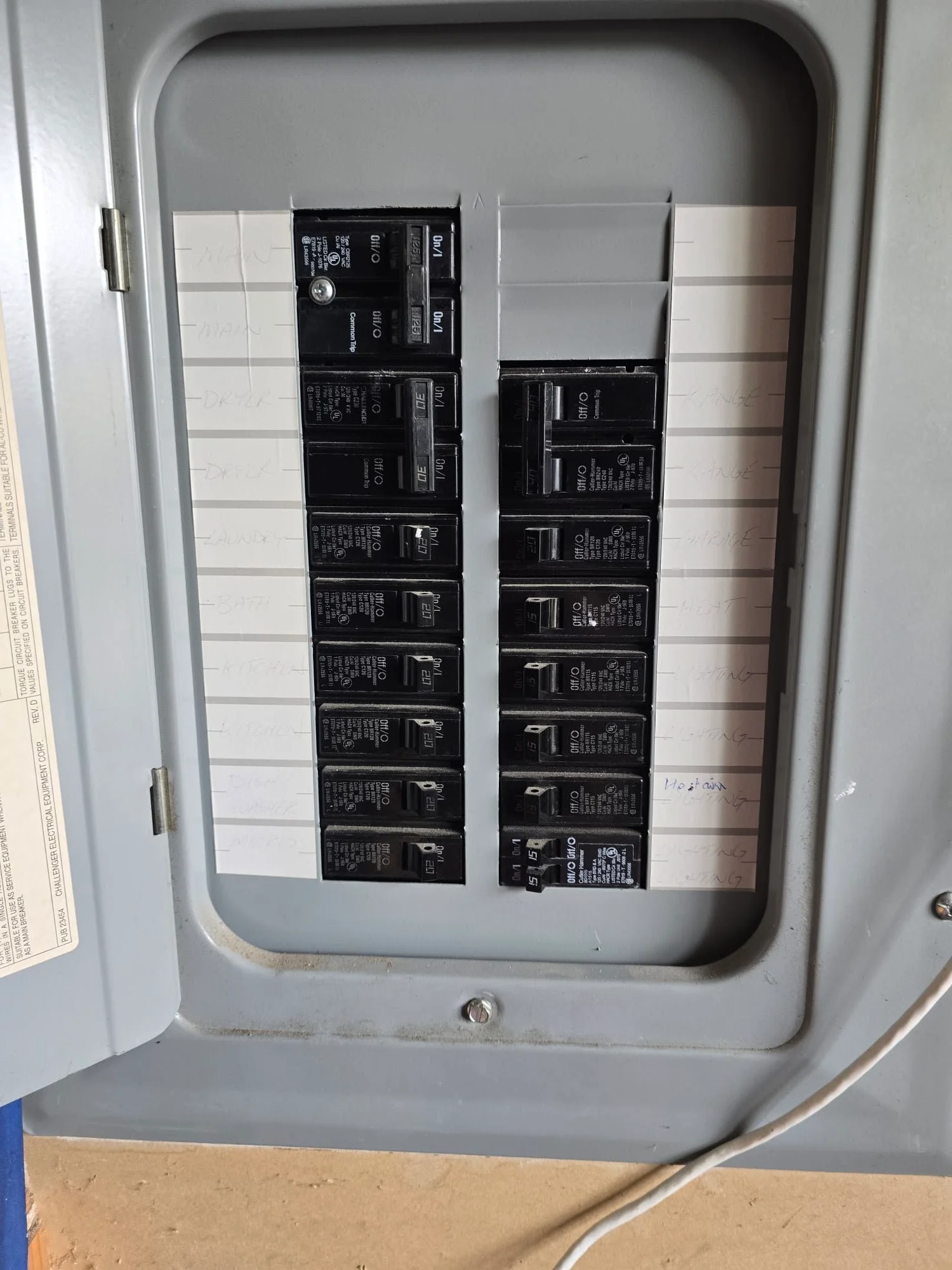
My advice is straightforward: if a breaker keeps tripping, have a licensed electrical contractor investigate. Snohomish County PUD advises calling an electrician when a breaker trips again and you cannot identify the cause. You can help by noticing when it happens and what was running. You do not need to open the panel or troubleshoot the wiring yourself.
Start with signs of immediate danger
Before checking which appliances were on, look for smoke, sparks, melted plastic, scorch marks, or a burning smell. Crackling at a receptacle or panel, water near electrical equipment, and a shock or tingling sensation from an appliance also call for immediate attention.
If there is smoke, fire, or evidence that a fire may be starting, get everyone out and call 911. Do not delay leaving to restore power or save equipment.
Stop using damaged outlets and appliances. Do not touch a suspect plug, feel an outlet to see how hot it is, or approach a wet panel. Switching off the affected circuit is an option only if you can safely reach a dry, apparently undamaged panel. If the panel itself is sparking, smoking, crackling, or wet, stay away from it.
Repeated trips still need investigation even when there are no visible warning signs. An electrical problem can be hidden behind an outlet, inside an appliance, or within a wall.
Too many appliances on one circuit
An overloaded circuit is one common explanation. The appliances connected to it are drawing more current than the circuit is designed to carry.
Picture a cold November evening. A space heater is running in your home office, and someone plugs in another high-draw appliance in the next room. Both rooms lose power. The outlets are in different places, but they may share the same circuit.
A 1,500-watt space heater draws about 12.5 amps at 120 volts. That is already a substantial load on a 15-amp circuit before you account for anything else connected to it. This example explains why a trip can happen, and it is not a sizing calculation. Safe circuit loading also depends on how long equipment runs, its requirements, and the condition of the installation.
Stop running the high-draw appliances together and note what was on when the breaker tripped. Moving the heater to the next outlet may not help because that outlet could be on the same circuit. An extension cord does not add capacity, either.
The U.S. Consumer Product Safety Commission recommends plugging portable electric heaters directly into a suitable wall outlet, never an extension cord or power strip. Keep them away from bedding, curtains, and other combustible materials, and turn them off before sleeping or leaving home.
Here in Western Washington, it is also worth asking why you need the extra heaters. If they run every day because parts of the house stay cold, the main heating system may need attention. Fixing weak or uneven heating can reduce your reliance on portable heaters, although the electrical circuit still needs evaluation if it keeps tripping.
A particular appliance may be involved
When a breaker trips whenever the microwave or vacuum starts, the timing gives an electrician useful information. It does not prove that the appliance is defective.
That appliance may be adding too much load to an already busy circuit. It could have a damaged cord or an internal fault. The problem could also be at the outlet or in the wiring. Equipment with a motor has startup current that may need to be considered during diagnosis.
Stop using the suspect appliance until it has been checked. Do not keep moving it around the house to see which outlet will run it, and do not open its housing. If heat, moisture, or damage makes the plug unsafe to handle, leave it alone.
Make a note of whether the trip happens immediately or after a few minutes, and whether other equipment was operating. Give that information to the electrician rather than testing the appliance again yourself.
Damaged wiring or a short circuit
An overload means too much current is flowing through the intended circuit. A short circuit involves an unintended connection between conductors, often because insulation has been damaged. Current can rise sharply, causing the breaker to trip.
The fault might be inside an appliance, an outlet, a light fixture, or the wiring itself. You may not see anything wrong from outside.
A breaker that trips again immediately should be left off. The speed of the trip alone does not identify the cause, but it is a clear reason to stop resetting it.
The same applies if it trips after you have unplugged the accessible appliances. Hardwired lights, fans, or other equipment may still be connected, and the wiring may have a fault. Leave the circuit off for an electrician. Do not remove outlet covers or the panel's protective cover to investigate.
Rain and moisture can help explain the timing
In Western Washington, a connection between wet weather and electrical trouble is worth mentioning when you schedule service.
Water can enter an outdoor receptacle, light fixture, connection, or damaged cord and create an unintended path for current. For example, outdoor lighting that loses power during rain gives an electrician a reason to investigate moisture intrusion. It does not identify the exact fault without testing.
Do not touch wet electrical equipment or try drying it with a hair dryer before switching it back on. Stay away from flooded panels and any equipment you would have to approach through standing water.
If the circuit works again after a few dry days, tell the electrician anyway. The opening that allowed water in, or damage it caused, may still be there.
GFCI and AFCI protection can trip without an overload
Some breakers have a TEST button because they provide protection beyond a conventional breaker's overload and short-circuit functions.
A ground-fault circuit interrupter, or GFCI, detects current leaking from its intended path and helps protect people from electric shock. This protection may be built into a breaker or provided by a receptacle with TEST and RESET buttons.
An arc-fault circuit interrupter, or AFCI, detects certain patterns associated with hazardous electrical arcing that can start a fire. Some devices provide both functions. Snohomish County PUD's electrical fire prevention guidance explains the safety roles of AFCI and GFCI protection in the home.
That is why a trip can occur even when you are not running anything particularly powerful. If the device has an indicator light or diagnostic code, a photo of the visible label and indicator can help an electrician. Take it only if the panel is safe to approach, without removing any protective cover.
It is tempting to assume a newer breaker is simply too sensitive. Compatibility issues and wiring errors are possible, but a real fault needs to be ruled out. Replacing the device with a standard breaker to eliminate the trips can remove required protection without addressing the cause.
The breaker itself could be faulty
Breakers can fail, but replacement should follow diagnosis. An electrician needs to assess the load, connections, wiring, and connected equipment before deciding that the breaker is the problem.
Installing a higher-amp breaker is not a fix for a circuit that keeps tripping. A 20-amp breaker does not make wiring designed for a 15-amp circuit capable of carrying more current. An improperly sized breaker can allow components to overheat before it disconnects power.
If the circuit cannot support how you use the space, a dedicated circuit or another upgrade may be appropriate. That decision needs to be based on the installation and the load, not a guess at the panel.
When the furnace or heat pump breaker trips
The problem may be in the electrical supply or within the heating equipment, including a connection, motor, compressor, or another component. Repeated tripping is not a normal part of winter operation.
Stop restarting the system at the breaker. An HVAC technician and an electrician may need to coordinate the diagnosis.
At Product Air Heating, Cooling, and Electric, we handle both HVAC and electrical work. That lets us evaluate the equipment and its power supply together. You do not have to figure out which trade is responsible before asking for help.
When resetting a breaker is reasonable
After a single trip with an obvious overload, such as running several high-draw appliances together, you may be able to restore power according to the manufacturer's instructions after removing the extra load. The panel must be dry, apparently undamaged, and safe to reach, with no burning smell, smoke, crackling, or other warning signs.
A reset usually involves moving the handle fully to OFF and then to ON, but follow the instructions for your device. Never force the handle or hold it in the ON position. Snohomish County PUD's outage FAQs also cover tripped breakers and when to call an electrician.
If it trips again, will not stay on, or the cause is unknown, leave it off and call an electrician. If you have already been resetting it repeatedly, you have reached that point. Another reset will not explain why it keeps happening.
What to tell the electrician
Your observations can make the visit more productive. You do not need to take electrical measurements or reproduce the fault. Write down:
- Whether a branch-circuit breaker or the main breaker trips.
- Which rooms, outlets, and appliances lose power.
- What was running just before the trip and how long it had been on.
- Whether rain, heating equipment, or a particular appliance seems connected to it.
- Any recent electrical work or newly installed equipment.
- Any flickering, unusual sounds, odors, or visible damage.
Do not trigger another trip to get a video. If it is safe, a photo of the accessible breaker label is enough to start the conversation.
You should understand the repair being recommended
One tripping breaker does not automatically mean you need a new electrical panel. The solution might involve an appliance repair, a damaged connection, or a component replacement. Other situations call for new wiring, a dedicated circuit, or a panel upgrade.
I encourage homeowners to ask what the electrician found, how it was confirmed, and why the proposed work addresses it. Ask which repairs are necessary for safety and whether there are other safe options. Some faults require a specific correction, so several alternatives will not always be available. Clarify diagnostic charges and repair approval before work begins.
Permits may also be part of the job. Washington Labor & Industries requires permits for most electrical work, with exceptions for certain like-for-like replacements. A new circuit or panel replacement is different from a diagnostic visit. The contractor should determine the permit and inspection requirements for your address, including whether L&I or a local jurisdiction handles them.
Before hiring, follow L&I's guidance for choosing an electrical contractor: verify the company's electrical contractor license and the electricians' certifications for the work involved. The contractor is responsible for obtaining the permits and inspections required for its work.
Get help when the trips keep happening
If your breaker keeps tripping, call a licensed electrical contractor. Even if you have found a way to keep the lights on temporarily, the cause still needs to be identified. The repair should address that cause and help protect your home and family.
My brothers and I are building Product Air Heating, Cooling, and Electric to be a company you can call without knowing what is wrong or what kind of repair to request. You can simply tell us, "This breaker keeps tripping, and I want to know whether my home is safe."
Our job is to investigate, explain what we find, and walk you through the options that make sense for your situation. We should be clear about what needs attention now and agree on the work with you before moving forward.
That is what "Your Tech Brother From Another Mother" means to me: someone you can count on to take the problem seriously, explain it honestly, and help you get it resolved.
If you are making repeated trips to the panel, contact Product Air Heating, Cooling, and Electric and have our electrical team take a look. You deserve to understand why the power keeps going out and what it will take to fix it safely.
PLAN YOUR NEXT STEP
Need help with your home comfort?
Explore Product Air’s electrical services or contact the team.
Share this guide