


David had worked with Product Air on his HVAC system and called us again when he wanted better electrical connections for his garage workshop. Woodworking is his hobby, and he needed outlets for his tools and dust collection equipment. He was comfortable doing some electrical work himself, but wanted professionals to handle work involving the panel.
Our team installed two dedicated 20-amp circuits serving two GFCI receptacles in a shared box beside the panel. We also removed an unsafe section of existing wiring. The invoice totaled $1,003.66, and the project passed electrical inspection. Serg worked on the proposal, and our electrical team carried out the installation.
Separate Circuits for the Tools and Dust Collection
When a homeowner asks for more outlets, I want to understand what will be plugged into them. Additional receptacles provide more connection points, but equipment on a shared circuit still draws from that circuit's available capacity. In a workshop, a tool and the dust collection system may run together, so their combined demand matters.
David's new connections provided two separate circuits for distributing that equipment. Choosing an arrangement like this starts with the tools, their electrical requirements, and how the owner uses them. Motor startup demand also needs to be considered. Counting receptacles alone does not tell you whether a workshop has suitable power for the work being done.
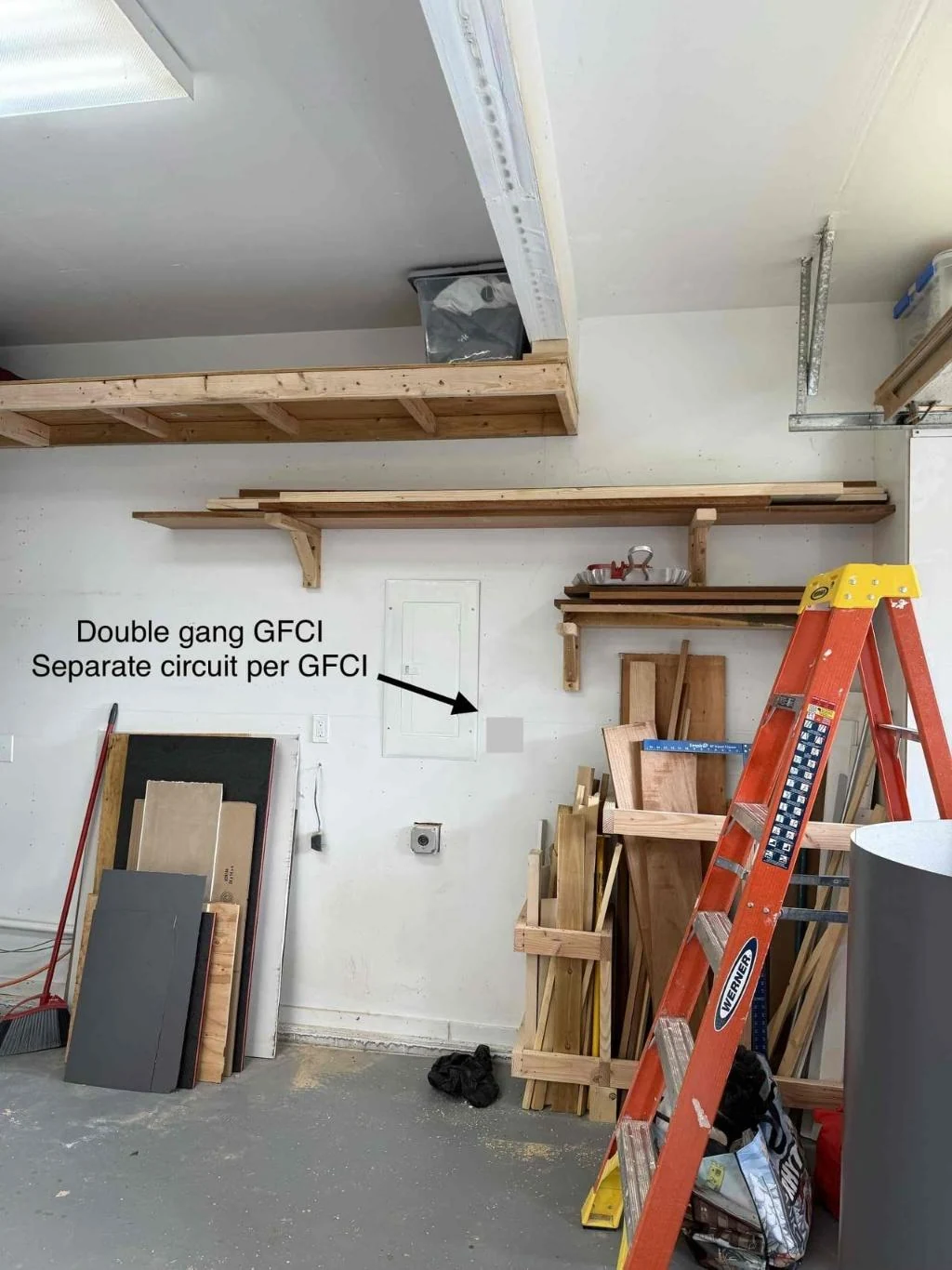
Planning photo showing the proposed location beside the panel, with a separate circuit for each GFCI receptacle.
A Location That Fit How David Used His Garage
We discussed several arrangements, and David wanted to keep the project simple. He planned to move his tools around and felt that a pair of receptacles beside the panel would give him what he needed. He chose that location rather than committing every connection to a fixed machine position.
That was a practical preference to account for. Another workshop might benefit from receptacles at several permanent workstations. For a homeowner still changing the layout, the discussion should include how equipment cords will reach the outlets without obstructing a walkway or getting damaged. Storage and tool placement also need to leave the electrical panel accessible.
Two Dedicated Connections in One Box
Our electricians installed two 20-amp breakers in the positions previously used by a 50-amp hot tub circuit. They ran 12/2 cable to the new GFCI receptacles in a two-gang box beside the panel. Each receptacle was supplied by its own dedicated circuit, giving David two independently protected connections in one compact location.
The shared box does not combine the circuits into a single 40-amp connection. Each circuit retains its own limits, and equipment must be connected to a supply that meets its requirements. Repurposing the breaker positions also does not increase the home's service capacity. The work adapted the existing panel to the workshop connections David selected.
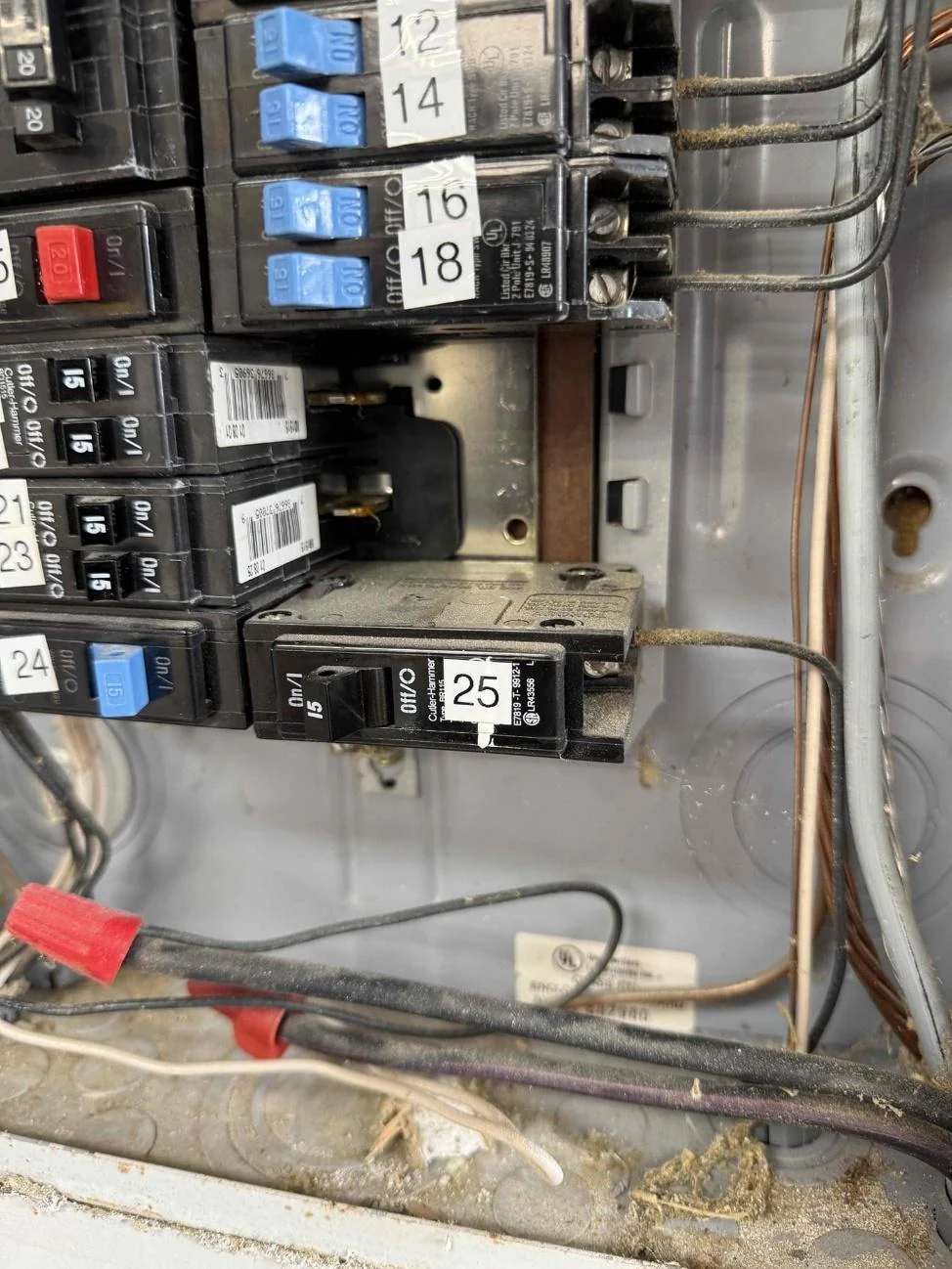
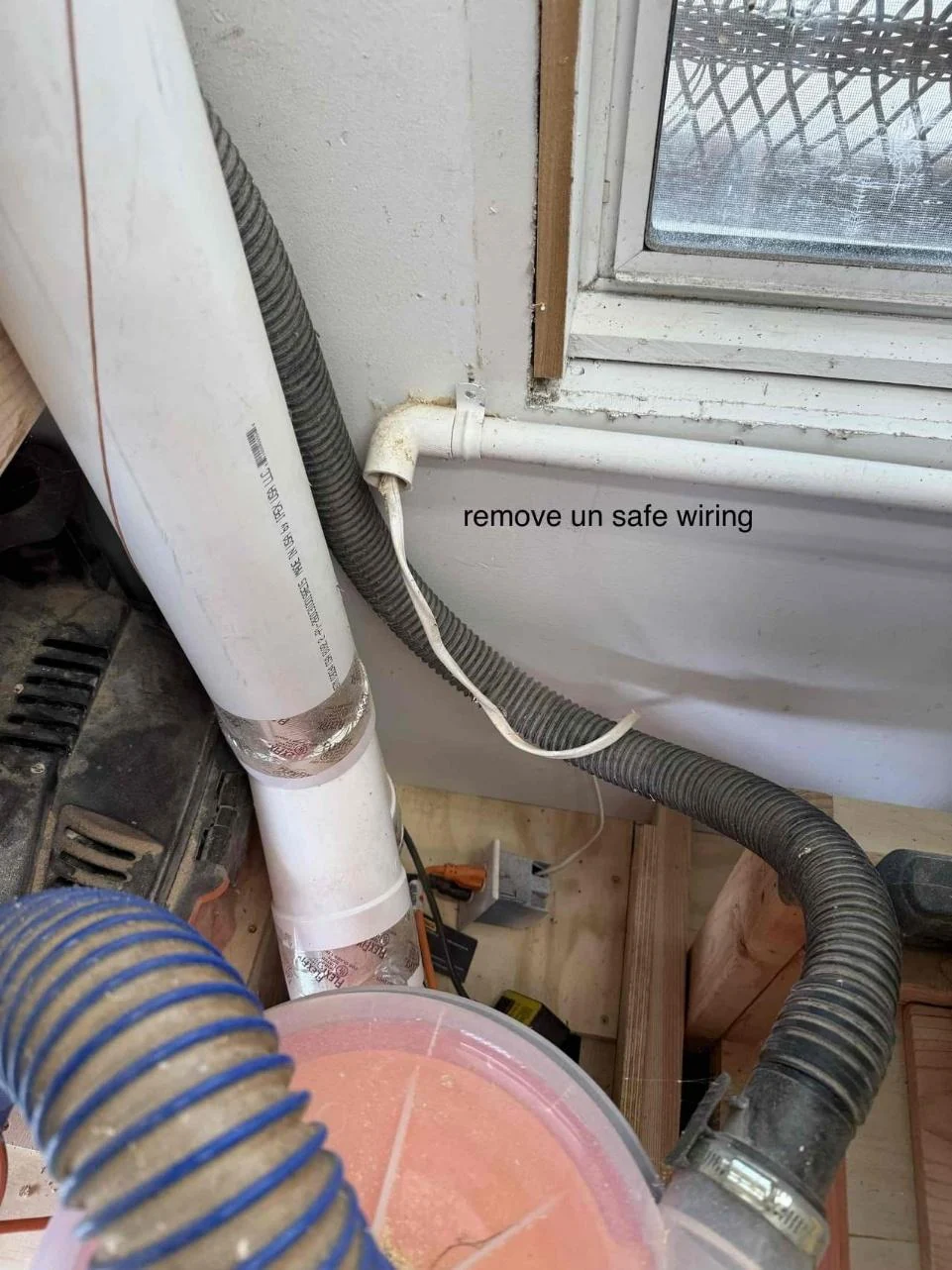
Existing conditions: the panel interior, left, and the cable section marked for removal near the window, right.
Why the New Outlets Included GFCI Protection
A GFCI helps reduce the risk of a serious electric shock by interrupting power when it detects current flowing along an unintended path. A standard circuit breaker protects against overcurrent conditions such as an overload or short circuit. Those are different jobs, which is why the new garage connections included both circuit protection and GFCI receptacles.
The owner should understand which device has operated if power shuts off. Repeatedly resetting a breaker or GFCI without finding the cause is not a repair. I also recommend learning the test procedure for the installed GFCIs and following the manufacturer's instructions. Protection devices need to be used and maintained as intended.
Keeping the Existing Panel and Addressing a Wiring Defect
The panel was older, but the assessment did not identify an obvious panel hazard that called for replacing it. We completed the workshop project in the existing panel. Age deserves attention during an evaluation, but a replacement recommendation should explain the specific condition or capacity requirement that makes the change necessary.
A separate area near the garage window did need attention. A cable end extended from a conduit fitting, and that wiring was marked for removal. As part of the project, our team removed the exposed wiring and capped the conduit. Addressing that section was part of the agreed work alongside the new workshop connections.
The Schedule and Electrical Inspection
David contacted us on October 2, 2026. The first visit was October 6, and the work was completed October 7, five days after the call. The project required an L&I electrical permit and passed electrical inspection. New circuits need the appropriate permitting and inspection process even when the outlets are close to the panel.
This was a straightforward electrical project. The planning centered on providing separate connections in the location David preferred and correcting the identified wiring condition. Keeping the work focused on those needs matched the simple arrangement David had chosen.
What the Invoice Covered
The $1,003.66 invoice covered the completed electrical project: two dedicated circuits with 20-amp breakers, the box and GFCI receptacles, the wiring needed for those connections, and the correction to the existing wiring. The price reflected work within an existing electrical system as well as the components being installed.
A short cable route can reduce installation work, but the electrician still needs to assess the connection, select suitable components, work in the panel, and check the result. When comparing estimates, ask whether you are being offered additional receptacles on a shared circuit or new dedicated circuits. The finished outlets may look similar while providing different capabilities.
David Appreciated the Finished Work
After the work was finished, David thanked our team for the clean installation and the idea of putting two separately supplied receptacles in one box. He appreciated the arrangement he had chosen. His workshop now had two dedicated connections beside the panel, and the identified unsafe wiring section had been addressed.
For a returning customer, I want the experience to reinforce the trust that brought them back. David had preferences about his workshop, and our team offered options he could consider before choosing. Your Tech Brother From Another Mother means giving a homeowner a useful explanation, respecting that decision, and taking responsibility for the work. In this project, the compact arrangement and the care our team took were what David appreciated.
Planning Electrical Work for Your Own Workshop
Start with a list of your tools and dust collection equipment, including model numbers and electrical requirements. Explain which machines run together and mention any planned purchases. A future machine with different voltage or circuit requirements can change the discussion, so it is worth bringing that information to the electrician before work is approved.
Ask how the existing garage receptacles are supplied. Outlets on different walls can still be on the same circuit, and a power strip does not add circuit capacity. The assessment should establish whether the problem is outlet location, shared demand, a wiring defect, or a combination of those conditions. That gives the contractor a reason for each proposed change.
Think through the physical layout as well. Permanent workstations may justify outlets closer to the equipment. Movable tools need appropriate cord routing, consistent with the equipment instructions. If extension cords are needed, their rating, length, and condition matter. A setup that continually runs cords across a walkway is a reason to reconsider where the permanent connections belong.
What to Ask Before Approving the Estimate
Have the contractor identify the number of new circuits, their intended loads, and the proposed outlet locations. Ask what will change in the panel and existing wiring, who will obtain the permit and arrange inspection, and what the written workmanship warranty covers. The total price should correspond to that defined scope. If a panel replacement is recommended, ask for the findings that support it.
Before using the finished installation, make sure you understand which receptacle belongs to each circuit and how to operate the GFCI controls. If you later add a larger machine, garage heat, or EV charging, have those requirements evaluated. The circuits selected for today's tools should not be assumed suitable for every future load.
David's solution fit his current equipment needs and his preference to keep the workshop flexible. For another garage, the right arrangement may involve different outlet locations or different circuits. I want homeowners to leave the conversation understanding why the proposed work fits their equipment and the way they use the space.
PLAN YOUR NEXT STEP
Need help with your home comfort?
Explore Product Air’s electrical services or contact the team.
Share this guide