


A house collects dust when more particles enter or form than your filter and cleaning remove. Skin flakes, fabric fibers, and soil from outside add up quickly, and a weak filter lets them build. I'm Serg Nikolin, co-owner of Product Air Heating, Cooling, and Electric. I deal with allergies myself, so I pay particular attention to filtration and the particles moving through the air in a home. Below, I explain how an HVAC system can add to the problem or help reduce it and what to fix first.
Quick Takeaways:
- Dust comes from inside and outside. It cannot be removed completely, so cut sources first and clean the air second
- The EPA recommends a filter rated at least MERV 13, or the highest your system can handle
- Wash bedding in hot water weekly, vacuum with a HEPA filter, seal gaps with caulk, and keep humidity between 30 and 50 percent
Sources of Dust: What Is Household Dust Made Of?
It is a mix of skin flakes, fabric fibers, pet dander, soil, and other dust particles. Dander is the tiny skin flakes that cats and dogs shed. The EPA says indoor particles come from indoor activity and from outdoors, including cooking, burning candles, and fireplaces. Outdoor dust can enter your home on shoes, on pets, and through open windows. Excess dust in your home often follows a remodel, because sanding and demolition make dust and debris that settle on every surface. Dust cannot be removed completely, because people and pets shed constantly. The realistic goal is less dust, which can be achieved by cutting sources first and then cleaning the air.
Why Does Your House Get So Dusty?
If your house is always dusty, find the cause first. Here are the usual ones:
- Dirty or low-efficiency filters. A clogged filter restricts airflow, while a low-efficiency filter captures fewer fine dust particles. A filter that does not fit the slot correctly can also allow air and dust to bypass the filter.
- Leaky ducts. ENERGY STAR says about 20 to 30 percent of the air moving through a duct system is lost to leaks, holes, and poor connections. Leaks on the return side can pull dust from attics and crawl spaces into the airflow.
- Soft furnishings. Carpets, upholstered furniture, curtains, and clutter act as dust magnets and release dust into the air when people sit or walk by.
- Open windows and doors. Pollen, soil, and smoke come in quickly.
When the house is so dusty that you wipe the same shelf twice a week, the cause is not inefficient cleaning products.
How Your HVAC System Contributes to Dust
A heating and air conditioning system moves air through the whole house, so it can either clean that air or spread dust from room to room. Two common problems:
- Basic fiberglass filters are at the low end of residential filtration. We generally prefer pleated filters because they are available in higher MERV ratings and can capture smaller airborne particles more effectively, as long as the system can handle the added resistance.
- A furnace or air conditioner that runs for shorter periods gives the filter less time to remove airborne dust, because an HVAC filter cleans air only while the blower is running.
A new filter does not help if leaks are allowing dust to bypass it. Unfiltered HVAC air from a leaky return in an attic or crawl space can be a major contributor to dust, and a cracked air duct is a common entry point. Leaks are contributing to dust whenever the blower runs.
We don't clean ducts, and the EPA doesn't recommend routine duct cleaning. Sealing duct leaks matters more when leakage is the problem. If you suspect a leak, we can check the airflow and ductwork and tell you what we find.
Filter Basics: Your Line of Defense Against Dust
A filter cleans only the air that passes through it, so it works while the blower runs. Air filters are rated by MERV, a scale of how well they capture particles, and a higher number captures smaller ones. The EPA recommends at least MERV 13, or the highest rating your system fan and filter slot can handle, and says an HVAC technician can confirm what works for your equipment.
Filters are also one of the maintenance items homeowners most often let go too long. We have arrived on service calls where the filter had not been changed in more than a year. That restriction adds wear to the equipment even when the homeowner does not immediately notice a problem.
A higher-rated filter that fits the system can trap airborne dust that a basic filter misses. Check the filter about once a month during periods of regular HVAC use, but don't rely on a universal 90-day replacement rule. How often you replace air filters depends on the filter type and thickness, system runtime, pets, remodeling, wildfire smoke, and how quickly the filter gets dirty. As a rule of thumb, we tell homeowners to expect roughly one to three months for a 1-inch filter, about three months for a 2-inch filter, and around six months for many 4- or 5-inch filters. Higher-MERV filters may need to be checked more often because they capture smaller particles and can become restrictive even when they do not look especially dirty. If the system has been working normally and suddenly develops an airflow or performance problem, one of the first things I recommend is replacing the filter and seeing whether the problem changes. A filter can look relatively clean while still restricting airflow.
North Bend Case: A Dirty Filter Was Already Restricting Airflow
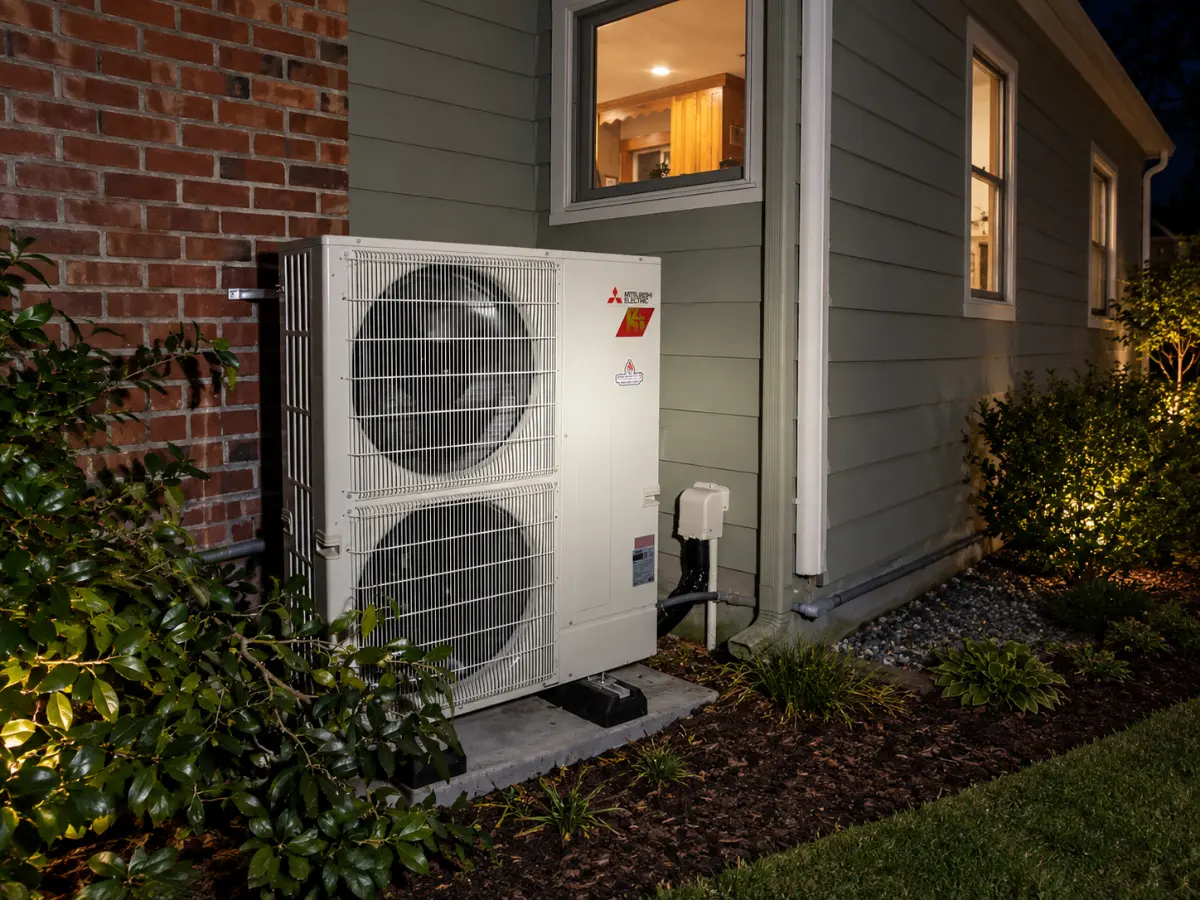
During a maintenance visit in North Bend, our technician Robert inspected a Mitsubishi heat pump system that was only about 18 months old. The equipment itself was still in solid condition, but the air filter had become dirty enough to restrict airflow through the system.
The visit did not turn into an unnecessary equipment repair. Robert addressed the airflow issue and restored the conditions the system needed to operate properly. The case is a good reminder that even relatively new HVAC equipment can develop performance problems when a filter becomes loaded with dust and debris.
Read the full North Bend heat pump maintenance case.
Health Risks of a Dusty Home
Visible dust on a shelf is only what you can see. Dust can cause symptoms in people with asthma and allergies, and dust allergies can bring sneezing, itchy eyes, and a stuffy nose. Dust can make asthma symptoms worse.
Mites are a common trigger. The NIEHS says they feed on skin flakes, and the EPA says moisture helps support dust mite populations. Dust mite droppings contain allergens that can trigger symptoms in sensitive people. Keeping indoor relative humidity ideally between 30 and 50 percent can help limit dust mite growth. In Western Washington, damp basements and poorly ventilated rooms are worth watching for elevated humidity even when visible dust is not unusually heavy.
Wildfire smoke adds fine particles. The EPA advises keeping windows closed, using a MERV 13 filter, and running portable air cleaners when smoke is heavy.
How to Get Rid of Dust and Prevent Dust at the Source
Dust keeps coming back when the source is still there. The best approach is to reduce how much dust gets into the house and deal with buildup before it spreads:
- Stop dust from entering. Put doormats at every entry, take shoes off, brush pets often, and close windows on windy days to keep dust from blowing in.
- Wash bedding in hot water every week, and use dustproof covers on pillows and mattresses.
- Vacuum with a machine that has a HEPA filter, because an ordinary vacuum can push fine particles back out.
- Wipe surfaces with a damp cloth, since dry dusting puts dust back in the air.
- Seal gaps around windows, baseboards, and pipes. Use caulk for small cracks.
- Replace the filter on schedule and have a technician check the ducts for leaks.
Fixing the filter and ducts will reduce the amount of dust that reaches your rooms, and sealing gaps helps reduce dust accumulation near windows. Cleaning habits help, but how often you dust matters less than where the dust comes from. If you notice more dust settling after the heat or air conditioning starts, or find a layer of dust around vents, check that run first. Excessive dust buildup at one register can point to a leak in that duct. Persistent dust usually means a source you have not found, and many dust problems trace back to the filter or a leak, so dust buildup in your home is worth tracing.
Do Air Purifiers Help?
Yes, but an air purifier is a second step. Using an air purifier can reduce airborne dust and other particles while the unit is running, while source control reduces the amount entering or forming in the room. A portable purifier with a HEPA filter can trap airborne dust and other small particles, but it needs to be sized for the room. Choose a unit with an appropriate clean air delivery rate, or CADR, and avoid ozone-generating air cleaners. Vacuuming and wiping are still needed to remove dust that has already settled. Together with a good HVAC filter, a portable air cleaner can support indoor air quality.
Need Help Finding Where the Dust Comes From?
We don't come to sell. We come to solve the customer's problem in a way that's right for the customer. That is what we mean by being your tech brother from another mother. If dust keeps coming back, our indoor air quality service can include checking the filter, ductwork, and airflow to find what may be contributing to the problem. We will show you what we find and explain which fixes are worth considering.
FAQ
Why is my house so dusty even after cleaning?
Dust in the house returns within days when the source is not fixed. Check the filter, ducts, windows, and humidity. Dry dusting can also push fine particles back into the air.
How do I stop my house from being so dusty?
Cut the sources, then clean the air. Use doormats, wash bedding weekly, vacuum with a HEPA vacuum, seal gaps, and replace the filter on schedule. No method removes every particle, but these steps lower the dust level a lot.
What does it mean if your house is dusty?
Heavy dust in the home usually means more dust enters or forms than cleaning removes. Common causes are weak filters, leaky ducts, open windows, pets, and fabric that holds dust.
Is a dusty house unhealthy?
It can be for some people. The EPA lists mites and pet dander among common asthma triggers, and dust in your house can set off allergy symptoms. Healthy people may notice little beyond the extra cleaning.
What are the common causes of a dusty house?
Dirty filters, leaky ducts, carpet and upholstery, clutter, pets, open windows, and indoor sources such as cooking and fireplaces. High humidity adds to mite growth.
How do HVAC systems contribute to dust in a house?
The system moves air through the whole house, so a dirty filter or leaky ducts can spread dust or pull it in from an attic or crawl space. A well-fitted filter and sealed ducts do the reverse.
Do air purifiers help reduce dust in a home?
Yes, for airborne particles in the room where the unit runs. A HEPA purifier does not remove settled dust or fix the source.
PLAN YOUR NEXT STEP
Need help with your home comfort?
Explore Product Air’s indoor air quality services or contact the team.
Share this guide