


Location: 156th Street Northeast corridor, Arlington, WA 98223
Call Date: July 23, 2026
First Visit: July 27, 2026, 8:00 AM
Project Completion: July 27, 2026, 12:00 PM
Lead Technician: Alex West, 5+ years in the trade, certified in residential electrical, installer
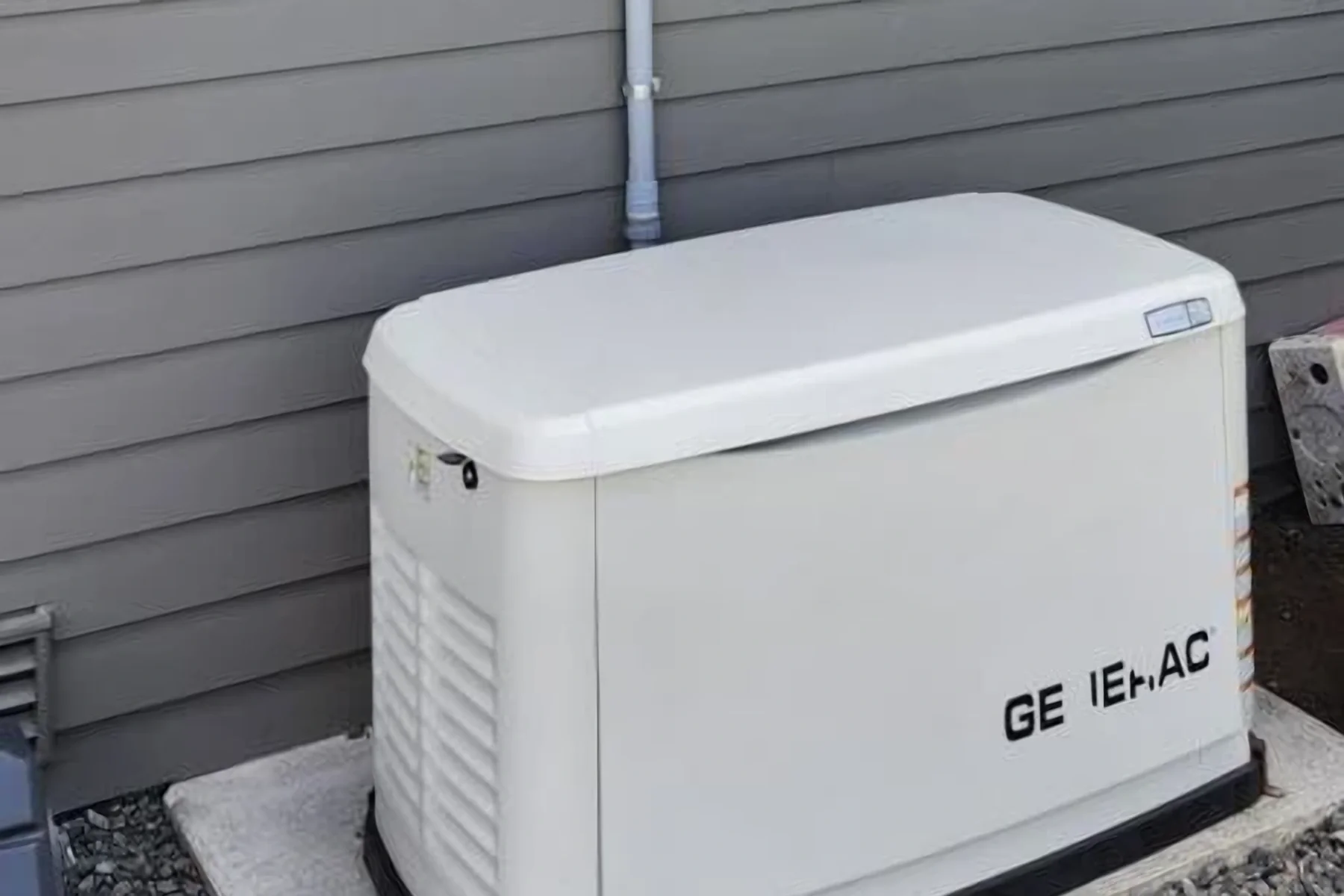
System Before: A Generac standby generator on its pad and transfer equipment already in place at a 2018 single-story home, but no wire run from the automatic transfer switch to the generator, no gas connection, and a unit that had never worked in 8 years
System After: Approximately 50 feet of wire pulled from the automatic transfer switch to the generator, all connections made and function verified, gas piping connected, the generator programmed and registered, plus an oil change and battery work
Final Project Cost: $3,139.89 (after a $90.00 cash discount, before tax)
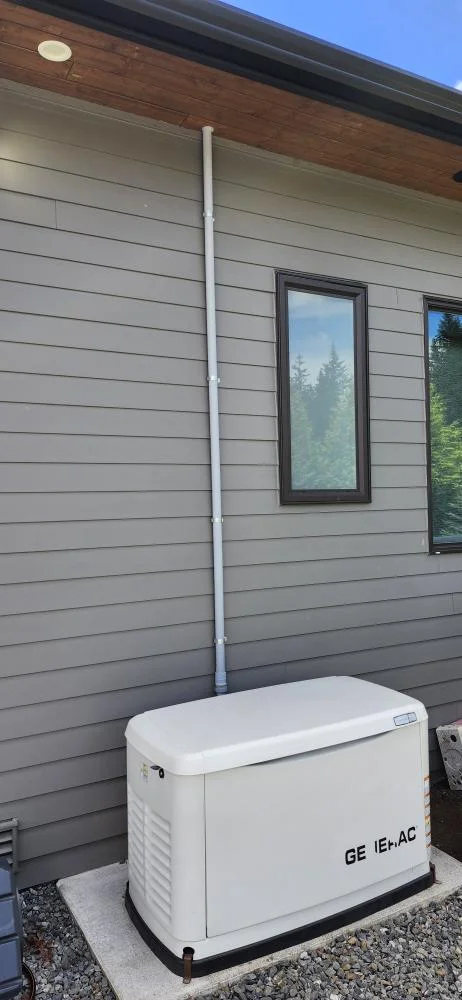
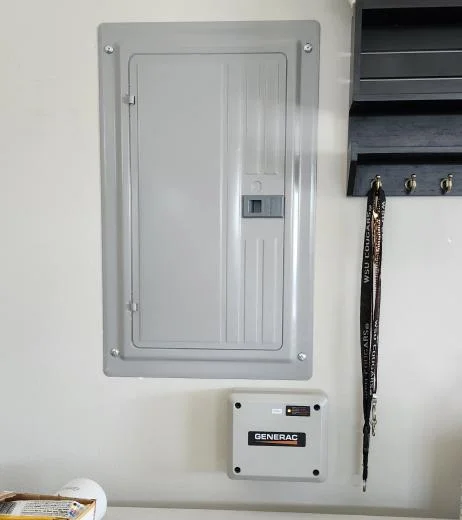
The generator beside John's house on the 156th Street Northeast corridor in Arlington looked finished. It sat on its concrete pad, conduit ran up the siding to the eaves, and a Generac module was mounted on the wall under the electrical panel inside. It had been there since the house was built in 2018. It had never once run.
By the county record, the single-story home is 3,187 square feet with three bedrooms. John bought it from the previous owner in the summer of 2026. When John called Product Air Heating, Cooling, and Electric in July 2026, his request was simple: "Looking to finish hooking the generator up, everything is there just needs the final steps for install."
Why John Called About a Generator That Was Already There
John is a returning Product Air customer. He called on July 23, 2026, and the job was sold by Kevon, who runs Product Air's electrical department, and booked as four hours for two electricians. No other contractor was involved.
This is a familiar situation with standby generators, and it is worth naming. The expensive, visible parts get bought and set in place: the generator, the pad, the transfer equipment on the wall. The final steps get left for later: running the wire between the components, connecting the gas line, and starting up the generator. From the driveway, the house looks like it has backup power. It does not, and nobody finds out until the lights go off.
What Our Crew Found at John’s Generator in Arlington, WA 98223
Alex West led the work on site. He has 5+ years in the trade, is certified in residential electrical, and works as an installer, which is the right background for a job that is all connections and no diagnosis.
What he found matched what John described, with one point made plainer. The generator was not connected to the gas line at all, and it had never worked in the eight years since the house was built. There was no wire run between the automatic transfer switch, the device that senses a utility outage and moves the house's load over to the generator, and the generator itself. The equipment was all present. None of it was joined up.
Alex's read on why was short: the previous owner never saw the use for it. That is not an equipment failure and not an install defect. It is a project that stopped one step before it would have done anything.
Does a Standby Generator That Came With the House Actually Work?
Not necessarily. A standby generator only protects a house when three things are in place: a fuel supply connected to the unit, wiring between the generator and the transfer switch, and a unit that has been started, programmed, and set up to run. A generator sitting on a pad tells you the first purchase was made. It does not tell you any of those three steps were finished.
For a buyer, the practical check is to ask the seller when the generator last ran during an outage, and if nobody can say, to have an electrician look at the connections before storm season rather than during it. A unit that has never run also needs basic service before it is trusted: oil and the battery are the obvious two.
John's house is the worked example. Everything was there, as he said. The gas line was not connected, no wire ran from the transfer switch to the generator, and the unit had never been brought online. Getting it working took one morning of connection work, not new equipment.
The Plan: Finish the Hookup Before the Fall Windstorms
There was one plan, because there was only one thing to do: finish the install that had been started. The generator and transfer equipment were John's, already on site, and the invoice says so plainly, with a customer-supplied equipment exclusion covering the owner-furnished products.
The reason to do it in July was timing. By Alex's account, it got John's generator fully ready for the fall windstorms, and Puget Sound gets strong windstorms through November. Snohomish County has the outage history to back that up. The Daily Herald reported that a November 2022 windstorm knocked out power to as many as 190,000 Snohomish County PUD customers at its peak, and that in Arlington, crews restored service to 500 customers including Arlington High School.
What Product Air Actually Did to Bring the Generator Online
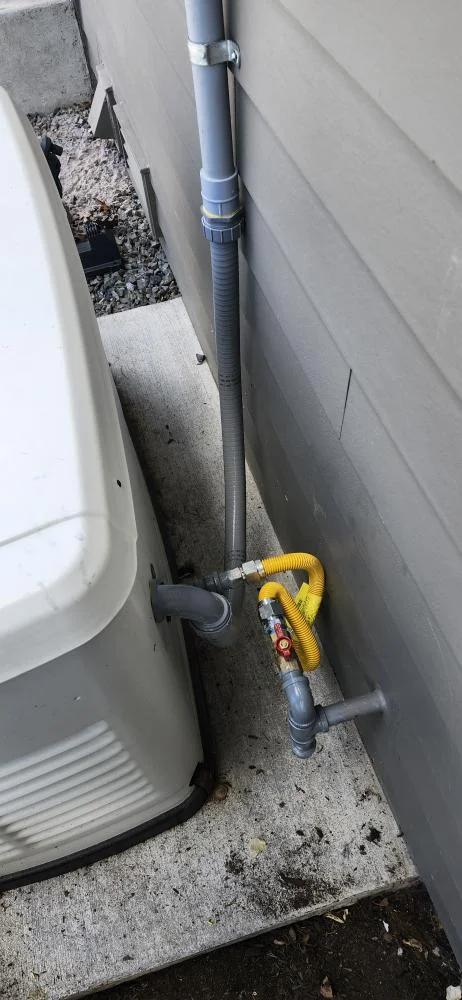
The crew from Product Air Heating, Cooling, and Electric pulled in wire from the automatic transfer switch to the generator, a run of approximately 50 feet. They made all the connections and verified function. Our HVAC team connected the gas piping to the unit in about an hour, through a flexible connector with a shutoff valve, using a short run of about one foot from the existing stub-out. The generator runs on propane. The existing gas line was not modified, so no gas permit was needed, and all required permits were completed through Washington State L&I. The electricians then programmed and registered the generator, changed the oil, and did the battery work on a unit that had sat unused since 2018. The Generac load-shed module mounted under the panel, which switches large loads off and on so the generator is not overloaded, was part of the job as well. This is the final stretch of a backup generator installation, the part that turns equipment into backup power.
Item |
Detail |
|---|---|
Generator |
Generac standby generator, customer supplied, already on its pad |
Wiring |
Approximately 50 feet pulled in from the automatic transfer switch to the generator, all connections made, function verified |
Gas |
Gas piping connected to the generator by our HVAC team, about one foot of pipe, about one hour |
Startup |
Generator programmed and registered |
Service |
Oil change and battery |
Crew |
Two electricians, four hours; HVAC team, about one hour for the gas piping |
Permits |
All required permits completed through Washington State L&I |
Load-Shed Module |
Generac load-shed module under the panel, part of the scope |
One Morning, Two Electricians, on 156th Street Northeast
John called on July 23, 2026, and the work was done four days later, on July 27, in a single visit from 8:00 AM to 12:00 PM with two electricians at the house on the 156th Street Northeast corridor. Alex described the job as routine. Nothing had to be relocated, and nothing about the install called for a workaround.
Warranty
Product Air provides a five-year labor warranty on its installations. The generator is eight years old, so the manufacturer’s warranty no longer applies, and our labor warranty covers our work. When a load-shed device failed within a month, we replaced it under that labor warranty.
The Real Number: $3,139.89
The wire run, the connections, the gas hookup, programming and registration, and the oil and battery work came to $3,139.89. That total reflects a $90.00 cash discount for paying in cash instead of by credit card or financing. It is the final amount after the discount and before tax. Because John already owned the generator and transfer equipment, none of that total is for the generator or transfer equipment; it covers the labor and materials to finish the job.
Electrical work does not carry rebates in most cases, and none applied here.
What It Means for John Going Forward
John asked for the final steps on a generator that was already there. Before the visit, his house had a generator and no backup power. After it, the generator was wired to the transfer switch, connected to gas, programmed and registered, in time for the windstorm months.
It was not trouble-free afterward. Within a month, one load-shed device failed. We replaced it under our labor warranty, and the system is working well now. By Alex’s account, John said the job was expensive, and also that he appreciated the warranty when that device failed. Both of those are fair, and both belong in the record.
FAQ
Does a standby generator that came with my house actually work?
Not always. A generator only provides backup power once it has a connected fuel supply and wiring to the transfer switch, and has been started and programmed. Equipment can be fully in place with none of that finished. In an Arlington home built in 2018, a Generac standby generator and its transfer equipment had been installed but never connected to gas or wired to the transfer switch, and the unit had never worked in eight years until Product Air finished the hookup in July 2026.
How much does it cost to finish hooking up a generator that's already installed?
It depends on how much of the install is missing, mainly the length of the wire run and the gas connection. As one real example, an Arlington job in July 2026 pulled approximately 50 feet of wire from the automatic transfer switch to the generator, made and tested all connections, connected the gas piping, programmed and registered the unit, and did an oil change and battery work. It came to $3,139.89 after a $90.00 cash discount, with the homeowner supplying the generator and transfer equipment.
Why get a generator ready in summer instead of waiting for winter?
Because Western Washington's outage season is fall, and the strong windstorms run through November. A November 2022 windstorm, as reported by The Daily Herald, cut power to as many as 190,000 Snohomish County PUD customers at its peak, including homes in Arlington. An Arlington homeowner whose generator had never been connected had the hookup finished on July 27, 2026, so the unit was ready before the windstorm months rather than being scheduled in the middle of them.
Can I plug a generator into my house without a transfer switch?
No. Snohomish County PUD tells customers not to plug a generator into the home's electrical system unless a transfer switch is installed. Without one, generator power can backfeed out through the meter and transformer onto the utility's lines, which is a shock hazard for the crews working to restore power. The PUD describes a transfer switch as the only safe way to positively disconnect the house from the utility system. The Arlington generator in this case was wired to its automatic transfer switch as part of the July 2026 hookup.
How long does it take to connect a standby generator?
When the generator, pad, and transfer switch are already in place, the remaining connections can usually be completed in a single visit. In Arlington in July 2026, two electricians pulled about 50 feet of wire from the transfer switch, programmed and registered the generator, changed the oil, and serviced the battery between 8:00 AM and 12:00 PM, four hours on site, while our HVAC team connected the gas piping in about an hour. The work was done four days after the homeowner called.
Key Takeaways
- A standby generator on a pad is equipment, not backup power; it needs a fuel connection, wiring to the transfer switch, and startup programming before it protects the house.
- In this Arlington home, a generator installed in 2018 had never worked because the gas line was never connected and no wire ran from the transfer switch.
- Finishing the hookup, including about 50 feet of wire, the gas connection, programming, registration, and oil and battery work, took two electricians four hours, plus about an hour from our HVAC team for the gas piping, and came to $3,139.89.
- Snohomish County PUD says a generator should never be connected to a home's wiring without a transfer switch, because backfeed endangers line crews.
- The time to finish a generator install in Western Washington is summer, not the first windstorm in November.
John told the crew everything was there and it just needed the final steps. He was right, and those steps had been waiting eight years. Since July 27, the generator on the 156th Street Northeast corridor has been connected and ready for the windstorm months.
See our reviews at our Marysville Google Business Profile.
Serg Nikolin, Co-Founder, Product Air Heating, Cooling, and Electric
Marysville · Issaquah · Seattle · Western Washington
PLAN YOUR NEXT STEP
Need help with your home comfort?
Explore Product Air’s electrical services or contact the team.
Share this guide