


Location: Mercer Island, WA
GMB Profile: Issaquah
Call Date: March 20, 2026
First Visit: March 23, 2026
Project Completion: April 3, 2026
Technician: Kevon
Project Range: $5,500–$8,500
The Call: “I Don’t Think This Was Installed Right.”
On March 20th, a homeowner named Grant called with a concern about his standby generator.
The system had already been installed by another contractor. It was operational, but something didn’t feel right.
Grant couldn’t point to a specific failure. What he felt was uncertainty.
When it comes to backup power, especially in a region like Mercer Island where outages do occur, uncertainty is not something homeowners are comfortable with.
Electrical technician Kevon was assigned to the case.
First Visit: March 23rd (A Closer Look)
When Kevon arrived on-site, he didn’t start with assumptions. He started by listening.
Grant explained his concerns. He questioned whether the installation had been done properly. He even said, more than once:
“I don’t understand how this passed inspection.”
Kevon approached the system methodically. Generator installations are not just about connecting wires. They involve:
- Proper clearances from structures
- Exhaust direction and ventilation
- Fuel line integrity
- Transfer switch integration
- Grounding and bonding compliance
- Permit documentation
Within a short time, a key issue stood out.
The Problem: Improper Clearances (A Fire Risk)
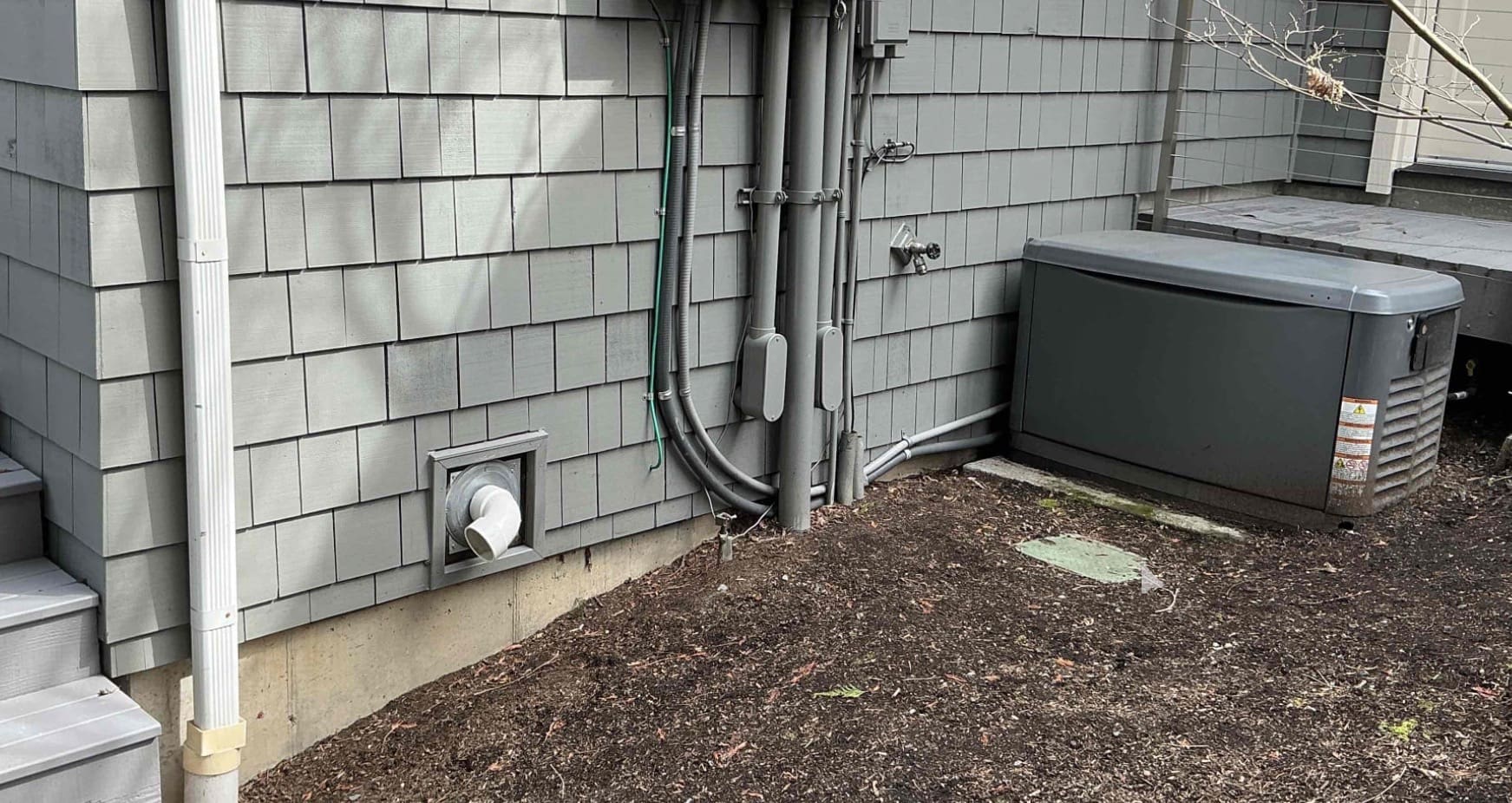
The generator had been installed with insufficient clearance from adjacent structures.
That is not cosmetic. It’s a fire hazard.
Standby generators produce heat and exhaust. Manufacturers specify minimum distances from walls, windows, fences, and combustible materials for safety and proper operation.
Improper clearances can lead to:
- Heat buildup
- Exhaust recirculation
- Increased fire risk
- Code violations
Kevon explained the issue carefully and showed Grant the manufacturer’s clearance requirements.
The installation did not meet those requirements.
The Bigger Discovery: No Permits Were Pulled
Grant kept coming back to one question:
“How did this pass inspection?”
Kevon began digging deeper.
He checked permit records.
There were none.
Whoever installed the generator had never pulled a permit for the project.
That meant:
- No city inspection
- No third-party verification
- No official documentation
- No recorded compliance
The system hadn’t “passed inspection”—it had never been inspected.
That realization shifted the entire conversation.
Why Permits Matter More Than Paperwork
Permit requirements are not bureaucratic formalities. They exist to protect homeowners.
A properly permitted generator installation ensures:
- Electrical code compliance
- Manufacturer guidelines are followed
- Clearances meet fire safety standards
- Transfer switch integration is safe
- The system is documented for resale and insurance
Without permits, a homeowner assumes liability.
In some cases, improper installations can complicate:
- Home sales
- Insurance claims
- Property inspections
- Future upgrades
Grant wasn’t just dealing with a technical correction. He was dealing with a documentation gap.
The Approach: Educate First, Then Quote
Kevon’s goal was not to criticize the previous contractor.
It was to clarify what would be required to bring the installation up to proper code.
He explained:
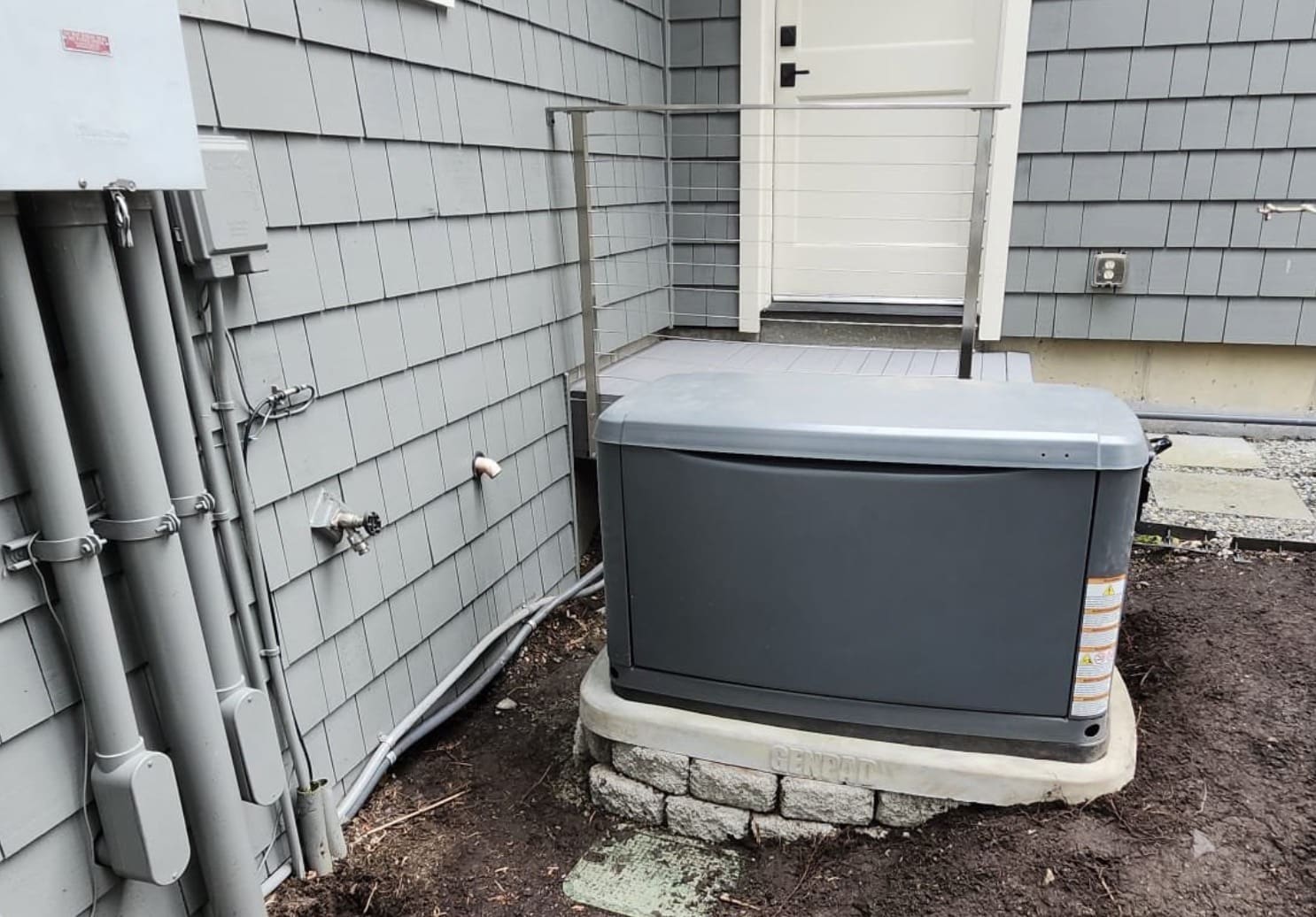
- The generator would need to be repositioned to meet clearance requirements.
- Permits would need to be pulled with the city.
- The work would need to be inspected and signed off by a third party.
- All documentation would need to be properly filed.
He broke down what it would take to do it right, step by step.
This is what being a “tech brother from another mother” looks like in practice.
Not rushing. Not overselling. Just laying out reality.
The Decision: Fix It Correctly
Grant considered his options.
He could leave it as-is and hope nothing happened.
Or he could correct it permanently.
He chose to move forward.
The estimated project range to correct the installation, reposition the generator, ensure proper clearances, and pull and complete permits fell between $5,500 and $8,500, depending on adjustments required during repositioning and final inspection requirements.
Grant chose peace of mind.
The Correction Process
Between March 23rd and April 3rd, the project moved forward in stages:
- Permit applications submitted
- Generator safely disconnected
- Unit repositioned to meet manufacturer clearance specifications
- Electrical connections updated
- Grounding verified
- Fuel supply confirmed
- Transfer switch rechecked
- City inspection scheduled
Once complete, the installation was inspected and signed off.
Now the generator had:
- Proper clearance
- Code compliance
- Official documentation
- Third-party approval
That documentation matters for insurance carriers, home resale, and long-term liability.
The Real Outcome
By April 3rd, Grant’s generator installation was no longer a question mark.
It was safe. Documented. Verified.
There were no more “I wonder how this passed inspection” conversations.
Because now it had.
Lessons From This Case
This situation highlights several important realities:
- Operational does not always mean compliant.
- Improper clearances create real fire risk.
- Permits protect homeowners, not just cities.
- Unpermitted electrical work can complicate insurance and resale.
- Correcting mistakes early prevents larger problems later.
Generators are installed for security during outages.
They shouldn’t introduce new risks.
Final Thought
Grant didn’t call because the generator failed.
He called because something didn’t feel right.
Trusting that instinct prevented a long-term safety issue.
Now, instead of questioning the installation, he has a safe, inspected, and fully documented system.
That’s the difference between “installed” and “installed correctly.”
PLAN YOUR NEXT STEP
Need help with your home comfort?
Explore Product Air’s electrical services or contact the team.
Share this guide