


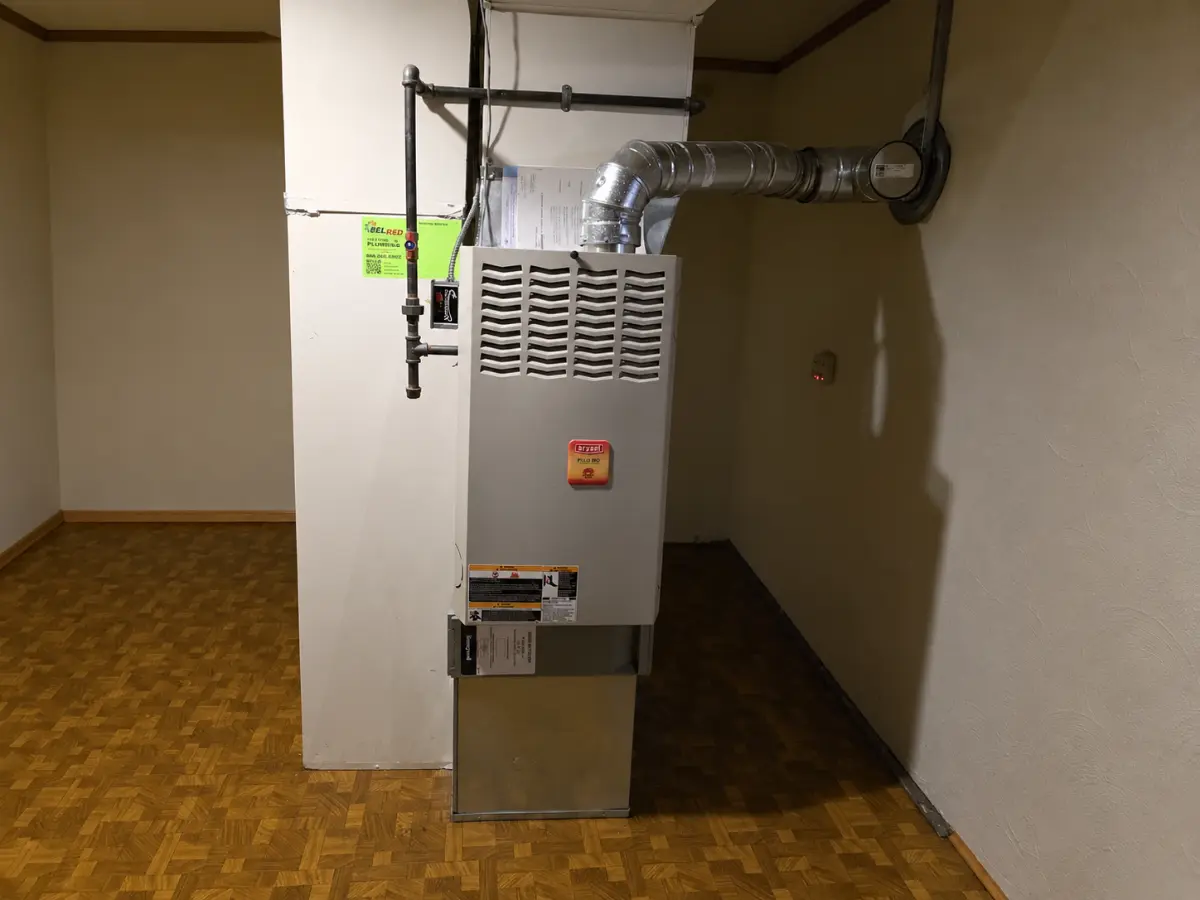
Most of our winter calls come from homeowners who had no idea anything was wrong until they woke up to a cold house. People think about their heating system once every 15 to 20 years, and then they get about three days to decide. Should it be repaired or replaced? What will it cost? Is this the time to switch to a heat pump? Who handles the permit?
Based on roughly 400 installations, our team has seen how much the condition of the existing system, electrical requirements, and installation complexity can affect a homeowner's options. These are decisions we help customers work through before recommending a repair or replacement.
I'm Serg Nikolin, co-owner of Product Air Heating, Cooling, and Electric, and I wrote this guide for the homeowner who has to choose between repair, replacement, and a heat pump before the next cold night. A typical furnace replacement in the Seattle area costs about $5,500 to $8,500 in 2026. More specialized communicating equipment, accessories, or additional installation work can push the total higher. This guide follows the order in which a homeowner meets the problem, and it explains what drives the price across Western Washington, how a gas furnace compares with a heat pump, and what to expect from permits, electrical work, and rebates. The figures are typical ranges for judging the estimates you receive.
Quick Takeaways:
- A typical furnace replacement in the Seattle area costs about $5,500 to $8,500 in 2026, and communicating equipment, accessories, or extra installation work can push the total higher
- Age alone does not decide whether to replace, so ask the technician what is failing and what a repair would cost before you commit
- The federal heat pump credit ended after 2025, so check current utility and state programs for your address before you sign
Repair or Replace: Start With the Failed Part
Age alone does not decide whether a furnace should be replaced. If your furnace is 25 years old, replacement is worth discussing, but a good contractor will first look at the furnace's condition, the failed component, the repair cost, efficiency, and safety. Whether parts are still practical to obtain matters too. Then you can compare repairing the existing system with replacing it.
Late this summer a homeowner asked us whether his older furnace would make it through the winter. It wasn’t heating at all, because the inducer motor had failed. The motor could be replaced, but after looking at the rest of the system I wasn’t comfortable promising him more than a year. Furnaces are built to run about 20 years. The ones we see reach 30 belong to homeowners who never skip a filter change.
Ask the technician to explain what is failing, what can still be repaired, and what replacement would cost before you spend money on either. You get the facts, and you decide which option makes sense for your home.
Timing: Why Waiting for Winter Limits Your Options
Spring and early fall are the shoulder season for HVAC companies here, and every contractor wants to keep technicians busy. Discounts for filling the schedule appear in those months, ours included. Heating season in Western Washington runs from November through March. Once a furnace fails during peak winter demand, homeowners usually have fewer options and less time to compare replacements.
There is one exception. If the furnace is unsafe or has already failed in cold weather, waiting for a particular season usually does not make sense.
What Furnace Replacement Costs in Seattle in 2026
Our furnace replacement in Seattle typically runs about $5,500 to $8,500, depending on the system and installation scope. The price can go higher for communicating systems, accessories, or projects that need additional installation work, and a simpler replacement can come in lower.
A communicating system is one where the furnace, thermostat, and outdoor unit exchange data and adjust output together. Filter cabinets and air scrubbers are the accessories that raise a quote most often, and a humidifier adds to it as well.
The total may include the furnace, labor, materials, permits, inspection, removal of the old equipment, and any job-specific electrical, venting, or ductwork changes. In our published pricing breakdowns, equipment accounts for roughly 45 percent of the project cost and labor about 30 percent, with permits, materials, and other project-specific work making up the balance.
A replacement may be completed in a day, while projects that require venting, electrical, ductwork, or other modifications usually take longer. For gas furnaces, Trane is the brand we install most often, because its parts are the easiest to get from distributors in the Seattle area. Coleman is the alternative we quote when a homeowner prefers something else. The house and the homeowner’s priorities come first, and the brand follows from them.
What Moves the Price Up or Down
Home size and heating load. Bigger homes generally need more heating capacity, but square footage alone does not determine furnace size. A 2,000-square-foot home does not automatically fall into one price or equipment size, because insulation, windows, air leakage, and layout all affect the heating load. The size should come from a load calculation. Copying the old unit’s size repeats whatever mistake was made 20 years ago.
Efficiency tier. Furnaces are rated by AFUE, the percentage of fuel converted to heat. Minimum-efficiency models run around 80 percent, while high-efficiency condensing units reach 95 percent or more. Higher-efficiency equipment costs more upfront and may require different venting or installation work. Whether the extra cost makes financial sense depends on the home, fuel rates, and how the furnace is used.
Upcoming efficiency requirements. Furnace efficiency standards are also changing. Under federal regulations, newly manufactured residential non-weatherized gas furnaces will be required to meet a minimum 95% AFUE rating beginning December 18, 2028. Washington homeowners planning a furnace replacement should consider these upcoming requirements alongside installation costs, venting needs, and long-term energy savings.
Ductwork and access. If ductwork is missing or needs substantial modification, our published 2026 pricing adds $1,500 to $8,000, depending on the scope. Tight crawl spaces, attics, and difficult mechanical-room access add labor, and older homes may have ductwork that should be inspected before the new equipment is selected.
Thermostat and accessories. A smart thermostat, upgraded filtration, a humidifier, an air cleaner, or a replacement coil is very likely to increase the final price. Adding central air at the same time turns the job into a full HVAC replacement, and the AC replacement cost joins the quote.
Your house, not your city. Location affects the price mainly through the conditions of the individual job. Two Seattle-area homes with the same furnace capacity often get different quotes because of tight access, older mechanical rooms, long equipment carries, or electrical and venting changes.
Gas Furnace or Heat Pump?
For homeowners across the Puget Sound region, system type makes a major difference in the project cost. A like-for-like gas furnace replacement can have a lower upfront cost than converting to a heat pump, especially when the existing ductwork and other infrastructure don't need to change. A heat pump provides both heating and cooling from the same system.
Our published 2026 heat pump pricing starts around $8,500 for a straightforward add-on and can reach the low $20,000s for a complete higher-end system replacement. A typical Seattle heat pump installation is $15,000 after applicable rebates, although equipment tier, electrical work, ductwork, and available incentives may change the final out-of-pocket cost. A panel replacement or long electrical run adds $1,500 to $4,500.
Ductless pricing varies by the number of indoor units, equipment tier, and electrical scope. Our published examples put a separate ductless system for a garage or workshop at $6,000 to $11,000, while multi-zone whole-home projects cost considerably more.
Dual-fuel setups pair a heat pump with a gas furnace. We see the most interest in places like Arlington and Granite Falls, where outages are more frequent and can last several days. A gas furnace needs about 10 amps to heat the house, while a heat pump can need 50 to 60, so a furnace is far easier to keep running on backup power. One caveat on rebates: PSE’s gas-to-heat-pump rebate requires the gas heating system to be removed completely, so a dual-fuel system does not qualify. When comparing gas with electric heating, look beyond purchase price and consider expected operating costs, maintenance, available incentives, and how long you expect to own the system.
What the In-Home Visit Should Cover
By the time the technician leaves, a few things should be settled. You should know how the furnace size was determined, and the answer should be a load calculation. You should also know whether your ducts were inspected and whether any need modification, and whether access to your furnace location will add labor. Ask whether electrical or venting changes are needed, because those change both the price and the schedule. If you are weighing a heat pump, ask for both options priced on the same scope so you can compare them fairly.
How to Compare Quotes Line by Line
If you compare multiple quotes, compare the scope instead of looking only at the final number. A lower number may reflect different equipment, labor, warranty terms, or a different scope of work, so ask what is and is not included. Here is a structure you can use.
Line item |
What the quote should state |
|---|---|
Equipment |
Exact model, system type, and efficiency rating |
Heating load |
How the size was determined |
Ductwork and venting |
What changes, if any, and what they cost |
Electrical |
Panel work or a long run, if needed |
Permit and inspection |
Fee, who obtains the permit, and who arranges the inspection |
Removal |
Whether the old equipment is removed |
Accessories |
Thermostat, filtration, humidifier, and anything else added |
Warranty |
Manufacturer warranty on the equipment and the installer’s labor warranty, listed separately |
Total |
With exclusions listed |
Two warranties sit behind every install. The manufacturer covers the equipment, and the length depends on the brand. The installer covers the labor. Ours runs 5 years, and we extend it when we maintain the system.
Permits, Licensing, and Inspections
In Seattle, a furnace replacement requires a furnace or mechanical permit through the Seattle Department of Construction and Inspections. Other jurisdictions in Western Washington use their own permitting offices and fee schedules, and additional electrical or gas-related permits may apply depending on the scope. Our permit costs typically range from $75 to $500 depending on the jurisdiction and scope and are included in the installation price.
Outside income-qualified programs, replacing a gas furnace with another gas furnace carries no rebate. PSE’s Efficiency Boost lists $750 for a furnace rated 95% AFUE or higher, for customers who meet its income limits.
Washington construction contractors must be registered with L&I. Electrical contracting has additional requirements: the business must hold an electrical contractor license, and the electrical work must be performed by properly certified electricians. Ask who will obtain the required permits and arrange the inspections, and whether those costs are included in the quote. Product Air Heating, Cooling, and Electric handles both HVAC and electrical work within the same company, so a project that needs both does not require a second contractor.
Rebates, Incentives, and Financing in 2026
The federal Energy Efficient Home Improvement Credit for heat pumps no longer applies to equipment placed in service after December 31, 2025, so homeowners installing a heat pump in 2026 should focus on current utility, state, and local incentives.
For homes heated with electric resistance, PSE offers a $1,500 rebate for a qualifying air-source heat pump, or $2,400 through Efficiency Boost for income-qualified customers. Income-qualified customers replacing natural gas heat with a heat pump are listed at $4,000. As of April 2, 2026, the installation has to be done by a PSE Trade Ally or Recommended Energy Professional.
Seattle City Light offers instant contractor discounts of $300 to $600 on qualifying air-source heat pumps, depending on the equipment's efficiency. The discount is available through participating distributors and is passed through by the contractor.
Washington's State Home Electrification and Appliance Rebates Program also funds heat pump installations through local program administrators. Households earning up to 150 percent of area median income may be eligible, although participating organizations set their own available measures and application processes. Because availability varies by area, check the administrator serving your address before starting the project.
Seattle homeowners who heat with oil have another current option. The Seattle Clean Heat program offers a $2,000 instant rebate for replacing oil heat with a qualifying Mitsubishi Electric heat pump. Moderate-income households earning 81 to 150 percent of area median income can receive an additional $4,000 bonus, for up to $6,000 total. The bonus is offered while funding lasts, so confirm its status on the City’s Clean Heat page before you count on it. Participating contractors apply qualifying rebates directly to the invoice.
Most major 2026 incentives favor heat pumps, electrification, or fuel-switching projects, and utility programs can change during the year. Check the current programs for your address and equipment before signing a contract.
Financing the Replacement
Product Air offers financing through GreenSky and Service Finance Company, LLC, and all financing is subject to credit approval. GreenSky offers a promotional option where interest is waived if you pay the full purchase amount within 12 months. Interest accrues during that period, so minimum payments alone will not clear the balance in time. Service Finance offers fixed-amount, fixed-term installment loans with no prepayment penalty. Rates and terms depend on the program, so check our financing page or ask us which option you qualify for.
Installation Day: What to Check
A replacement can take a day, but venting, electrical, or ductwork makes it longer, so ask for the schedule in writing. When the new furnace is running, check the job against your quote. Look at the model on the unit and make sure the old furnace was hauled away. Then confirm that every duct, venting, or electrical change you were promised was made. Ask the installer to show you how the thermostat works, and find out when the permit inspection is scheduled. If something doesn't match, tell the installer while they are still at the house.
After the Job: What to Keep
Keep your quote, permit paperwork, equipment model information, and written warranty terms in one folder. They help with service calls later and with a home sale.
Planning Your Furnace Replacement With Product Air
Product Air Heating, Cooling, and Electric is a family business run by three brothers, Serg Nikolin, Eli Nikolin, and Rob Nikolin, working in Western Washington since 2017. We don't come to sell. We come to solve the customer's problem in a way that's right for the customer. That is what we mean by being your tech brother from another mother.
If you are replacing a furnace or weighing a gas furnace against a heat pump, send us the quote you already have, and we'll tell you what we would do in that house.
FAQ
How much does it cost to replace a furnace in a 2,000-square-foot house?
At Product Air, a typical furnace replacement in the Seattle area currently runs about $5,500 to $8,500, but a 2,000-square-foot home does not automatically fall into one price or equipment size. The final quote depends on the heating load, furnace type, installation conditions, and any duct, venting, electrical, or accessory work required.
What is the best time of year to replace a furnace?
Spring and early fall are good times to plan a furnace replacement because scheduling may be more flexible. If the furnace is unsafe or has already failed during cold weather, however, waiting for a particular season usually does not make sense.
Should a 25-year-old furnace be replaced?
Age alone does not decide whether a furnace should be replaced. If the furnace is 25 years old, replacement is worth discussing, but we would first look at the furnace's condition, the failed component, repair cost, efficiency, safety, and whether parts are still practical to obtain. Then you can compare repairing the existing system with replacing it.
What factors influence furnace replacement costs in Seattle and Western Washington?
System type, equipment tier, heating load, ductwork condition, installation access, electrical or venting changes, accessories, and permit requirements can all affect the final price.
What rebates and tax credits are available for furnace replacement in Washington in 2026?
The federal heat pump credit ended after 2025. In 2026, qualifying homeowners may still have access to heat pump incentives through utilities such as PSE or Seattle City Light and through programs such as HEAR. Eligibility and amounts depend on your address, existing heating system, income where applicable, and the equipment being installed.
How does Seattle's location affect furnace replacement costs compared to other regions?
Seattle homes may cost more to work on when access is tight or the project involves an older mechanical room, difficult attic or crawl-space access, electrical changes, or venting modifications. The conditions of the individual house matter more than the city name alone.
What permits are required for furnace installation in Seattle and Western Washington?
A furnace replacement in Seattle requires a furnace or mechanical permit and inspection. Other cities and counties have their own permitting requirements, and additional electrical or gas-related permits may apply depending on the scope of the project.
PLAN YOUR NEXT STEP
Need help with your home comfort?
Explore Product Air’s heating services or contact the team.
Share this guide