


Location: 81st Ave NW, Stanwood, WA 98292
Call Date: June 1, 2026
First Visit: June 5, 2026
Work Start: June 24, 2026
Project Completion: June 24, 2026
Service Type: Furnace replacement and heat pump installation
Lead Technician: Eli, 10+ years of HVAC experience, Mitsubishi certified
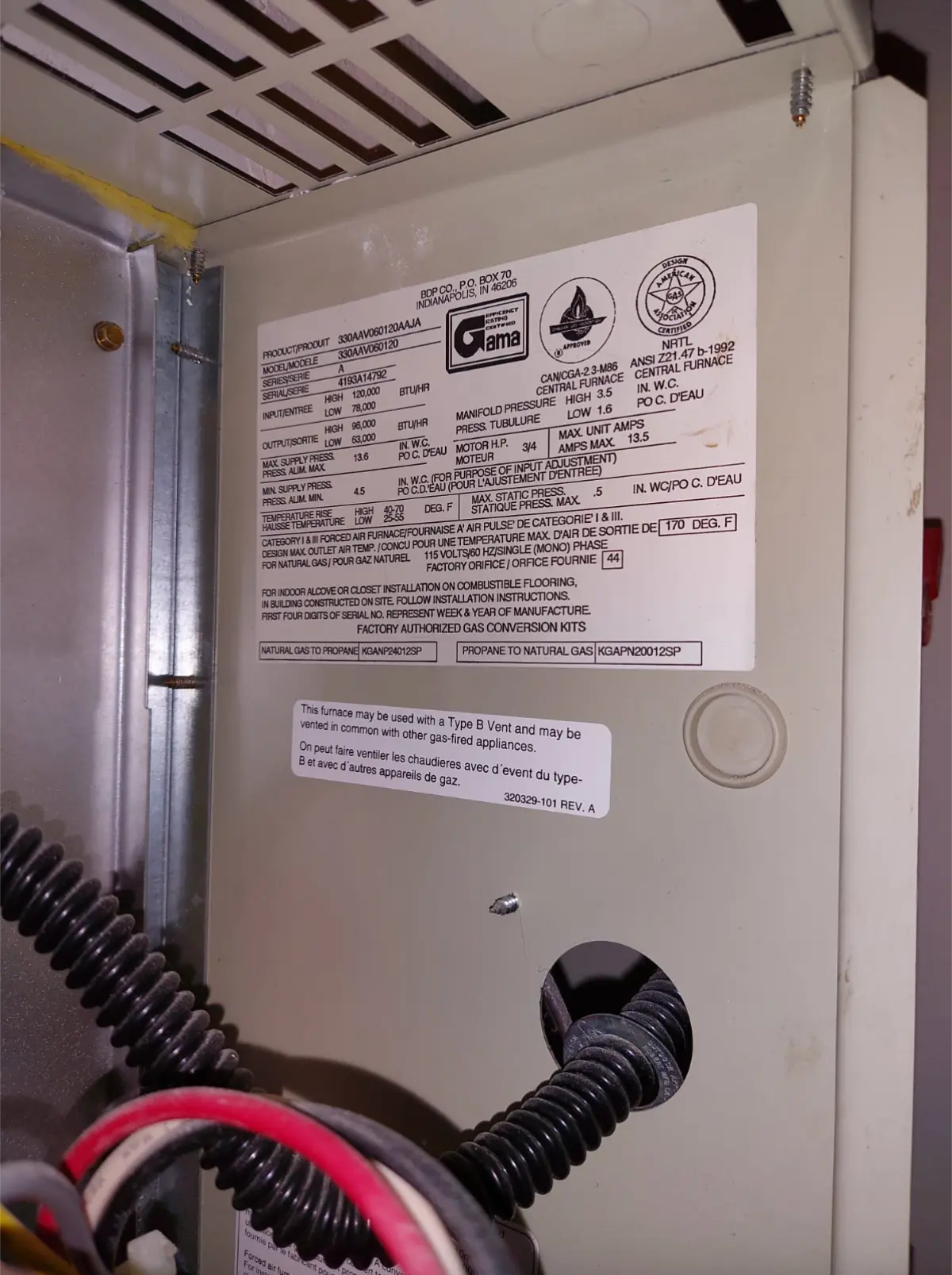
System Before: Approximately 30-year-old gas furnace and existing ducted HVAC system, with no central AC documented
System After: Trane 5-ton, 120,000 BTU, 80% AFUE two-stage gas furnace with heat pump add-on, new evaporator coil, Product Air Smart Communicating Thermostat, and Columbia G150 filter boxFinal Project Cost: $6,417.06 before tax / $6,924.01 including tax
Furnace and Heat Pump Installation in Stanwood, WA: Adding Central AC After 30 Years
Robert had lived in his Stanwood home for 30 years, and the heating system was about the same age. The house had never had central air conditioning, so summer comfort had always meant working around the heat rather than actually controlling it. That had become harder as the summers got hotter, and Robert was planning to stay in the home for at least another decade. He was not looking for a temporary way to get through July. He wanted the house to be more comfortable for the years ahead, with better efficiency and equipment he could trust.
A referral brought him to Product Air, and Eli came out on June 5.
The Stanwood Home
Robert’s Stanwood home was built in 1995 and has about 1,853 square feet of living area with four bedrooms. He has lived there for roughly 30 years, so he knows the comfort patterns of the house better than anyone coming in for a two-hour HVAC consultation. He already knew the living room tended to run colder than other parts of the home, and he could tell Eli how the house had changed over time, including the replacement of roughly 90% of its windows.
That history matters when we look at new HVAC equipment. A house does not have the same heating and cooling load forever just because the square footage stays the same. Newer windows can change heat loss and summer heat gain, while existing duct layout and airflow still determine how well conditioned air reaches individual rooms.
A 30-Year-Old HVAC System That Was Still Running
Robert already knew the living room tended to run colder than the rest of the home, and the bigger missing piece was summer comfort because the house had never had the central cooling he wanted.
The house had also changed during those 30 years. About 90% of the windows had been replaced, which can affect how much heat the home gains and loses compared with the house the original system was selected for. Robert was not planning another major window, insulation, or addition project, so we could look at the home largely as it exists today instead of sizing new equipment around a renovation that might change the load again next year.
Robert also expected to stay in the house for at least another decade. That made this less of a “how cheaply can we keep the old furnace alive?” conversation and more about what he wanted to live with for the next 10 years. The colder living room mattered because new equipment alone does not automatically fix a room-to-room comfort problem. Airflow, duct layout, supply and return balance, and the actual heating and cooling load of each part of the house still matter. Eli’s job was to show Robert what each system option could improve and where the money would make a real difference for a house he planned to keep.
Why Robert Wanted AC Now
Robert gave us a much simpler reason: comfort in summer. He had lived without the cooling setup he wanted for years, but hotter summers were making that harder to accept. That is a different kind of HVAC project from replacing a dead furnace in January or a failed compressor in July. We were not responding to an emergency. We had room to look at how Robert actually used the house and what he expected from a new system before recommending equipment.
Robert also pointed out that the living room tended to run cold compared with the rest of the home. That is useful information during an HVAC consultation because square footage alone does not tell us how a house behaves. The home has 12 supply vents on the main floor and six downstairs, with two return-air locations documented in the comfort survey. Those details tell us there is an existing ducted distribution system in the home, but they do not tell us by themselves why one space feels different from another. Room load, airflow, duct layout, solar exposure, insulation, and other conditions can all affect comfort.
Upgraded Filtration for a Home With Allergy Concerns
Robert told us his wife deals with allergies, even though the family was not seeing an unusual amount of dust in the house. This is one of those subjects I take pretty seriously because I deal with allergies myself, and I know how frustrating indoor air quality can be. There usually is not one magic filter that suddenly fixes everything. Pollen, pet dander, fine particles, outdoor air getting into the house, filter efficiency, and how much air the HVAC system can actually move all play a part.
The new system included a Columbia G150 media filter box, which gives the system more filter surface area than a typical 1-inch filter and is designed to capture airborne dust, pollen, and other particles as return air passes through it. The larger filter area also matters because filtration has to work without creating so much resistance that the blower struggles to move the airflow the equipment needs. The project estimate lists a typical replacement interval of about 6 to 12 months, although the real interval depends on the house and how quickly the filter loads up.
I would never tell Robert that a better HVAC filter is going to cure his wife’s allergies. I would tell him what I would want someone to tell me: good filtration can reduce some of the airborne particles circulating through the system, but allergy comfort is usually a bigger indoor-air-quality conversation rather than something one filter solves by itself.
What Product Air Installed
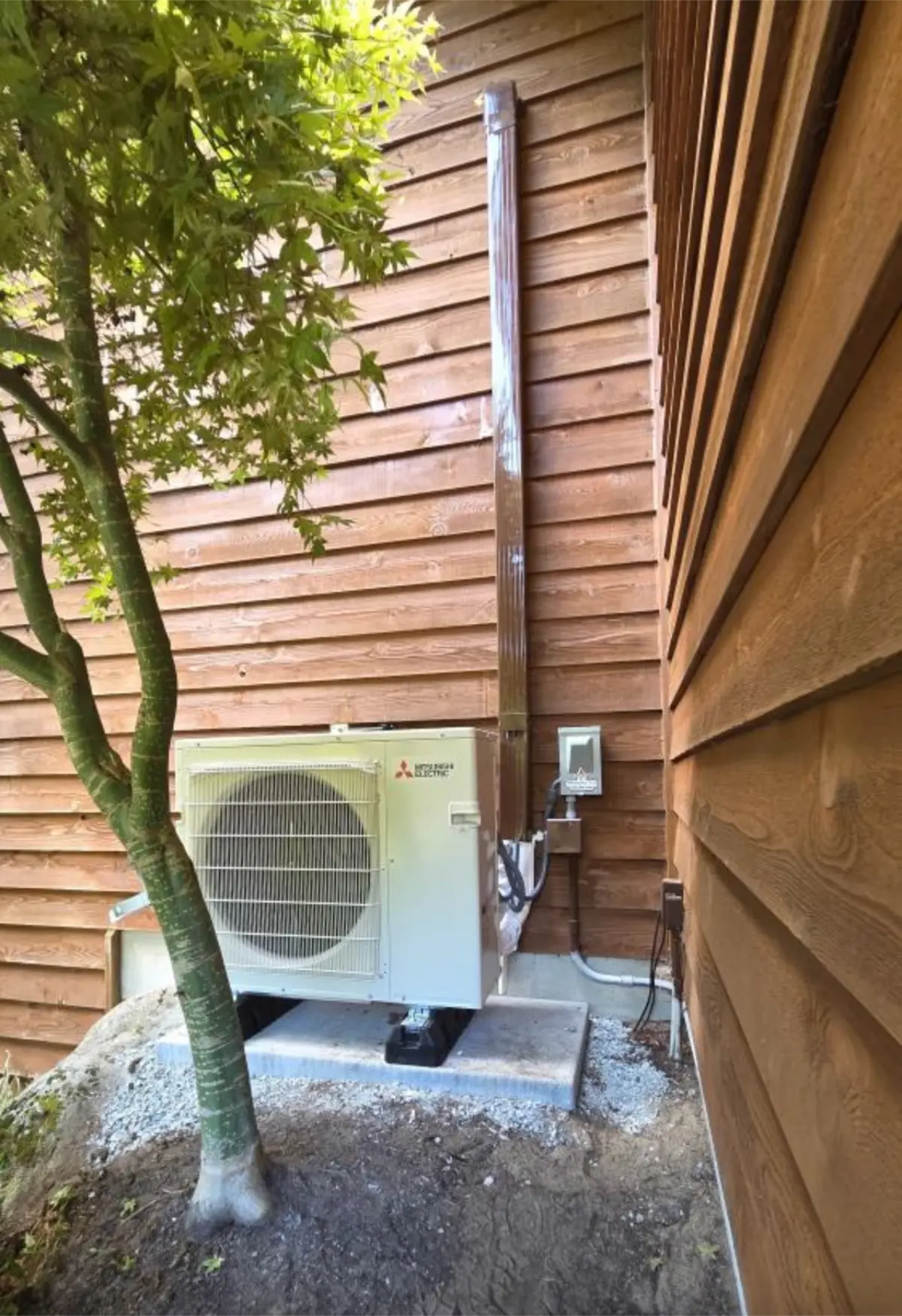
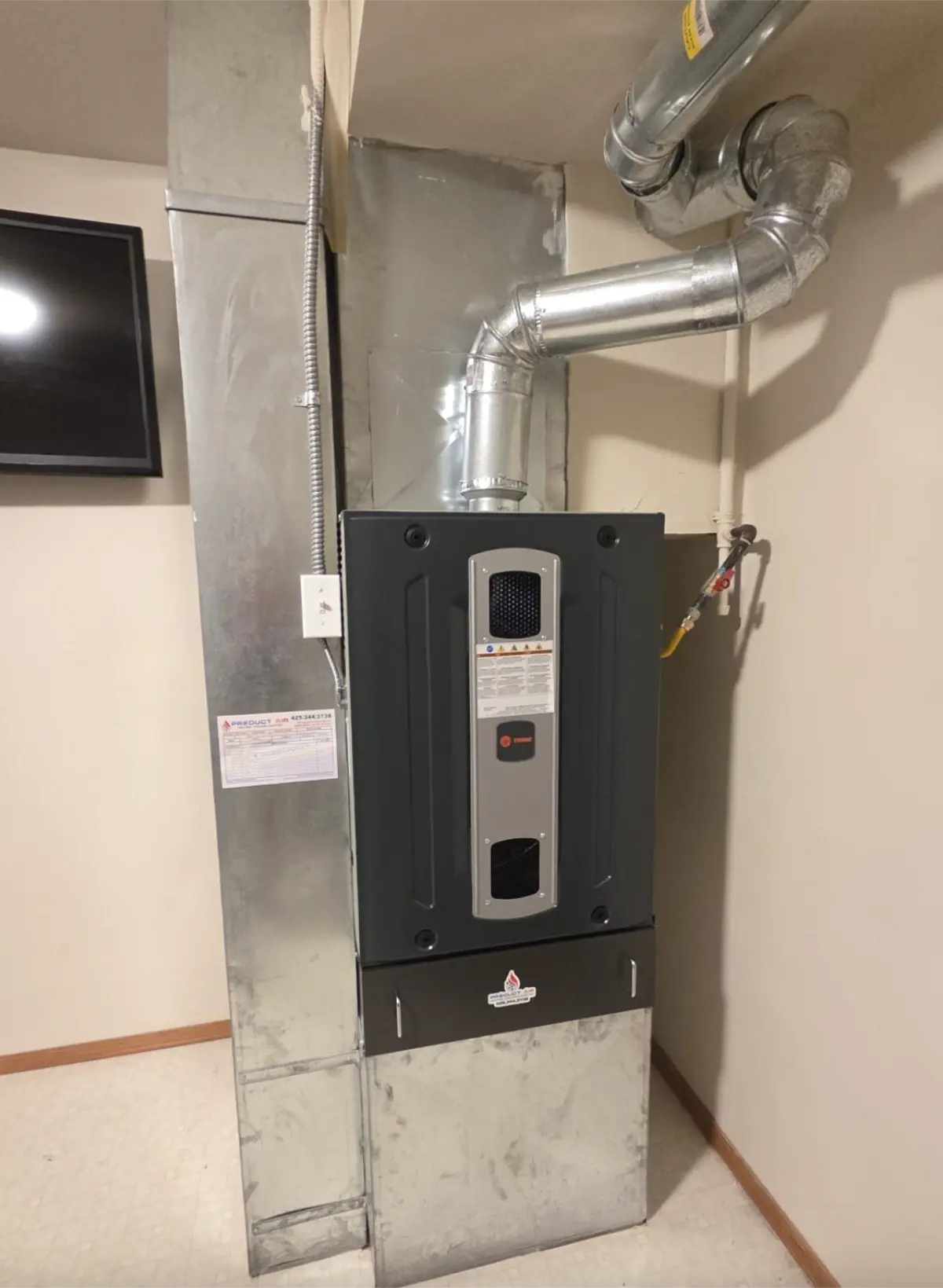
Product Air replaced the old heating setup with a Trane S8X2D120M5PSCA, a 5-ton, 120,000 BTU, 80% AFUE two-stage gas furnace, and added a heat pump with a new indoor evaporator coil. The furnace can operate at a lower heating stage when the house only needs a moderate amount of heat and step up to the higher stage when the load increases, instead of firing at full output on every heating call. The heat pump adds electric heating as well as central air conditioning, while the gas furnace remains available as another heat source.
The system also included a Product Air Smart Communicating Thermostat and a Columbia G150 media filter box. The thermostat matters on a furnace-and-heat-pump setup because the controls have to coordinate equipment staging and decide how the system responds as the heating or cooling demand changes. The G150 gives the return-air side a larger media filter than a standard 1-inch setup, adding filtration surface area while giving the blower a filter designed for higher-capacity central HVAC airflow.
Installation started at 8:00 AM on June 24 and the final walkthrough wrapped up at about 7:30 PM, so this was a full-day changeover. Product Air installed the furnace, heat-pump components, controls, and filtration as one system rather than treating the new AC as a separate add-on. That integration matters because airflow, refrigerant-side heat transfer, thermostat logic, and furnace operation all have to work together before a hybrid system is actually ready for the homeowner.
How Much Did Robert’s Furnace and Heat Pump Installation Cost?
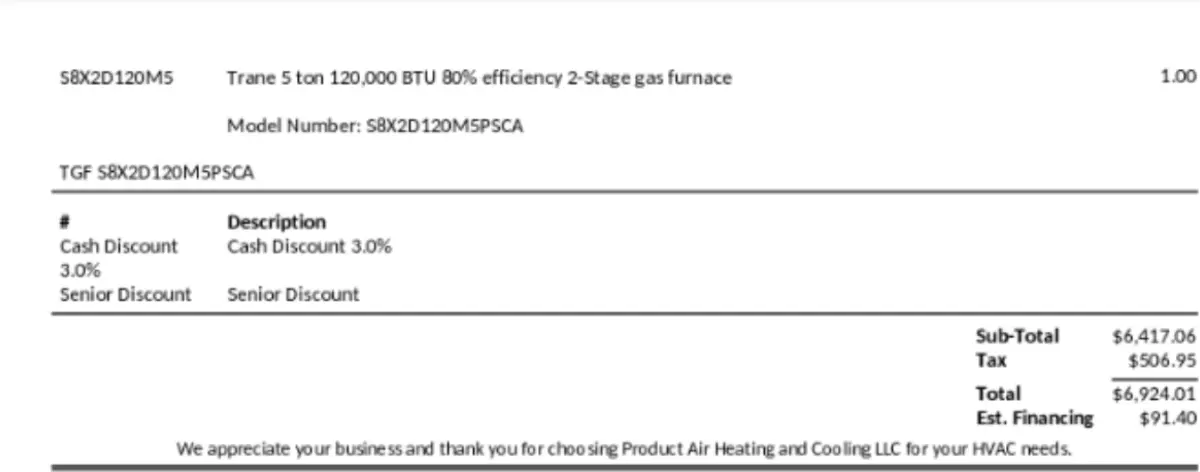
The project subtotal was $6,417.06 before tax. Sales tax added $506.95, bringing the final total to $6,924.01.
What Robert Got From the Project
The finished system gave Robert central cooling through the home’s existing ductwork for the first time, along with a new Trane two-stage gas furnace for heating. The added heat pump can provide both cooling and electric heat, while the furnace remains part of the system when gas heat is needed. A new evaporator coil handles the indoor refrigerant-side heat transfer, communicating controls coordinate the equipment, and the Columbia G150 media filter gives the return-air side more filtration capacity than the basic filter setup he had before.
Robert also did not have to turn the project into a whole-house redesign to get those improvements. The existing duct system stayed in use, while the equipment serving it was brought forward by roughly three decades. For a homeowner planning to stay another 10 years or more, that was the part that mattered most to me: he was not paying just to get through one hotter summer; he was putting in a system he could actually live with for the next chapter of the house.
Tech Brother Rule: Don’t Let Age Make the Decision
A 30-year-old system can still run, and you do not have to replace it just because of the number. I’d upgrade when the old setup no longer gives the house what you actually want from it.
Frequently Asked Questions: Furnace and Heat Pump Installation in Stanwood, WA
Do I have to wait until my old HVAC system fails before adding AC?
No. Robert’s project was driven by comfort, not an emergency equipment failure. His existing system was approximately 30 years old, but he called because he wanted better summer comfort and expected to remain in the home for years.
Are ductless mini-splits useful for rooms that have different comfort needs?
They can be. Ductless systems can provide individual zones, which allows different areas to have their own temperature control. The exact benefit depends on the design and placement of the indoor units. Robert had already noticed that his living room did not feel the same as the rest of the house, which was useful information during the comfort consultation.
Does replacing windows change HVAC needs?
It can. Windows affect the amount of heat entering and leaving a home, so major window upgrades are useful information when HVAC equipment is being selected. Robert told us roughly 90% of his windows had already been replaced and that he did not have another major home-envelope project planned.
Does a ductless mini-split help with allergies?
A ductless system should not be sold as an allergy cure. Filtration and indoor air quality depend on the specific equipment, maintenance, indoor conditions, and the homeowner’s individual sensitivities. Robert told us his wife has allergies, so it was something Eli needed to keep in mind during the comfort conversation, not something we should make an unsupported health promise about.
Is a 30-year-old HVAC system automatically due for replacement?
Age gives me context, not the answer. Robert’s 30-year-old system was still running. He called because the house no longer felt the way he wanted it to in summer, and he expected to keep living there for years.
How long did Robert’s installation take?
The project started at 8:00 AM on June 24 and reached final walkthrough at approximately 7:30 PM the same day.
How much did Robert’s ductless system cost?
The final project price was not included in the current case data and should be added before publication.
Key Takeaways
- You do not have to wait for a 30-year-old HVAC system to fail before adding cooling if the house no longer meets your comfort needs
- Replacing old equipment should be based on how the home performs today, not on age alone
- Major window upgrades can change a home’s heating and cooling load, so they should be part of the HVAC sizing conversation
- A room that consistently runs hotter or colder than the rest of the house can point to an airflow or distribution problem that new equipment alone may not fix
- A heat pump can add central cooling and electric heating while still working alongside a gas furnace in the same ducted system
- Better filtration can reduce some airborne particles, but it should not be presented as a cure for allergies
- A larger media filter can provide more filtration surface area than a standard 1-inch filter while still needing to be selected around proper system airflow
— Serg Nikolin, Co-Founder, Product Air Heating, Cooling and Electric
Marysville · Issaquah · Seattle · Western Washington