


Location: 222nd Street Southeast corridor, Woodinville, WA 98077
Call Date: April 30, 2026
First Visit: May 14, 2026
Project Completion: May 14, 2026
Lead Technician: Robert, 8 years in the trade, factory training on Trane, Mitsubishi, and Navien equipment, EPA certified (initial account walkthrough by co-founder Serg Nikolin)
System Before: A multi-room ductless mini-split system across a Woodinville office building, mixed vintage, with older Sanyo and Mitsubishi heads alongside newer Mitsubishi equipment, some indoor heads mounted without vibration isolators, coming off a maintenance contract a previous provider had billed but not carried out
System After: A full mini-split maintenance inspection completed across every head and condenser, every finding documented, and an annual maintenance plan with Product Air set up, with a deep clean and air-treatment units quoted for later
Final Project Cost: $1,888.75 (maintenance inspection visit, quoted repairs and add-ons not taken on this visit)
Steven runs the facilities for a company in an office building on the 222nd Street Southeast corridor in Woodinville. Each office has its own wall-mounted ductless mini-split head, a mix of equipment added over the years, and the whole system was under a maintenance contract with a previous provider. The contract was being billed. The maintenance was not being done.
That is a quiet problem. Nothing breaks on the day you notice it. The units keep running, the invoices keep arriving, and the work that is supposed to be happening once a year, the blower and coil cleaning, the refrigerant readings, the electrical checks, is not. By the time Steven brought Product Air in, the system needed someone to go through it head by head and establish what was actually going on.
Why Steven Switched the Office's Mini-Split Maintenance to Product Air
Steven and the company have been Product Air customers for three years. No verbatim quote from him was recorded for this job. The account of why he made the switch is that a previous maintenance provider had been charging the company for a contract it never fulfilled. It is a pattern worth naming plainly: a maintenance agreement collects a recurring fee, and the visits it is supposed to pay for are easy to skip, because a system that has been running is assumed to be fine.
Rather than simply take over the same contract, Product Air's co-founder, Serg Nikolin, offered Steven a two-step approach: an initial visit to get to know the equipment and find every issue on it, handle the repairs that came out of that, and only then move to maintaining it on a yearly schedule. The point of starting with a full inspection is that it puts the whole list of problems on the table at once, at the beginning, instead of one repair quote at a time on every future visit.
What the Mini-Split Maintenance Visit in Woodinville, WA 98077 Found
Robert ran the visit. He has eight years in the trade, factory training on Trane, Mitsubishi, and Navien equipment, and carries an EPA certification, which on a mixed-vintage mini-split system matters mostly because reading refrigerant charge correctly across several different units is the core of the job. The system is a set of single-zone ductless mini-splits, one head per office, spread across the commercial building with six offices and a server room. The equipment is mixed vintage. Some heads are older, including a Sanyo unit and an older Mitsubishi Electric unit. Others are newer Mitsubishi equipment, and the outdoor condenser serving the southwest office was installed by Product Air in April 2024. A building that has added cooling one room at a time over many years ends up with exactly this: several independent systems of different ages, all needing the same attention.
The maintenance inspection covered, on each system, the refrigerant charge with subcooling and superheat readings, the compressor and condenser fan motor amp draws, a capacitor test, and an inspection of the contactor, the defrost control board, and the condenser coils. That is the real content of a mini-split service visit, and on a system this size it is a half-day of work. The prior year's maintenance, on April 11, 2025, was logged at five hours, which is a useful benchmark for what the job should take when it is actually performed.
The finding that came out of the walkthrough is that some of the indoor heads had been installed without vibration isolators. Those are the rubber or spring mounts that sit between the unit and its bracket and keep the blower's vibration from transmitting into the wall. Without them, the vibration goes straight into the structure and comes back out as extra noise. It is not a safety problem and it is not a defect in the units. It is an install detail that was skipped, and in an office where people are trying to work next to the head, the noise is the thing they notice.
What Should a Ductless Mini-Split Maintenance Visit Actually Include?
A real mini-split maintenance visit is done per head, not per building. For each indoor unit, that means checking and cleaning the blower wheel and the evaporator coil, since dirt on either one chokes airflow and drops both efficiency and air quality. At the outdoor unit for each system, it means reading the refrigerant charge against the target subcooling and superheat, measuring the compressor and fan motor amp draws, testing the capacitor, and inspecting the contactor, the defrost board, and the condenser coil. The drain path gets checked so a clogged line does not back water up into the head.
The reason the distinction matters is time. A single wall head takes real minutes to do properly, so a building with a head in every office is a multi-hour visit by definition. When a maintenance contract's visits are quick, or are not happening at all, that is the tell. On this job the inspection ran across every system in the building, which is why the invoice reflects a genuine half-day of work rather than a drop-in.
What Happens When a Maintenance Contract Isn't Fulfilled?
Two things, and both are slow. The first is that you are paying for a service you are not receiving, which is a straightforward billing problem. The second is that the maintenance itself compounds when it is missed: coils and blowers get dirtier each season, small electrical parts drift without anyone reading them, install details like missing vibration isolators never get caught, and there is no baseline set of measurements to compare against when something does eventually go wrong.
Product Air's answer to that here was the two-step plan: treat the first visit as a full inspection that produces the complete list of what the system needs, address those items, and then run annual maintenance from a known starting point. It front-loads the discovery instead of spreading it across years of surprise repair quotes, which, as the technician put it, is also the honest way to do it. A contractor who shows up every single visit with a new thing to fix looks the same as a contractor inventing work, even when the finds are real.
The Plan: Inspect First, Contract Second
The visit that this case study covers is step one: the baseline inspection across the whole building, billed as a maintenance visit. Two pieces of larger work came out of it and were written up as estimates for Steven to decide on separately:
- A deep clean of the mini-split blower wheels and evaporator coils, including in-place coil cleaning and condenser coil cleaner, quoted at $3,349.20.
- Six external-mount air-treatment units, one per office, that mount to the mini-split and treat the air without adding a filter to clean, quoted at $3,757.08.
Neither was sold on this visit, and neither had to be. The deep clean is a heavier version of what routine maintenance keeps on top of, worth doing once when a system has gone a while without service. The air-treatment units are an air-quality add-on, not a repair. Both are now priced and on file, which is the point of the inspection-first approach: the options exist as numbers Steven can act on when he wants to, not as pressure applied during a service call.
What Product Air Did on the Visit
Robert worked through the building system by system: at each indoor head, he inspected the unit and its mounting and checked the condition of the blower and coil; at each outdoor unit, he took the refrigerant, electrical, and coil readings that make up the inspection. The missing vibration isolators were documented against the heads that did not have them. The larger deep-clean and air-treatment scopes were quoted rather than performed, and the annual maintenance plan was set up so the system is now on a schedule that gets carried out.
Item |
Detail |
|---|---|
System type |
Multiple single-zone ductless mini-splits, one wall-mounted head per office |
Indoor units |
Mixed vintage: older Sanyo and Mitsubishi Electric heads, newer Mitsubishi heads |
Outdoor units |
Wall-bracket-mounted Mitsubishi condensers The southwest office condenser installed by Product Air in April 2024 |
Maintenance inspection |
Refrigerant charge, subcooling and superheat Compressor and condenser fan motor amp draw; capacitor test Contactor, defrost control board, and condenser coil inspection |
Finding |
Some indoor heads mounted without vibration isolators, transmitting blower vibration and noise into the structure |
Model numbers |
Not recorded on the job |
Where the inspection turns up repairs, they fall under heat pump and mini-split repair. The ongoing schedule is a maintenance agreement built for the building.
Warranty
Product Air Heating, Cooling, and Electric installed no equipment on this visit, so no installation warranty applies. The work was a maintenance inspection only. If Steven moves forward with the air-treatment units, a one-year labor warranty is typical for commercial installs.
One Afternoon Across Several Offices on 222nd Street Southeast
The visit was a single appointment on May 14, 2026, running about four hours through the afternoon on the 222nd Street Southeast corridor, with Robert moving office to office. There was nothing non-standard about it in the engineering sense: no equipment moved, no shutdown to coordinate, no access problem beyond working around people at their desks. Robert's read on the scope was routine. The 2025 maintenance was logged at five hours, so four hours for an inspection pass, without the deep clean, is the expected footprint for a system with this many heads.
The Real Number: $1,888.75
The maintenance inspection visit was invoiced at $1,888.75. The record does not break out a pre-tax subtotal, and no repair line items were added to it on this visit. The two larger scopes that came out of the inspection were quoted separately: $3,349.20 for the blower and coil deep clean, and $3,757.08 for six external-mount air-treatment units. Neither was taken.
No utility rebate applies. Rebate programs are built around efficiency upgrades and new equipment, not maintenance visits or air-quality add-ons, so none was available for this work and none was claimed. For the larger scopes Steven is still deciding on, we also work with GreenSky and Service Finance Company, LLC, and most applications get a decision in minutes. Financing is subject to credit approval.
What It Means for the Office Going Forward
Steven now has something the previous arrangement never produced: a documented, system-by-system baseline for every mini-split in the building, and an annual maintenance plan that is actually carried out against it. The next visit starts from a known state rather than from scratch.
The two bigger jobs, the deep clean and the air-treatment units, are priced and waiting for a decision instead of hanging over a service call. And the smaller finding, the heads without vibration isolators, is on the record to be corrected. According to the crew, Steven has consistently said he appreciates how honest the company is and how good the work is, which, for a commercial account that switched providers over exactly that issue, is the whole point.
Where This Job Fits: Our Issaquah Team
This job was handled by our Issaquah team, the crew that covers Issaquah and the Eastside. Our Issaquah location covers King County, including Woodinville, Kirkland, and Redmond. You can see reviews from that area on our Issaquah Google Business Profile.
Frequently Asked Questions
What does a ductless mini-split maintenance visit include?
Per indoor head: inspecting and cleaning the blower wheel and evaporator coil, and checking the drain path. Per outdoor unit: reading the refrigerant charge against target subcooling and superheat, measuring compressor and fan motor amp draws, testing the capacitor, and inspecting the contactor, defrost control board, and condenser coil. On this Woodinville office system, that inspection was run across every head and condenser in the building, which took about four hours for one technician.
How often should office mini-splits be serviced?
Once a year is the standard interval for a mini-split that both heats and cools, which most do. Systems in commercial spaces can warrant more frequent blower and coil attention because of higher occupancy, dust, and runtime. The key is that the visit actually happens and covers every head. This office had been on a yearly contract that was billed but not performed, so the practical service history was closer to none.
What happens if you pay for a maintenance contract that isn't fulfilled?
You lose twice. You are billed for visits that do not occur, and the deferred maintenance compounds: coils and blowers get progressively dirtier, electrical components go unread, and install defects never get caught. There is also no baseline of measurements to diagnose against later. In this case, Product Air restarted the account with a full inspection to build that baseline before putting the system back on an annual schedule.
Why are some mini-split heads noisier than others?
A common cause is missing vibration isolators, the mounts that sit between the indoor unit and its wall bracket. Without them, blower and refrigerant-flow vibration transmits directly into the wall and radiates as noise. It is an installation detail, not a fault in the unit, and it can be corrected by remounting the head with isolators in place. On this job, several heads in the building had been installed without them, and that was logged as a finding.
Do commercial mini-splits qualify for utility rebates?
Rebates in this region are aimed at efficiency upgrades and new high-efficiency equipment, not at maintenance or air-quality accessories. A maintenance inspection, a coil deep clean, or add-on air-treatment units do not qualify. No rebate applied to this Woodinville job, and none was claimed. Equipment replacement is where rebate programs come into play, and that was not part of this visit.
Is a mini-split "deep clean" the same as routine maintenance?
No. Routine maintenance keeps the blower and coil clean enough to run efficiently year to year. A deep clean is a heavier, more involved procedure, often with the blower wheel and coil cleaned in place using dedicated cleaners, and it is mainly worth doing when a system has gone a long stretch without service. For this office, a deep clean of the blowers and coils was quoted at $3,349.20 as separate work from the maintenance inspection.
Key Takeaways
- A ductless mini-split maintenance visit is per-head work: each indoor unit's blower and coil, plus refrigerant and electrical readings at each condenser. In a multi-office building, that is a half-day, not a quick stop.
- Paying for a maintenance contract is not the same as the maintenance happening. This office had been billed by a previous provider for work that was not carried out.
- A mini-split head installed without vibration isolators transmits blower vibration into the wall and shows up as extra noise. It is an install-quality issue, not a unit defect.
- A blower and coil deep clean was quoted at $3,349.20 and six external-mount air-treatment units at $3,757.08, separate from the $1,888.75 maintenance inspection.
Steven changed providers because the last one billed for maintenance it did not do. What the office has now is a full inspection of every mini-split in the building, the larger work priced and on file, and a yearly plan that runs from a documented baseline.
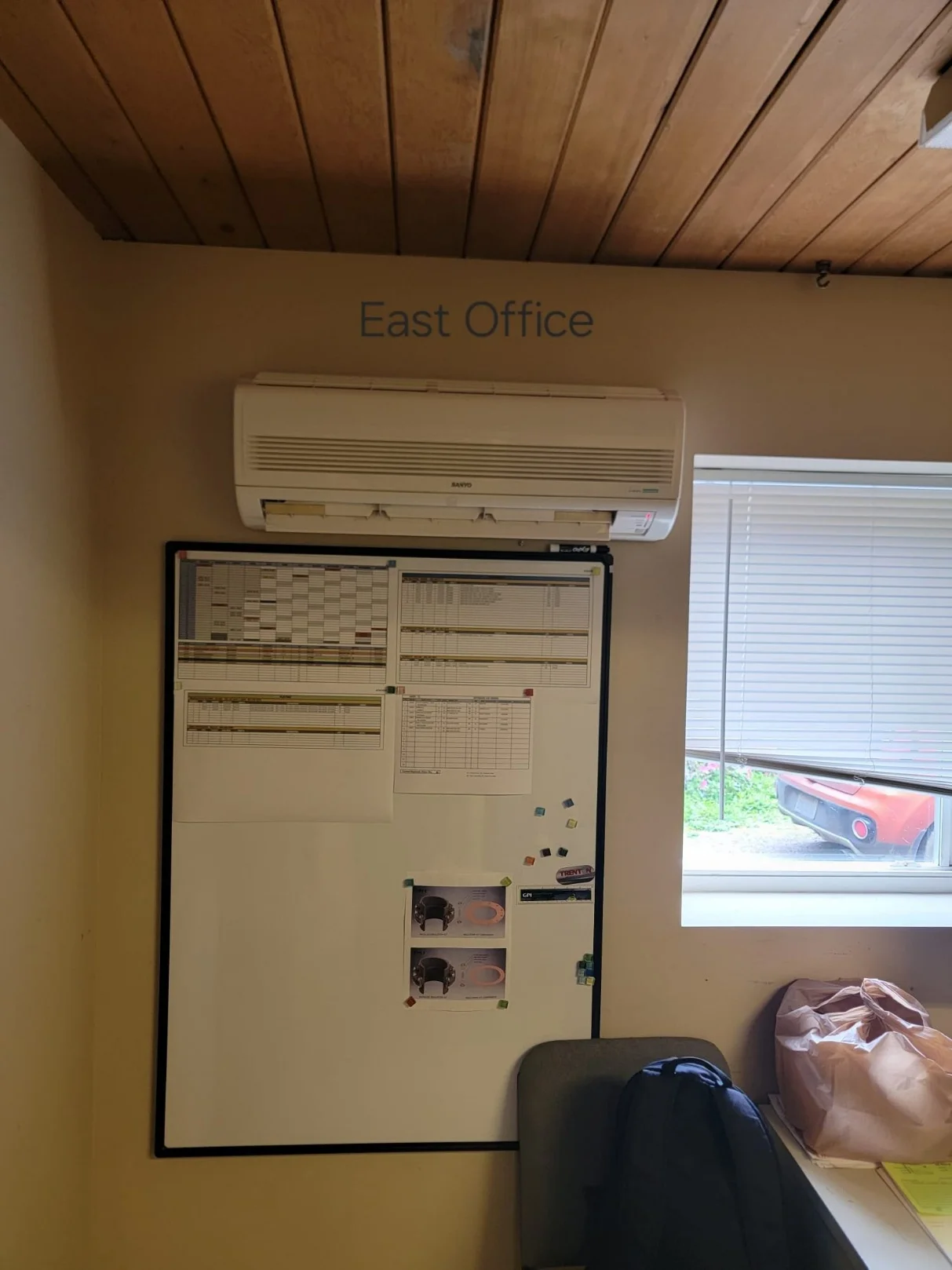 an older head before service, the Sanyo unit in the east office
 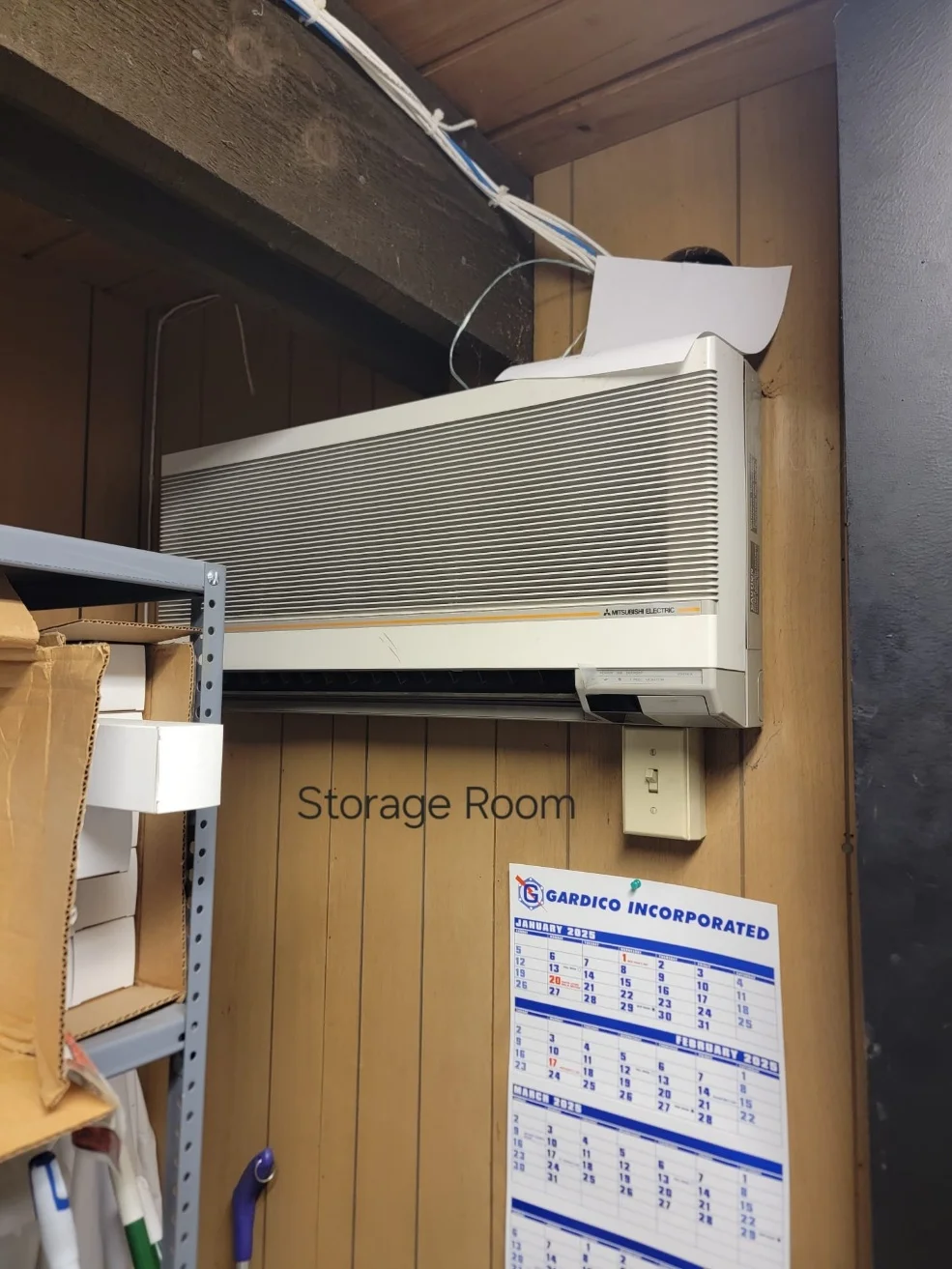 an older Mitsubishi Electric head in the storage room
 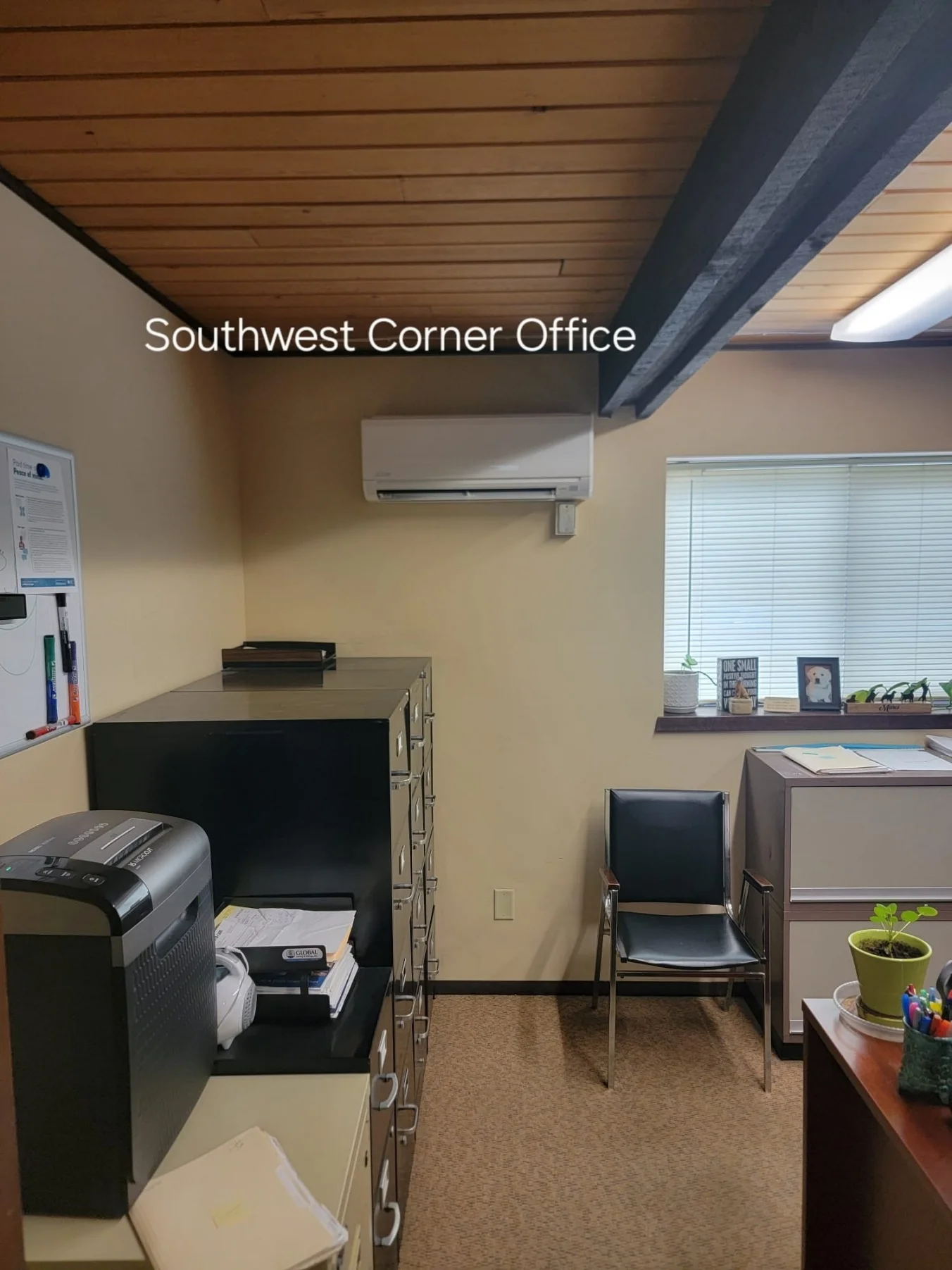 a newer Mitsubishi head in the southwest corner office
 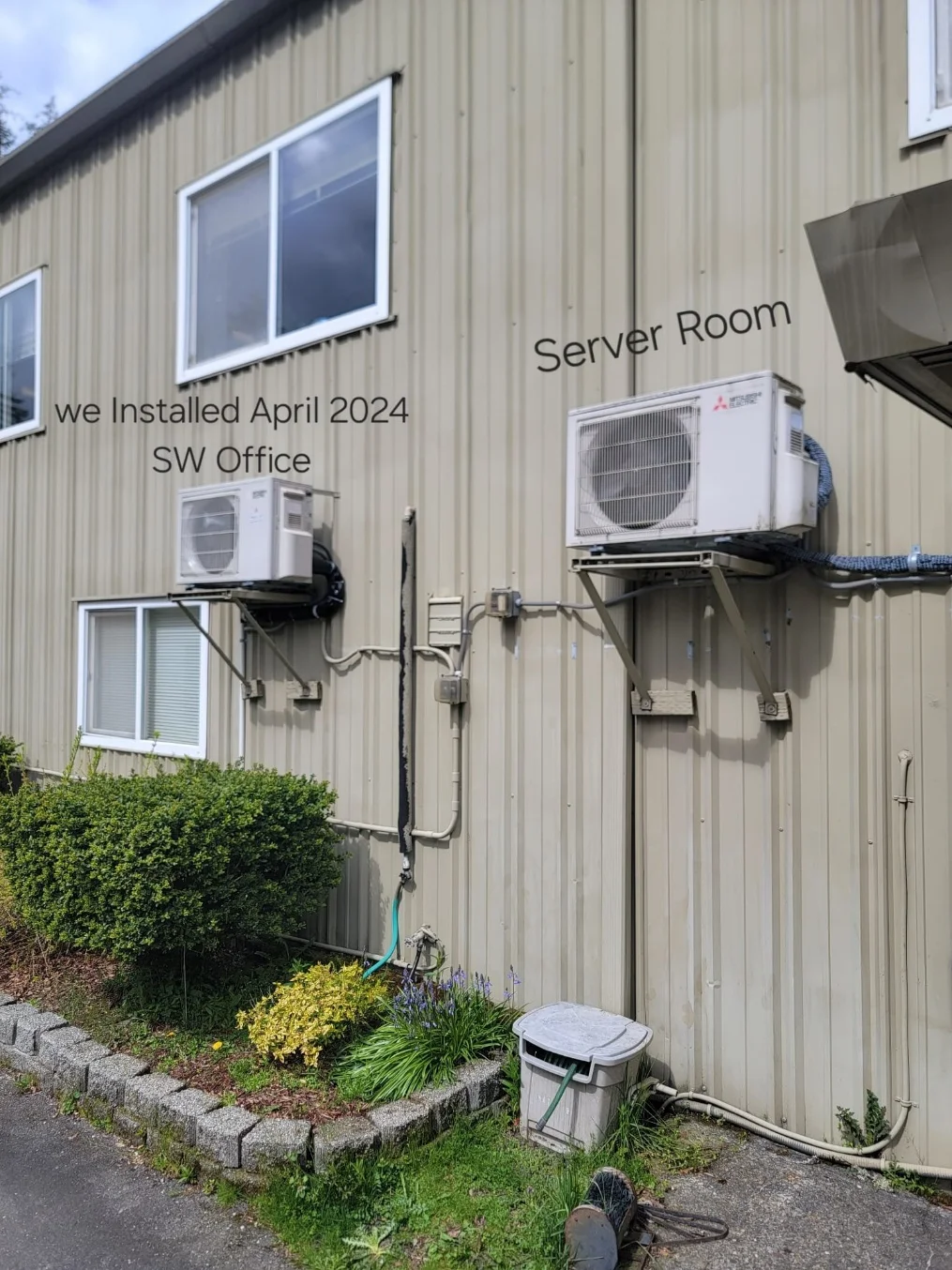 the outdoor Mitsubishi condensers on wall brackets, one installed by Product Air in April 2024
PLAN YOUR NEXT STEP
Need help with your home comfort?
Explore Product Air’s heat pumps services or contact the team.
Share this guide