

Winters are known to be tough in Western Washington. When the cold sets in, homeowners often have one big concern: Can a heat pump really keep a house warm when temperatures plunge, or will it struggle when the cold sets in?
The above level of skepticism is definitely justified if one is considering older models of HVAC technology. However, modern cold-climate heat pumps rewrite the rules. Heat pump technology has changed a lot in the last decade, and if you are researching heat pump options because your existing heat source is on its last legs, it is worth understanding what has actually changed.
I’m Serg Nikolin, one of three brothers who have been running Product Air Heating, Cooling, and Electric in Western Washington since 2017. Our technicians in Marysville, Issaquah, and Seattle have installed well over 120 heat pump systems in the last year alone. And believe me, when it comes to real-world performance in cold weather under Pacific Northwest skies, this is your tech brother from another mother offering you the honest, engineering-backed truth: no sales pressure, no gimmicks, and no tight script telling you what you must buy.
Never do we believe in hard-selling or forcing every homeowner into the same solution. Every home is different, and our job is to explain your options so you can choose what makes the most sense for your family, safety, and budget.
Quick Takeaways:
- With over 120 heat pump installs in our region over the past year, we see firsthand what performs reliably in Western Washington homes.
- Through hands-on field experience, we lean heavily on installing Mitsubishi cold-climate systems because we’ve seen them hold up better and trigger fewer service calls than most other brands we work with.
- These advanced units can pump out effective heat down to an outdoor low of -13°F, far colder than our typical regional winters.
- For certain home layouts, pairing a heat pump with auxiliary heat ensures seamless comfort if extra capacity is needed during rare deep freezes.
- Most homeowners in Western Washington can benefit from installing a cold-climate heat pump, and those who make the switch often report greater comfort, improved safety, and long-term savings.
How Heat Pumps Actually Heat and Cool and How They Operate
Think of a heat pump less like a traditional fuel-burning furnace and more like a thermal transport system. Instead of burning gas or using raw electrical resistance to create heat from scratch, an electric heat pump uses electricity and circulating refrigerant running through copper refrigerant lines to extract heat and capture heat energy from the outside air, even when it feels chilly outside, and heat your home. In the summer, the cycle reverses to pull heat out of your house, letting the system heat and cool your home. Heat pumps improve overall energy efficiency and lower monthly heating bills by moving heat instead of producing it from scratch, even if the compressor itself still requires electricity. This is the main principle behind how heat pumps operate.
What Types of Heat Pumps Are Out There?
When you are exploring types of heat pumps for system upgrades, you will generally run into a few primary configurations:
- Air-Source Heat Pumps: The standard heat setup for whole homes connecting an outdoor compressor to indoor air handlers or furnaces. An air-source heat pump is what most homes in Western Washington use.
- Ductless Mini-Splits: Ideal for homes without conventional ductwork, offering independent, room-by-room temperature control via wall-mounted heads.
- Hybrid (Dual-Fuel) Systems: A system that combines a heat pump with a backup gas furnace, automatically balancing efficiency and fuel sources based on outdoor conditions.
- Water-Source (Geothermal) Heat Pumps: These work on the same basic principle but pull thermal energy from a well, pond, or buried loop instead of outdoor air. We do not install water-source heat systems often here, but if your property has the right setup, it is worth knowing they exist.
How Heat Pumps Work in Cold Climates and Extreme Cold
It is a well-known fact that even on a damp, 38°F winter day in Western Washington, heat energy exists in the ambient air. Liquid refrigerant inside the heat pump’s outdoor coil absorbs that thermal energy, evaporating into a low-pressure gas as it starts to extract heat from outdoor air even in cold temperatures. The heat pump’s compressor then squeezes that gas, spiking its temperature and optimizing its coefficient of performance. That heated vapor then enters the indoor coil, where a blower fan circulates your home’s air across it, delivering consistent warmth throughout your living spaces while your wall thermostat controls the cycle.
Cold-Climate Heat Pump Technology: What Makes Them Different?
Standard heat pumps start losing heating capacity and heat pump efficiency once outdoor temperatures drop near freezing. A proper cold-climate heat pump is designed with advanced variable-speed inverter compressors, which let modern cold-climate heat pumps maintain high output even when the weather turns harsh, often down to 5°F or lower depending on the model. While proprietary innovations like enhanced flash-injection technology help specific manufacturer lineups such as Mitsubishi H2i systems maintain high performance in severe weather, they serve as examples of engineering rather than mandatory baseline definitions for all cold-climate equipment.
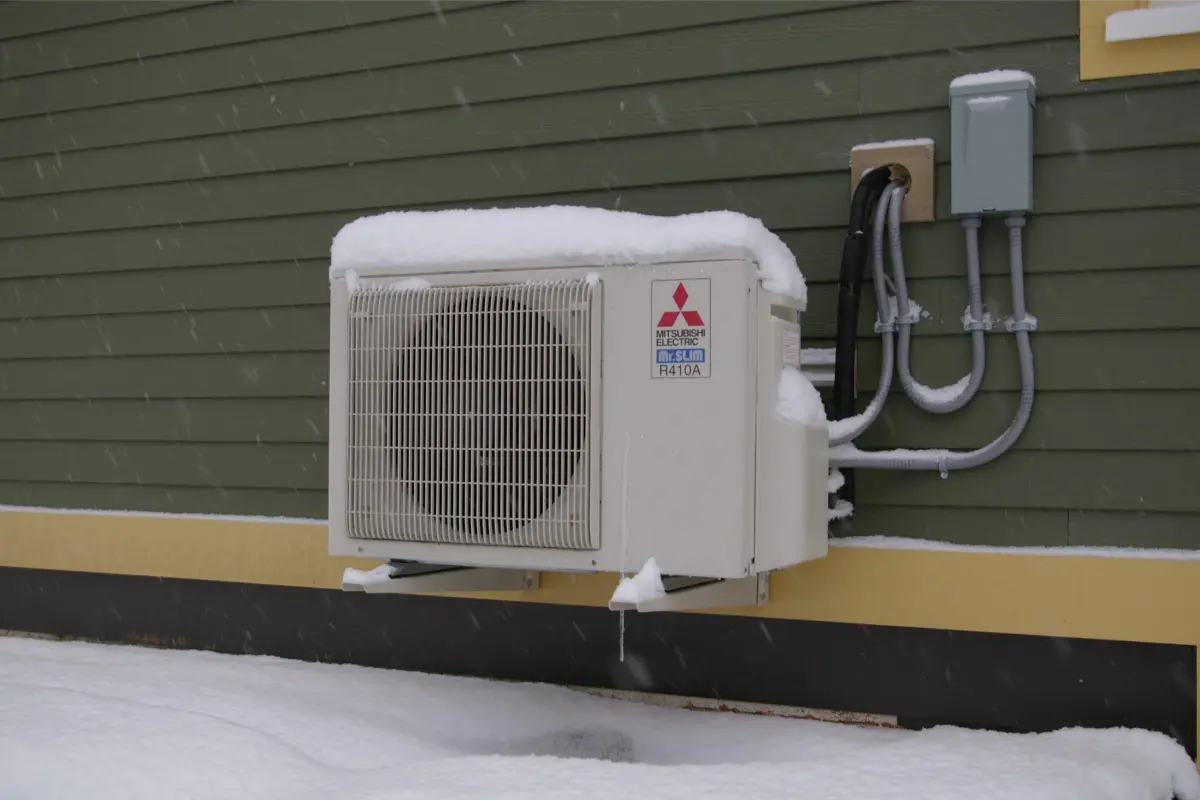
As a Mitsubishi Elite Diamond Contractor, we at Product Air specialize in installing their cold-climate heat pump systems. After years of servicing local residences, we have also found they run into fewer mechanical issues, manage local humidity well, and hold their heat pump performance when other systems start struggling. If you live in a colder climate anywhere in the Pacific Northwest, this is the category of equipment worth researching heat options for first.
Where Heat Pumps Struggle in Cold Weather: Backup Heat and Performance Limits
Modern cold-climate heat pumps may be impressive pieces of engineering, but physics still has limitations. When the outside temperature goes to single digits, the ambient heat available in the air diminishes dramatically, causing the compressor to work considerably harder.
High humidity and freezing fog can also cause frost formation on the exterior coil. Quality units use automatic defrost cycles to clear this ice, but extreme cold tests any heat pump’s working capabilities.For homes with high heat loss, complex floor plans, older insulation profiles, or large square footage that demands extra thermal capacity, we sometimes design setups that incorporate backup heat or supplemental heat. This provides an extra safety net for homes during rare, biting cold snaps, and it is a standard engineering practice across cold regions rather than a sign that the primary system was simply undersized.
What Does the ENERGY STAR® Cold Climate Designation Mean?
Not every cold-weather heat pump is ENERGY STAR certified. Qualifying systems must fulfill certain low-temperature efficiency and heating capacity requirements at 5°F, according to current ENERGY STAR guidelines. The Residential Cold Climate Heat Pump Technology Challenge by the Department of Energy is a separate technology-development project that should not be confused with the ENERGY STAR designation. Understanding cold-climate heat pump technology can help you avoid falling for typical sales tactics.
Additionally, the DOE oversees a different project for residential cold-climate heat pumps, which encourages manufacturers to create units that maintain capacity at significantly lower temperatures than the typical heat pump. If you wish to confirm a specific model before purchasing, the ENERGY STAR product finder is a searchable database of heat pump options with the Cold Climate designation, making it simple to determine which models meet the criteria. A heat pump product can be marketed as “cold climate” without being officially certified.
Certification is only half the equation, though. Even a top-tier, ENERGY STAR certified heat pump installed in your home will underperform if it is not sized and installed correctly. That is why it pays to work with an HVAC contractor who specializes in low-ambient systems. Pairing your new heat pump with a home that has been sealed up to minimize heat loss makes a massive difference in performance.
Choosing the Right Heat Pump for Cold Climates
If you’re looking for a system designed to withstand Pacific Northwest winters, keep these specifications in mind:
- Inverter-driven variable speed: Instead of using single-stage devices, look for a variable-speed heat pump that gradually adjusts its output rather than simply turning on and off.
- Certified low-ambient performance: Use the ENERGY STAR database to verify the Cold Climate designation and rated performance at 5°F. For temperatures below 5°F, check the manufacturer’s performance data for the exact equipment combination.
- Proper sizing and design: Balance static pressure and airflow with your floor layout to ensure optimal performance.
- Low-profile options: If your side yard or installation space is tight, several manufacturers now offer low-profile cold-climate heat pumps that require less clearance without sacrificing output.
Does Western Washington Even Need a Cold-Climate Heat Pump?
We definitely inform our customers upfront that our winters here are milder than most people assume when they learn what a cold climate heat pump is designed for. Seattle’s official ASHRAE 99% heating design temperature is often in the low to mid-20s°F.That places us in IECC Climate Zone 4C, a mild marine climate that is nowhere near the harsh conditions that heavy-duty cold-climate heat pumps are designed to withstand.
You have two options to consider. We can either repair your current setup, or we can look at replacement options appropriate for your climate. Neither choice is incorrect.Your budget, the amount of buffer you desire for the occasional cold snap, and whether local rebates are advantageous all play a role.
Your Tech Brother’s Take: How Cold Climate Heat Pumps Work in Seattle Winters
Here in Western Washington, heat pumps function in frigid climates. Modern heat pumps are capable of handling local weather effortlessly, and heat pumps don’t struggle when sized properly. When compared to outdated electric resistance heating, the great majority of local households who make the move discover that it benefits them in terms of precise temperature control across rooms, improved safety, and cheaper seasonal operating expenses. Modern heat pumps can provide complete year-round comfort.
Check out our recorded case study of a Mitsubishi cold-climate heat pump installation in Wedgwood, Seattle, to see how they function locally.
A quick note on incentives: Depending on your utility provider, you may still be eligible for regional programs or income-qualified pathways, such as hybrid heat pump rebates or clean-heating grants, if you are upgrading or switching from obsolete fossil-fuel systems. We always urge homeowners to verify current local utility eligibility requirements, and we are happy to point you in the right direction before beginning any project.
Talk to Your Tech Brother
Selecting an HVAC upgrade shouldn’t be like negotiating a stressful sales maze. We are here to provide you with clear, pressure-free solutions whether you want to assess your present configuration, talk about whether a hybrid backup makes sense for your layout, or look at summer cooling choices.
— Serg Nikolin Product Air Heating, Cooling, and Electric, your tech brother from another mother.
FAQ
What Is a Cold-Climate Heat Pump?
It is an advanced air source heat pump equipped with variable-speed inverter technology, built to extract and deliver efficient heat even during severe sub-freezing winter weather.
Is a Cold-Climate Heat Pump Worth It?
For the vast majority of Pacific Northwest homeowners, yes. They offer high-efficiency heating and cooling system performance, lower annual energy bills, and better comfort control.
What Are the Disadvantages or Challenges of Heat Pumps in Cold Climates?
The main challenges are reduced efficiency during extreme deep freezes and the need for periodic defrost cycles. Top-tier equipment mitigates these factors effectively, but it is worth understanding upfront.
How Do Cold-Climate Heat Pumps Work?
They absorb thermal energy from outdoor air via a closed refrigerant circuit, compress the gas to raise its temperature, and transfer that warmth indoors.
Do Cold-Climate Heat Pumps Need a Backup Heating System?
Not always, but in certain larger or unique home layouts, pairing a heat pump with auxiliary heat is a smart design choice to guarantee seamless warmth.
What Features Should You Look for in a Cold-Climate Heat Pump?
Look for variable-speed inverter compressors, certified low-ambient performance down to negative temperatures, and solid manufacturer reliability.
What Temperature Is Too Cold for a Heat Pump?
There is no single cutoff temperature for every cold-climate heat pump. Some Mitsubishi Hyper-Heat systems we install can continue heating at outdoor temperatures as low as -13°F, while the exact operating range and available heating capacity depend on the specific model.
PLAN YOUR NEXT STEP
Need help with your home comfort?
Explore Product Air’s heat pumps services or contact the team.
Share this guide