


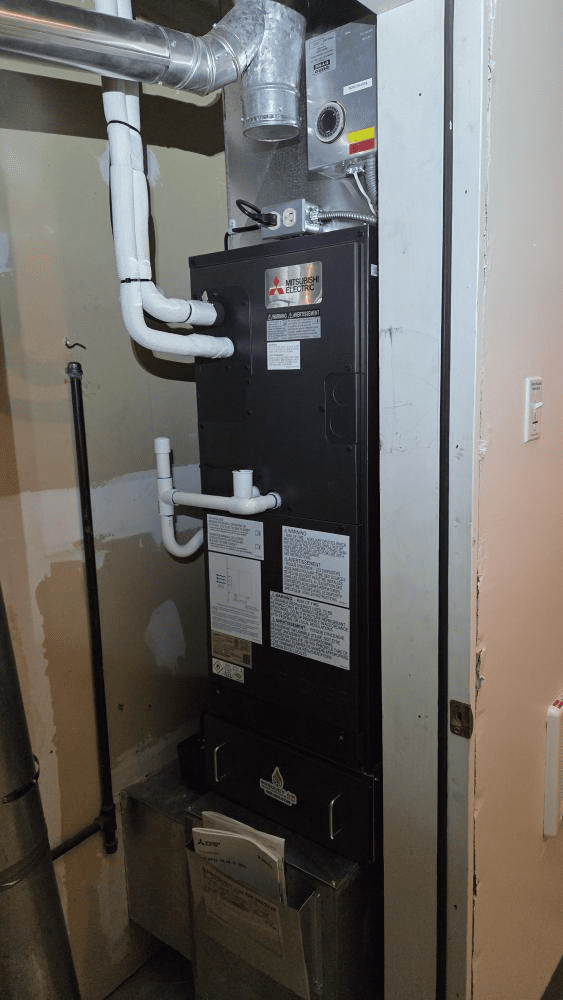
“How long will a heat pump last?”
It’s one of the first questions homeowners ask before upgrading their heating system. The short answer is simple: a modern heat pump can last up to 20 years.
The more accurate answer is this: it depends almost entirely on installation quality and maintenance discipline.
According to Serg Nikolin, a properly installed and maintained system in Seattle’s moderate climate can realistically operate for two decades. But when systems fail in five years, and it does happen, the cause is rarely “bad luck.”
What Is the Realistic Lifespan?
Most modern heat pumps are engineered with a service life of 15–20 years. In the Pacific Northwest, where winter temperatures are generally mild, systems are not exposed to the extreme cold that shortens lifespan in harsher climates.
With proper care, 20 years is achievable.
However, there’s a pattern technicians see repeatedly:
- Systems failing around 5 years → usually installation-related.
- Systems declining around 10 years → often maintenance-related.
- Systems reaching 15–20 years → typically well-installed and consistently serviced.
Heat pumps do not fail randomly. Their lifespan reflects how they were installed and how they were maintained.
Why Installation Determines the First Five Years
Early compressor failure is almost always tied to installation errors.
A heat pump’s compressor is its most expensive and critical component. If it fails within the first several years, the root cause is often improper setup during installation.
Common installation issues include:
- Improper refrigerant line routing
- Failing to remove moisture and air from the system using a proper vacuum pump
- Contaminated refrigerant lines
- Incorrect refrigerant charge
- Poor brazing practices
Moisture and “non-condensables” left in the system can damage internal components over time. Even something as simple as how refrigerant lines are stored before installation can affect longevity.
This is why installation quality is not just a technical detail. It’s the foundation of lifespan.
Homeowners exploring professionally engineered systems can learn more about proper heat pump installation services here: https://productairheating.com/heating/heat-pump-installation/
How Improper Sizing Shortens Equipment Life
Sizing plays a major role in durability.
An oversized system may seem powerful, but it often short cycles, turning on and off frequently because it reaches temperature too quickly. Each startup places stress on electrical components and the compressor.
Over time, that repeated stress shortens lifespan.
An undersized system creates a different problem. It runs constantly, struggling to meet demand. While this may not cause immediate failure, it reduces comfort and increases wear.
Correct load calculations and sizing are critical to achieving both comfort and longevity.
The Role of Annual Maintenance
Maintenance is the second major factor affecting service life.
Serg recommends servicing a heat pump once per year. That includes cleaning, electrical inspection, airflow verification, and performance testing.
A real-world example illustrates why this matters.
A technician responded to a home with ductless mini-split units that were no longer heating or cooling properly. Upon inspection, the blower wheels were packed with dust and debris. Airflow was severely restricted. The compressor was working harder than necessary.
This wasn’t a defective system. It was a neglected one.
Restricted airflow increases strain on internal components and reduces efficiency. Over time, it accelerates wear that could have been prevented with basic maintenance.
The difference between a system lasting 10 years and 20 years often comes down to annual service and simple filter care.
Early Warning Signs a System Is Declining
Homeowners typically notice comfort issues first.
Common warning signs include:
- Uneven temperatures
- Longer run times
- Reduced airflow
- Higher energy bills
- Unusual noises
Technicians use diagnostic tools to measure motor resistance, electrical draw, and compressor performance, allowing them to assess wear before failure occurs.
Addressing issues early often prevents major repairs later.
Repair or Replace?
There is no fixed dollar amount that automatically determines whether replacement makes sense.
Some homeowners will repair a system multiple times because the costs are small and the unit is relatively new.
Others may choose replacement after a single breakdown, not because the repair is expensive, but because they want confidence and peace of mind.
A $300 repair versus a $7,000 replacement decision isn’t purely mathematical. It depends on:
- Age of the system
- Frequency of issues
- Long-term goals
- Comfort expectations
The key is education and transparency, not pressure.
The Biggest Myth About Heat Pump Lifespan
There isn’t a magic expiration date.
Many homeowners assume systems simply “wear out” at a specific year mark. In reality, lifespan is driven by controllable factors:
- Installation quality
- Proper sizing
- Maintenance frequency
- Environmental conditions
Most premature failures are preventable.
When installed correctly and maintained annually, modern cold-climate heat pumps in Seattle can operate reliably for two decades.
How to Maximize a 20-Year Lifespan
If your goal is to reach the upper end of a heat pump’s service life, the formula is straightforward:
- Invest in professional installation.
- Ensure proper load calculations.
- Schedule annual maintenance.
- Replace or clean filters regularly.
- Address small issues early.
Heat pumps are sophisticated systems. But they are not fragile when installed and maintained correctly.
In Seattle’s moderate marine climate, the environment is already favorable. With the right foundation, a heat pump can be a long-term investment, not a short-term expense.
The lifespan isn’t a mystery. It’s a result.
PLAN YOUR NEXT STEP
Need help with your home comfort?
Explore Product Air’s heat pumps services or contact the team.
Share this guide