


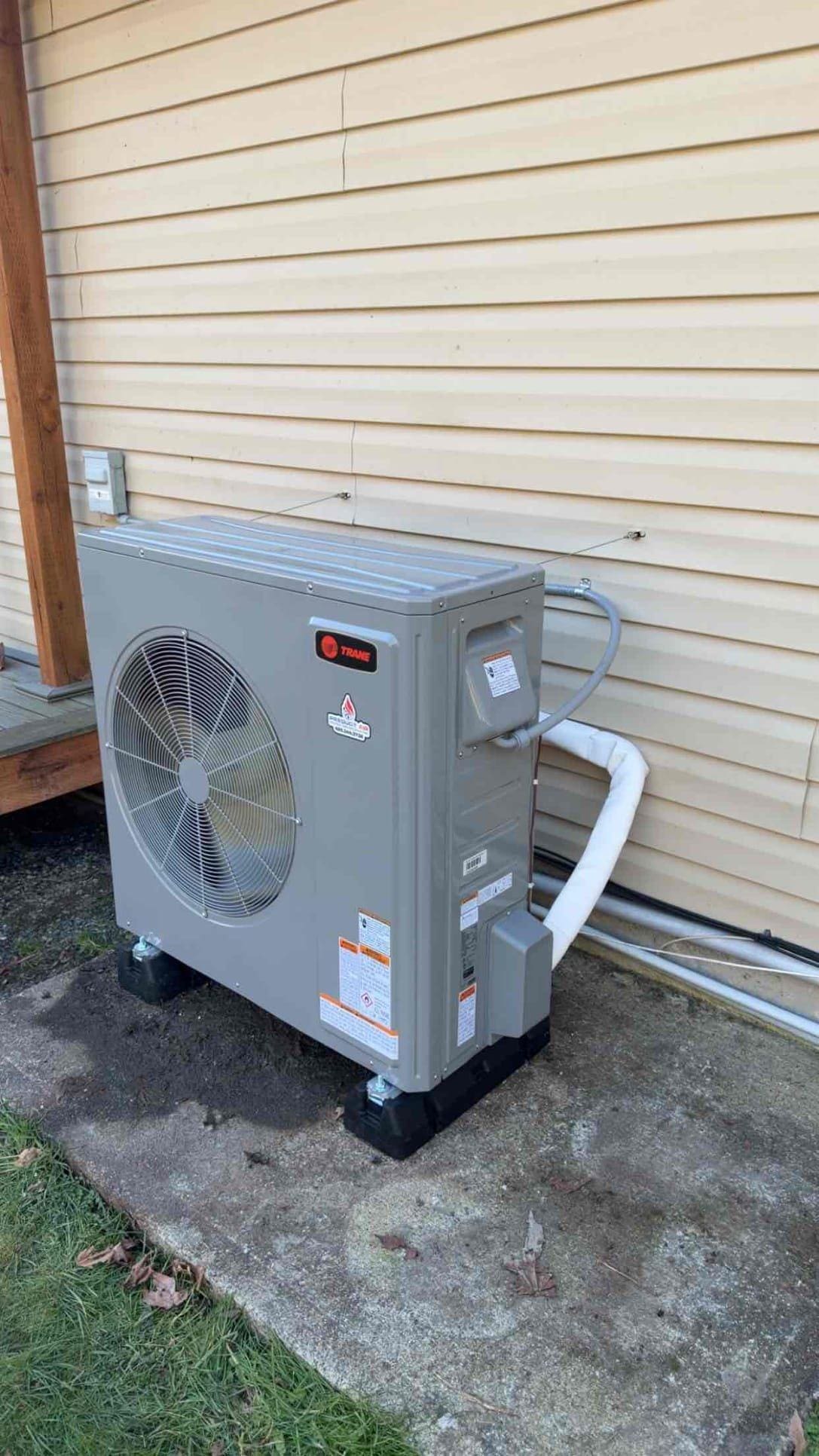
Seattle homeowners replacing an aging heating system in 2026 are asking a practical question:
Should I install another gas furnace or switch to a heat pump?
The answer is no longer just about upfront cost. It’s about 10–15 year operating expenses, fuel price stability, rebates, and where Washington’s energy policies are headed.
Here’s how the comparison really looks in Seattle’s climate.
Operating Costs Over 10–15 Years
On paper, a high-efficiency gas furnace can look competitive.
Modern furnaces can reach 97% efficiency. At that level, operating costs can be similar to a heat pump, at least today.
But not every furnace is 97%.
An older 80% furnace is a different story. Compared to electric resistance heat or lower-efficiency gas systems, homeowners can see anywhere from 10% to 50% savings after switching to a properly installed heat pump.
Seattle’s winter temperatures, typically in the upper 30s to 50°F, sit directly in the sweet spot for cold-climate heat pumps. In this range, they operate extremely efficiently because they move heat rather than create it through combustion.
So in mild marine climates like Seattle, the performance gap often favors heat pumps.
The Wild Card: Natural Gas Price Volatility
What makes long-term comparisons harder is fuel volatility.
Natural gas pricing is influenced by global supply, geopolitical events, and growing demand from industries such as data centers. As more facilities consume natural gas, utility costs are trending upward.
In some areas, homeowners are now being charged significant fees (sometimes over $10,000) just to connect natural gas to a property. That wasn’t common a decade ago.
Electricity prices can fluctuate too. But Washington’s push toward electrification and renewable energy aligns more directly with heat pump technology.
Over a 15-year horizon, predictability becomes a factor. And electrification appears to be the direction policy and infrastructure are moving.
Maintenance and Mechanical Differences
A gas furnace is a single heating appliance.
A heat pump system includes both indoor and outdoor components. That means more parts and slightly higher maintenance costs.
For example:
- Furnace maintenance may average around $149 per visit.
- A full heat pump system tune-up may average around $299.
But maintenance cost alone doesn’t determine value.
Reliability depends more on:
- Installation quality
- Proper sizing
- Annual servicing
Poorly installed systems (furnace or heat pump) can fail within just a few years. Properly installed and maintained systems can operate for 15 to 20 years or more.
The deciding factor is not the number of components. It’s the quality of the install.
How Rebates Change the Financial Equation
In 2026, rebates are shifting the cost comparison.
Washington utilities and regional programs are offering significant incentives for heat pump installations. In some cases, homeowners have qualified for $6,000 or more in rebates.
That can turn a system that initially felt “out of reach” into a practical upgrade, even allowing homeowners to choose higher-tier equipment instead of settling for entry-level options.
Gas furnaces typically do not qualify for comparable electrification incentives.
For homeowners evaluating total installed cost after rebates, professional heat pump installation services can help calculate eligibility and long-term savings.
When incentives are applied correctly, the price gap often narrows substantially.
Regulatory Trends and Long-Term Direction
Washington State continues to move toward cleaner energy adoption.
Many rebate programs favor established, energy-efficient brands. New or unproven equipment often does not qualify.
Electrification is not just a trend. It is becoming embedded in utility planning and incentive structures.
That matters when choosing a system expected to operate for 15 years or more.
Climate Fit: Why Seattle Is Different
Heat pump performance depends heavily on climate.
In extreme cold regions, heat pumps may require supplemental heating. In extremely hot regions, air conditioning loads dominate.
Seattle sits in between.
Winter temperatures averaging around 39–50°F allow cold-climate heat pumps, especially inverter-driven systems, to operate in their most efficient range.
And unlike a gas furnace, a heat pump also provides air conditioning. As summers continue to trend warmer, having both heating and cooling in one system adds value.
When Gas Furnaces Still Make Sense
There are scenarios where a gas furnace remains practical.
If a homeowner:
- Already has a relatively new 97% furnace
- Has stable gas infrastructure
- Is not planning to stay long-term
- Or cannot comfortably afford a heat pump
Then replacing with another high-efficiency furnace may be reasonable.
The key factor is financial stability. No system upgrade should create strain.
What Would a Professional Choose?
When asked which system he installed in his own home, Serg’s answer was simple: Mitsubishi cold-climate heat pump.
The reasoning wasn’t trend-based. It was practical:
- Efficient in Seattle’s temperature range
- Proven brand with local support
- Long-term reliability
- Heating and cooling combined
Established equipment with a track record matters more than chasing the lowest upfront price.
So Which Is More Cost-Effective in 2026?
Short term:
- A high-efficiency gas furnace and a heat pump may have similar operating costs today.
Long term:
- Rising natural gas demand and volatility create uncertainty.
- Electrification incentives favor heat pumps.
- Seattle’s climate aligns well with heat pump efficiency.
- Rebates significantly offset upfront costs.
In many Seattle homes, especially those upgrading from older systems, heat pumps present the stronger long-term financial case.
Homeowners comparing system options in the Seattle area can review local recommendations and availability here: https://productairheating.com/seattle/
The most cost-effective choice isn’t determined by fuel type alone. It’s shaped by climate, installation quality, rebates, and how long you plan to live in the home.
But in 2026, in Seattle’s mild marine climate, heat pumps are increasingly difficult to ignore.
PLAN YOUR NEXT STEP
Need help with your home comfort?
Explore Product Air’s heat pumps services or contact the team.
Share this guide