

Location: NE 86th St corridor, Seattle, WA 98115
Call Date: June 11, 2026, 7:38 PM
First Visit: June 12, 2026, 9:50 AM
Work Start: June 13, 2026
Project Completion: June 13, 2026
Lead Technician: Luis, 25 years of experience, Mitsubishi certified in heat pumps, Seattle refrigeration certified, EPA card
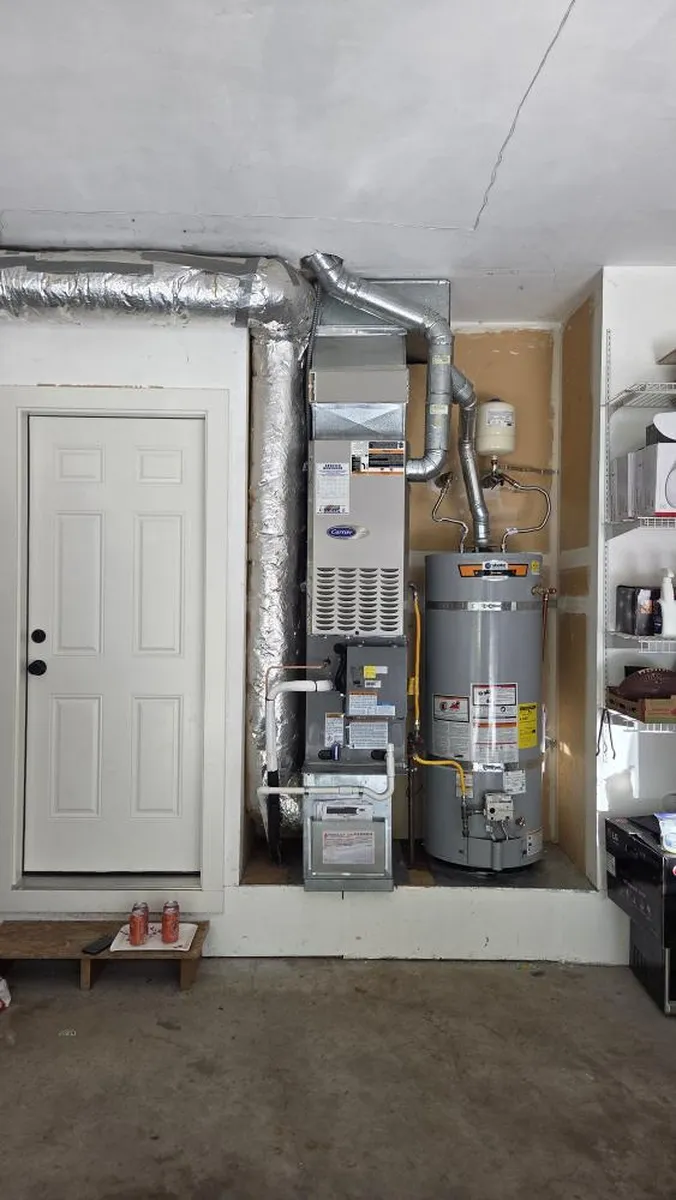
System Before: Carrier 3-ton AC unit, R-410A, 17 years old, compressor shorted to ground; an aging gas water heater sharing the same utility closet
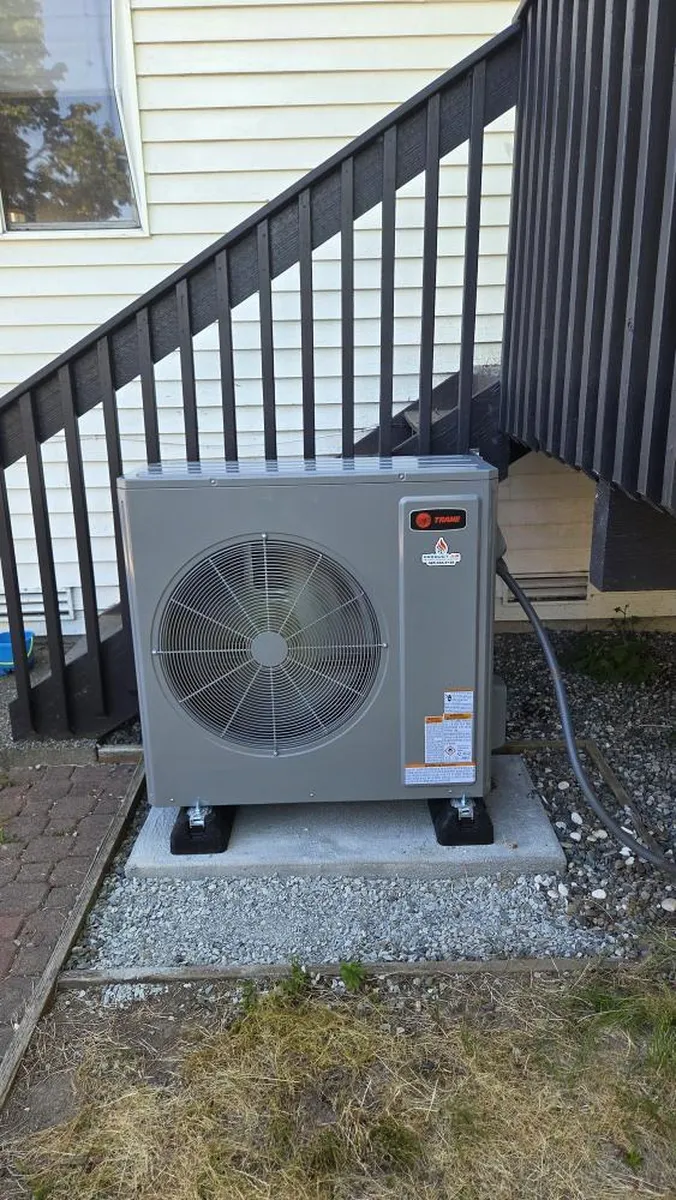
System After: Trane Resolute 3-ton inverter heat pump, model 5HCL5036B1000A, with matched evaporator coil, plus a new ProLine Series gas water heater, model ST GS6 BRT
Final Project Cost: $13,063.22
Anish had owned his house on NE 86th St for two years, and the air conditioning had simply worked the whole time: one of those systems you stop thinking about because it never gives you a reason to. Then, about two weeks before he called Product Air, it stopped. Not gradually. He went to check on it and found the outdoor unit’s fan sitting completely still. “Bought the house two years ago, and AC was working up till two weeks ago,” he told the technician who eventually came out. “The outdoor fan isn’t spinning.” With a wife and kids in the house and a Seattle summer heating up, that wasn’t a problem he wanted to sit with for long.
Anish found Product Air online and made the call on the evening of June 11. He was a new customer with no other contractor in the picture, this was his first call about the problem, not a second opinion.
Why Anish’s AC Fan Wasn’t Spinning: A Compressor Shorted to Ground in Seattle, WA 98115
Luis arrived the next morning, June 12, at 9:50 AM. Twenty-five years in the trade, Mitsubishi certified in heat pumps, Seattle refrigeration certified, carrying an EPA card, the kind of technician who works a diagnostic like this one methodically, ruling things out in order rather than jumping to a conclusion.
He started by confirming what Anish had already told him: the fan genuinely wasn’t spinning. Then he checked whether the thermostat was actually calling for cooling, sending a signal to the outdoor unit telling it to run, and found that it was. The system wanted to turn on. It just wasn’t getting the power to do it. Checking at the outdoor unit itself, Luis found no power reaching it at all, and tracing that back to the panel, he found the breaker dedicated to the AC circuit had tripped.
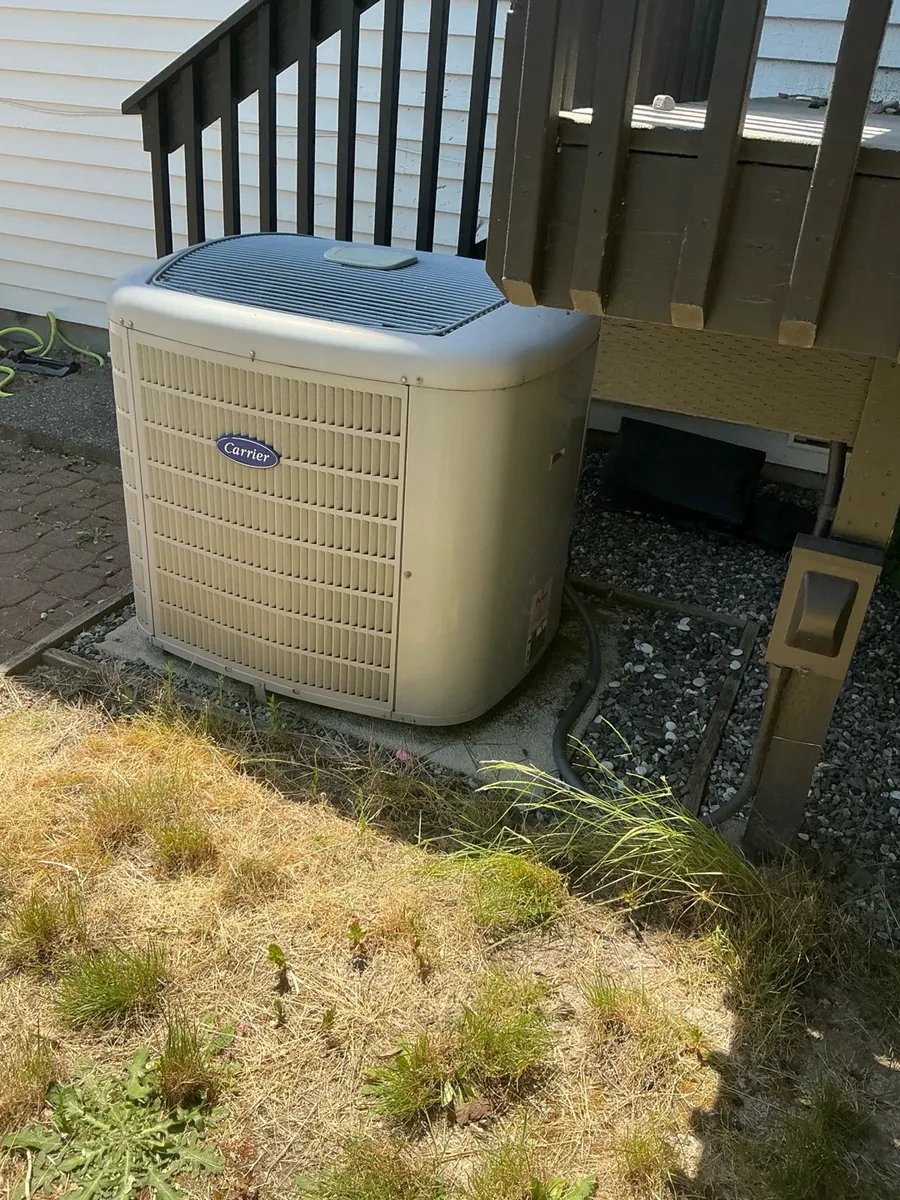
That’s usually where a homeowner’s diagnosis stops: breaker tripped, flip it back, see what happens. Luis kept going. Further diagnostics traced the actual cause to the compressor itself, internally failed, shorted to ground. That’s a specific and telling failure mode. Inside a compressor’s sealed motor, the windings are supposed to carry current along a controlled path.
When insulation inside those windings breaks down, current starts leaking to the compressor’s metal casing instead of completing its intended circuit, a ground fault happening entirely inside the sealed unit. The breaker isn’t malfunctioning when it trips in this situation. It’s doing exactly what it’s designed to do, cutting power the instant it senses current escaping to ground, which is also why resetting that breaker doesn’t fix anything and usually just trips it again.
Luis’s read on the cause: an older unit, 17 years into service, compounded by installation issues from years earlier that likely put uneven stress on the compressor over its lifetime. There was no fire or safety hazard beyond the obvious one, a family with young kids facing a Seattle heat wave with no working cooling in the house.
AC Worked Fine, Then Suddenly Stopped: What a Tripped Breaker Really Means
Anish’s situation is a useful example of a pattern that trips up a lot of homeowners: an AC unit that runs perfectly for years and then stops abruptly, with the outdoor fan not spinning and a breaker that won’t hold. The instinct is to treat it as an electrical problem, something wrong with the house’s wiring or panel. Sometimes it is. But a tripped breaker on an AC circuit is just as often the electrical system correctly protecting itself from a failure happening inside the equipment, not a fault in the home’s wiring at all.
The difference matters because the fix is completely different. If the breaker itself is faulty or the wiring has a problem, an electrician resolves it and the AC unit runs again unaffected. If the compressor has shorted to ground, as Anish’s had, no amount of electrical troubleshooting on the house side changes anything: the compressor itself is done, and it needs to be replaced or the whole outdoor unit does. Sorting out which one you’re dealing with requires exactly the kind of step-by-step check Luis ran: confirm the thermostat signal, confirm power at the panel, confirm power at the unit, and only then dig into what’s actually inside the equipment causing the fault.
Compressor Replacement or a Bigger Upgrade: What Luis Actually Offered
Luis laid out two real paths rather than pushing toward the bigger job. “Anish, the system is 17 years old, and it has outlived its warranty now,” he told him. “It can be repaired, and here’s an option exactly for that. But I also heard your goals for the long term and the comfort you’re looking for. Well, we have an option for that too.”
The compressor replacement alone was priced at $5,460.90, a legitimate, complete fix for a system that was otherwise mechanically sound apart from the one failed part. The upgrade option replaced the entire outdoor and indoor system with a Trane inverter heat pump, adding heating capability the old AC-only unit never had, and bundled in a new gas water heater at the same time. Anish didn’t decide on the spot. He asked to think it over for a day, which Luis gave him without pressure, and by the next morning, June 13, the crew was on-site to install the option Anish had chosen.
Whether a 17-year-old AC unit is worth repairing or worth replacing usually comes down to exactly this kind of comparison: a system out of warranty, with one confirmed failed component, can often be repaired for meaningfully less than a full replacement. But when a homeowner’s actual goals extend beyond just getting cooling working again, heating capability, quieter operation, a system built for the next fifteen years rather than a patch on the last one, the calculation shifts. Anish’s decision wasn’t about which option was cheaper. It was about which one matched what he actually wanted for his family going forward.
Trane Heat Pump Installation in Seattle: What Product Air Actually Installed
The equipment that went in was a Trane Resolute inverter heat pump (2 to 3 ton capacity, 16 to 19 SEER2, quiet side-discharge design, model 5HCL5036B1000A, rated at 30 circuit amps) paired with a matched Trane Resolute 3-ton evaporator coil measuring 23 inches high, 17.5 inches wide, and 21-1/4 inches deep.
| Component | Detail |
| Outdoor Unit | Trane Resolute, 2–3 Ton, 16–19 SEER2, Quiet Side Discharge, Inverter Heat Pump |
| Outdoor Model Number | 5HCL5036B1000A |
| Circuit Amps | 30 |
| Indoor Coil | Trane Resolute 3-Ton Evaporator Coil, 23″ H x 17.5″ W x 21-1/4″ D |
| Water Heater | Trane ProLine Series gas water heater |
| Water Heater Model | ST GS6 BRT |
| Manufacturer Warranty | 10 years |
| Product Air Labor Warranty | 5 years |
An inverter heat pump differs from a standard AC unit in two important ways. First, it can heat as well as cool, running its refrigeration cycle in reverse to move heat into the home during colder months, something the old Carrier AC-only unit was never capable of doing regardless of its condition. Second, an inverter compressor modulates its output to match the actual load rather than cycling on and off at full power the way older single-stage equipment does, which generally means quieter operation, steadier indoor temperatures, and better efficiency across a range of conditions. For Anish’s family, that meant trading a unit that could only ever do one job (cooling) for one that handles both heating and cooling from the same outdoor unit.
Why Anish Replaced His Water Heater and AC in the Same Visit And What It Saved Him
The gas water heater sitting next to the old furnace in Anish’s utility closet wasn’t the reason he called Product Air. But once Luis was already on-site diagnosing the compressor failure, it became part of the conversation, and Anish chose to replace it in the same visit rather than treat it as a separate project down the road.
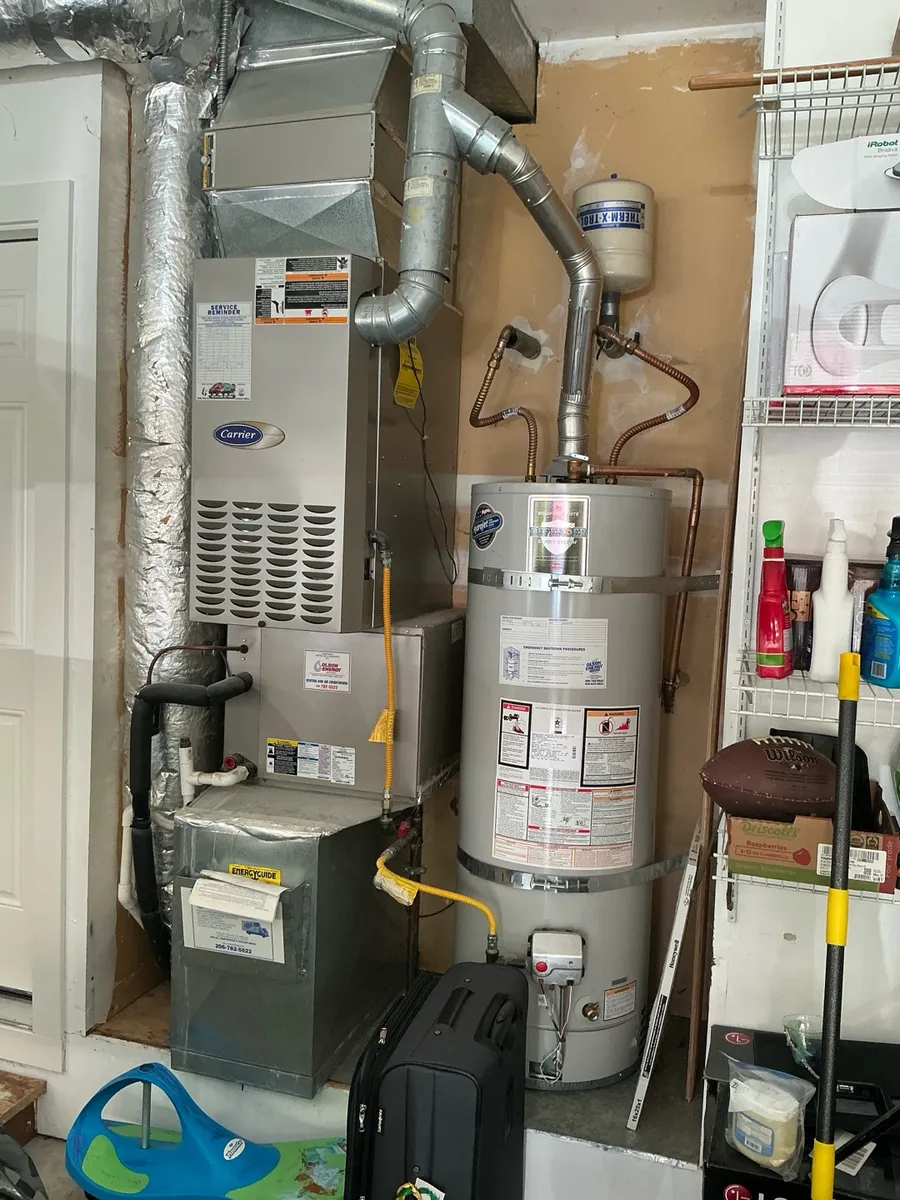
That decision came with a real, quantifiable benefit. Product Air applied a $1,000 schedule fill-in discount to the project, on top of a $600 utility rebate, bringing meaningful savings specifically because both projects were combined into one visit rather than scheduled separately. Bundling a water heater replacement with an HVAC upgrade isn’t the right call for every homeowner, but for someone already opening up the same utility space, already scheduling a crew for a day of work, the marginal cost of adding a second piece of equipment is almost always lower than paying for two entirely separate service calls months apart.
The Real Numbers: $14,663.22 Before Incentives, $13,063.22 Final
| Program | Amount |
| Seattle City Light Midstream Rebate (9.5 HSPF2) | $600 |
| Schedule Fill-In Discount | $1,000 |
| Total Savings | $1,600 |
Base price: $14,663.22
Final cost after rebate and discount: $13,063.22
The Seattle City Light Midstream rebate is a less widely known program compared to some of the larger county-level heat pump incentives, applying specifically to qualifying high-efficiency installations like Anish’s 9.5 HSPF2-rated system. Anish paid the final balance out of pocket by check, with no financing involved.
One Day to Decide, One Day to Install
The diagnostic visit itself ran about two hours on the morning of June 12, enough time for Luis to trace the fan issue back through the thermostat signal, the panel, and finally the compressor itself. Anish took a day to think over his options, and by June 13, two HVAC technicians were on-site for roughly eight hours, removing the old AC system and water heater and installing the new Trane heat pump, matched coil, and ProLine water heater in their place. The installation and final walkthrough wrapped the same day. Product Air handled permitting throughout, coordinating the inspection sign-off required to close out the work to code.
What a New Level of Comfort Actually Means for Anish’s Family
The old Carrier system could only ever do one thing when it worked at all: cool the house in summer. The new Trane Resolute heat pump does that and handles a share of the winter heating load too, backed by a 10-year manufacturer warranty and a 5-year Product Air labor warranty that stretches well past where the old system’s coverage had already run out. The water heater replacement closes out the other piece of aging equipment that had been quietly sharing the same closet, on the same rough timeline, without needing a second disruption to the household later.
Anish’s reaction after the work wrapped was simple and direct: he appreciated the new level of comfort that had been unlocked in his home. Not just cooling restored, a system built to carry his family comfortably through both the next Seattle summer and the winter after it.
Frequently Asked Questions: AC Repair and Heat Pump Upgrades in Seattle, WA
Why does my AC breaker keep tripping even though the fan isn’t spinning?
A breaker that trips repeatedly on an AC circuit while the outdoor fan stays still often points to an internal compressor failure rather than a wiring problem in the home. When a compressor’s internal windings break down, current can leak to the unit’s metal casing instead of completing its normal path, and the breaker trips to protect against that fault every time the system tries to start. In a Seattle case, this exact pattern: a stopped fan and a tripped breaker, traced back to a 17-year-old compressor that had shorted to ground, a failure no amount of resetting the breaker could resolve.
What does “compressor shorted to ground” mean?
It means the electrical insulation inside the compressor’s motor windings has broken down enough that current is leaking to the compressor’s metal casing instead of flowing through its intended circuit. This creates a ground fault, which trips the breaker as a safety response every time the system attempts to run. In a Seattle case, a technician confirmed this exact failure after finding a tripped breaker on an AC unit whose fan had stopped spinning. The compressor itself was the actual source of the fault.
Is a tripped breaker always an electrical problem, or could it be the compressor?
Not always, a breaker tripping on an AC circuit can be caused by a genuine electrical issue in the home’s wiring, or it can be the breaker correctly responding to an internal fault inside the equipment itself, such as a compressor shorted to ground. Distinguishing between the two requires a step-by-step diagnostic: confirming the thermostat is sending a signal, checking for power at the panel, and checking for power at the unit before concluding what’s actually failing. In a Seattle case, this process ruled out a wiring issue and identified the compressor itself as the cause.
Is it worth repairing or replacing a 17-year-old AC compressor?
It depends on the homeowner’s goals as much as the repair cost itself. A compressor replacement can be a legitimate, complete fix for an otherwise sound system, even one that’s out of warranty, in one Seattle case, that repair option was priced at $5,460.90. But a system that old is also a reasonable point to consider a full upgrade, especially for homeowners who want heating capability an AC-only system never had. That same homeowner chose a full heat pump upgrade instead, prioritizing long-term comfort and reliability over the lower cost of a single-component repair.
What is the Seattle City Light Midstream heat pump rebate?
The Seattle City Light Midstream program offers a rebate for qualifying high-efficiency heat pump installations, with the exact amount tied to the system’s HSPF2 rating. In one Seattle installation, a 9.5 HSPF2-rated Trane heat pump qualified for a $600 rebate under this program, applied directly against the final invoice. It’s a smaller, less widely known incentive compared to some county-level heat pump rebate programs, but it can be combined with other applicable discounts on the same project.
Is it worth combining a water heater replacement with an HVAC upgrade?
Often, yes, particularly when both pieces of equipment are aging and sharing the same utility space, since combining the work into one visit avoids the cost and disruption of two separate service calls. In one Seattle case, a homeowner replacing a failed AC compressor with a full heat pump upgrade chose to replace his water heater in the same visit, and received a $1,000 schedule fill-in discount on top of a separate utility rebate specifically because both projects were bundled together.
How does an inverter heat pump differ from a standard AC unit?
A standard AC unit can only remove heat from a home, meaning it cools but cannot provide heating. An inverter heat pump can run its refrigeration cycle in both directions, providing both cooling and heating from the same outdoor unit, and it modulates its compressor speed to match the actual load rather than cycling on and off at full power. In a Seattle case, a homeowner’s AC-only system was replaced with a Trane Resolute inverter heat pump, giving the home heating capability it never had while also delivering quieter, more consistent operation than the old single-stage unit.
How much does AC compressor replacement cost in Seattle, WA?
Compressor replacement costs vary based on system size, refrigerant type, and accessibility, but they’re generally lower than a full system replacement when the rest of the equipment is in good condition. In one Seattle case, replacing a failed 3-ton compressor on an existing Carrier AC unit was quoted at $5,460.90, compared to $14,388.64 for a full upgrade to a Trane heat pump system with a bundled water heater replacement. Getting both options quoted side by side is the only reliable way to know which makes more sense for a specific system’s age and condition.
Key Takeaways
- A tripped breaker on an AC unit with a fan that won’t spin doesn’t always mean an electrical problem in the home: it can be the breaker correctly responding to an internal compressor fault.
- A compressor “shorted to ground” is an internal electrical failure inside the compressor’s motor windings, not a wiring issue, and it cannot be fixed by resetting the breaker.
- A 17-year-old AC compressor can often be repaired for meaningfully less than a full system replacement, but homeowners with long-term goals like heating capability may find a full heat pump upgrade the better fit.
- The Seattle City Light Midstream rebate offers savings tied to a heat pump’s HSPF2 rating, and can be combined with other discounts like scheduling incentives on the same project.
- Bundling a water heater replacement into an existing HVAC service visit can produce real, quantifiable savings compared to scheduling the two projects separately.
- An inverter heat pump adds heating capability an AC-only system never had, while also modulating output for quieter, steadier operation than older single-stage equipment.
Anish didn’t call because he wanted a bigger system. He called because his family was heading into summer with no cooling at all, and what he ended up with was a technician willing to explain exactly why the breaker kept tripping, lay out an honest repair option alongside the upgrade, and let him take the time he needed to choose between them. That’s the job whether the fix is a five-thousand-dollar repair or a full system replacement: give the homeowner the real picture, and let the decision be theirs.
— Serge Nikolin, Co-Founder, Product Air Heating, Cooling and Electric
Marysville · Issaquah · Seattle · Western Washington