

I’m Serg Nikolin, co-founder of Product Air and an HVAC technician with more than 12 years in the trade. The first thing I would tell my own family is that “the AC isn’t cooling” is a symptom, not a diagnosis. There are many simple causes you can address, and in some cases, that is enough to make the problem go away. I wanted to explain when you can fix the problem yourself and when it is time to call a technician.
What I’d Check Before Calling a Technician:
- Is the problem affecting the whole house or just one area?
- What is still working?
- What happened right before the AC stopped working?
Reasons Your AC Unit Isn’t Working That You Can Fix Yourself
Your first thought was probably, “Well, there goes $10,000 or more,” after your AC stopped working. A major repair or replacement can cost that much, but it does not always end that way. Many no-cool calls come down to something you can check and fix without a technician. Here is what I would check first.
1. The Thermostat Reset
It may sound too simple, but the thermostat is often the problem. Lower the temperature by 3 degrees from current room temperature and set the fan to Auto so it runs only while the AC is cooling. Replace the batteries if the screen does not respond. Check the settings too, especially any energy-saving mode on a smart thermostat, because it can interfere with cooling. Give the system up to five minutes to start, since the compressor may have a built-in delay.
2. A Clogged Condensate Drain
Your AC pulls moisture out of the air while it cools your home. It becomes water and drops into a shallow pan under the indoor coil, then leaves the house through a small PVC drain line.
A clogged drain line stops the water from flowing out, so it backs up into the pan. It does not take long for the float switch to shut the AC off before the water spills into your home. What looks like a major AC problem may actually be a safety feature doing its job and protecting your home from water damage.
If you see water near the indoor unit, find the outside end of the drain line. Place a wet/dry vacuum over the pipe and let it run for two or three minutes. You can wrap a rag around the hose to close the gap and improve the suction.
Some systems also have an accessible cleanout near the indoor unit. You can flush it with warm water, but only when you are sure you have found the condensate cleanout.
If the water still does not drain, stop there. The blockage may be farther inside the line, where a vacuum cannot reach it. A clog that returns within a few days can also mean the drain was not installed correctly. If the water is gone but the AC still will not restart, the float switch may need to be tested by a technician.
3. The Air Filter
The air filter may look like a cheap piece of material, but it protects some of the most expensive equipment inside your system. When the filter gets packed with dust, the blower has to work harder to pull air through it. At the same time, less warm air reaches the evaporator coil.
Most ducted systems need roughly 400 CFM of airflow for each ton of cooling, although the exact number depends on the equipment. You do not need to measure that yourself. The important part is simple: without enough airflow, the coil can become colder than 32°F. The moisture on it then freezes instead of draining away.
Once enough ice builds up, air can barely pass through the coil. You may feel warm air or almost no airflow from the vents. The problem may show itself pretty quickly as a puddle of water from the melting ice. None of this necessarily means something major has failed. A dirty filter alone can cause all of it.
Pull the filter out and hold it up to a light. Just do not let this test fool you into thinking the filter is fine simply because some light gets through. Some filters still pass light even when they are causing airflow problems, so check how long the filter has been in use and replace it if it is overdue.
4. The Outdoor Unit
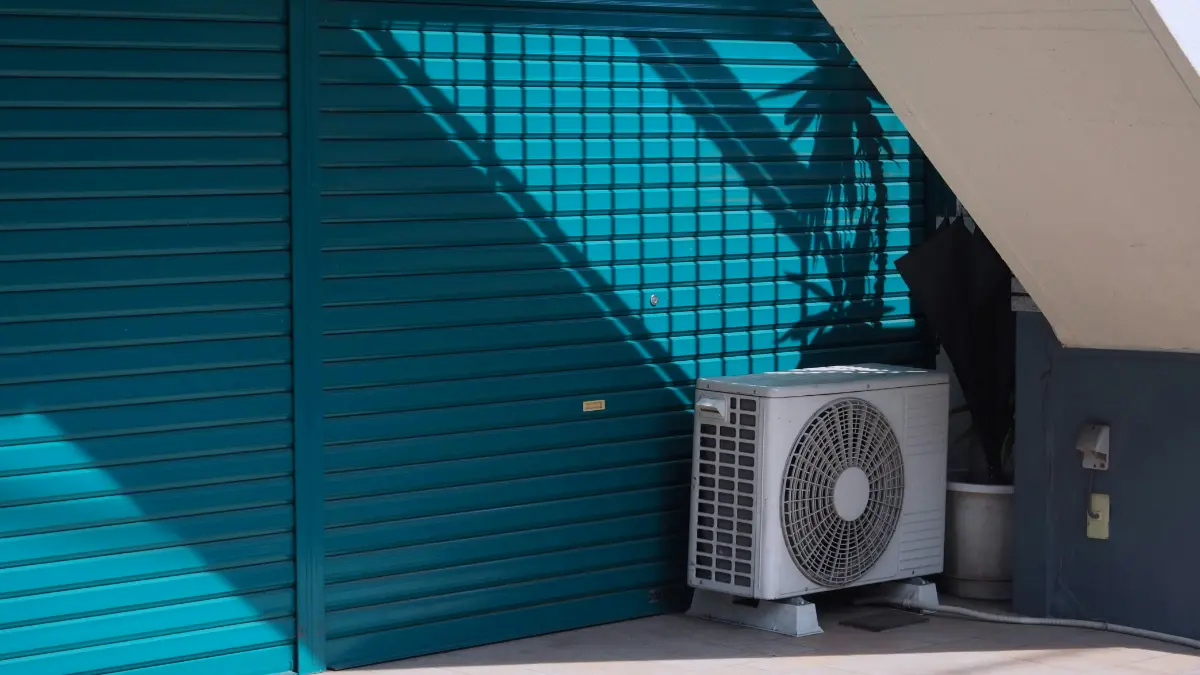
The outdoor unit is where your AC gets rid of the heat it pulled from your home. It cannot do that well without clear airflow.
Early-summer service calls in Marysville, Everett, Lake Stevens, and Seattle often lead us to the same problem. Cottonwood fluff and grass clippings cover the coil, while pollen and dirt settle deeper between the fins. Bushes or tall weeds can block airflow too.
The cabinet may look clean from a few feet away even when the coil behind it is packed. Take a closer look and shine a light through the fins. I would rather have you spend five minutes checking this than pay for a service call just to learn that the outdoor unit could not breathe.
Turn the power off at the outdoor disconnect before cleaning anything. Leave at least 2 feet of open space around the unit and keep the top clear. Pull back anything growing against the cabinet.
A garden hose is enough for light buildup. Use gentle water pressure and rinse from the inside out so the dirt leaves the way it came in. Do not use a pressure washer. It can flatten the soft aluminum fins in seconds. Bent fins restrict airflow just as badly as a dirty coil.
5. It Runs But Blows No Cold Air
Hold your hand near a supply vent and pay attention to both the airflow and the temperature. Weak airflow can point to ice building up on the indoor coil. A strong stream of warm air tells you that the blower is moving air, but it does not tell you which part has failed.
A basic thermometer can give you one more clue. Measure the air at the return grille, then compare it with the air from a supply register near the indoor unit. Many properly working systems show a temperature difference of about 15°F to 20°F. A smaller difference means the AC is not removing enough heat, but that number alone cannot diagnose the cause.
Ice usually shows up on the thick insulated copper line near the indoor unit. You may also see frost farther along the line. The blower can keep running while the ice blocks most of the airflow.
Turn cooling off at the thermostat as soon as you find ice. Set the fan to On and let the system thaw completely. Do not scrape the ice or try to break it off because the coil and refrigerant lines are easy to damage. The melting ice may leave water near the indoor unit. Let the system dry before switching it back to Cool. A coil that freezes again needs a proper diagnosis rather than another reset.
6. The Breaker and The Outdoor Disconnect
The outdoor disconnect may still be off after winter or a previous service visit. Check that the switch reads On. A pull-out disconnect must sit fully inside the box and face the correct direction. It can also slide in upside down, which leaves the unit off.
I do not want you opening the fuse compartment or touching anything behind the cover. The disconnect carries 240 volts, and the fuses need to be tested with proper equipment. Most AC systems also have two breakers. One powers the outdoor unit, while the other powers the furnace or air handler. A tripped breaker may sit halfway between On and Off. Move it fully to Off, then switch it back to On once.
Leave the breaker off if it trips again. The system may have a short or ground fault. A trip during startup can also point to a failing capacitor or compressor. Never replace the breaker or fuse with a larger one. The original size protects the wiring from overheating and starting a fire.
AC Troubleshooting: When Not to Fix It Yourself
A few AC problems have nothing to do with how handy you are. Two areas are off-limits to homeowners:
- Refrigerant. A low charge doesn’t mean the system ran out of refrigerant. It runs in a sealed loop and never gets used up, so if the level’s down, it’s leaking out somewhere. Federal law requires EPA Section 608 certification to handle refrigerants.
- The electrical box. Inside sits a capacitor, and its job is to store a jolt of electricity to help the compressor start. The capacitor can hold a dangerous charge even after the power is off, so this repair is not safe to do yourself.
A faint hiss near the copper lines is also where you need to stop doing the basic checks and leave the unit alone. It can mean the refrigerant is leaking. Oily residue around a fitting can mean the same thing. I would shut the AC off after either one. The system may still cool, but it is now running with a problem, and the compressor can pay for it later.
A breaker that trips again is not asking for another reset but telling you to stop. The system may have a short or a ground fault, and you are sending power back into that problem every time you flip it on.
A frozen coil can still have a simple cause, but the problem may be more serious if you fix the obvious issue and the coil freezes again. Low refrigerant or a problem inside the unit could be responsible. Do not scrape the ice off. Those coils are easier to damage than they look.
A compressor that only hums may have a bad capacitor. It may also be the compressor itself. You cannot safely check that by opening the electrical box. Loud grinding or metal sounds make it even simpler: turn the AC off.
The AC needs service when it still blows warm air after the normal checks. The same is true when it starts and stops every few minutes. A control problem can cause that. An oversized system can also do it. Neither one will be fixed by changing the thermostat again.
You can clear a simple drain clog yourself, but I would stop if the water problem continues or the air starts to smell musty. That is no longer a problem you can safely solve on your own, and further attempts may only make it worse.
Signs It’s Time for a New System
No single item on this list means you need a new system. I start talking about replacement when several of them show up together and the next repair no longer looks like good money:
- The repair costs close to half the price of a new system. I would not replace the AC based on that number alone, but I would compare both options before putting that much into the old one.
- Your energy bills keep going up. One expensive month does not tell us much. A steady increase matters more when you have not changed the thermostat or the way you use the AC.
- The system is 10 to 12 years old and needs a major repair. Many older units use R-410A. That refrigerant is being phased down, so repairs that need a recharge cost more than they used to. You also cannot simply convert an R-410A system to a newer refrigerant. The equipment was not designed for it.
- The service calls keep adding up. One repair can happen to any system. A second or third call in the same season tells me the unit may be wearing out, and the current repair may not be the last one.
- The AC short cycles because it is oversized. A unit that is too large cools the house quickly, shuts off, and starts again soon after. A repair can replace a failed part, but it will not correct the original sizing problem.
- You already need a major repair and want to compare a heat pump. This is a good situation to compare the costs and decide what makes the most sense for you.
From the Field: John’s AC Problem and the Options We Gave Him
One Thursday turned into a difficult day for John at the office as the temperature kept rising even though the blower was still running. He followed Claude’s advice and completed a few basic checks, including checking the thermostat, but none of them solved the problem. Claude then recommended finding an experienced HVAC company in the Seattle area, which is how John reached us.
We listened to John and sent our technician Luis out as soon as possible. The outdoor unit showed no signs of life, which gave Luis an important clue. He tested the system and found that the compressor had shorted to ground, meaning the failure was inside the compressor itself. At that point, the only options were to replace the compressor or the failed equipment.
I do not like seeing that failure on an eight-year-old system. A Bryant unit like this should normally last 12 to 15 years in our climate. The age told us there was probably more to the story.
The indoor coil and outdoor unit were different sizes. The system had been running outside the pressure range it was designed for since the original installation. Every cycle put a little more wear on the compressor. A filter that stayed clogged too often added even more strain. The compressor finally became the part that gave out.
John could replace only the compressor or put that money toward new equipment. He could also replace the full HVAC system, but his furnace still worked well, so there was no good reason to throw it away.
He chose a matched Trane heat pump with a new outdoor unit and coil, and we kept the existing furnace. That got the cooling working again and gave him an efficient heating option for winter without replacing equipment that still had life left.
Prevent The Problem Next Time
I see a lot of AC systems that will not start or only blow warm air because something small was ignored for too long. Maintenance will not prevent every repair, and I am not going to pretend it will. But it does help with the basic problems that never needed to become expensive.
Once a month during cooling season:
- Check whether the air filter needs to be cleaned or replaced.
- Clear leaves and other debris from around the outdoor unit. It needs room to move air.
Two or three times during the season:
- Pour one cup of a 50/50 mix of distilled white vinegar and warm water into the condensate drain-line access tee near the air handler. This helps control the algae buildup that clogs the drain and trips the safety switch.
Once a year, before the first hot day:
- Look around the air handler and vents for anything blocking airflow.
- Check the outdoor disconnect. If you turned it off for winter, switch it back on at least 24 hours before you start the AC.
A Tech Brother Lesson From the Field
Luis has seen plenty of dead compressors turn into quotes for a whole new system. John’s furnace was still working well, so we gave him a way to keep it and replace only the part of the system that had actually failed. He chose the heat pump route. Another homeowner might make a different call, and that is fine. What matters is knowing what still has useful life before you decide how much of the system you want to change.
Still Blowing Warm?
I hope this article helped you rule out something simple. A dirty filter or blocked airflow can cause more trouble than people expect. But if the AC still blows warm air after the basic checks, the problem is probably inside the system.
My brothers and I started Product Air here in Marysville. Since 2017, our crew has completed more than 10,000 jobs across Snohomish and King counties. Local homeowners have also left us more than 800 five-star reviews.
We are licensed for both HVAC and electrical work. That matters on a no-cool call because the problem is not always where you expect it to be. Sometimes it is inside the cooling equipment. Other times, the fault is electrical.
We will check the system, show you what we found, and be clear about the cost of each option. You will understand what you are paying for and make the final decision yourself. There is no dispatch fee, and we do not move forward until you say yes.
Call 425-340-3576 or schedule online.
FAQ
Q: Why is my AC turning on but not cooling?
A: First, see which part of the system is actually running. The indoor fan may run while the condenser unit stays completely silent. That usually points to lost power, a tripped breaker, a blown fuse, or a failed electrical part such as the capacitor or contactor.
The problem is different when both units run but you still do not get cool air. Make sure the thermostat is set to Cool and the fan is set to Auto. Check for a clogged air filter, closed vents, debris on the outdoor coil, or ice on the refrigerant lines. Turn the air conditioner off when you see ice and let it thaw completely before doing anything else.
Q: How do I reset my air conditioning unit?
A: Set the thermostat to Off, then turn off the breakers for the indoor and outdoor equipment. Wait five minutes. Turn the breakers back on and set the thermostat to Cool, about 2 to 5 degrees below the room temperature.
The air conditioner may wait another three to five minutes before starting. That delay is normal. Reset the system once. A second trip means the reset did not fix the problem, and repeatedly sending power back to the unit can make an electrical failure worse.
Q: What are the signs of a faulty AC capacitor?
A: A bad capacitor often shows up as humming, delayed startup, or a fan that tries to start but cannot. The system may also blow warm air, shut on and off too often, or work only sometimes.
Do not open the electrical panel to check it yourself. A capacitor stores electricity and may still hold a dangerous charge after you turn the power off.
Q: Can a dirty air filter prevent an AC from turning on?
A: Yes. A clogged air filter can restrict airflow enough to freeze the coil or fill the drain pan with water. The safety switch may then shut the system down.
Check the filter every month during heavy use. Most homes need a replacement or cleaning every 30 to 90 days. Homes with pets or a lot of dust may need it sooner. A clogged air return or blocked vent can create a similar airflow problem, so check those areas too.
Q: How can I tell if an AC fuse is blown?
A: A blown fuse often leaves the thermostat and indoor fan working while the condenser unit stays silent. The house will not cool because the outdoor equipment has no power.
Some fuses show a broken strip or a dark burn mark. Many failed fuses look completely normal. A technician needs a meter to confirm the failure, and the test involves dangerous voltage. I would leave that part alone.
Q: What should I check first if my AC is not turning on?
A: Check the system in this order:
- Make sure the thermostat is set to Cool and lower it 2°F to 4°F below the room temperature.
- Set the fan to Auto.
- Replace weak thermostat batteries and check for a blank screen or error message.
- Confirm that nobody turned off the service switch near the indoor unit.
- Check the breakers for the air handler and condenser unit.
- Make sure the outdoor disconnect is installed correctly and switched on.
- Check for a clogged air filter and look for water around the indoor equipment.
- Wait three to five minutes in case the system has a built-in compressor delay.
Stop there when the air conditioner still does not respond. Do not remove electrical panels or start testing live parts.
Q: How do I troubleshoot an AC unit that is not turning on?
A: Start with what the system is doing, not with what you think the failed part might be.
Check the thermostat batteries, indoor service switch, and air-handler breaker when both the thermostat and indoor fan are dead.
Check the condenser breaker and outdoor disconnect when the indoor fan runs but the condenser unit does not. The next step usually requires electrical testing.
Check the filter and look for ice or standing water when the system keeps starting and stopping. Do not keep resetting it. The system is shutting down for a reason.
Q: What are the most common reasons an AC unit will not turn on?
A: The simple causes include the wrong thermostat setting, dead batteries, a tripped breaker, a switched-off disconnect, a blown fuse, or a clogged drain line.
The problem may also be inside the equipment. A failed capacitor, motor, control board, or compressor can keep the system from starting. Ice on the coil and water in the drain pan can also trigger a safety shutdown.
Q: Why is my outdoor AC unit not turning on?
A: Check the breaker and outdoor disconnect first when the indoor fan works but the condenser unit does not. Give the system three to five minutes after changing the thermostat because many units have a built-in delay.
A blown fuse or failed capacitor may also keep the outdoor unit off. Wiring damage, a bad fan motor, or a compressor failure can cause the same symptom.
Turn the air conditioner off when the outdoor unit only hums or the breaker trips again. Those signs point past normal homeowner troubleshooting.
Q: Why does my AC breaker or fuse keep tripping?
A: A breaker or fuse that keeps tripping usually means the system has an electrical problem. The cause may be a short, a grounded component, damaged wiring, or a motor pulling too much current.
Reset the breaker once. Do not install a larger fuse or breaker to keep the air conditioner running. The original protection is there to stop the wiring and equipment from overheating. Turn the system off and have a qualified HVAC technician or electrician test it.
PLAN YOUR NEXT STEP
Need help with your home comfort?
Explore Product Air’s air conditioning services or contact the team.
Share this guide