


Jim had worked with Product Air before, so when the GFCI on his hot tub kept tripping, he called us again. He wanted a licensed electrician to find the cause and fix the installation so he could use the tub safely and reliably.
At his home in Everett, we found that the hot tub had been fed from a tap at the air-conditioning disconnect instead of its own dedicated circuit. The earlier installation used incorrect wiring and components. Addressing that setup meant following the supply back toward the house panel and looking at how the whole circuit had been put together.
We removed the old feed, installed a dedicated hot tub circuit with new 40-amp GFCI protection, and raised the spa disconnect. We also replaced the AC disconnect and made room in the existing panel for the new circuit and surge protection. Jim approved the work, and the final project invoice was $4,945.50.
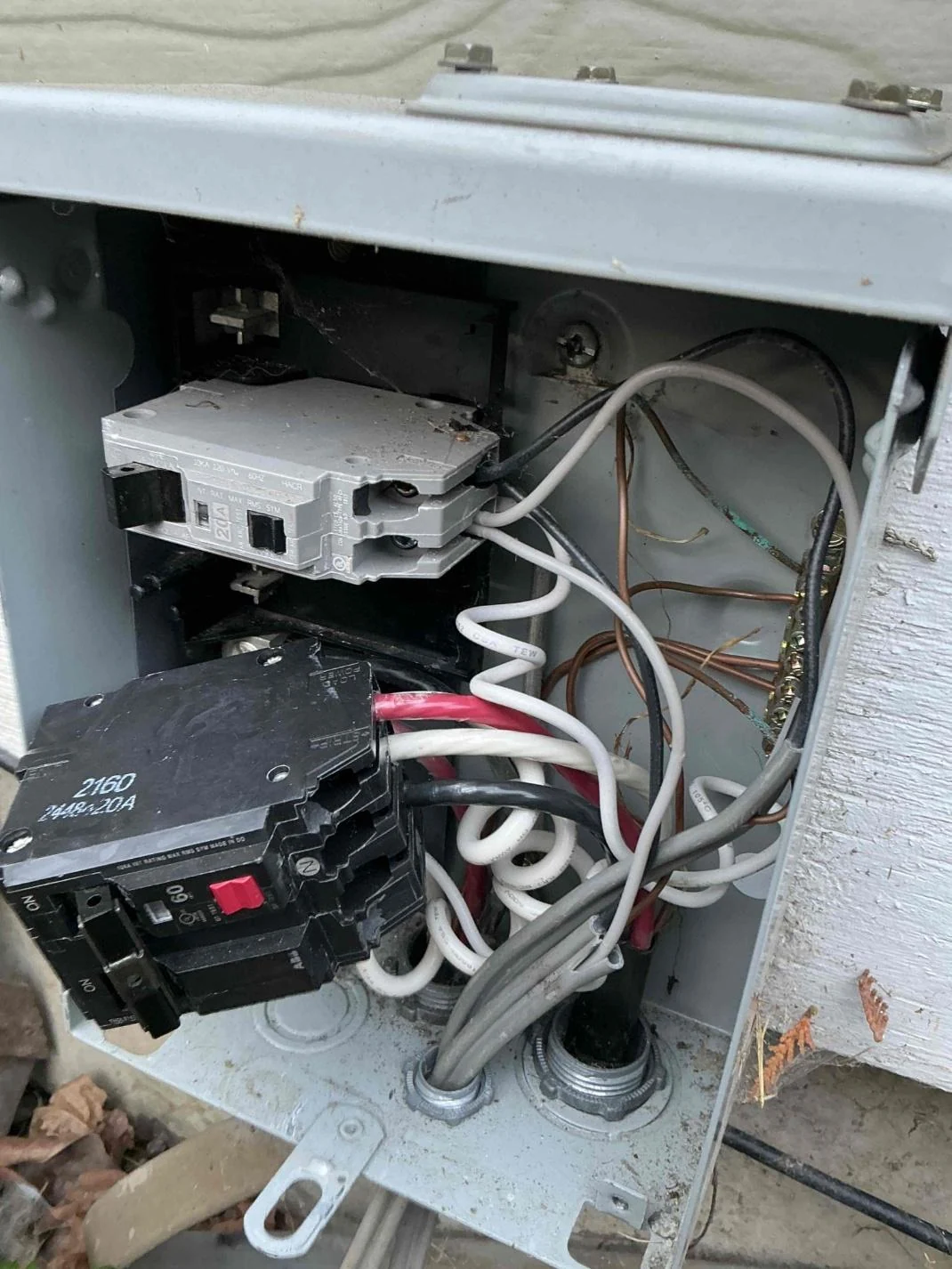
The existing outdoor electrical enclosure before the work, with its cover open for inspection.
Following the Problem Back to the Supply
A GFCI, or ground-fault circuit interrupter, helps reduce the risk of electric shock. When it trips, an electrician needs to investigate why. Wiring problems, moisture, a fault in the spa equipment, or a defective protective device can all require different repairs. Around a hot tub, that protection has an especially important job, and we need to understand what is happening before recommending a fix.
In Jim's case, the supply arrangement was a problem we needed to correct. A handyman had connected the tub through the AC disconnect. That left the spa dependent on an improvised feed rather than a circuit installed for it. Replacing a breaker alone would have left that arrangement in place.
Our recommendation was to remove the old feed and give the hot tub its own circuit from the main panel, with the appropriate protection and a separate spa disconnect. We included replacement of the AC disconnect as part of untangling the two supplies. Jim's priority was safe, reliable operation, and this scope addressed the installation problems we found.
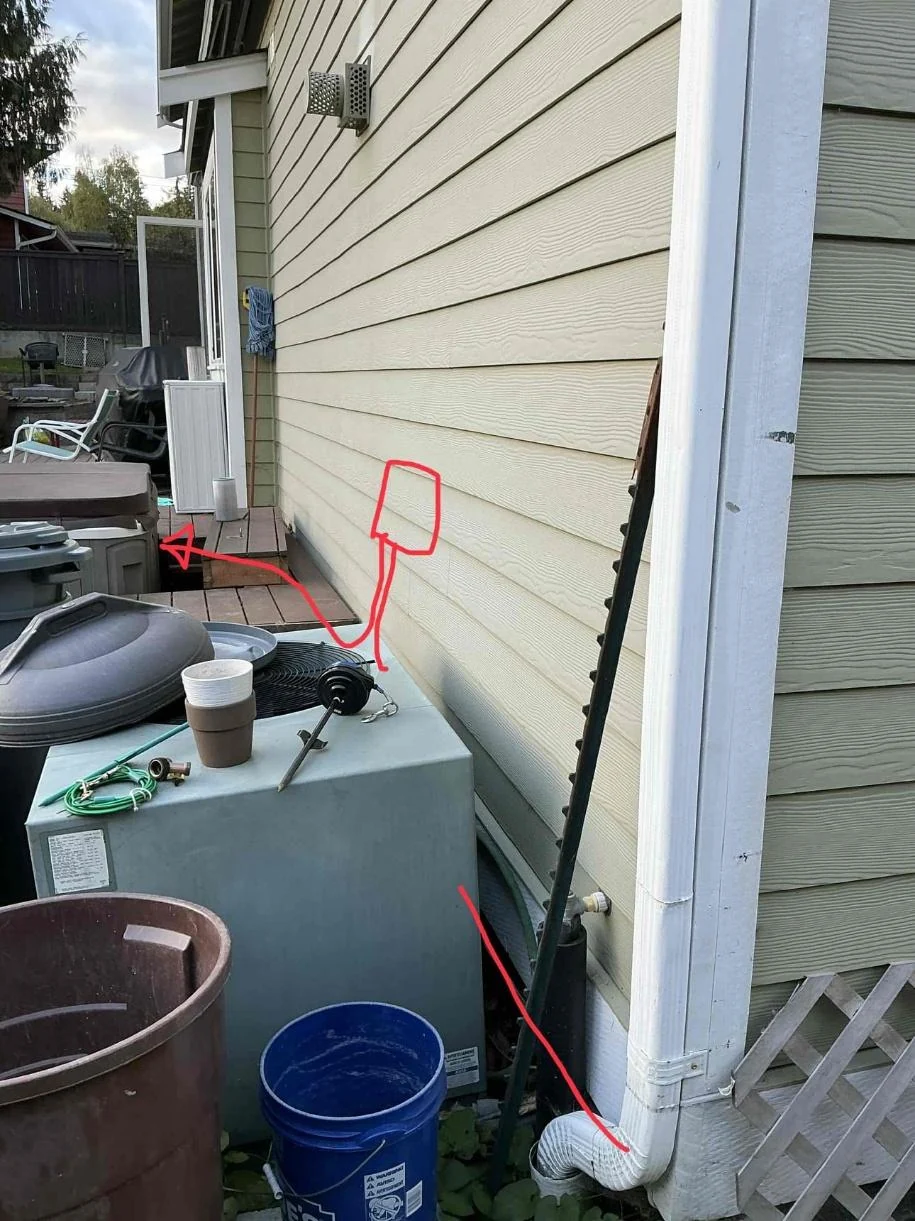
Planning the new route beside the AC equipment and hot tub. The red markings show the proposed disconnect location and connection route.
I want a homeowner to understand why a recommendation has grown beyond the symptom they called about. Here, the connection between the two was specific: the hot tub's electrical supply needed to be rebuilt. That gave Jim a clear reason for the work we proposed.
Running a New Circuit Around the House
Jim's two-story home was built in 2007. Getting a dedicated circuit to the tub meant routing conduit along the foundation and around the house. The existing exterior door and the equipment along the wall made the route more involved than a straight run between two nearby boxes.
Our electrical crew installed 3/4-inch PVC conduit and formed it to follow the foundation, including the section beneath the exterior door. At the spa end, we raised the disconnect to a more accessible height and installed new flexible conduit between it and the hot tub. The work also included a weatherproof box extension for the existing UF cable connection.
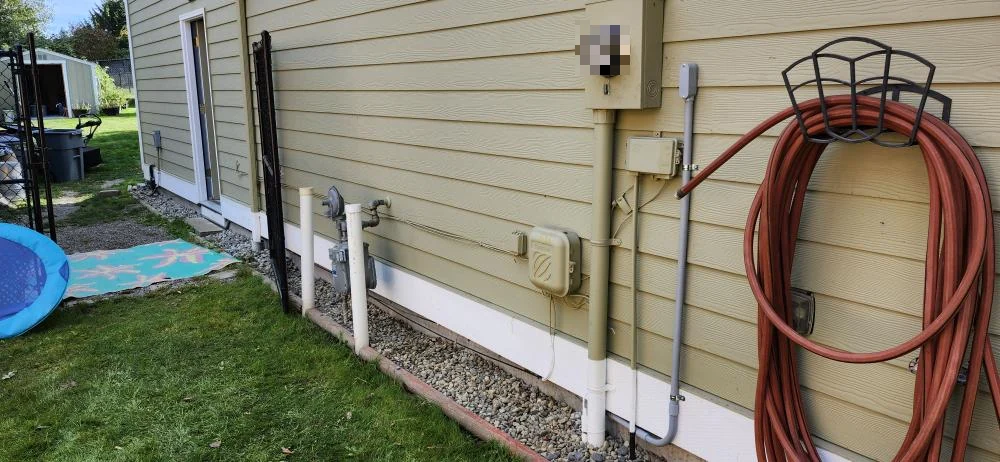
The new exterior conduit follows the foundation and passes beneath the door on its way around the house.
The route is part of the work a homeowner is paying for. It takes time to fit and secure conduit around an occupied home, make the transitions, and connect the equipment. On Jim's project, those details were necessary to replace the old feed with a separate, protected path to the tub.
What the New Protection Does
We installed a new 40-amp GFCI breaker for this hot tub circuit. That rating describes Jim's installation; another spa may have different electrical requirements. The equipment instructions and the circuit design determine the correct protection. A larger breaker is never a substitute for diagnosing repeated trips.
The surge protection we added at the main panel serves a different purpose. It helps protect connected equipment against certain brief voltage spikes. GFCI protection addresses ground-fault shock hazards. Both have a role, and neither replaces proper wiring.
Making Room in the Existing Panel
Jim already had a panel with a 200-amp main breaker. We retained it and used quad breakers to make room for the hot tub circuit and the surge protective device. A quad breaker combines circuits in a more compact arrangement, which can help with space when that breaker type is permitted for the panel.
That distinction matters when a homeowner hears that a panel is full. Running out of breaker positions and running out of electrical capacity are different problems. An electrician has to consider the panel's approved configuration and the loads it serves. Making room for more breakers does not increase the service rating.
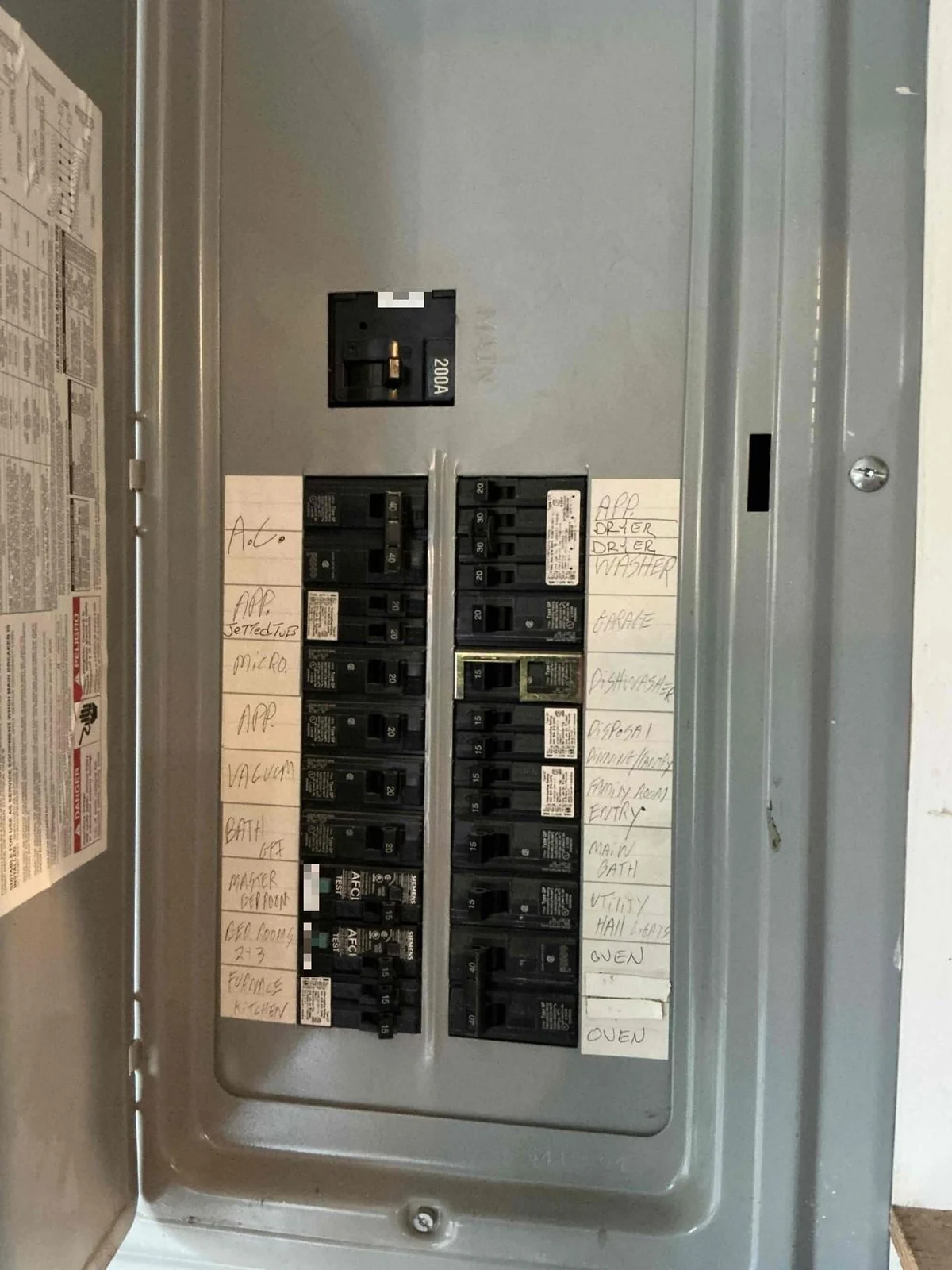
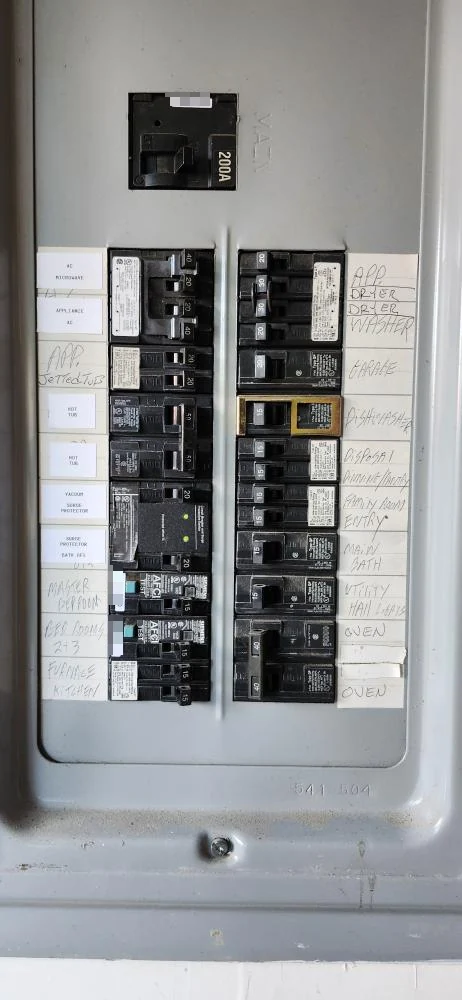
Before at left and after at right. We retained the existing panel and made room for the hot tub circuit and surge protection.
For this project, the work stayed within the existing panel. We changed the breaker arrangement, added the new circuit and surge protection, and labeled the affected circuits. There was no main panel replacement in Jim's scope. Keeping useful existing equipment is part of making a recommendation that fits the work the house actually needs.
Who Handled the Work
Kurt handled the proposal, and our licensed electrical team carried out the installation. We scheduled a two-person crew for a four-hour work window. The job also included a City of Everett electrical permit, E2610-142.
What the Project Cost and What Jim Chose
The final invoice was $4,945.50. That covered the electrical correction as a whole: removing the old hot tub feed, installing the dedicated circuit and exterior conduit, replacing the GFCI breaker, raising the spa disconnect, replacing the AC disconnect, and reworking the panel arrangement to accommodate the new circuit and surge protection.
Jim wanted to be able to use his hot tub without wondering why the protection kept shutting it down. He approved a scope that corrected the supply arrangement and gave the spa its own circuit. For me, explaining that connection is an essential part of the proposal. The customer should understand what we found, why the work is needed, and what the quoted price covers before deciding to proceed.
If you are comparing estimates for a similar problem, look closely at the work included. A price for replacing a GFCI breaker covers a different job than removing an existing feed and running a new circuit around the house. Ask whether the estimate includes the disconnect, the route to the equipment, any panel changes, and the permit. Those details make the prices meaningful.
Two Days From the Call to the Completed Installation
Jim called on October 14, 2026. Our site visit and installation were completed on October 16. The new setup gave the hot tub its own supply, separate from the AC disconnect, with new GFCI protection and the revised outdoor wiring route.
When the work was finished, Jim summed it up simply: "Hot tub tonight thank you." He was looking forward to using it again, which was the reason he had called us in the first place.
Taking Care of a Customer Who Called Us Again
When someone comes back to Product Air, I take that trust seriously. If my brother called about a hot tub that kept tripping, I would want him to understand what was wrong with the installation before he spent money on it. I would also want him to know why I recommended a particular repair and which parts of the existing system could stay.
That is what Your Tech Brother From Another Mother means to me. With Jim, it meant tracing the problem through the supply, explaining why a dedicated circuit made sense, and completing the agreed work while keeping the existing main panel. He came to us with a specific concern. Our job was to give him a clear explanation and a practical way to address it, with the decision in his hands.
PLAN YOUR NEXT STEP
Need help with your home comfort?
Explore Product Air’s electrical services or contact the team.
Share this guide