

Don called us about replacing an air conditioner that was roughly 23 years old and starting to give him trouble. He had worked with Product Air before, but he was getting several estimates for this project. When we talked through what he wanted from a replacement, another concern came up: the temperature difference between his first and second floors.
That changed the conversation. Don wanted dependable equipment, but he also wanted the house to feel more comfortable. My job was to help him understand which system I would recommend, what the installation would involve, and why. He would make the decision after comparing his options.
He ultimately chose a 4-ton Mitsubishi SUZ/SVZ heat pump system. The final project invoice was $22,945.05. After the installation, he told us the temperature felt steadier, the difference between floors was no longer noticeable to him, and he was comfortable with the thermostat set about 2 degrees lower than before.
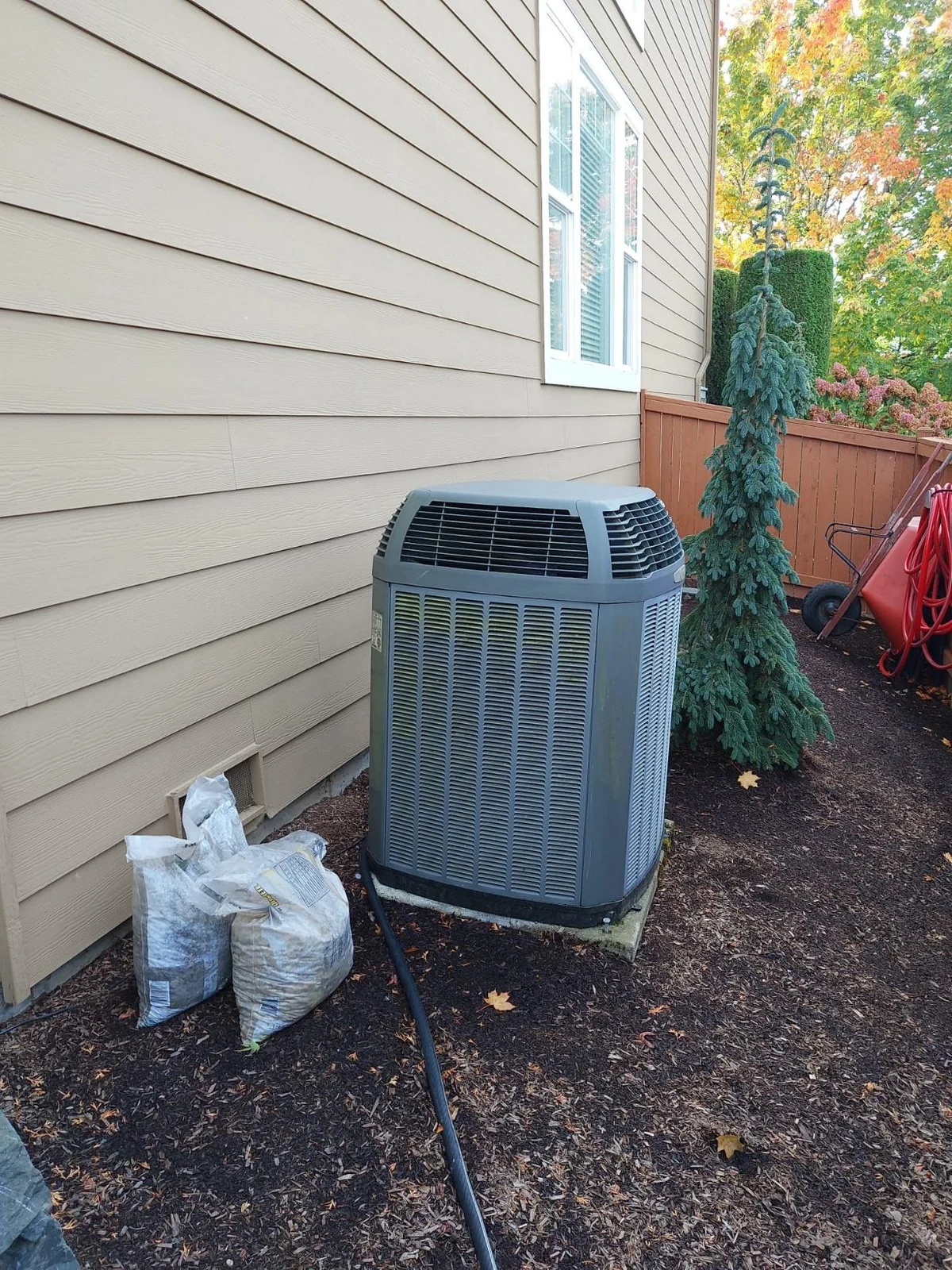
The existing outdoor unit before replacement at Don's Snohomish home.
Looking at the House Before Choosing the Equipment
Don's home was built in 2002. It has two stories, four bedrooms, and about 2,957 square feet of living space. The existing indoor equipment included a Trane furnace in the garage, surrounded by ductwork, gas piping, and other connections. A replacement had to fit that space and work with the home's air distribution system.
I wanted Don to understand why we were looking beyond the outdoor unit. Equipment selection matters, but so do airflow and the connections between the new air handler and the existing ducts. An inverter system can adjust its output, but that feature alone does not guarantee equal temperatures in every room.
Our preparation included measurements of the equipment space and surrounding connections. We marked up the existing installation so the crew could plan the fit and the duct transitions. Supply ductwork and the gas line needed attention as part of that planning, along with the electrical connections. Don also pointed out that the old outdoor pad had settled. He wanted us to address the base so the new installation would have solid support.
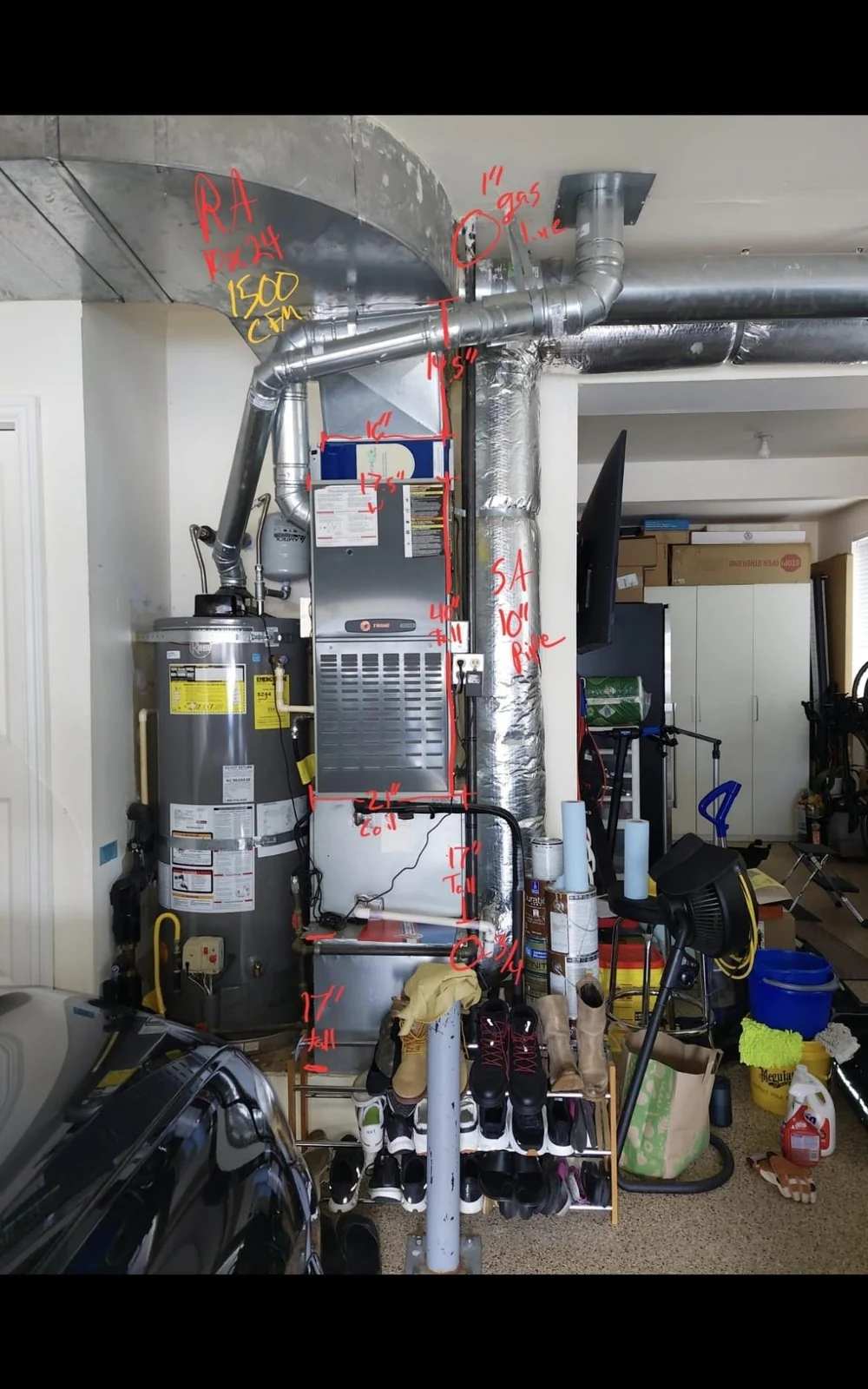
Measurements and installation notes around the existing furnace and ductwork.
Why I Recommended the Mitsubishi System
We settled on a Mitsubishi SUZ/SVZ system with a nominal capacity of 4 tons. It pairs an outdoor heat pump with a ducted indoor air handler, using the home's ductwork to deliver heating and cooling. For Don, an important part of the recommendation was how the equipment adjusts its output as the house's needs change.
His previous system would come on at full output and shut off when it reached the thermostat setting. With variable-capacity equipment, the system can increase or decrease its output instead of relying entirely on full-output cycles. I explained that in terms of what he cared about: maintaining a more consistent temperature throughout the day.
I also explained that the installation had to support that goal. If a duct connection restricts airflow, a better outdoor unit will not make the restriction disappear. We needed to treat the indoor equipment, duct connections, controls, and outdoor installation as parts of the same job. That was the basis for my recommendation.
How Don Made His Choice
Don compared our proposal with estimates from other contractors. I welcome that. A homeowner should have room to ask questions and understand the differences before committing to a project of this size. I explained the system I recommended and the installation considerations we had identified, then left the choice with him.
The warranty discussion mattered to him. We talked through the 12-year manufacturer warranty and our 5-year labor warranty, including the distinction between equipment coverage and labor coverage. Don also valued our satisfaction guarantee. These were part of his decision alongside the equipment itself and the care we put into planning the installation.
What stood out to Don was the thoroughness of our approach. He felt that choosing Product Air was the most dependable way to move forward. I did not need him to memorize model numbers. I wanted him to understand what we proposed to do in his home, why I thought it was appropriate, and who would stand behind the work.
The Cost of the Project
The final invoice came to $22,945.05 for the project. That price needs to be understood in the context of an installed system in an existing home. Along with the Mitsubishi equipment, the job involved fitting the new installation to the existing space and connections, preparing the outdoor base, and starting up the system. Those details affect the scope just as surely as the equipment choice does.
Preparing the Installation and Completing the Work
Once Don approved the project, our licensed installation team took over the hands-on work. The HVAC scope called for a two-person crew. My role in the consultation was to make the recommendation and explain the project to Don; the crew's responsibility was to carry that plan through at the house.
Outside, the team removed loose soil and bark from beneath the old pad area and prepared a firm base for the new pad. They installed the new Mitsubishi outdoor unit on supports. This addressed a concern Don had raised himself, so it belonged in the installation plan from the beginning.
Inside, the crew had to fit the new equipment around the existing ductwork and utilities. The measurements taken during planning helped them work through those connections. We also considered the electrical side of the installation. Photographing the existing panel was part of documenting the home's setup; electrical requirements belong in the planning conversation whenever new HVAC equipment is being installed.
Don's call and our first visit were on October 5, 2026, and the job was completed on October 6. The HVAC scope allowed 12 hours for a two-person crew. Startup planning included a static-pressure test, an important check on how the blower moves air through the duct system. The equipment and the airflow have to work together for the installation to perform as intended.
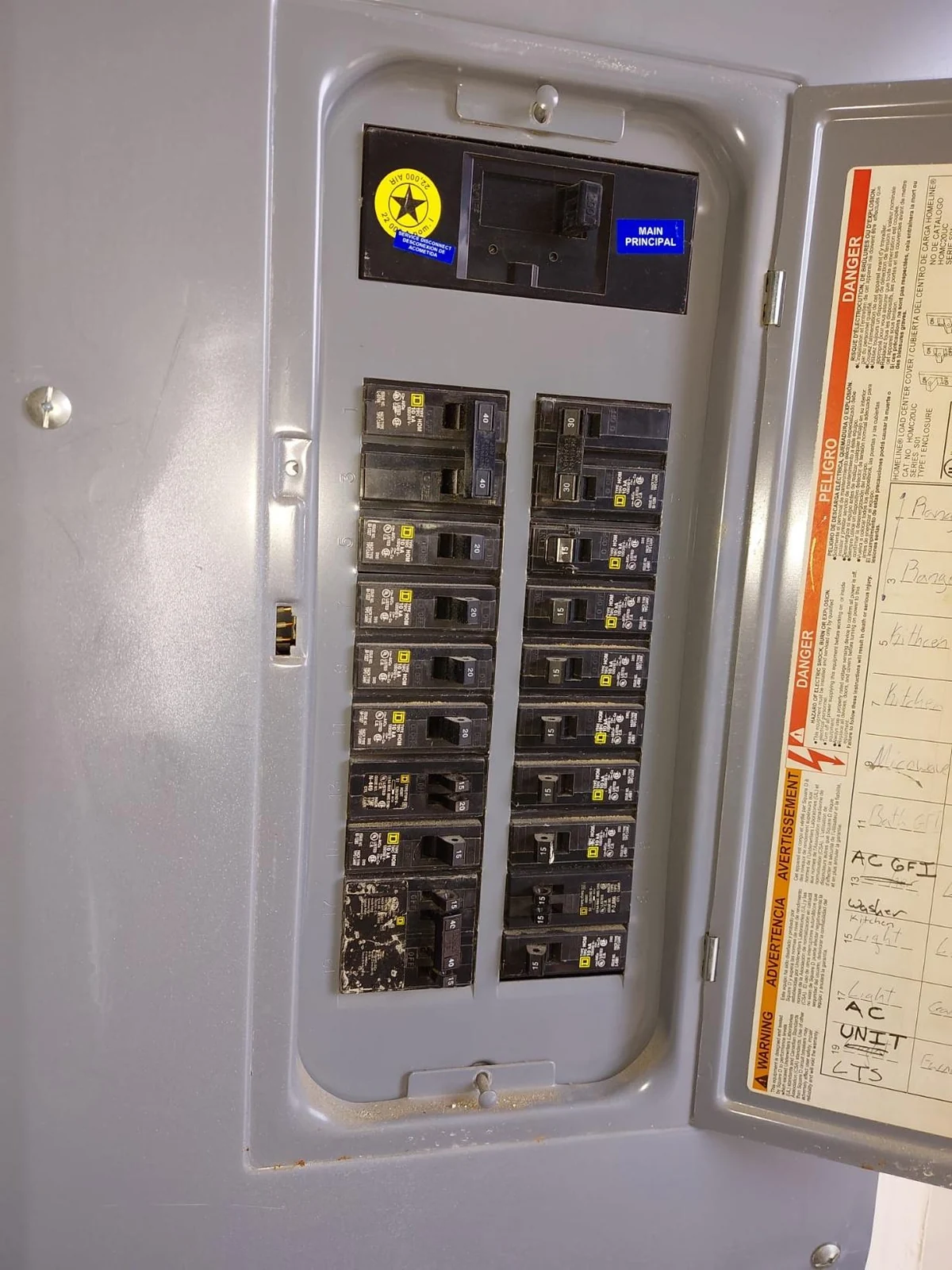
The existing electrical panel documented during project preparation.
What Don Noticed After the Replacement
After the installation, Don described a change that connected directly to our first conversation. The new system held the temperature more steadily, and he no longer felt the same difference between the upstairs and downstairs. He also found that a thermostat setting about 2 degrees Fahrenheit lower felt comfortable to him.
That is useful feedback because it describes life in the house. Don was telling us how the finished system felt to use. His observations about steadier temperatures and comfort between floors were exactly the kind of improvement he had wanted when we discussed replacing the old equipment.
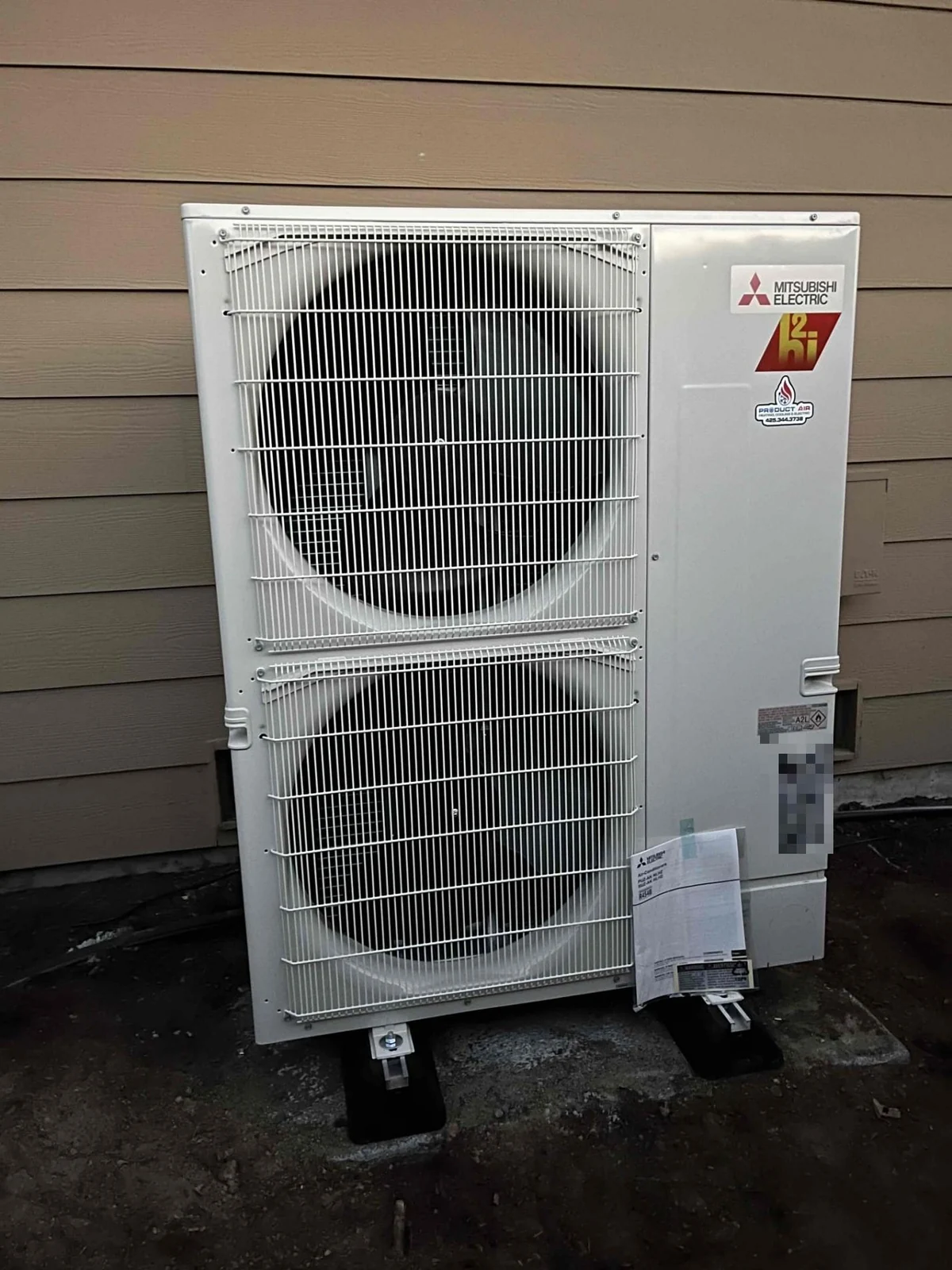
The new Mitsubishi outdoor heat pump installed on supports at the home.
What Being Your Tech Brother Means to Me
As a co-founder, I stay involved in field work because these conversations shape the way we run Product Air. At Don's house, I could see the existing installation, hear what bothered him, and explain a recommendation in the context of his home. That makes for a much more useful conversation than simply handing someone a price.
When we say Your Tech Brother From Another Mother, I think about the responsibility that comes with knowing more about the equipment than the person buying it. I should be able to explain my recommendation clearly and give that person room to decide. Don compared his options, chose our team, and then told us his home felt more comfortable. That is the outcome I wanted for him when we started.
PLAN YOUR NEXT STEP
Need help with your home comfort?
Explore Product Air’s heat pumps services or contact the team.
Share this guide