


Karen asked us for a second opinion after another contractor recommended a new motor for her heat pump. She was already a Product Air customer and wanted someone to look at the system and explain her options before she committed to a repair. Our inspection found a noisy outdoor fan motor, along with corrosion and a drainage problem at the bottom of the outdoor unit. After considering repair and replacement, she chose a new Mitsubishi Electric ductless system.
Looking Beyond the Motor
Karen's two-story home in Tulalip Bay was built in 1931 and has about 2,160 square feet of living space. The system we were discussing was a Daikin mini-split, with a wall-mounted indoor unit above the large windows facing the water. That indoor unit delivers heated or cooled air directly into the room. Its role in the house matters when choosing a replacement; the home's total square footage alone does not tell you what size that particular system should be.
Our technician found that the outdoor fan motor bearings were making more noise than normal, a sign of wear. The outdoor unit had been manufactured in May 2014. Its age was relevant, but I would not recommend replacement based on age alone. The condition of the rest of the equipment was what made this a broader conversation.
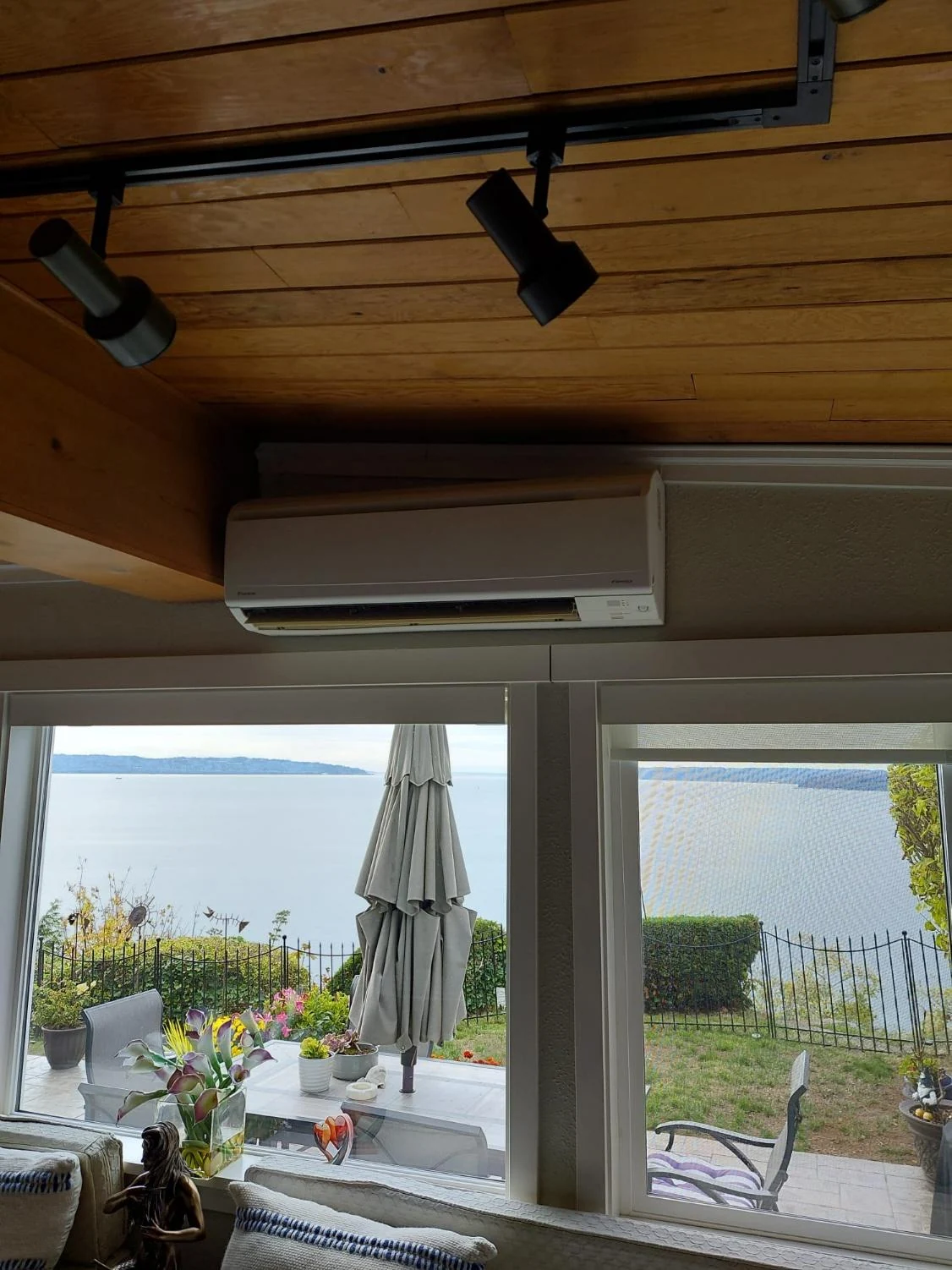
Before replacement: the Daikin indoor unit above the windows facing Tulalip Bay.
Why Water Was Collecting in the Outdoor Unit
The old outdoor unit sat directly on a concrete pad. Our inspection identified restricted drainage beneath the unit: water was staying in the bottom pan, where substantial rust had developed. Replacing the fan motor would leave that condition to be addressed separately.
A heat pump can produce water outside during normal heating operation. Frost forms on the outdoor coil, and the defrost cycle melts it. That water needs a clear way out. The mounting arrangement must allow the unit to drain as the manufacturer intended, especially where freezing conditions can turn retained water into ice.
The concrete pad itself was not the issue. The relationship between the pad and the unit's drain openings mattered. A waterfront location can also expose equipment to moisture and salt that contribute to corrosion. Those conditions make regular inspection useful, but the installation problem we could address here was the lack of clearance beneath the unit.
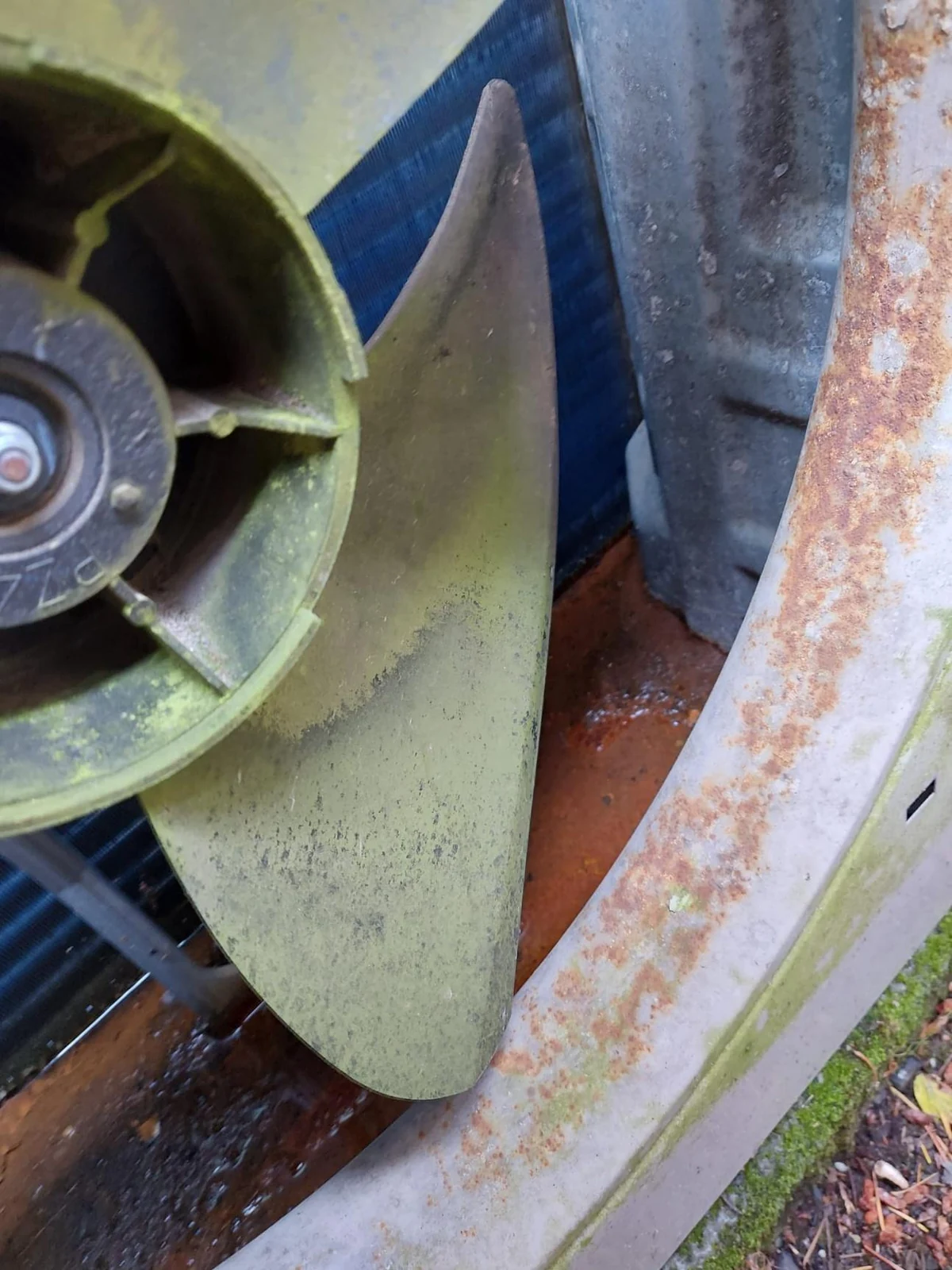
Water and corrosion in the lower portion of the old outdoor unit.
Why Karen Chose Replacement
We offered a repair. A motor replacement can be a sensible investment when the rest of the system is sound and the installation problems can be corrected at a reasonable cost. In Karen's case, the corroded base and condition of the older equipment also had to be considered. A new motor would address the worn component while leaving the other components and existing corrosion in place.
Eli handled the proposal. Karen decided that new equipment, a corrected outdoor installation, and warranty coverage were the better investment for her. Our recommendation gave her reasons to consider replacement, while the repair option remained available for her to weigh.
Installing the New Mitsubishi Electric System
Our HVAC installation team replaced both the outdoor unit and the indoor wall-mounted unit with Mitsubishi Electric equipment. The new indoor unit went above the windows in the same area as the Daikin. The system continued to serve the space through a wall-mounted unit that sends air directly into the room.
Outside, the crew installed the new heat pump on support feet above the concrete pad and secured it with an additional brace attached to the wall. The feet created clearance beneath the base so water could leave the bottom of the unit. Correcting that mounting detail addressed a specific problem we had found with the previous installation.
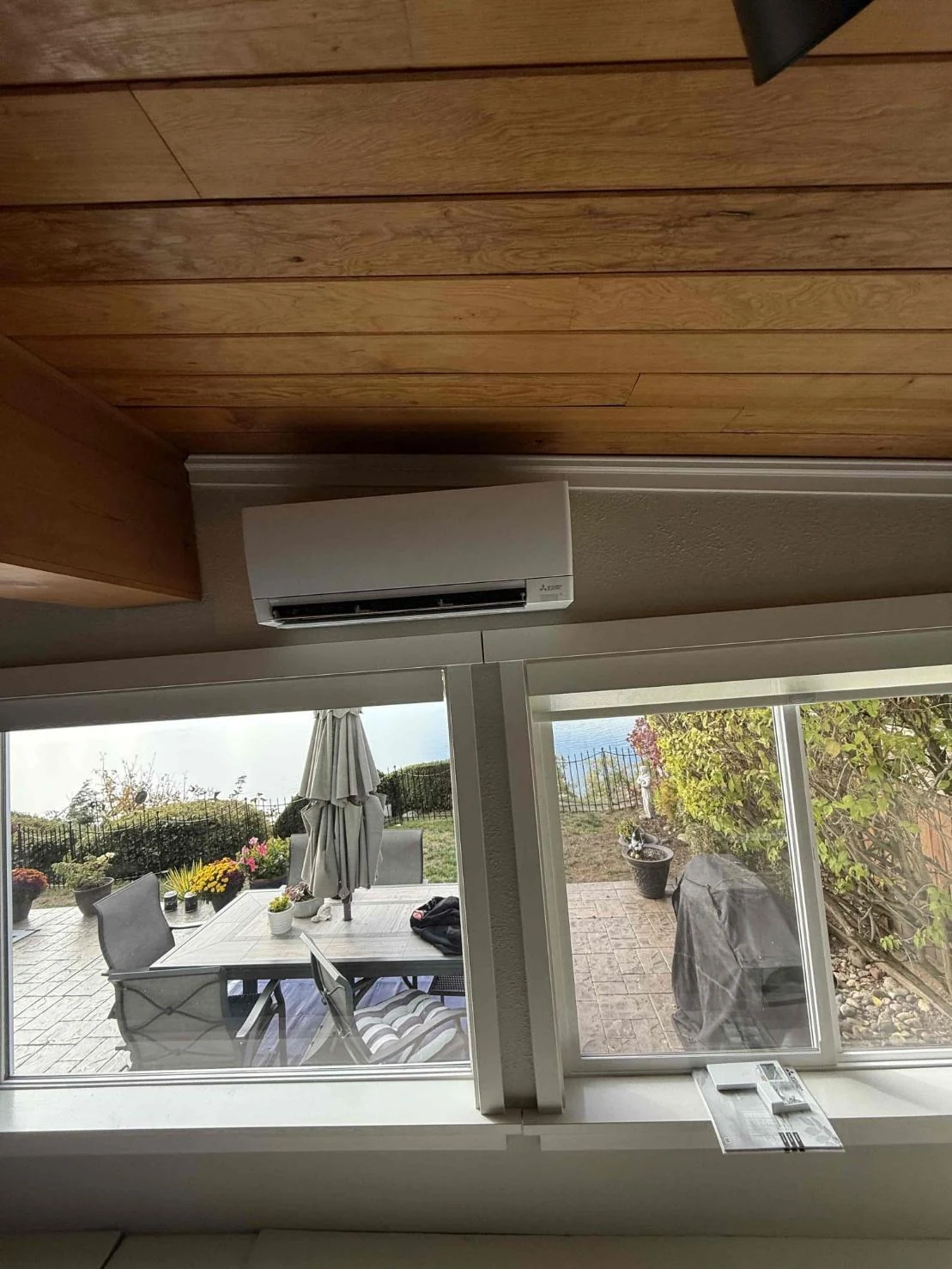
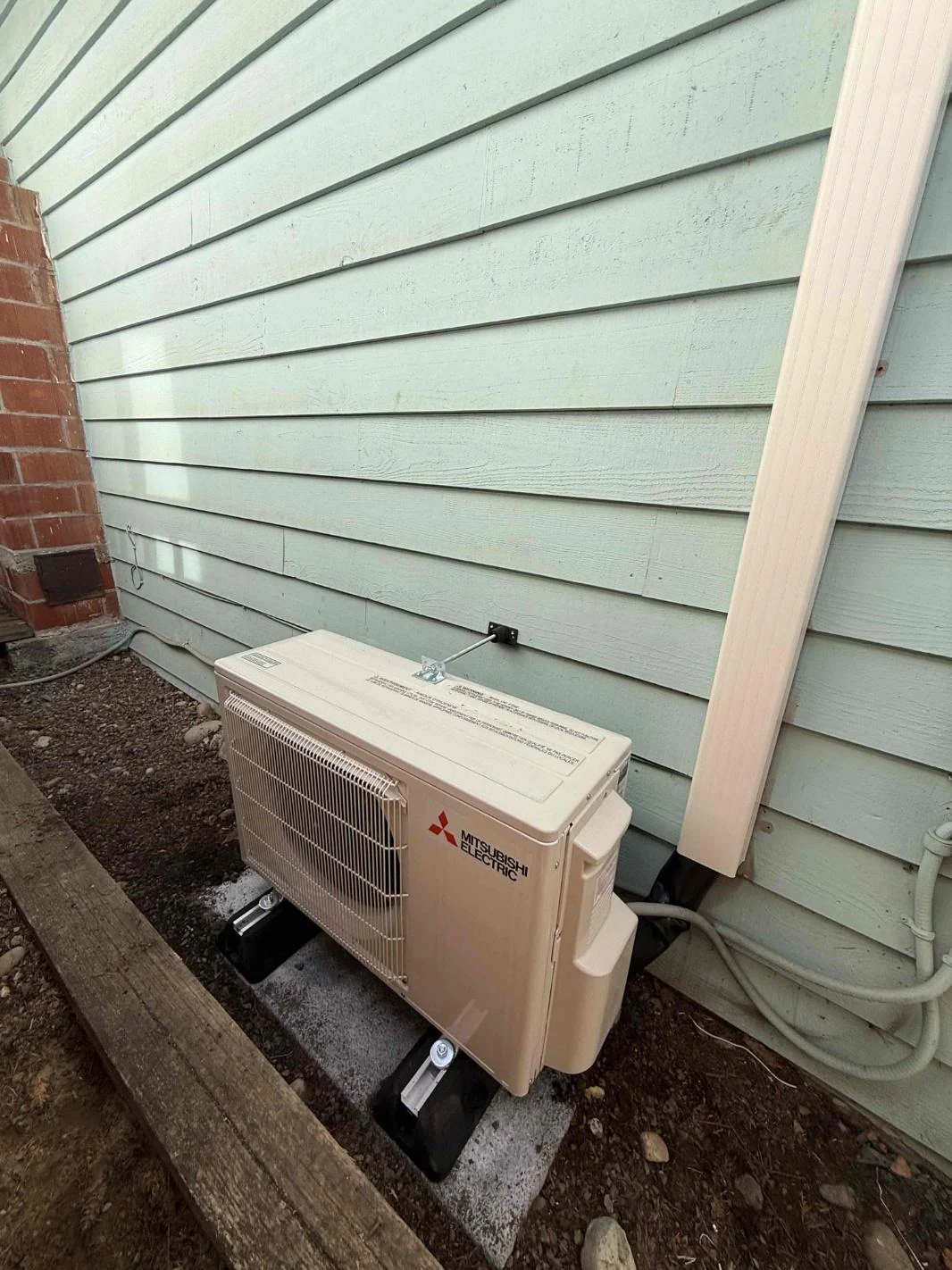
The new Mitsubishi Electric indoor unit and the outdoor unit raised on support feet.
Helping the Homeowner Make the Choice
If someone in my family were deciding whether to put money into an older heat pump, I would want them to understand what a repair would accomplish and what it would leave unchanged. That is the approach of Your Tech Brother From Another Mother. We should be able to explain our recommendation clearly enough that the homeowner can decide whether it fits their priorities and budget.
Karen chose the replacement after we discussed the condition of her system. Our crew then carried out that choice and improved the way the outdoor unit was mounted. After work, she told us, "Thank you. This is so much better than before." I want customers to reach that point knowing why they chose the work and what we did for them.
The Invoice and Financing
An invoice issued as part of Karen's project totaled $8,074.50. A $5,000 payment was applied through Synchrony financing. Financing provided a way to pay for part of the work; its repayment terms are a separate consideration from the equipment and installation scope.
When comparing repair and replacement proposals, I encourage homeowners to look at the work each option buys. In Karen's replacement, the result included new indoor and outdoor equipment, an outdoor mounting arrangement that addressed the drainage problem, and registered warranty coverage. A useful estimate explains the equipment and installation work together, including any separately priced items, so the homeowner understands what they are agreeing to.
Warranty Coverage After Installation
Warranty support was part of Karen's decision. The new equipment was registered, and the replacement was offered with 12-year manufacturer coverage and Product Air's five-year labor warranty. Those cover different obligations, so I want homeowners to understand both.
Mitsubishi Electric's extended residential warranty covers parts and the compressor under the applicable terms. Eligibility depends on requirements that include the installation, registration, and ownership. It does not make every service expense free for 12 years. Our labor coverage is a separate warranty with its own terms. Keep the registration confirmation and written warranty information with your installation paperwork so you know where to turn if the equipment needs service.
What to Ask Before Replacing Your Heat Pump
Start by asking the technician to explain the diagnosis. If the recommendation is a new fan motor, ask what confirmed the failure, what the repair includes, and whether the rest of the unit is in serviceable condition. A second opinion can be useful when the choice involves a substantial repair or replacement. The explanation should help you understand the problem well enough to compare the options.
For homeowners in Western Washington, drainage deserves attention during the heating season. Water released during defrost can be normal. Water that remains inside the base, growing corrosion, or ice that interferes with the equipment calls for a closer look. Have a technician assess those conditions rather than treating every puddle as a failure or dismissing persistent water as harmless.
If replacement is recommended, ask how the installation will address the problems found in the old system. Discuss the complete scope and written warranty terms before approving the work. Karen's project is a useful example: the decision involved the worn motor, the condition of the outdoor unit, and how a new system would be installed. Understanding those connections gave her a sound basis for choosing the replacement.
PLAN YOUR NEXT STEP
Need help with your home comfort?
Explore Product Air’s heat pumps services or contact the team.
Share this guide