


When Steve's old Duo-Therm electric furnace stopped working, he already knew what he wanted from his next system. He wanted to spend less on heating, have air conditioning for summer, and control the temperature in different parts of his home. He also wanted to move away from the old ductwork. Our team installed a Mitsubishi Electric ductless heat pump with three indoor units to serve the spaces he had selected.
Steve was a returning Product Air customer, but he still compared contractors before making a decision. His home is a single-story, three-bedroom double-wide built in 1978, with about 1,574 square feet of living space. He was looking for a company that would handle the installation well and stand behind its work. Devon worked on the proposal, and our Product Air team handled the installation and electrical work.
Why Steve Chose Ductless Heating and Cooling
With a failed furnace, I want to understand how the homeowner felt about the system before it stopped working. That helps determine whether restoring the old setup would meet their needs. Repairing an electric furnace can be a reasonable choice in the right circumstances, but it would not, by itself, give Steve the zoned control or summer cooling he wanted from his new equipment.
A ductless system delivers heated or cooled air directly into the spaces with indoor units. For Steve, that meant his new system could operate independently of the old ducts. It also gave him separate temperature settings in the three served areas. He had a clear preference for that approach, and the selected system matched those priorities.
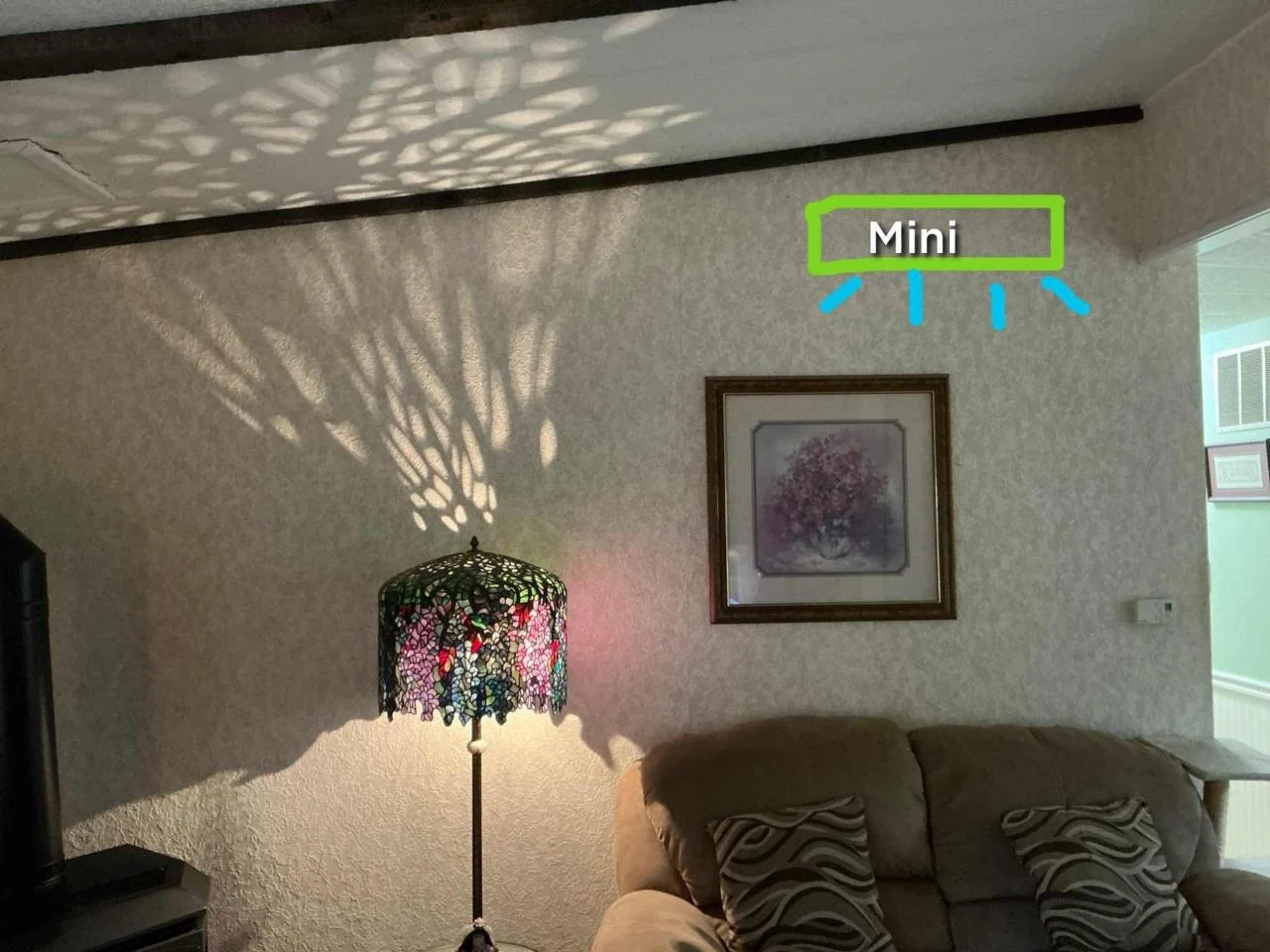
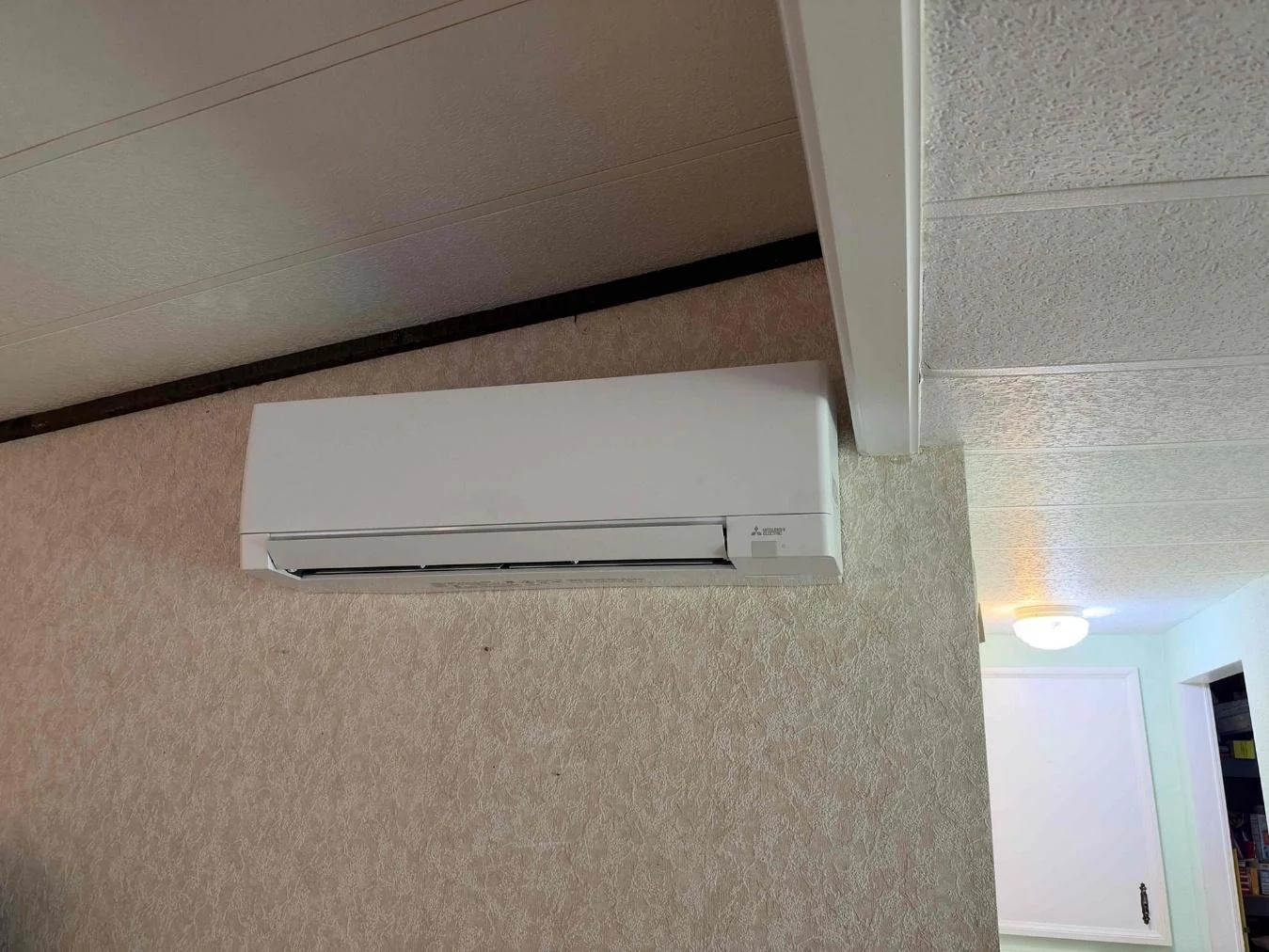
Main living room before and after installation. The marked location became the home of the 24,000 BTU/h indoor unit.
Three Indoor Units for Three Selected Areas
We installed a 12,000 BTU/h indoor unit in the bedroom, a 9,000 BTU/h unit in the smaller living room and kitchen area, and a 24,000 BTU/h unit in the main living room. All three connect to one outdoor unit. Each indoor unit has its own temperature setting, so Steve can adjust the served areas to suit how he uses them.
Those numbers describe the nominal size classes of the indoor units. Adding them together does not establish the outdoor unit's heating output. A multi-zone system has to be evaluated as an approved equipment combination, with attention to the capacity available when several spaces need heat at once and when the outdoor temperature drops.
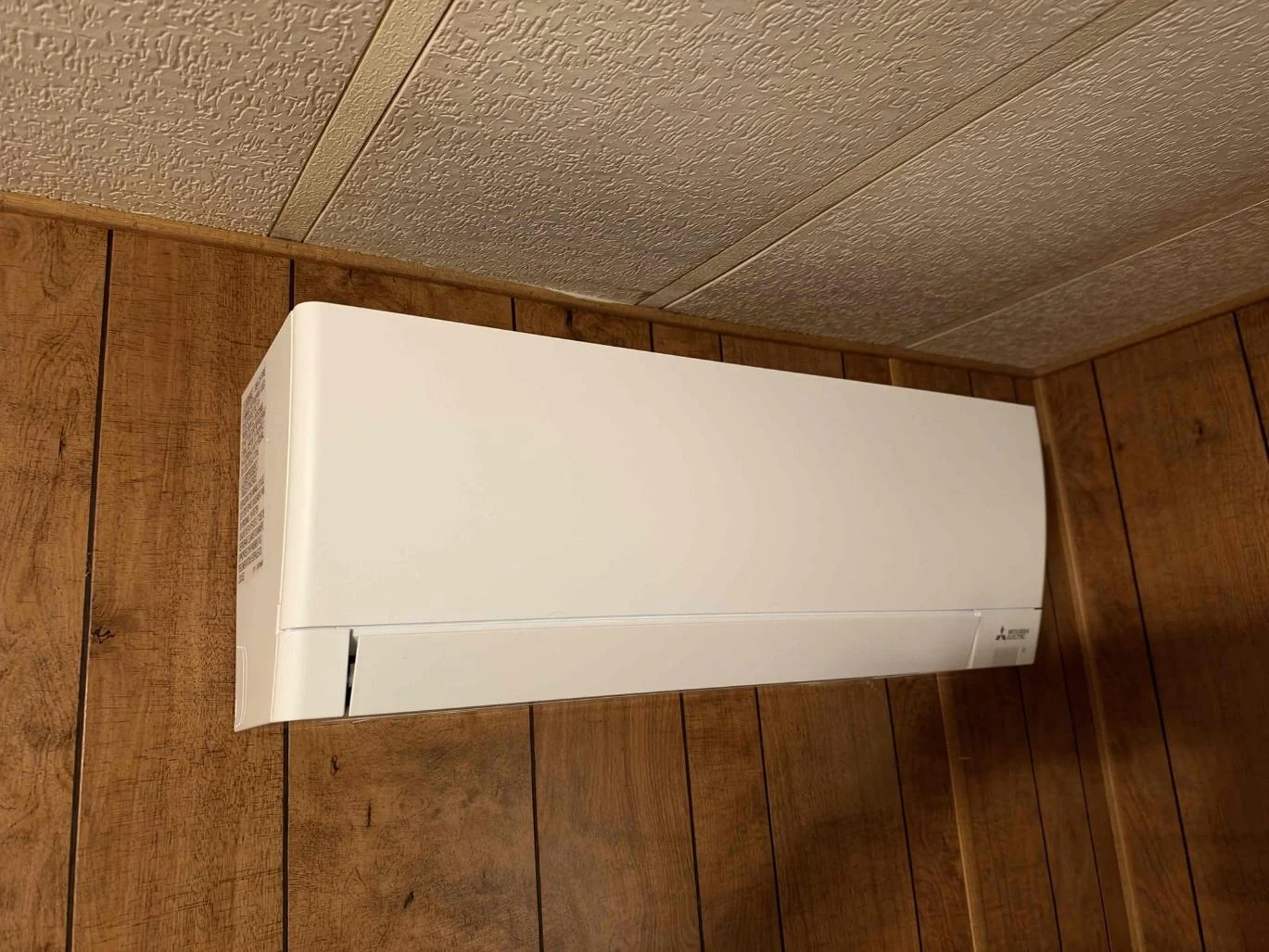
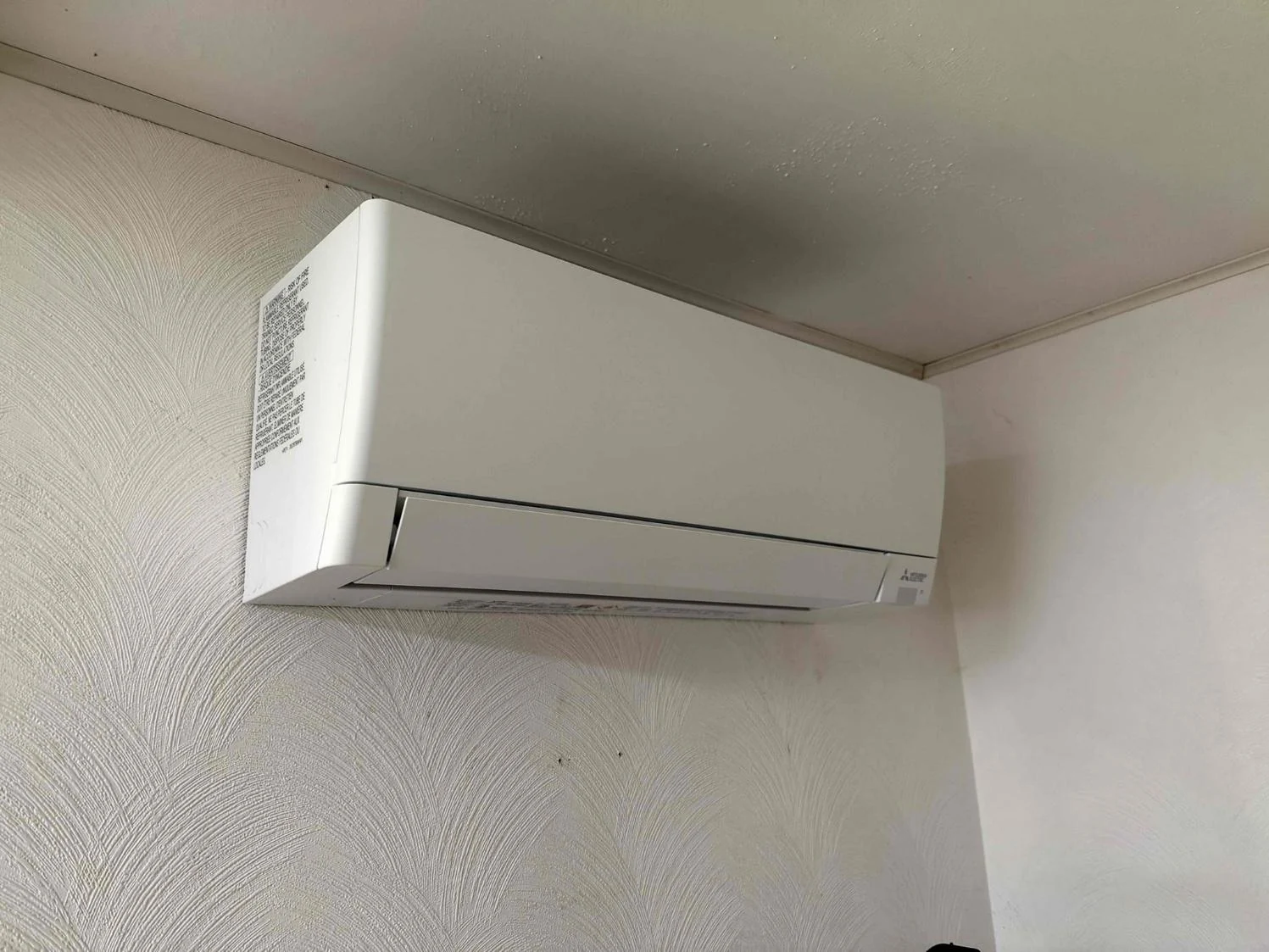
Completed indoor units in the bedroom, left, and smaller living room and kitchen area, right.
The room layout matters just as much as the equipment. A wall-mounted unit needs a suitable path for its airflow, and its location should account for furniture, ceiling conditions, and service access. The placement should work for someone sitting on the sofa or sleeping in the room, as well as for the installer connecting the equipment.
Routing the Lines Through an Existing Home
Our installation used a route through a closet to the exterior, then through the crawlspace to reach the outdoor unit location. That route connected the selected indoor locations to the equipment outside while working with the construction of Steve's home.
A manufactured home does not automatically require every refrigerant line to run underneath it. The route depends on the layout, access, and equipment requirements. On a project like this, I want the proposed path explained before installation so the owner understands where the lines will go and what parts of the home the crew will need to access. The lines also need appropriate support, insulation, and protection wherever they run.
Keeping Condensate Away From the Entry Steps
The indoor unit serving the smaller living room and kitchen needed a condensate route that carried water away from the entry steps. During cooling, an indoor unit removes moisture from the air. That moisture has to drain somewhere, and the convenient place to run a tube is not always a good place for the water to end up.
We planned the route around the entrance so drainage would be directed away from the steps. It is a practical detail that affects how the homeowner uses the space. I want that addressed while the installation is being laid out, rather than becoming a nuisance after the first stretch of warm weather.
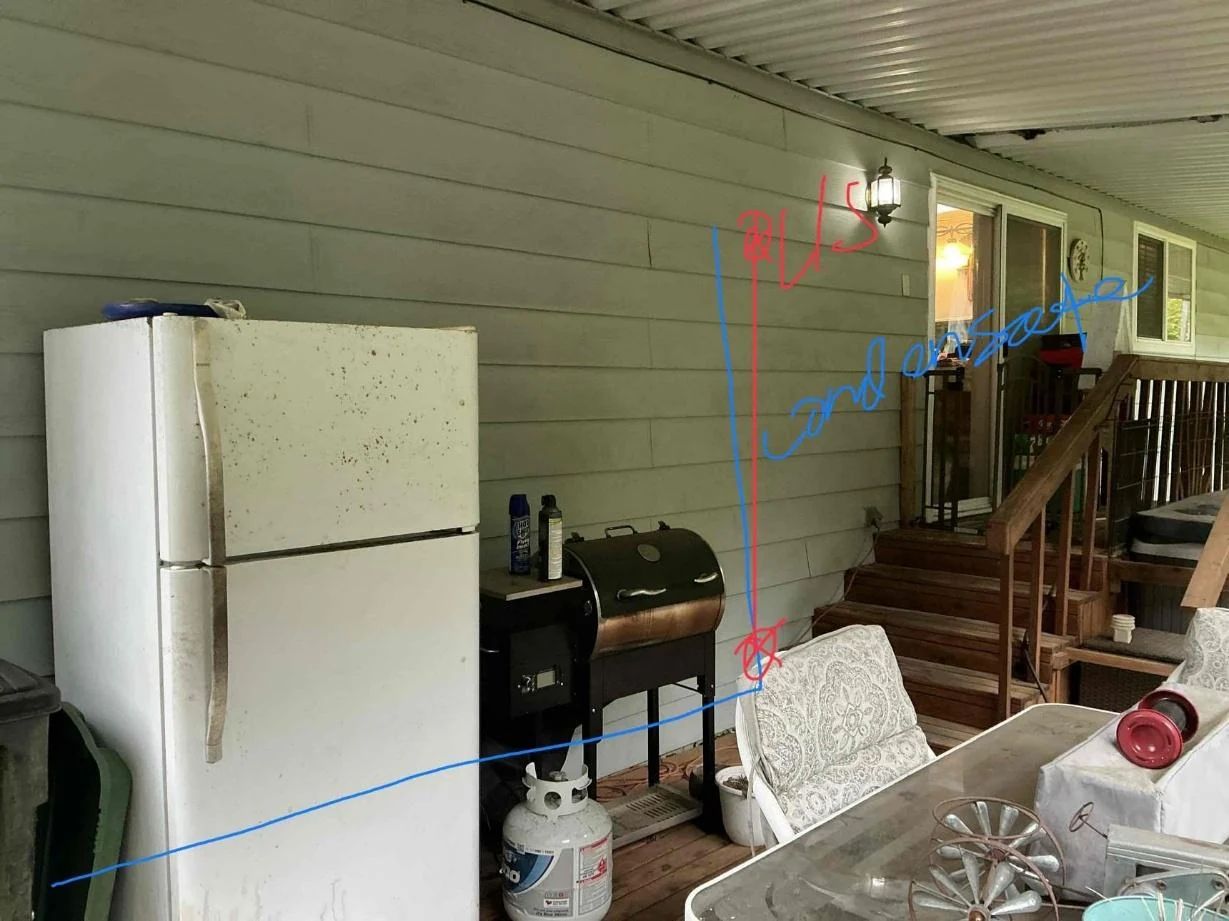
Installation planning photo showing the line route and the condensate path away from the entry steps.
The Outdoor Installation and Electrical Work
Our team set the Mitsubishi Electric outdoor unit on a pad with support feet beside the home. An electrical disconnect is located next to the equipment. The outdoor installation has to be considered as a whole, including airflow, service access, stability, vibration, and where water will go during winter defrost cycles.
The project included electrical work and called for a combined Washington L&I manufactured-home permit covering the mechanical and electrical scope. Those requirements belong in the project planning. A heat pump needs an appropriate power supply, and changes to a manufactured home's systems need to follow the requirements that apply to that home.
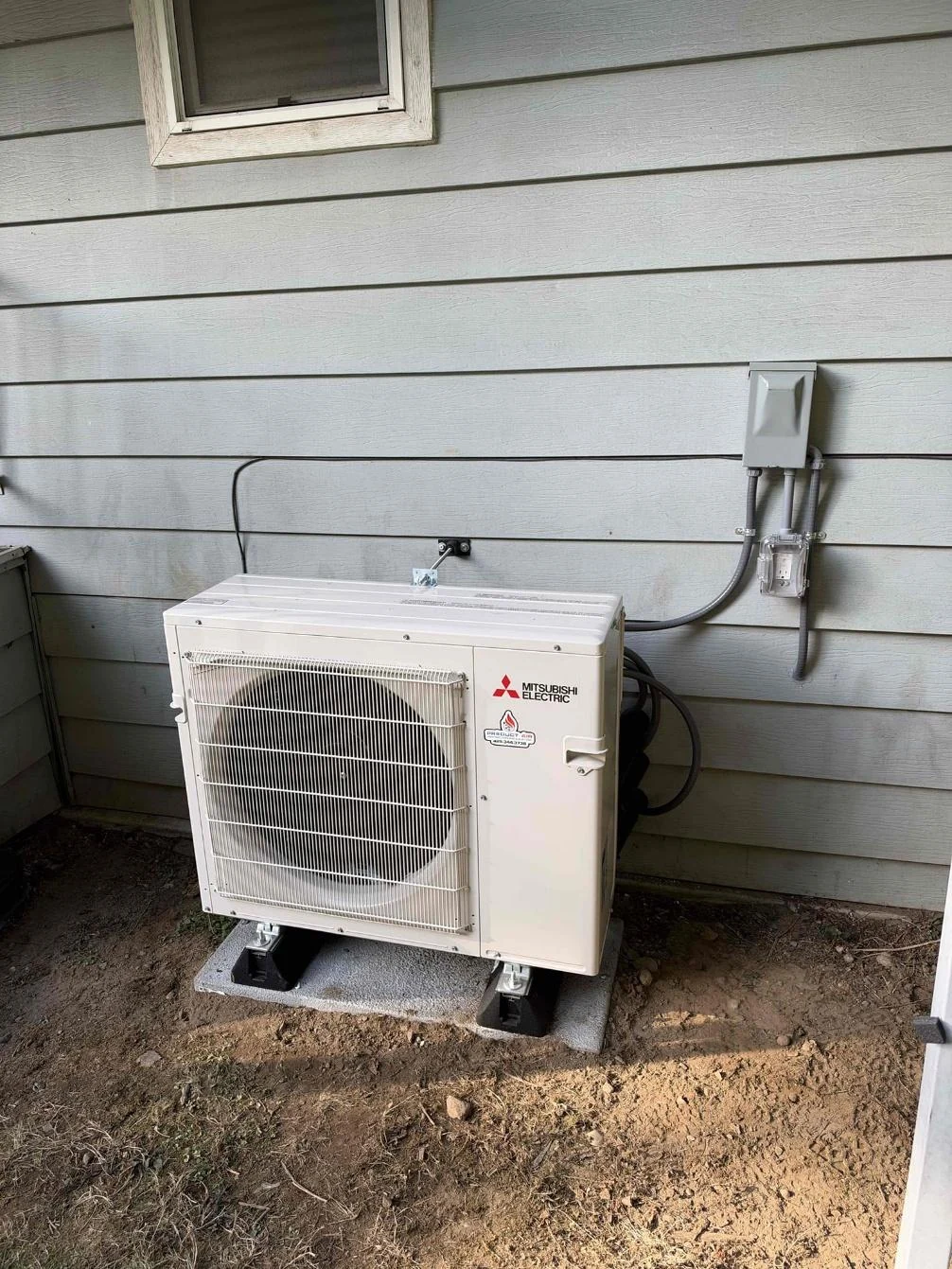
The installed Mitsubishi Electric outdoor unit on its pad and support feet, with the disconnect beside it.
What the Project Invoice Covered
The project invoice totaled $17,356.71, and Steve used financing. The work brought together the outdoor unit, three indoor units, refrigerant lines, condensate drainage, and electrical connections in an existing home. The route through the closet and crawlspace was part of connecting the equipment in the selected locations.
When comparing proposals, I encourage homeowners to look at that complete scope. The price of the equipment alone does not describe the cost of installing a working system in a particular house. Access, line routing, electrical requirements, and the contractor's responsibilities can make two proposals with the same brand name quite different.
We also submitted an application for a $750 Mitsubishi fall rebate for Steve's project. Manufacturer rebates have their own terms and should be distinguished from utility incentives. I want homeowners to understand how any applicable incentive is handled in their agreement, along with the amount they are paying or financing. A rebate amount and a monthly payment should each come with a clear explanation.
Why Steve Chose Product Air
Steve told us that being locally owned mattered to him. He also valued the warranty package: a 12-year manufacturer warranty, 5 years of labor coverage from Product Air, and our satisfaction guarantee. We registered the equipment for warranty coverage. The manufacturer's limited warranty and our labor warranty are separate commitments, each with its own terms.
I am comfortable with a homeowner comparing our proposal with another company's. If my own brother were making this decision, I would want him to understand what he was buying and who would help if he had a problem. That is the approach of Your Tech Brother From Another Mother. Steve had specific goals, and our job was to explain the solution, respect his choice, and carry out the agreed work.
How Steve Felt About the Finished Installation
We completed the installation on October 1, 2026. Afterward, Steve told us he liked the new setup and how well it heated his home. He also complimented the quality of the work. That feedback matters to me because it connects the equipment decision to the experience of living with the finished installation.
The new system gave him heating and cooling in the three served areas, with individual temperature settings and no reliance on the old ductwork to deliver air from those units. His early response was positive. Long-term energy use is something to evaluate over comparable weather and operating conditions, rather than estimate from the first few days of comfort.
What to Consider Before Replacing an Electric Furnace
If you own a manufactured home in Western Washington and your furnace stops working, start with a diagnosis and a conversation about what you want to change. A repair may make sense if the existing setup meets your needs. If you also want cooling, different temperature settings, or a change in how air reaches the rooms, those goals should be part of the equipment discussion from the beginning.
For a ductless proposal, ask how each room will be heated, especially bedrooms used with the doors closed. A unit in a living room does not automatically maintain the same temperature in an enclosed room down the hall. Depending on the layout, additional indoor units, another heat source, or a different distribution approach may be appropriate. The explanation should cover the way you actually use the house.
Ask about cold-weather performance as well. The useful question is how much heat the selected equipment combination can deliver at the outdoor conditions used to design the system, and whether the house needs supplemental heat at those conditions. Square footage alone is not enough to answer that. Windows, insulation, air leakage, and the room layout all affect the heating requirement.
Understanding Energy Costs and the Written Proposal
A heat pump offers an opportunity to reduce heating electricity use because it moves heat rather than producing all of it with electric resistance elements. The actual savings depend on the house, equipment, weather, temperature settings, and use of any other heaters. Summer air conditioning also adds electricity use in exchange for comfort. I would compare bills over similar conditions before putting a percentage on the savings.
Before approving a project, ask for the exact equipment models, installation scope, electrical work, permit responsibilities, and written warranty terms. Have the contractor explain the line routes and condensate disposal. If financing or a rebate is involved, understand the terms and how the amounts fit into your agreement. These are reasonable questions for a substantial investment in your home.
Steve wanted to move away from his old ductwork and gain control over the spaces where he spent his time. The three-zone Mitsubishi system matched those preferences, and he was pleased with the heat and workmanship after installation. Another house may call for a different arrangement. My recommendation starts with the owner's priorities and the building itself, because that is what makes the equipment choice useful.
PLAN YOUR NEXT STEP
Need help with your home comfort?
Explore Product Air’s heat pumps services or contact the team.
Share this guide