


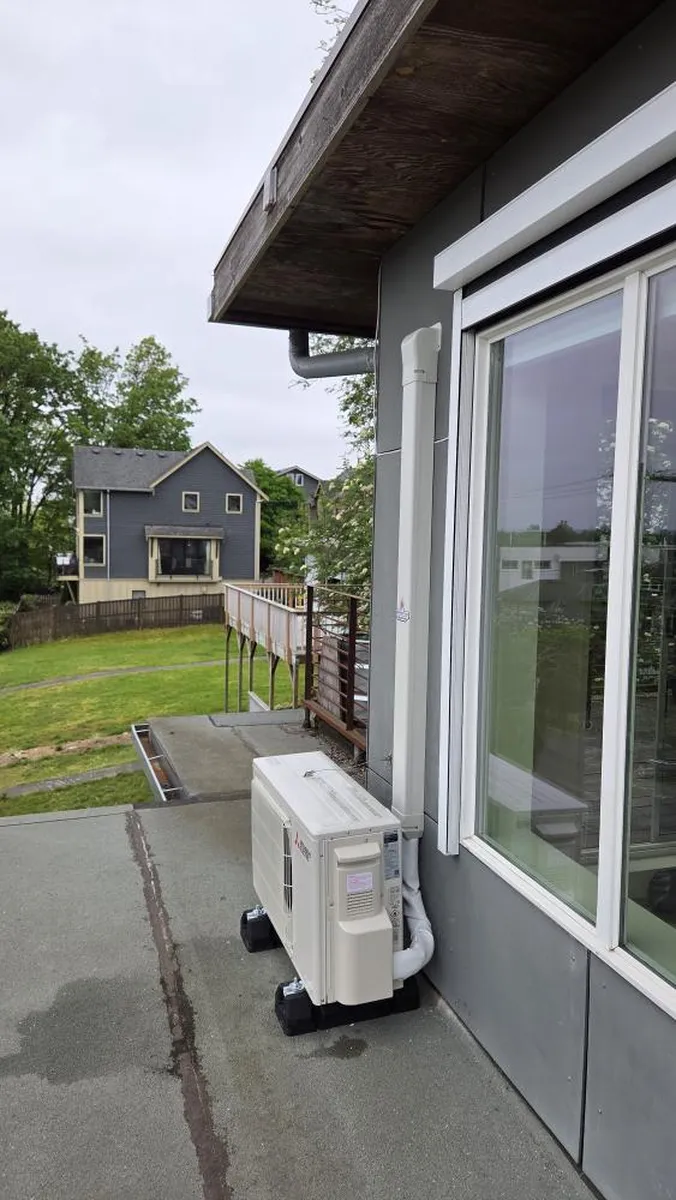
Location: E Pine St corridor, Capitol Hill, Seattle, WA 98122
Call Date: April 20, 2026
First Visit: April 21, 2026
Work Start: May 5, 2026
Project Completion: May 5, 2026
Lead Technician: Luis, 25 years of experience, EPA certified, Mitsubishi certified
System Before: No air conditioning, a 2006-built townhouse with heating only, recently converted into a short-term rental
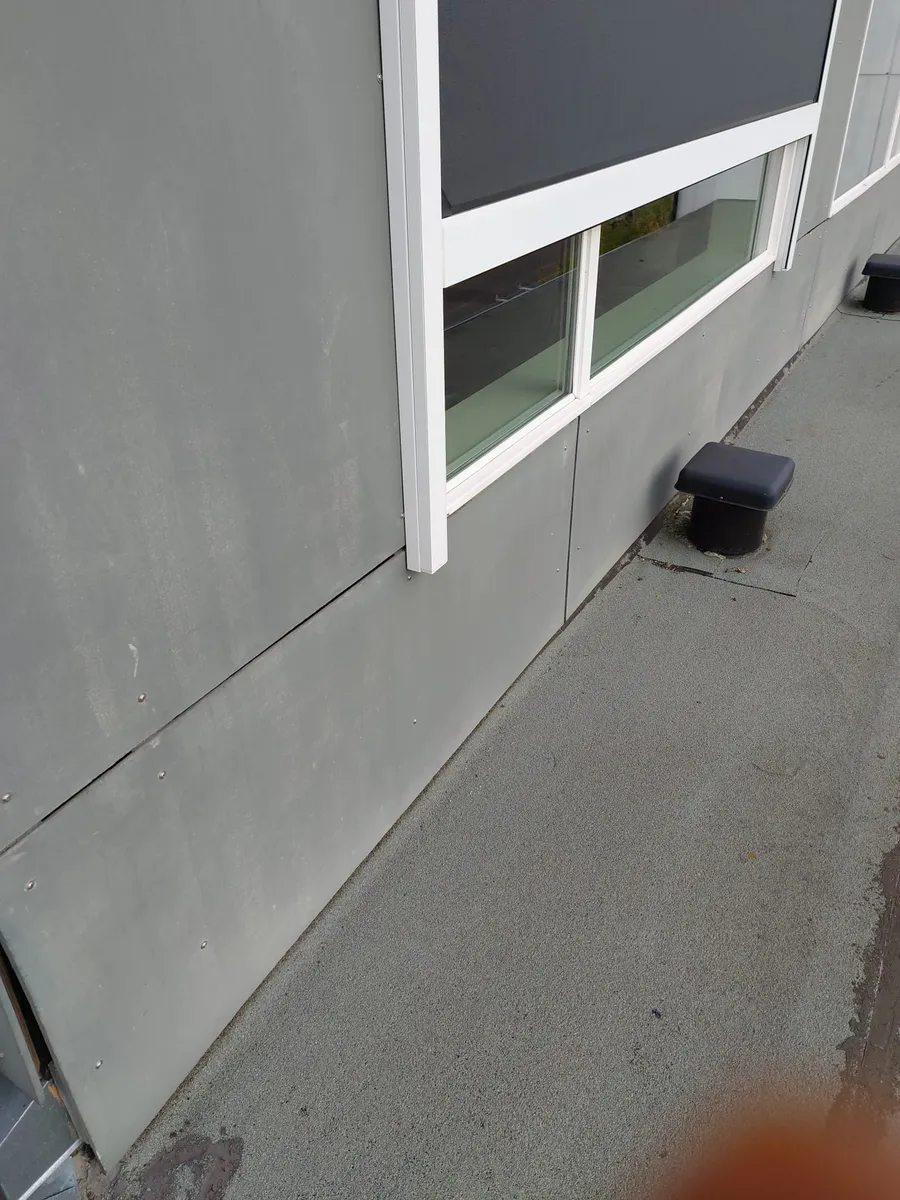
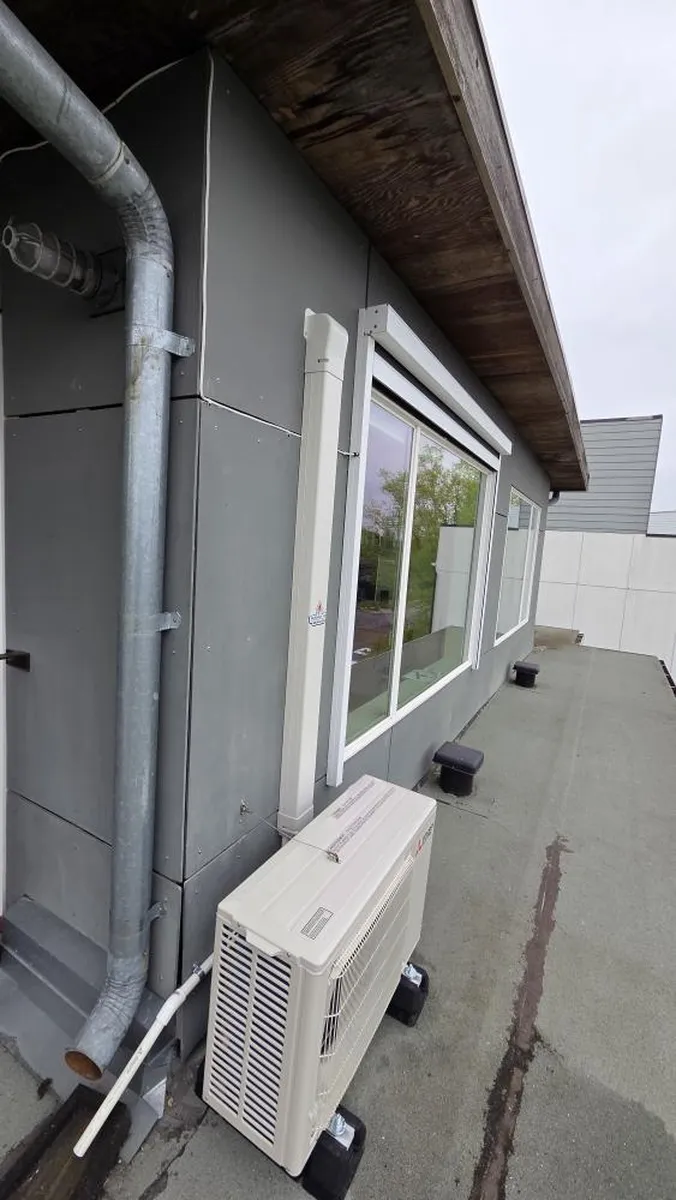
System After: Mitsubishi single-zone ductless heat pump, outdoor unit model MUZJX12WL paired with wall-mounted fan coil model MSZJX12WL, cooling the main living area
Final Project Cost: $6,784.76 (no rebate available for single-zone systems)
Andrew had just turned his townhouse on E Pine St into an Airbnb when he realized the one thing the place didn’t have was the one thing summer guests would notice first. “We just made it Airbnb and need some cooling,” he told Product Air when he called. There was a newly listed property on Capitol Hill and a very practical deadline: guests were coming, and a townhouse with no air conditioning wasn’t going to earn the reviews he needed.
A New Airbnb Host on Capitol Hill Needed Guest Comfort, Not a Full Renovation
Andrew found Product Air through Angi, and this was his first call: a new customer, not entirely sure whether anyone else had looked at the property before him. What he needed wasn’t a whole-home renovation or a system built to future-proof every possible use case. He needed reliable cooling for the space guests would actually spend their time in, delivered on a budget that made sense for a rental property rather than a forever home. That’s a distinct and increasingly common kind of HVAC call, a short-term rental host solving for guest comfort and reviews, not a family solving for their own long-term comfort.
Why a 2006 Townhouse on E Pine St Still Had No Air Conditioning
The property itself was a fairly typical Capitol Hill townhouse: built in 2006, two stories, 1,700 square feet, two bedrooms. Like a lot of townhouses from that era in Seattle, it had been built with heating covered but cooling left out entirely, on the old assumption that Seattle summers didn’t really require it. That assumption has been aging poorly for years, and it becomes a much more immediate business problem the moment a property starts hosting paying guests who don’t have the option of just waiting out a hot week.
How Many Mini Split Zones Do You Need for a Small Townhouse or Rental?
Luis came out for the first visit on April 21 and built Andrew three real options rather than a single system to take or leave. A single-zone ductless heat pump: one outdoor unit paired with one indoor wall-mounted fan coil, delivering cooling and heating to a single room or open area. A four-zone system, extending that same outdoor unit to four separate indoor heads throughout the home. And a seven-zone system, covering essentially every room in the townhouse individually.
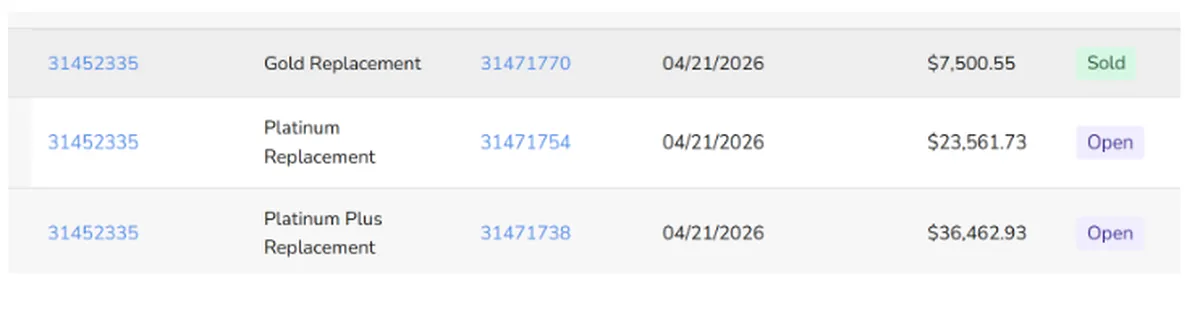
The pricing spread across those three tiers was substantial: a single-zone system at the lower end, a four-zone system roughly three times that cost, and a seven-zone system roughly five times the single-zone price. For a homeowner living in the space full-time, that spread often justifies itself room by room. For Andrew, the calculation was different. His Airbnb guests were going to spend the overwhelming majority of their time in the main living area: the open living, kitchen, and dining space that defines how a short-term rental actually gets used and reviewed. Bedrooms matter too, but a guest’s impression of “was this place comfortable” gets formed in the space they’re awake in, not just the room they sleep in.
Luis explained it directly: “The customer appreciated all the different options, but he wanted to go a budget friendly option to get future guest cooling. But durable. So when we presented, we said: this single zone option will cool your main area and keep the guest happy in the summer. Also, it has the manufacturer warranty that will protect you for many years.” Andrew chose the single-zone system.
Does a Single-Zone Ductless Heat Pump Qualify for a Rebate?
Not this one, and Product Air was upfront about that from the start rather than letting Andrew assume otherwise. Utility and manufacturer heat pump rebate programs are generally structured around systems that serve as a meaningful share of a home’s primary heating load, often with specific capacity or configuration requirements tied to that intent. A single-zone system covering one living area of a townhouse, installed as a supplemental cooling solution rather than a whole-home heating replacement, typically doesn’t meet those program thresholds. Andrew’s final invoice reflected that honestly: no rebate applied, full cost paid directly. It’s a detail worth knowing before budgeting for a project like this, since the sticker price on a small single-zone system is the real price, not a starting point expected to shrink with incentives the way a larger heat pump replacement often does.
What Product Air Installed: A Mitsubishi Single-Zone System for the Main Living Area
The system Luis installed was a Mitsubishi single-zone, 1-ton, 12,000 BTU Ultra Quiet, side-discharge, modulating variable-speed heat pump, model MUZJX12WL, paired with a matched Mitsubishi 1-ton, 12,000 BTU Ultra Quiet wall-mounted modulating variable-speed fan coil, model MSZJX12WL.
| Component | Detail |
| Outdoor Unit | Mitsubishi Single Zone, 1 Ton, 12K, Ultra Quiet, Side Discharge, Modulating/Variable Speed |
| Outdoor Model Number | MUZJX12WL |
| Indoor Unit | Mitsubishi 1 Ton, 12K, Ultra Quiet, Wall Mounted, Modulating/Variable Speed Fan Coil |
| Indoor Model Number | MSZJX12WL |
| Manufacturer Warranty | 15 years |
| Product Air Labor Warranty | 5 years |
A single-zone ductless mini split is exactly what the name describes: one outdoor condensing unit dedicated to exactly one indoor fan coil, rather than one outdoor unit branching out to multiple indoor heads the way a multi-zone system does. The wall-mounted fan coil draws in room air, passes it across a refrigerant coil, and delivers conditioned air directly back into the space, quiet enough to run continuously in an occupied room, and simple enough that there’s only one indoor unit to control, clean, and maintain.
One Day, Four Trades: How the Installation Came Together
The consultation itself ran about two hours, enough time for Luis to walk through all three zoning options and land on the single-zone system that matched Andrew’s actual priorities. The installation happened in a single day, May 5: two HVAC technicians on-site for four hours handling the equipment and refrigerant work, alongside two electricians working an additional four hours to run the new dedicated circuit the outdoor unit needed. Even a single-zone system requires its own electrical circuit sized to the equipment, which is why a job this size still calls for a coordinated electrical and HVAC crew rather than HVAC technicians working alone.
Because the installation touched electrical, refrigeration, and mechanical work, it required permitting across all three disciplines, handled by Product Air and signed off in a single day of inspections, the same coordinated approach used on larger heat pump system installations elsewhere in Seattle.
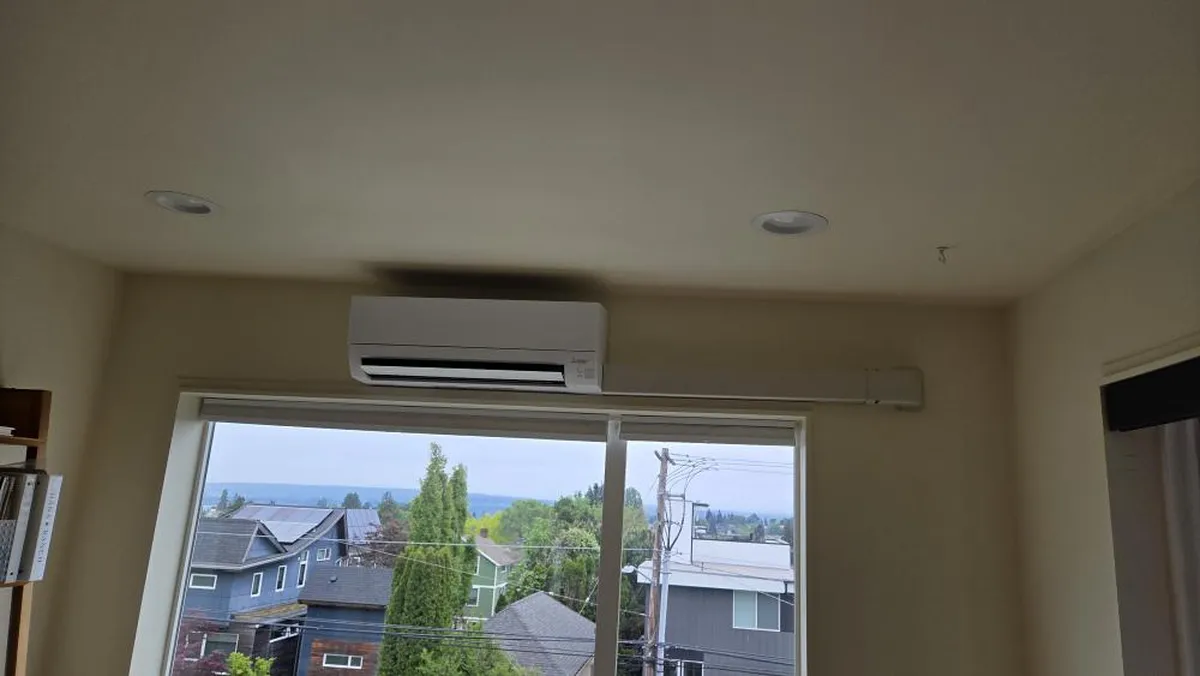
The Real Number: $6,784.76, No Rebate, Paid in Full
The single-zone system came to $6,784.76, with no utility or manufacturer rebate applied, and Andrew paid the full amount out of pocket. There’s no rebate math to walk through here, no incentive program to apply for after the fact. The number on the estimate was the number on the final invoice, which is worth knowing upfront for any homeowner or host budgeting for a single-zone system rather than a larger, rebate-eligible installation.
What Guest-Ready Cooling Means for Andrew’s Airbnb
The system Andrew now has covers exactly the space his guests actually live in during a stay, backed by a 15-year manufacturer warranty and a 5-year Product Air labor warranty, durability that matters more, not less, on a rental property where the owner isn’t around daily to notice small problems before they become guest complaints. What Andrew mentioned most after the work was finished wasn’t the equipment itself. He appreciated how the installation went and the quality of the work, and specifically called out how the technicians took the time to put down drop cloths and plastic sheeting to keep the house clean throughout the job, a detail that matters even more on a property that needs to look guest-ready again the moment the crew leaves.
Frequently Asked Questions: Ductless Mini Split Installation in Seattle, WA
How many mini split zones do I need for a small townhouse or rental?
The right number of zones depends on how the space actually gets used, not just the total square footage or room count. A single zone covering the main living area is often enough when that’s where occupants spend the majority of their time, while a multi-zone system makes more sense when every room needs independent temperature control. In one Capitol Hill case, a 1,700-square-foot, two-bedroom townhouse converted into an Airbnb was covered with a single-zone system focused entirely on the main living space, since that’s where guests would spend most of their time.
Does a single-zone ductless heat pump qualify for a rebate?
Often, no. Utility and manufacturer rebate programs are typically structured around systems serving as a meaningful share of a home’s primary heating load, and a small single-zone unit installed to supplement cooling in one area frequently doesn’t meet those program requirements. In a Seattle case, a homeowner installing a single-zone system for a townhouse’s main living area was told directly that no rebate applied to the project, and the final cost reflected the full price with no incentive applied.
What’s the difference between single-zone and multi-zone mini splits?
A single-zone system pairs one outdoor condensing unit with exactly one indoor fan coil, delivering conditioned air to a single room or open living area. A multi-zone system connects one larger outdoor unit to multiple indoor heads throughout a home, each independently controlled. In a Seattle case, a homeowner was offered three options, a single-zone system, a four-zone system, and a seven-zone system with pricing scaling significantly from roughly $7,500 for the single-zone option up to more than $36,000 for the full seven-zone whole-home setup.
How much does a single-zone ductless heat pump cost in Seattle?
Costs vary based on equipment capacity and installation complexity, but a single-zone system covering one primary living area is generally the most budget-friendly ductless option available. In a recent Capitol Hill installation, a Mitsubishi single-zone system, including the outdoor unit, indoor wall-mounted fan coil, new electrical circuit, and all permitting, totaled $6,784.76 with no rebate applied.
What’s a good cooling solution for an Airbnb or short-term rental?
A single-zone ductless mini split covering the main living area is often a strong fit for a small rental property, since it delivers reliable, guest-facing comfort in the space occupants use most, without the cost of covering every room individually. In one Seattle case, a host who had just converted a townhouse into an Airbnb chose exactly this approach, prioritizing a budget-friendly but durable system over a full multi-zone installation, since guest comfort in the main living space was the priority driving the project.
What is a single-zone ductless mini split?
A single-zone ductless mini split is a heating and cooling system made up of one outdoor condensing unit connected to exactly one indoor fan coil, typically wall-mounted, which delivers conditioned air directly to a single room or open living area without any ductwork. It’s a simpler, more contained version of the multi-zone systems that connect one outdoor unit to several indoor heads throughout a home. In a Seattle case, this exact configuration was installed to cool the main living area of a townhouse recently converted into a short-term rental.
Does mini split installation require an electrical permit?
Yes, in most cases. Even a single-zone mini split typically requires a new dedicated electrical circuit sized to the outdoor unit, which means the installation involves licensed electrical work alongside the HVAC and refrigeration work, all requiring permits and inspection. In a Seattle case, a single-zone installation required permits across electrical, refrigeration, and mechanical disciplines, with inspections for all three completed in a single coordinated day.
How long does single-zone heat pump installation take?
A single-zone system installation typically takes about a day of on-site work when the electrical and HVAC components are coordinated together. In a Seattle case, a two-person HVAC crew completed the equipment and refrigerant work in about four hours, while a separate two-person electrical crew ran the new dedicated circuit in a similar timeframe, with the full installation and final walkthrough completed within a single day.
Key Takeaways
- A single-zone ductless mini split covering just the main living area can be the right call for a small townhouse or rental, especially when that space is where occupants spend the majority of their time.
- Single-zone systems typically don’t qualify for the same utility or manufacturer rebate programs available to larger, whole-home heat pump installations.
- Zoning options for ductless systems can scale in price in one Seattle case, from roughly $7,500 for a single zone up to more than $36,000 for a full seven-zone system.
- Even a single-zone mini split installation usually requires new dedicated electrical work, meaning the project involves both HVAC and electrical trades and multiple permit disciplines.
- A single-zone system for a townhouse’s main living area cost $6,784.76 in a recent Seattle installation, paid in full with no rebate applied.
- For short-term rental hosts, a budget-conscious but durable cooling solution focused on the primary living space can meet guest comfort expectations without the cost of a full multi-zone system.
Andrew didn’t need a system built for every possible future use of his townhouse. He needed one built for exactly what the property is right now, a place guests stay for a few nights at a time, spending most of those hours in one shared living space. Matching the system to that reality, rather than defaulting to the biggest option on the table, is what made this project make sense on a rental property’s budget without cutting a corner that guests would actually notice.
— Serge Nikolin, Co-Founder, Product Air Heating, Cooling and Electric
Marysville · Issaquah · Seattle · Western Washington