


Location: 23rd Ave NE corridor, Seattle, WA 98125
Call Date: May 18, 2026
First Visit: May 22, 2026
Work Start: June 9, 2026
Project Completion: June 9, 2026
Lead Technician: Brandon J., 10 years of experience, 02 electrician certified by Washington State
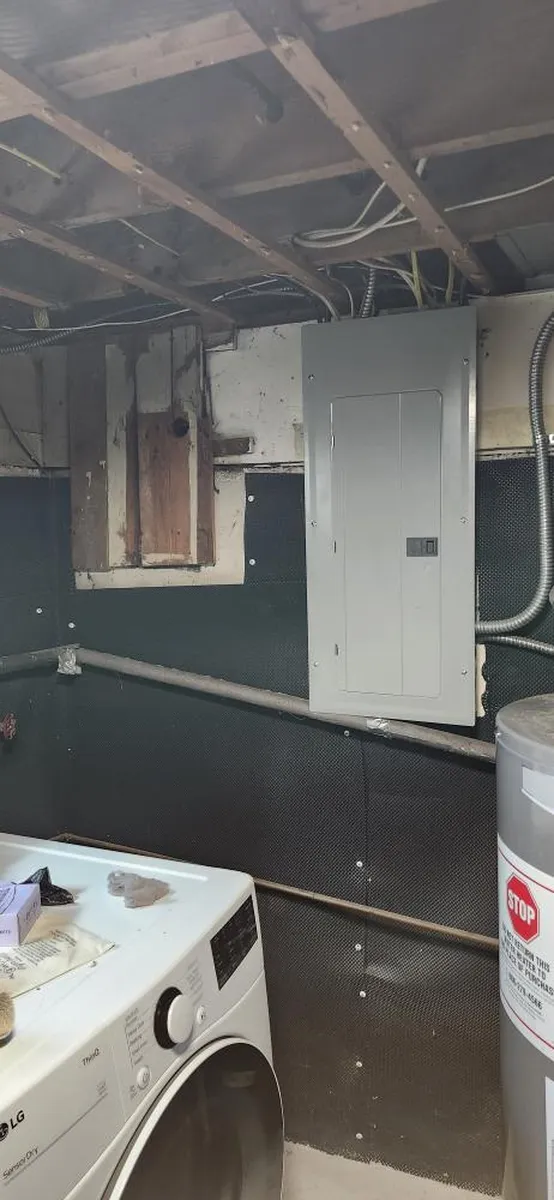
System Before: Original 1941 panel with no brand labeling, no ground rods, no 200-amp disconnect between meter and panel, abandoned wiring, knob-and-tube wiring feeding basement receptacles, no surge protection, and a mislabeled panel directory
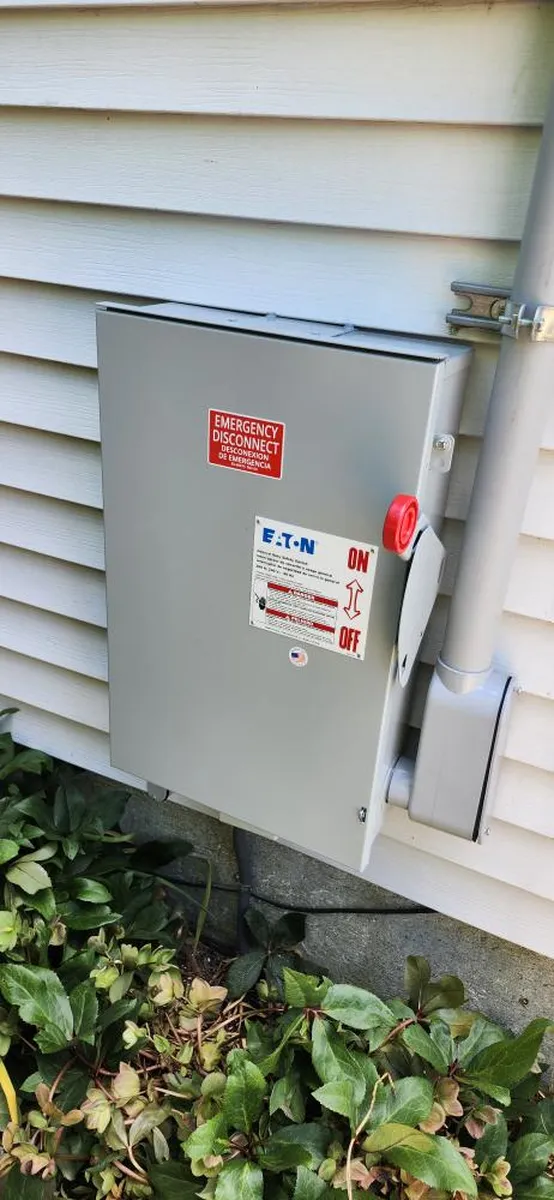
System After: Full panel rejuvenation, new panel wiring, new Eaton 200-amp main disconnect, knob-and-tube removed, all work brought up to current city and national code
Final Project Cost: $10,014.28 ($0 down, 0% interest financing available)
Andrea had already been told what was wrong with her electrical panel. Brandon had come out a few months earlier for a separate job, and while he was there, he’d flagged it: the panel needed a cleanup, and there was a strand of knob-and-tube wiring that really needed to go. It wasn’t an emergency at the time, just a recommendation, the kind of thing a homeowner files away and means to get to eventually. Then an outlet on the outside of her house melted. “Had you out a few months ago to do some electrical work, and at the time discussed needing to do a clean up on my current panel, and get rid of one strand of knob and tube,” she wrote when she reached back out. “I had an external outlet melt, so feel like I need to move forward with that work pretty soon and would love to get an estimate.”
Is It Risky to Postpone Electrical Panel Work? Why Andrea Waited And What Changed Her Mind
Andrea found Product Air originally through Thumbtack, and this call made her a returning customer rather than a new one. She already knew Brandon’s work, which is part of why she reached back out to him specifically rather than starting over with someone new. What she was looking for now wasn’t just an estimate. It was safety and reliable electrical, stated plainly, after an incident that made the earlier recommendation feel a lot less optional.
This is a familiar pattern in older homes, and it’s worth naming directly: electrical work that isn’t causing an obvious daily problem is easy to postpone, especially when the price tag is significant and the system has technically been “working” for decades. Andrea’s panel had been doing exactly that: functioning, in the loosest sense, right up until an outlet melted with no other warning. Postponing electrical work on a system already flagged as having real issues doesn’t make those issues go away. It just means the next sign of trouble arrives without any additional notice.
Why Andrea’s Outlet Melted Without Tripping a Single Breaker
What alarmed Andrea most wasn’t just that the outlet melted. It was that none of her breakers tripped when it happened. Brandon understood exactly why that mattered to her. “She was really concerned that her outlet melted and none of the breakers tripped,” is how he described her state of mind arriving on-site.
It’s a completely reasonable thing to find unsettling, because it cuts against how most people assume their electrical system works: something goes wrong, the breaker trips, the danger is contained. But a breaker is designed to respond to specific conditions, primarily overcurrent flowing through the full circuit, or a short circuit pulling current somewhere it shouldn’t go. A localized failure right at an outlet, a loose or corroded connection, a failing device, arcing happening at the contact points themselves, can generate real, damaging heat exactly at that spot without ever pulling enough current through the entire circuit to trip the breaker sitting upstream at the panel. The breaker isn’t malfunctioning in that scenario. It’s simply not built to catch that particular failure mode, which is precisely why an outlet can melt while every breaker in the panel sits calmly in the “on” position.
What Are the Signs of a Dangerous, Outdated Electrical Panel? Seven Things Brandon Found in One Visit
Once Brandon got into the panel itself, the melted outlet turned out to be one symptom among several. The home was built in 1941: a single-story, 1,640-square-foot house with three bedrooms and the panel inside it was original, with no brand labeling anywhere on it, meaning there was no way to even verify its rated capacity from the equipment itself. From there, the list only grew.
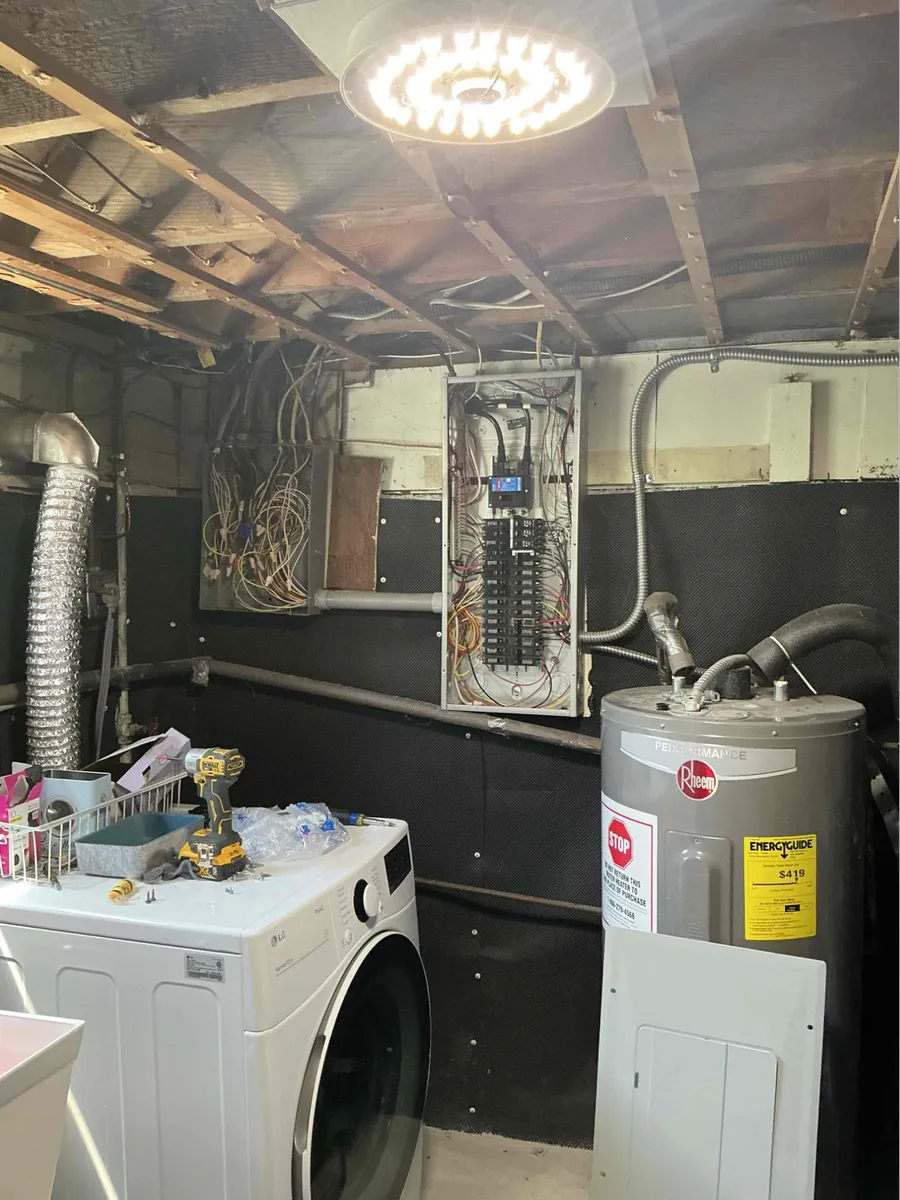
Brandon documented seven distinct issues in a single visit: the old, original, unlabeled panel itself; old wiring still present in the panel but not connected to anything on the other end, a kind of electrical debris left behind by past renovations; no surge protection anywhere in the system; knob-and-tube wiring still feeding basement receptacles; no ground rods, meaning the home’s electrical system lacked a proper path to earth ground; no 200-amp disconnect installed between the meter and the panel; and a mislabeled panel directory, so the breakers didn’t accurately reflect what they actually controlled. Brandon’s read on how a panel accumulates this many issues at once was straightforward: age, combined with the home passing through multiple different owners over more than eighty years, each one making their own changes without necessarily documenting or maintaining what came before. The safety risk from a panel in this condition isn’t abstract. It’s fire, or worse.
Is It Safe to Have Knob-and-Tube Wiring Still Connected in a Basement?
No, and this was one of the more specific concerns in Andrea’s panel. Knob-and-tube wiring, common in homes built in this era, has no ground conductor, and its insulation degrades significantly over eight-plus decades of service. When that wiring is still live and actively feeding receptacles that get regular use, rather than sitting inert and disconnected, the combination of aging insulation, missing grounding, and ongoing electrical load is a legitimate fire and shock hazard. In Andrea’s basement, knob-and-tube wiring was still connected directly to receptacles, which made its removal one of the clearest priorities in the entire scope of work.
The Fix: Panel Rejuvenation, Not a Patch
With seven separate issues on the table, patching the most obvious one, replacing the melted outlet, would have left every other risk exactly where it was. Brandon’s recommendation was a full panel rejuvenation: address the panel, the missing disconnect, the abandoned wiring, the knob-and-tube, the grounding, the surge protection, and the mislabeling together, in one coordinated project, rather than working through them piecemeal over separate visits.
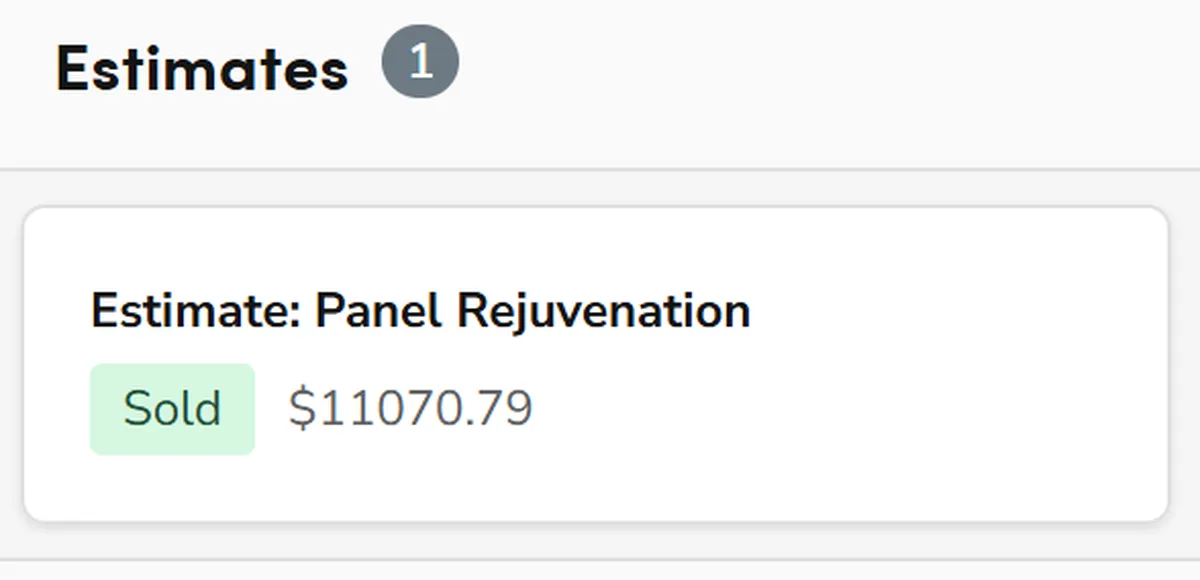
When Brandon explained the choice to Andrea, he didn’t lead with a feature list or a price comparison. He led with the one thing that actually mattered here: safety. Andrea chose the full panel rejuvenation.
What Panel Rejuvenation in Seattle, WA 98125 Actually Involves
Panel rejuvenation is a comprehensive rebuild of a home’s electrical distribution system, starting at the point where power enters the house and extending through everything the panel touches. For Andrea’s home, that meant a substantial amount of new wiring throughout the panel and its surrounding circuits, plus a new Eaton 200-amp main disconnect installed between the meter and the panel, the exact component that had been missing from her system entirely.
A 200-amp main disconnect matters because it gives a home’s electrical system a single, clearly identified point where power can be shut off completely in an emergency for a technician working on the system, for first responders, or for the homeowner themselves. Its absence in Andrea’s original setup meant there was no equivalent fail-safe point between the utility connection and the panel. All of the work was completed to meet current city and national code requirements, closing every one of the seven issues identified during the diagnostic rather than addressing them selectively.
| Component | Detail |
| Panel | Original unlabeled panel replaced, rewired throughout |
| Main Disconnect | New Eaton 200-amp main disconnect installed between meter and panel |
| Knob-and-Tube | Removed from basement receptacle circuits |
| Abandoned Wiring | Removed from the panel |
| Grounding | Ground rods installed |
| Surge Protection | Added to the system |
| Panel Directory | Correctly labeled to match actual circuits |
| Code Compliance | All work completed to current city and national electrical code |
| Product Air Warranty | Lifetime craftsmanship warranty on labor performed |
One Day, Two Technicians, Ten Hours: How the Rejuvenation Came Together
The consultation itself ran about two hours, walking Andrea through everything Brandon had found and the reasoning behind recommending a full rejuvenation over a narrower repair. The actual work happened in a single day, June 9, with two technicians on-site for roughly ten hours, enough time to rebuild the panel, install the new main disconnect, remove the knob-and-tube wiring, add grounding and surge protection, and relabel the system from top to bottom.
The Real Number: $10,014.28, With $0 Down and 0% Financing
The full panel rejuvenation came to $10,014.28. No utility or manufacturer rebates applied. This was safety and code-compliance work, not an efficiency upgrade, and doesn’t fall under the kind of incentive programs available for heat pumps or high-efficiency equipment. Andrea took advantage of $0 down, 0% interest financing to cover the cost, spreading a significant repair into payments without paying anything upfront or accruing interest.
What Safe, Code-Compliant Electrical Actually Means for Andrea
The panel Andrea has now bears little resemblance to the one Brandon found in May: no unlabeled mystery equipment, no wiring running to nowhere, a proper 200-amp disconnect where there used to be none, and knob-and-tube wiring that’s no longer live anywhere in the house. All of the work carries Product Air’s lifetime craftsmanship warranty, and more importantly, it closes out every one of the seven issues that had been accumulating in that panel for over eighty years, not just the one that happened to announce itself with a melted outlet.
Her reaction after the work was finished reflected exactly what she’d asked for at the start. She appreciated having safe electrical in her house, and she could finally sleep comfortably in her own home, not because anything dramatic had changed about how the house looked or felt day to day, but because the invisible system running behind the walls had stopped being something she needed to worry about.
Frequently Asked Questions: Electrical Panel Safety in Seattle, WA
Can an outlet melt without tripping the breaker?
Yes. A breaker is designed to respond to overcurrent flowing through an entire circuit or a short circuit pulling current somewhere unintended, but it isn’t designed to catch every kind of localized failure. A loose or corroded connection, a failing device, or arcing happening right at an outlet’s contact points can generate significant heat exactly at that spot without ever pulling enough current through the full circuit to trip the breaker upstream. In a Seattle case, a homeowner’s exterior outlet melted with every breaker in her panel still sitting normally in the “on” position, a genuinely alarming but mechanically explainable failure.
What are the signs of a dangerous, outdated electrical panel?
Common warning signs include an unlabeled or unbranded panel with no way to verify its rated capacity, wiring inside the panel that isn’t connected to anything on the other end, missing surge protection, knob-and-tube wiring still feeding active receptacles, absent ground rods, no main disconnect between the meter and the panel, and a mislabeled panel directory that doesn’t match actual circuits. In one Seattle home built in 1941, an electrician found all seven of these issues present in a single panel, accumulated over more than eight decades and several different owners.
Is it safe to have knob-and-tube wiring still connected in a basement?
No. Knob-and-tube wiring lacks a ground conductor, and its insulation degrades significantly with age, which becomes a real fire and shock hazard when the wiring is still live and actively feeding receptacles that get regular use, rather than sitting inert. In a Seattle case, knob-and-tube wiring was found still connected directly to basement receptacles in a home built in 1941, and its removal was one of the priority items addressed during a full panel rejuvenation.
How much does a full electrical panel upgrade cost in Seattle?
Costs vary significantly based on the scope of work and how many separate issues need to be addressed at once. In one Seattle case, a comprehensive panel rejuvenation addressing seven distinct problems, an outdated panel, missing main disconnect, abandoned wiring, knob-and-tube removal, missing grounding, missing surge protection, and panel relabeling, came to $10,014.28, with $0 down and 0% interest financing available to spread the cost without any upfront payment.
Is it risky to postpone electrical panel work?
It can be, particularly when a panel has already been flagged with specific, identified issues rather than just general age. A system that appears to be “working” can still be accumulating risk quietly, and the next sign of trouble may arrive without additional warning. In one Seattle case, a homeowner postponed a recommended panel cleanup and knob-and-tube removal for several months after it was first flagged, until an exterior outlet melted with no breaker tripping, the incident that finally prompted her to move forward with the full repair.
What is panel rejuvenation?
Panel rejuvenation is a comprehensive rebuild of a home’s electrical panel and its surrounding infrastructure, addressing multiple issues in a single coordinated project rather than fixing them one at a time across separate visits. It typically includes rewiring the panel itself, removing abandoned or outdated wiring, adding missing safety components like grounding and surge protection, and bringing the entire system up to current code. In a Seattle case, a panel rejuvenation addressed seven separate issues found during a single inspection, from a missing main disconnect to live knob-and-tube wiring, all completed in one day.
What is a 200-amp main disconnect and why does it matter?
A 200-amp main disconnect is a dedicated point installed between the utility meter and a home’s electrical panel that allows power to the entire system to be shut off completely in an emergency. Its absence means there’s no single, clearly identified fail-safe point for a technician, first responder, or homeowner to cut power quickly if something goes wrong. In a Seattle case, a home built in 1941 had no main disconnect between its meter and panel at all, and installing a new Eaton 200-amp disconnect was one of the core components of the home’s panel rejuvenation.
Does a house need surge protection?
Surge protection helps guard a home’s electrical system and the devices connected to it from voltage spikes, which can otherwise damage appliances, electronics, and in more serious cases, contribute to wiring and equipment failures over time. Older homes in particular were typically built without any surge protection at the panel level, since the technology and the number of sensitive electronics in a typical home have both changed significantly since then. In one Seattle case, a home with no surge protection at all had it added as part of a full panel rejuvenation addressing multiple outdated safety gaps.
Key Takeaways
- A breaker not tripping doesn’t mean an outlet is safe: localized failures like arcing or a corroded connection can generate damaging heat without pulling enough current to trip a breaker upstream.
- Old electrical panels can accumulate multiple serious issues over decades without any single obvious symptom, including missing grounding, missing main disconnects, and abandoned wiring left behind by past renovations.
- Knob-and-tube wiring still connected to active receptacles is a genuine fire and shock hazard, not simply an outdated but harmless feature of an older home.
- A comprehensive panel rejuvenation addressing multiple issues at once can cost around $10,000 for a home with significant deferred electrical needs, with financing options available to spread that cost without a large upfront payment.
- Postponing flagged electrical panel work doesn’t reduce the underlying risk. It just means the next warning sign may come without any advance notice.
- A 200-amp main disconnect between the meter and the panel gives a home a single, reliable point to cut power in an emergency, and its absence is a meaningful gap in an older home’s safety setup.
Andrea didn’t need convincing about whether the work mattered. She’d already been told, months earlier, exactly what was wrong. What she needed was the push that turns a known recommendation into an actual appointment, and unfortunately, that push came from a melted outlet rather than a phone call made a little sooner. Either way, the panel behind her walls now matches the home she actually wants to live in, one she doesn’t have to think twice about.
— Serge Nikolin, Co-Founder, Product Air Heating, Cooling and Electric
Marysville · Issaquah · Seattle · Western Washington