

Location: Seattle, WA
Call Date: March 5, 2026
Installation Date: March 6, 2026
Technician: Robert (7 years in the trade)
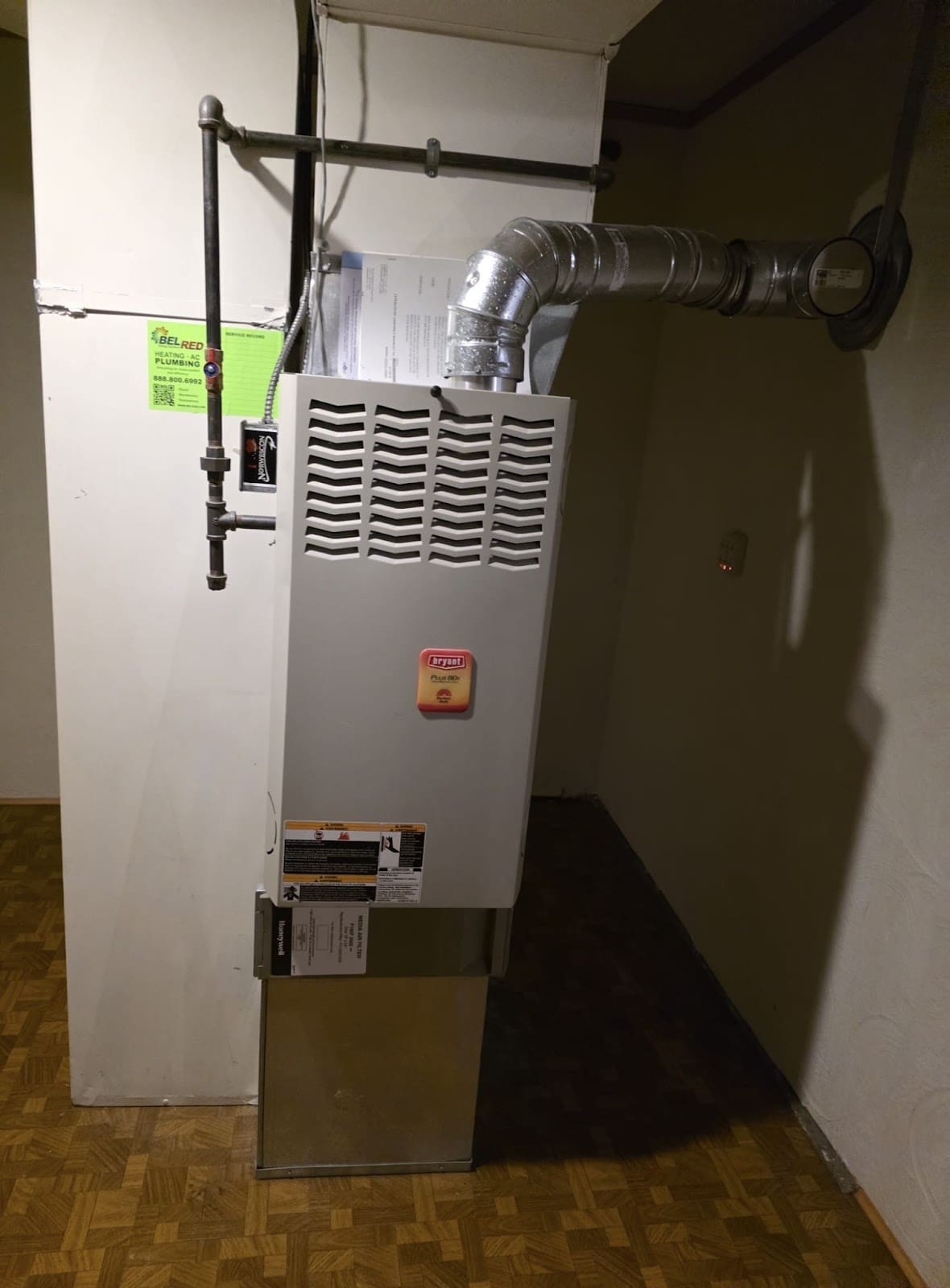
System Before: 23-year-old Bryant gas furnace, 80% efficiency
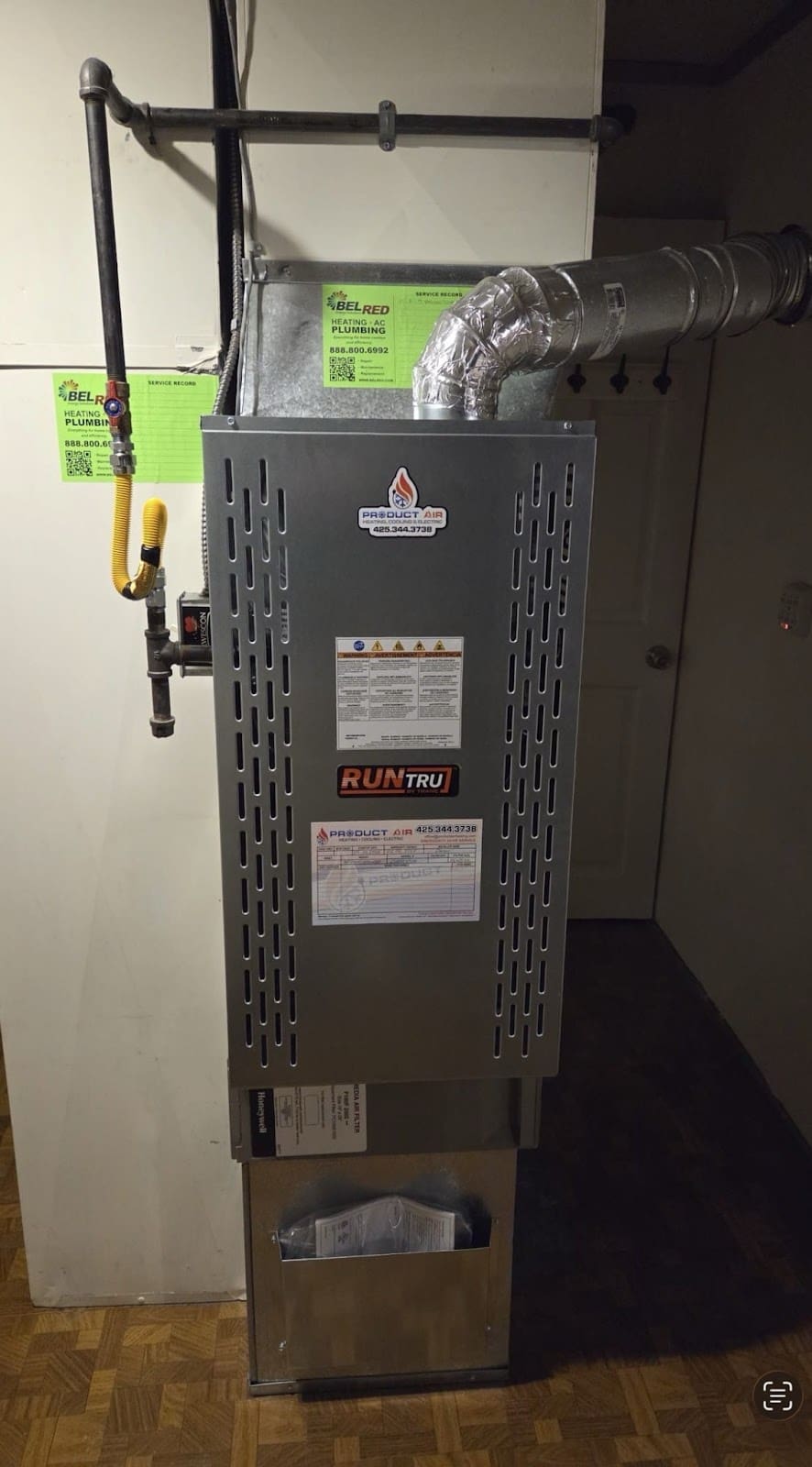
System After: RunTru by Trane gas furnace, 80% efficiency
Project Range: $4,500–$7,500
The Call: “No Heat”
On March 5th, a call came into the Seattle office: no heat.
The homeowner, Adam, reported that his furnace would turn on, run briefly, and then shut off after about two minutes. The home would start to warm slightly, and then everything would stop again.
In early March, that’s not an inconvenience. That’s urgent.
Robert, a technician with seven years of field experience, took the call and headed to the home the same day.
First Observation: Short Cycling Is Never “Normal”
When Robert arrived, he observed exactly what Adam described. The furnace ignited, ran for roughly two minutes, then shut down. After a short pause, it attempted to restart.
This pattern, known as short cycling, is common in aging furnaces and is a red flag.
Short cycling often signals that a safety mechanism is preventing the unit from continuing to operate. Modern furnaces are designed to shut themselves off when internal conditions become unsafe.
Instead of jumping to conclusions, Robert began a full diagnostic process.
The Root Cause: A Cracked Heat Exchanger
The furnace was a Bryant gas unit, 80% efficiency, approximately 23 years old. That alone placed it well beyond typical service life expectations.
During the inspection, Robert evaluated the draft sensor and key combustion components. His concern was quickly confirmed.
Using a camera, he visually documented a cracked heat exchanger.
That changes everything.
A cracked heat exchanger is not just a repair issue — it’s a safety concern. The heat exchanger separates combustion gases from the breathable air circulating throughout the home. When it cracks, there is a risk of carbon monoxide entering the airflow.
The system was shutting itself down because the safety controls detected abnormal operation.
Robert didn’t just explain it verbally. He called Adam over and showed the crack to him directly on camera.
Transparency first.
The Conversation: “Are You Trying to Sell Me a Furnace?”
Adam asked the question many homeowners think but don’t always say:
“So what now? Are you trying to sell me a new furnace?”
This is where the approach matters.
Robert didn’t rush. He didn’t push. He educated.
He explained three facts clearly:
- The heat exchanger is the core component of the furnace.
- Replacing a heat exchanger on a 23-year-old furnace is technically possible, but it is expensive.
- Even with a new heat exchanger, the rest of the system remains 23 years old.
He broke down the cost comparison between replacing the heat exchanger and installing a new furnace. He explained warranty differences and outlined reliability expectations.
No pressure. Just information.
The goal is simple: be the “tech brother from another mother.” Educate so that the homeowner can decide what’s best for his family and financial situation.
The Decision: Repair or Replace?
In cases like this, homeowners often face two paths:
Option 1: Replace the heat exchanger.This keeps the existing furnace operational but does not reset the ages of other components, such as the blower motor, control board, gas valve, and sensors.
Option 2: Replace the entire furnace.New equipment. New warranty. Reset service life.
Adam weighed both options carefully. The furnace had already provided 23 years of service: well beyond average lifespan for an 80% gas unit.
He ultimately chose reliability and warranty over investing in a major repair on an aging system.
The decision wasn’t about being sold. It was about confidence.
Installation: Next-Day Completion
Because the heat was out, timing mattered.
The installation was scheduled immediately for March 6th, the very next day.
The replacement selected was a RunTru by Trane 80% efficiency gas furnace — a reliable, mid-tier solution known for durability and strong manufacturer backing.
Why choose 80% again instead of upgrading efficiency?
In many Seattle homes, the existing venting configuration and budget goals play a key role. Higher-efficiency systems often require venting modifications. In Adam’s case, staying with an 80% system allowed for a straightforward, cost-effective replacement without major structural changes.
The installation was completed cleanly and efficiently.
The old Bryant furnace was removed.
The new RunTru system was installed and commissioned.
Full safety checks were performed.
Combustion was verified.
Airflow was tested.
Heat was restored.
Why This Situation Was Dangerous
It’s important to underline something: a cracked heat exchanger is not something to postpone.
Short cycling in older furnaces is sometimes dismissed as “just a sensor issue.” But when combustion components are involved, immediate inspection is critical.
In this case, the furnace’s safety systems did their job. They shut the unit down before something worse occurred.
But the crack itself would not repair itself.
The Financial Reality
Projects like this typically fall within a $4,500–$7,500 range, depending on:
- Furnace size
- Venting requirements
- Duct adjustments
- Warranty selection
- Electrical modifications
Adam chose a solution that aligned with both safety and long-term reliability without overcomplicating the project.
The Real Outcome
By the evening of March 6th, Adam’s home had steady, safe heat again.
No more two-minute shutdowns.
No more uncertainty about combustion safety.
No more 23-year-old equipment operating on borrowed time.
The system now carries a manufacturer’s warranty and a predictable service life with our annual maintenance.
Key Takeaways
This case reinforces several important principles:
- Short cycling should never be ignored.
- Cracked heat exchangers are safety issues, not minor repairs.
- Education builds trust.
- Replacement is sometimes the more responsible option when equipment exceeds its lifespan.
- Transparency, including showing the homeowner the actual problem, changes the tone of the entire conversation.
Adam didn’t buy a furnace.
He bought confidence.
And that’s ultimately what responsible HVAC service should deliver.
PLAN YOUR NEXT STEP
Need help with your home comfort?
Explore Product Air’s heating services or contact the team.
Share this guide