

For the first seven years of Product Air, we did HVAC. Heating, cooling, heat pumps, furnaces, ductless mini-splits. That was the full scope of what we offered, and for a long time that was enough.
But at a certain point, the work itself started showing us something we couldn’t ignore.
A homeowner calls about a heat pump installation. The equipment requires a new dedicated circuit, and usually it also requires an assessment of the electrical panel. Does it have capacity? Does it have space? Is it in the condition that can support modern HVAC loads? If the panel isn’t adequate, which in older Western Washington homes it often isn’t, it needs to be addressed before we can complete the HVAC work. And addressing the panel is electrical work, which requires a licensed electrician.
For seven years, we handled that by coordinating with third parties. We’d bring in an outside electrician for the portions of the job that crossed into their licensed scope. That arrangement had a cost that didn’t appear on any invoice. The third-party electrician had their own schedule, their own way of communicating with customers, their own standard for explaining the work. We had built our entire reputation around how we show up in someone’s home. And then, on every job that touched electrical, we were handing a portion of that experience to someone we hadn’t trained and couldn’t fully account for.
We couldn’t build a company on that. So two years ago, we decided to change it.
The Decision to Build the Electrical Division Properly
The decision wasn’t to hire someone who could do basic electrical on the side. It was to build a real electrical division: licensed, equipped, and supported by the same infrastructure we had spent six years building on the HVAC side.
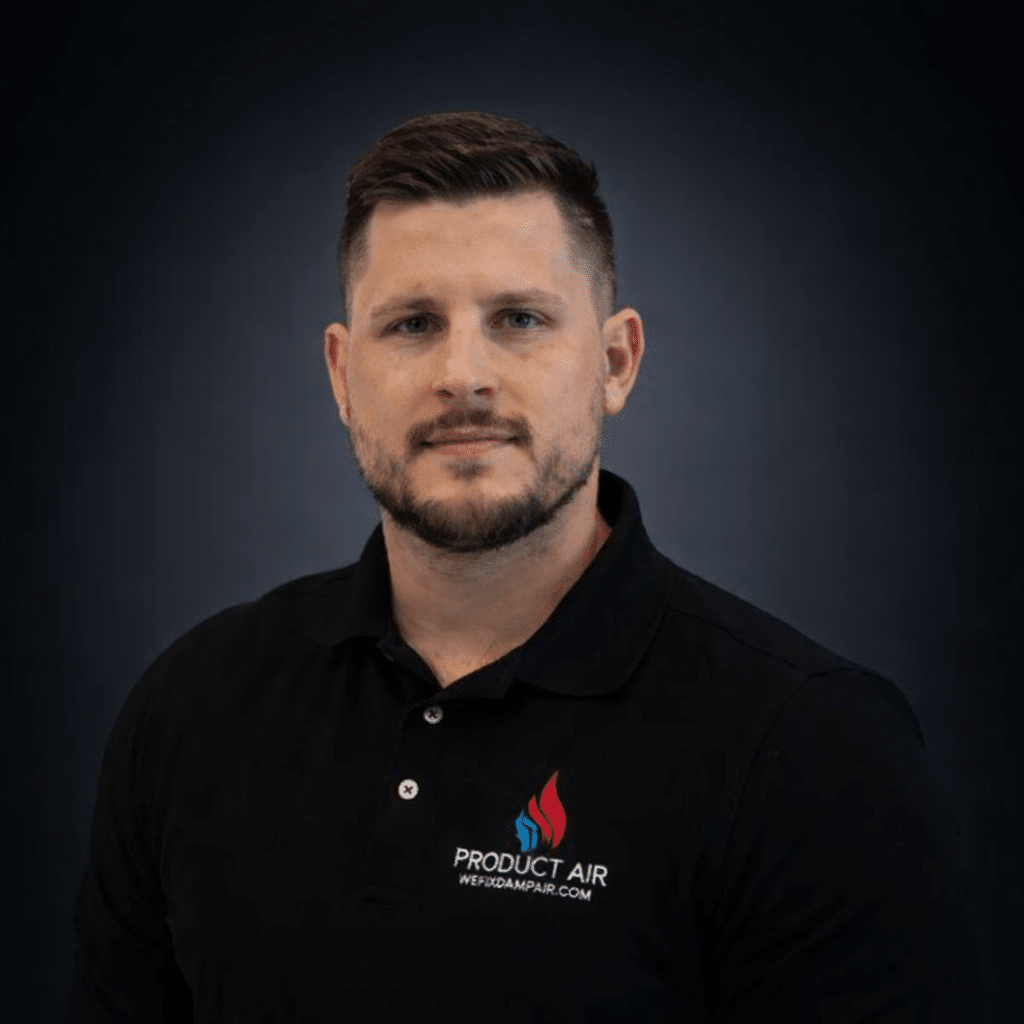
That meant one thing first: finding the right person. When Kevon joined Product Air as our first licensed electrician, he didn’t arrive as just a technician. He arrived as someone who had worked in this industry long enough to understand what a professional electrical operation looked like, at the level we were trying to build. He had worked for companies where the supply side was organized well and for companies where it wasn’t, and he knew the difference in how that played out on the job. In delays. In missing parts. In the uncomfortable conversation where you have to tell a homeowner that you’ll need to come back tomorrow with something you should have had today.
Within the first weeks of his being on our team, Kevon looked at how the HVAC side of Product Air was supplied (the Gensco relationship, the warehouse system, the van inventory, the way materials flowed from our Marysville and Seattle locations out to every job) and he said that the electrical side needed to be built the same way. And then he told us who to call.
Platt. One Recommendation. No Hesitation.
Kevon’s recommendation was Platt Electric Supply. Not a shortlist. Not “here are a few options worth looking into.” One name, with the kind of directness that comes from someone who has watched the alternatives up close and already done the comparison in real working conditions.
Platt Electric Supply is one of the most established electrical distributors in the Pacific Northwest. They serve professional contractors (licensed electricians, HVAC companies, commercial builders) across Washington, Oregon, Idaho, and beyond, with branches throughout the region including locations that serve the Western Washington territory where we work.
They carry everything a licensed electrical crew needs for residential and commercial work: breakers, wire in every gauge, conduit, panels, load centers, fixtures, switches, low-voltage materials, professional tools. Not the mass-market version of those things. The professionally certified version, the kind that carries the proper testing and approval marks that licensed work in the United States requires. This is the “special stamp” I described in our article on why licensed electrical work costs more than a handyman’s bid. The stamp exists because the product was tested. And the product Platt carries has it.
When Kevon said Platt, he wasn’t describing a hardware store with a contractor account. He was describing a supplier that operates at the level we were trying to build toward.
We called them. We met with them. And we built the relationship from there.
The Account Manager Who Watches the Relationship, Not Just the Orders
The first thing that distinguished working with Platt from working with a standard vendor was what happened after the initial agreement was signed.
Platt assigned us a dedicated account manager. Not in the sense of a contact who answers the phone when something goes wrong. In the sense of someone who actively monitors the account, checks in on how conditions are working for us, and looks for ways to improve them, not because we asked, but as a standing part of how they manage the relationship. He reviews our ordering patterns. He looks at whether our terms still match what we actually need as the business grows. When something changes on their end (pricing shifts, new products relevant to our work, changes in availability), we hear about it from him before we discover it on our own. And when something changes on our end (a new service line, a new city, a job type we’re doing more of), the supply relationship adapts with us, because someone is watching it closely enough to see it coming.
I described the Gensco relationship in similar terms in an earlier article about how our HVAC division operates. Gensco’s rep comes to our warehouses on a regular schedule, not on request. He walks the shelves, counts the positions, and restocks us to the right levels. Platt operates on the same philosophy. Both relationships work because someone on their side treats the account as something worth actively managing, not as a revenue line they review quarterly and otherwise leave alone.
That’s the difference between a vendor and a partner. A vendor fills orders. A partner shows up.
The Software That Runs in the Background So We Don’t Have To
Beyond the account manager, Platt brought us something that changed how our electrical inventory actually functions on a day-to-day level.
Here is how it works in practice. Our warehouse has organized shelving for electrical materials such as breakers, wire in different gauges, conduit fittings, boxes, connectors, the full range of what our technicians need for the jobs on any given day’s schedule. When inventory is pulled from those shelves, when a technician takes a breaker or a run of wire before heading to a job, the system registers it. The item is scanned, the quantity is updated, and the replenishment order is automatically generated and sent to Platt. No phone call. No manual purchase order.
No end-of-week inventory walk where someone goes shelf by shelf with a clipboard trying to figure out what’s running low.
Platt receives the order and delivers on their next scheduled visit. For a company running jobs across 34 communities in Western Washington, manual inventory management at scale is genuinely unreliable. Things run out. People get busy and forget to order. A part that should be in the warehouse on Monday morning isn’t there because someone didn’t have time to make the call on Thursday afternoon. The Platt software removes that entire category of failure. The warehouse stays stocked because the system is watching it, not because someone remembered to check.
The Detail That Surprises People: Platt Tracks the Vans Too
The warehouse integration is useful. What surprises people when I describe how the Platt system works is that it doesn’t stop at the warehouse.
It extends to the vans.
Every technician on our electrical team works out of a service van that’s organized the same way our warehouse is: labeled sections, specific items in specific places, a defined inventory of what should be on the truck at all times. When a technician uses a part from the van on a job, the system registers it. And on Platt’s next delivery, that part is replenished. The truck goes back to its correct inventory level without the technician tracking what they used, without anyone auditing the van at the end of the day.
I want to be honest about what this actually requires, because the software is only half of it. The system works because our technicians use it consistently. Every part that comes off the van gets scanned. Every item pulled from a shelf gets logged. The discipline of that habit is what makes the automation reliable, without it, the system tracks what was scanned, not what actually happened, and those two things diverge quickly. What we’ve built with the Platt integration is a system that functions because the people using it take it seriously. That’s not a given. It’s something that has to be built into how a team works.
The result is that every van on our fleet is continuously maintained at its correct inventory level. And that result is the most direct line between the Platt partnership and what a homeowner actually experiences when they call us.
What All of This Means at Your Door: Fixed on the First Visit
Here is the version of this story that matters most to the person who calls us because something in their home isn’t working.
There’s a version of a service call that most homeowners have experienced at least once. A technician arrives, looks at the problem, and says: I don’t have that part with me. I’ll need to order it. Come back in two days. The family waits. The outlet stays dead. The switch that stopped working in March stays broken through May. A job that should have taken forty-five minutes turns into a week-long scheduling problem.
When our electrician arrives at your home, we almost always have what we need.
Not because we got lucky. Because the van was stocked before it left, because the stocking system tracks what gets used and automatically replaces it, because Platt built the supply chain around making sure the right materials are in the right place before the problem even exists.
That chain runs from Platt’s distribution to our warehouse to the van to your front door, and it runs continuously, not just when someone notices something is low and makes a call.
What that means on a real job: the outlet that stopped working gets turned back on that day. The light that hasn’t come on in two months comes back on while we’re standing in the room. The small electrical correction that needed to happen alongside the heat pump installation gets handled in the same visit, not scheduled as a separate appointment two weeks out.
Kevon put it simply when we were talking about why the Platt setup mattered: we show up ready. That’s the whole point. We show up ready, we fix the problem, the customer’s day isn’t interrupted any longer than it has to be. That’s what a brother would do.
Two Divisions, Two Partners, One Way of Operating
Product Air runs on two supply relationships that operate on the same model.
For HVAC: Gensco. For electrical: Platt.
Both are established regional companies with deep roots in the Pacific Northwest. Both assign a dedicated contact to the relationship. Both integrate with our systems and manage inventory proactively rather than waiting for us to place orders. Both treat the partnership as something worth actively maintaining, not something that runs on autopilot once the initial agreement is signed.
This isn’t a coincidence. It’s a deliberate choice about how we want to operate.
We could run the electrical division off a hardware store account and buy what we need when we need it. A lot of small electrical contractors do. It keeps overhead low. It doesn’t require any investment in systems or relationships. And on any individual job it might be invisible. The technician stops at the supply counter, picks up the part, drives to the house. The customer may never notice the stop happened.
But across a team of technicians, running jobs across dozens of cities, on schedules where homeowners have rearranged their days to be home for our arrival, the version of the business that buys parts as needed and the version that arrives with the parts already on the van produce very different experiences for the people waiting at home. We chose the version that shows up ready. The Platt relationship is what makes that version real on the electrical side, the same way Gensco makes it real on the HVAC side.
What Kevon Built in Two Years
I want to end this the way it started with Kevon. When he joined Product Air two years ago as our first licensed electrician, the electrical division didn’t yet exist as a real operation. It existed as a direction we had decided to go. Kevon’s technical skill was the reason we hired him. But the operational foundation he helped us build, the Platt relationship, the warehouse integration, the van inventory system, the discipline of process that makes all of it function, is a contribution that extended far beyond anything his job description required.
He arrived with experience. He looked at how we operated on the HVAC side and understood the model. And then he did the thing that the best people on any team do: he applied that model to his own area, found the right partner to make it work, and built it correctly from the start instead of patching it together over time. There are a lot of ways to start a new service division. Building the supply infrastructure right in the first weeks is not the obvious path. It’s the harder one, and it’s the one that pays off every day after.
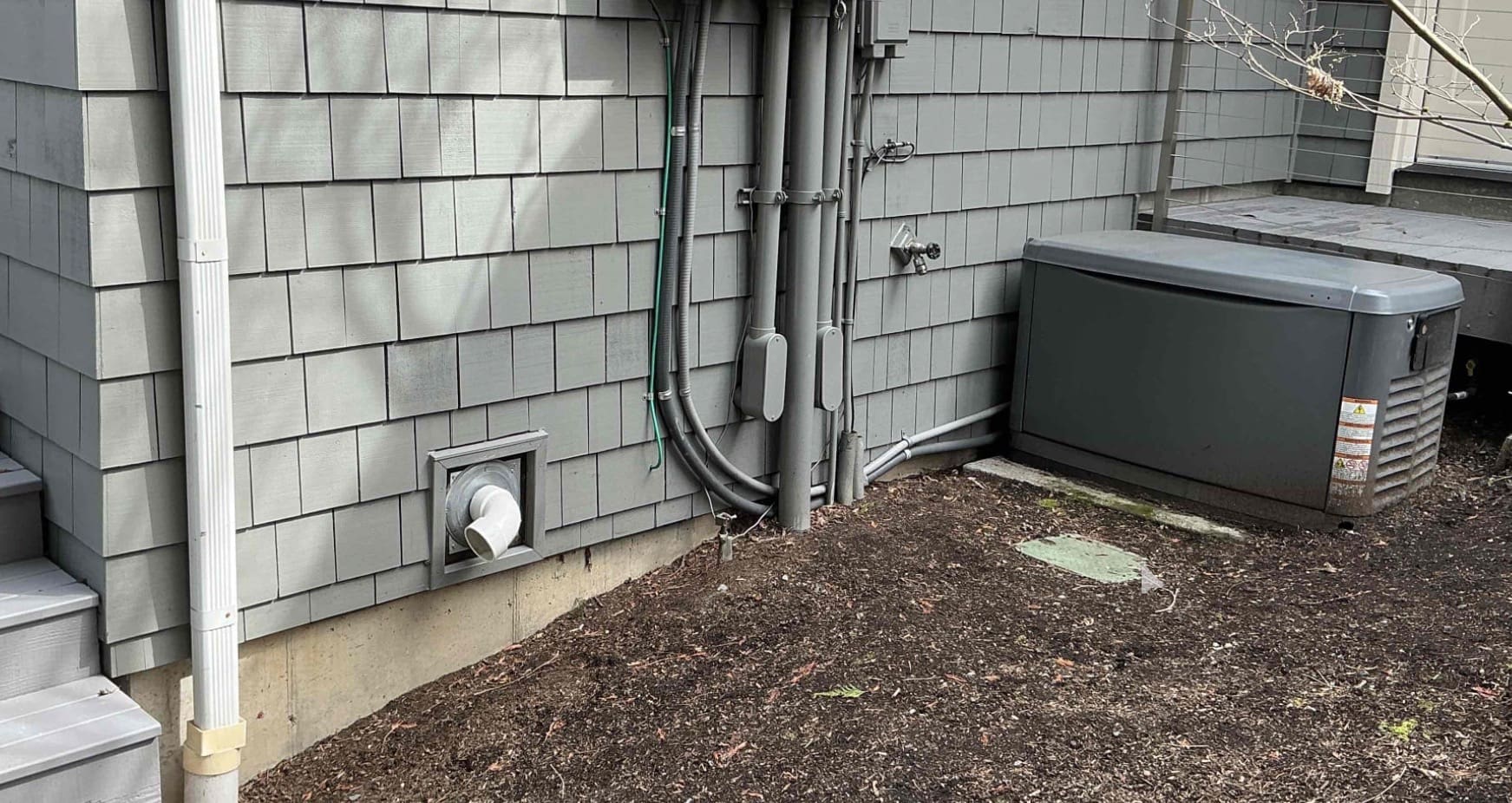
Our team has grown since Kevon joined. The electrical division now serves homeowners across all of Western Washington: panel upgrades, EV charger installations, whole-home rewiring, generator installations, emergency electrical repairs. Every job we do on the electrical side benefits from the supply infrastructure that Kevon helped establish in those first months. Every technician who joins the electrical team inherits a system that was built properly before they arrived.
That kind of contribution doesn’t appear on any certificate. But it’s one of the most consequential things that’s happened to Product Air in the last two years, and it deserved to be said out loud.
We built Product Air to be here for decades, not seasons. Every partnership we build, every system we invest in, every operational decision we make is oriented around that. The Platt relationship isn’t a supply contract. It’s part of the infrastructure of a company that intends to still be doing this work for the homeowners of Western Washington long after the trucks in the parking lot are a different generation than the ones there today.
When a family calls us because something isn’t working in their home, we want to be the company that shows up ready. Not the company that shows up, assesses, and schedules a follow-up for when the part comes in. The difference between those two versions of the same service call is exactly what “Your Tech Brother From Another Mother” means in practice. A brother comes to help. He comes prepared. He doesn’t leave the problem half-solved because he didn’t bring what he needed.
The Platt partnership is how we keep that promise real, every day, on every electrical job, across every city we serve in Western Washington.
— Serge Nikolin, Co-Founder, Product Air Heating, Cooling and Electric
Marysville · Issaquah · Seattle · Western Washington
PLAN YOUR NEXT STEP
Need help with your home comfort?
Explore Product Air’s electrical services or contact the team.
Share this guide