


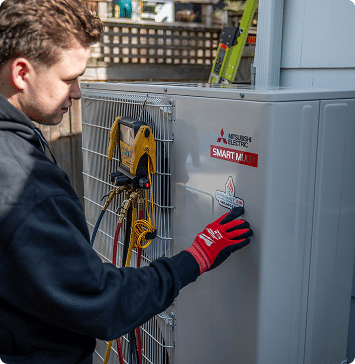
The first question most homeowners ask us when we pull up is: how much is this going to cost? On Mercer Island, it isn’t always the first question. On Mercer Island, we sometimes get there after two or three other conversations — about whether the outdoor unit will be visible from the water-facing deck, about how loud the system runs in the evenings when the lake is quiet, about whether a technician who actually knows what they’re doing can be there the same week.
The price question comes. We’ll answer it completely. But the homeowners we work with here are asking something more than what the number is — they’re asking whether the system is right for their home, for a long time, and whether it can be installed without compromising what makes the property worth what they paid for it.
That’s a different conversation than most of the market has. This article reflects it.
Quick answer: $8,006 to $22,663 for a professionally installed central AC or ductless system on Mercer Island, depending on equipment tier, installation complexity, and concealment requirements. Most Mercer Island installations land in the mid-range to premium tier. Entry-level systems are available — they’re just not what this market typically needs.
| Scenario | Price |
| Customer-sourced equipment (Home Depot), Product Air installation | $3,500–$5,000 |
| Entry-level full installation — Runtru by Trane, 14 SEER2 | $8,006 |
| Mid-range — Trane Priority or Carrier Comfort, 17 SEER2 | $13,870 |
| Premium variable-speed — Mitsubishi, Carrier Infinity, Lennox Signature | $16,532–$22,663 |
| Complex installation — panel upgrade, concealment, full system | $20,000–$28,000+ |
3-ton system, Mercer Island, 2026. Permits included. Before tax.
How AC Pricing Breaks Down on Mercer Island
Equipment — approximately 45%. We source through Gensco, our Pacific Northwest distributor.
For Mercer Island specifically, the vast majority of systems we install here are in the premium and mid-range tiers — Mitsubishi multi-zone ductless, Carrier Infinity, Lennox Signature. These aren’t upsells. They’re what the homes need and what the homeowners want when they understand the full picture.
Labor — approximately 30%. We service Mercer Island regularly. No travel premium. One note specific to this market: installations that require careful outdoor unit placement — behind landscaping, under decks, in side-yard enclosures — take more time and more planning than straight swap installations. That additional scope is always in the proposal before the job starts.
Permits. Mercer Island issues mechanical permits through the City of Mercer Island Community Planning & Development department, submitted via MyBuildingPermit.com. Electrical work requires a separate permit from Washington State Department of Labor & Industries. We pull both, before the job begins, and coordinate all inspections.
What a Permit Is and Why It Matters
On a property worth $2 million or more, the math on skipping permits becomes almost nonsensical. Unpermitted HVAC work on Mercer Island voids manufacturer warranties, creates mandatory disclosure at sale, and gives insurance carriers grounds to deny claims. The permit costs a fraction of what any of those outcomes cost. We file it, we coordinate the inspection, and you don’t have to track any of it.
What Makes Mercer Island Installations Different
This is the section that doesn’t exist in our Seattle or Issaquah guides, because the considerations here are genuinely specific to this market.
Noise is not a secondary concern. Mercer Island is quiet. The water carries sound across the lake on summer evenings. A single-stage outdoor unit cycling on and off twenty feet from a covered deck is audible in a way it wouldn’t be on a busy Seattle street. When homeowners on
Mercer Island tell us noise matters, they mean it — and the right system for that conversation is variable-speed equipment, which runs the outdoor compressor at low capacity for extended periods rather than cycling loudly at full output. Variable-speed systems operate at 55–60 dB at the outdoor unit. Single-stage systems typically run 65–75 dB at startup. On a still July evening over the water, that gap is significant.
Where the outdoor unit goes matters aesthetically. On most jobs, the outdoor unit goes where it fits and where the lineset runs cleanly. On Mercer Island, homeowners frequently have specific requirements — no visible unit from the waterfront side, placement that doesn’t interrupt established landscaping, enclosures that blend with the architecture. We’ve done installations where the outdoor unit sits behind a custom cedar screen, where refrigerant lines run through the crawl space to exit at a rear corner, where the placement required an additional 20 feet of lineset and a more complex route than standard. That’s buildable. It takes planning. It belongs in the proposal.
Smart thermostat integration matters here. Mercer Island homes are not modest homes. Many have structured wiring, home automation systems, and homeowners who expect the HVAC controls to integrate with the rest of the house. We install and configure Ecobee, Nest, Honeywell T10 Pro, and other smart thermostats as standard on premium jobs. When the existing system has proprietary controls, we assess compatibility before proposing equipment — because discovering an integration issue after installation is not acceptable at any price point, let alone this one.
Older waterfront homes and electrical capacity. The homes that were built on Mercer Island’s best water-facing lots weren’t built recently. Many date from the 1950s through the 1970s, with original or partially updated electrical infrastructure. A 1960s waterfront home may be carrying 100-amp service — or a 200-amp panel that’s never had an AC circuit. We assess the panel on every job. When a panel upgrade or a new dedicated circuit is required to support the AC load, it goes on the proposal. For homes that have already been updated, this is typically not an issue. For older island stock, it’s one of the first things we evaluate.
Equipment Tiers — What Mercer Island Homes Actually Use
Entry-level. Runtru by Trane, 14 SEER2. Available, licensed, warrantied. Starting at $8,006 for a 3-ton add-on. Not the typical recommendation for this market, but available for detached garages, guest quarters, or investment properties on the island where budget constraints apply.
Mid-range. Trane Priority, Carrier Comfort, American Standard — 15–17 SEER2, two-stage or variable-speed. Best price-to-performance for the majority of Mercer Island homes that don’t require the multi-zone complexity of the premium tier. Starting at $13,870 for a 3-ton add-on.
Premium. Mitsubishi Electric multi-zone ductless, Carrier Infinity, Lennox Signature, Trane XV series. Variable-speed compressors, low-decibel operation, highest SEER2 ratings available, and 10–12 year warranty coverage through a Diamond Elite contractor. Starting at $16,532 for ductless, up to $22,663 for a full central system. This is the tier most Mercer Island homeowners end up in because when the full picture is explained, variable-speed operation for the noise, the efficiency, and the 20-year warranty makes the most sense for what they own.
Three Installation Types and What Each Costs
Simple. Direct swap of existing outdoor unit and coil, same location, no electrical modifications. Straightforward on Mercer Island homes that have been previously updated with modern ductwork.
Standard. Electrical modifications, duct adjustments, relocated outdoor unit, or additional zoning for a multi-zone ductless system. The most common tier for mid-range to premium installs.
Complex. Panel upgrades, outdoor unit concealment requiring extended lineset routing, new ductwork in a home with no existing forced-air system, or full multi-zone Mitsubishi installations in older homes with significant infrastructure work required.
| Equipment | Simple Add-on | Standard | Complex |
| Home Depot (Midea / Carrier / Lennox) | $3,500–$5,000 | N/A | N/A |
| Entry — Runtru, 14 SEER2 | $8,006 | $10,019 | $13,959 |
| Mid-range — Trane Priority, 17 SEER2 | $13,870 | $14,656 | $19,002 |
| Premium — Mitsubishi / Carrier Infinity | $16,532+ | $17,672+ | $22,663+ |
3-ton, Mercer Island, 2026. All prices include permits. Before tax.
After every in-home assessment, we prepare three to four written options. You choose the one that fits. No pressure, no single path.
Rebates and Incentives for AC in Mercer Island in 2026
For central AC: no rebates. PSE and Energy Smart Eastside — both active on Mercer Island — are structured entirely around heat pumps. No utility rebate exists for AC-only installations in 2026.
For heat pumps, Energy Smart Eastside is available to Mercer Island residents:
- $6,000 Fuel Switch Rebate — for switching from gas, oil, propane, or wood heat to a qualifying heat pump. Requires household income below 150% of King County AMI. Approved brands: Mitsubishi, Bryant, Carrier. Must be fully electric — no gas furnace backup.
- $1,000 Manufacturer Rebate — for Mitsubishi, Bryant, or Carrier heat pump installations. Cannot be combined with the $6,000 fuel switch.
A candid note specific to Mercer Island: the income qualification threshold for the $6,000 rebate is 150% of King County area median income. For many Mercer Island households, income levels may exceed that threshold. If that’s your situation, the $1,000 manufacturer rebate may be what’s available, potentially combined with PSE heat pump rebates of $1,500–$2,500. We verify eligibility at the assessment — there’s no point promising a number we haven’t confirmed applies to you.
Federal programs. The Section 25C tax credit expired January 1, 2026. Federal HARP and HOMES programs have not launched as of June 2026.
For a full breakdown of heat pump rebates and whether the numbers change the AC vs. heat pump calculation for your home, see our heat pump cost guide for Seattle.
A Real Installation — What This Work Looks Like in Practice
Matthias owns a single-family home in Shoreline — not Mercer Island, but a comparable property with similar demands. He had a Lennox heat pump, 15 years old, that was making noise in the evenings near the main living area. Two zones weren’t cooling evenly. He was planning an addition.
We installed a Mitsubishi Electric Smart Multi heat pump with the outdoor unit on vibration isolation pads to address the noise at the compressor. The air handler was relocated from a living room closet to the crawl space and mounted with additional vibration isolation. The result was a multi-zone system that runs quietly at variable speed, handles the existing footprint, and has capacity for the planned addition without a second outdoor unit. One and a half days of installation.
Final price: $30,000–$38,000. The outcome, in Matthias’s words: “I thought I was just replacing a heat pump. What I got was a system that closes out every question about the house for at least the next twenty years.”
That’s the conversation Mercer Island homeowners are usually trying to have. We try to meet it where it is.
What to Know Before Installing AC on Mercer Island
DIY and unlicensed work. Energy Smart Eastside rebates require an approved licensed installer. On a $2 million property, unpermitted mechanical work creates disclosure complications that affect the transaction. We’ve been called in after unlicensed work enough times to know how those conversations go. It’s not a path we’d recommend to anyone, and least of all to someone with significant equity at stake.
Warranty and support. Standard manufacturer warranty is 10 years on parts. Mitsubishi extends to 12 years through a Diamond Elite contractor — which Product Air is. Our labor warranty runs 5–10 years depending on the scope. On Mercer Island, where the system is protecting a significant asset in a demanding environment, the warranty terms deserve the same attention as the price.
Service life and maintenance. A professionally installed variable-speed system in Western Washington’s climate, with biannual maintenance, should run 15–20 years. Annual maintenance: $299 for two visits covering both AC and heating seasons. Required to maintain warranty validity and the efficiency gains that made the system worth buying in the first place.
Why We Share Real Prices
Most HVAC contractors serving Mercer Island don’t publish numbers. We do — because a homeowner who knows what fair pricing looks like makes a better decision than one who doesn’t.
The complete 12-scenario pricing matrix, with every equipment and installation type combination, is in our Seattle AC installation costs guide. The numbers in this article are drawn from the same real jobs.
Get a Quote on Mercer Island
We assess every home before proposing a system. The assessment is free. After the walkthrough, you receive a written proposal — fixed scope, fixed price, equipment model, permit inclusion, warranty terms — typically the same day.
Frequently Asked Questions
How much does AC installation cost on Mercer Island?
$8,006 to $22,663 for a professionally installed system, depending on equipment and installation complexity. Most Mercer Island homes land in the mid-range to premium tier. Full-system installations with electrical work or concealment requirements can exceed $25,000.
Are there rebates for AC on Mercer Island?
No. PSE and Energy Smart Eastside both apply to heat pumps only. There are no utility rebates for AC-only installations on Mercer Island in 2026.
Can I get rebates if I install a heat pump instead?
Yes, potentially. Energy Smart Eastside offers up to $6,000 for fuel-switching from gas to a qualifying heat pump, subject to income eligibility (≤150% King County AMI). PSE heat pump rebates of $1,500–$2,500 may stack on top. We verify eligibility at the assessment.
Is a permit required for AC installation on Mercer Island?
Yes. A mechanical permit from the City of Mercer Island is required. Electrical work requires a separate Washington State L&I permit. We pull both before the job starts.
Why is variable-speed equipment worth the premium on Mercer Island?
Variable-speed systems run continuously at low capacity rather than cycling loudly at full output. Outdoor unit noise drops from 65–75 dB on single-stage equipment to 55–60 dB on variable-speed. On an island where outdoor living and waterfront quiet matter, the difference is audible and real. Variable-speed also provides better humidity control and runs 30–40% more efficiently on partial-load days.
Can the outdoor unit be hidden or concealed?
Yes. We’ve installed systems with outdoor units concealed behind landscaping screens, under deck structures, and in side-yard enclosures. Concealment requires planning — longer linesets, specific routing, coordination with any aesthetic requirements — and that scope belongs in the proposal before the job starts, not in a conversation after the crew is on-site.
Does the IRA 25C tax credit still apply?
No. It expired January 1, 2026.
Can I finance an AC installation on Mercer Island?
Yes. GreenSky financing at 0% APR for 12 months or 10.99% APR for up to 180 months, minimum $1,000.
Disclaimer
Prices reflect 2026 Mercer Island, WA installations based on Product Air’s current pricing. Rebate programs, permit fees, and income eligibility thresholds are subject to change. Request a written proposal for your specific home before budgeting.
— Serge Nikolin, Co-Founder, Product Air Heating, Cooling and Electric
Marysville · Issaquah · Seattle · Western Washington
PLAN YOUR NEXT STEP
Need help with your home comfort?
Explore Product Air’s air conditioning services or contact the team.
Share this guide