


Mike had worked with Product Air before, so he called us again when the electric heat in his Marysville home wasn't doing its job. A few years earlier, he had replaced the baseboard heaters in the living and dining areas himself. The newer units didn't seem to keep the house as warm as the old ones. He told us he wasn't an electrician and wanted someone to check his wiring.
He also had a separate problem in a bedroom that had been converted from a garage. The fan in its Cadet wall heater would run, but the heater wasn't producing warm air. Mike approved a project that included a new 240-volt bedroom heater, changes to its electrical circuit, breaker work in the existing panel, and digital thermostats in the bedroom and living room. The final project cost was $2,275.12.
I appreciate it when a homeowner feels comfortable telling us what they've worked on. That history helps us understand the problem. It's also where Your Tech Brother From Another Mother has practical meaning for me: give someone room to ask questions, explain the recommendation, and let them decide how to move forward. Mike came to us for help figuring out what had gone wrong.
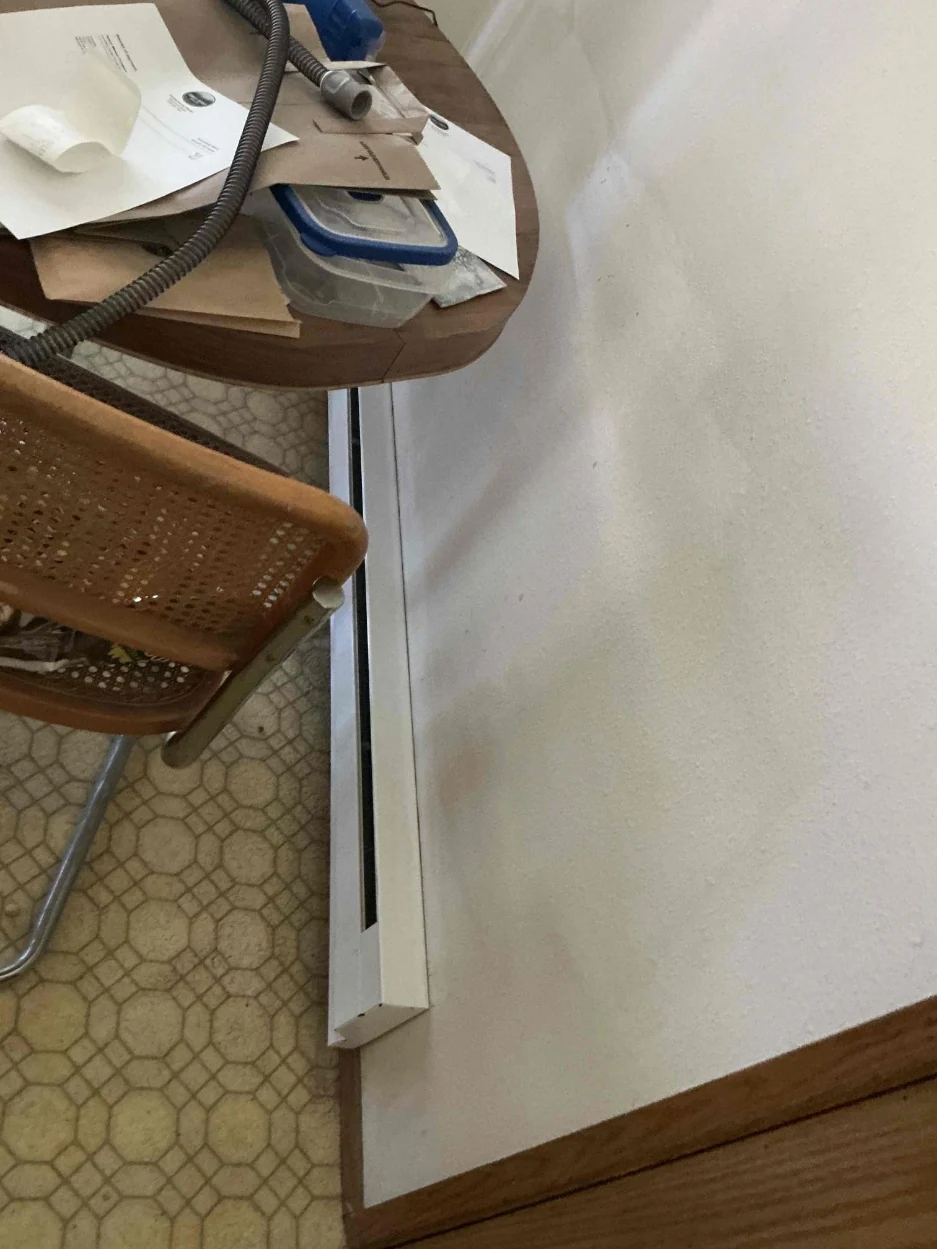
One of the baseboard heaters Mike asked us to evaluate.
Two Heating Problems to Sort Out
Our electrical team found wiring issues that needed attention. The symptoms also called for a closer look at each type of heater. In the living and dining areas, Mike was comparing the heat from his replacement baseboards with what he remembered from the previous units. In the bedroom, he had a fan that ran without useful heat. Those observations help direct an assessment, but they don't establish the same fault in every room.
Mike believed his baseboard heaters could be connected to either 120 or 240 volts. For an electrician, the equipment label and the manufacturer's instructions determine what's allowed. Heaters that look alike can have different electrical ratings. A replacement has to be matched to the available supply, or the circuit has to be changed appropriately for the selected equipment.
Replacing the Bedroom Wall Heater
The old bedroom Cadet was rated for 120 volts and 1,500 watts. A running fan doesn't tell you whether the heating element and its controls are working. That is why a complaint about cool air needs an equipment check as well as an assessment of the wiring. Simply hearing the fan come on isn't enough to judge the heater's condition.
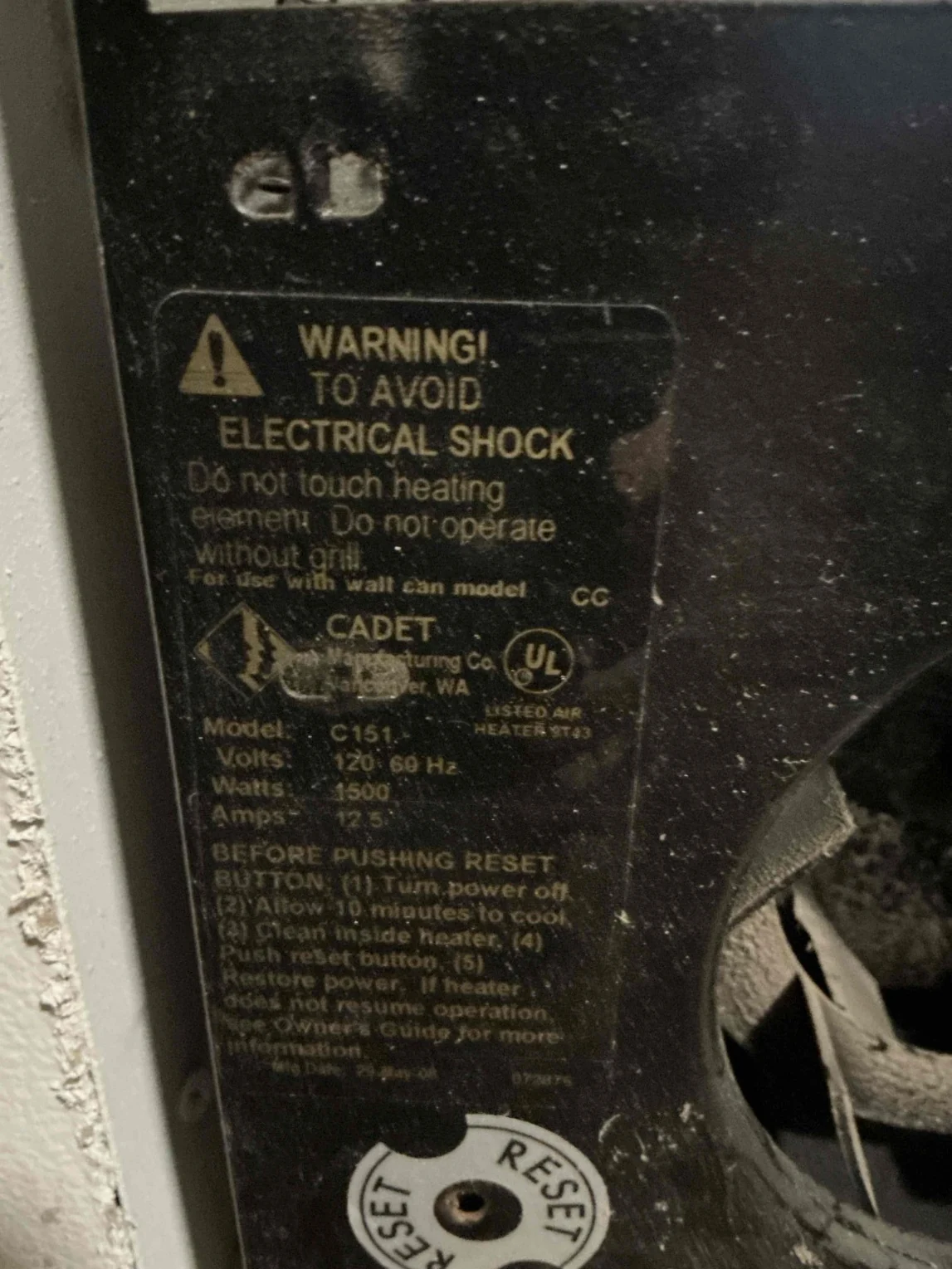
The original Cadet heater label identifies a 120-volt, 1,500-watt unit.
For Mike's bedroom, we replaced the old heater with a 240-volt unit and changed the circuit to supply it. The replacement's voltage requirement drove that electrical work. Each heater needs the supply specified for its own design; installing a 240-volt replacement does not mean the old 120-volt model should have been connected to 240 volts.
Updating the Circuit and Making Room in the Panel
Our electricians converted the bedroom heater circuit from 120 to 240 volts and installed a new two-pole breaker. To make room for it, they used a tandem breaker in the existing panel. We retained the panel and checked its connections as part of the work.
A tandem breaker accommodates two individual circuits in one suitable breaker position. Its use depends on the panel's design and the approved breaker types and locations. Making room for a breaker also has to be distinguished from increasing the home's electrical service capacity. More breaker positions do not give the service more capacity to carry a load.
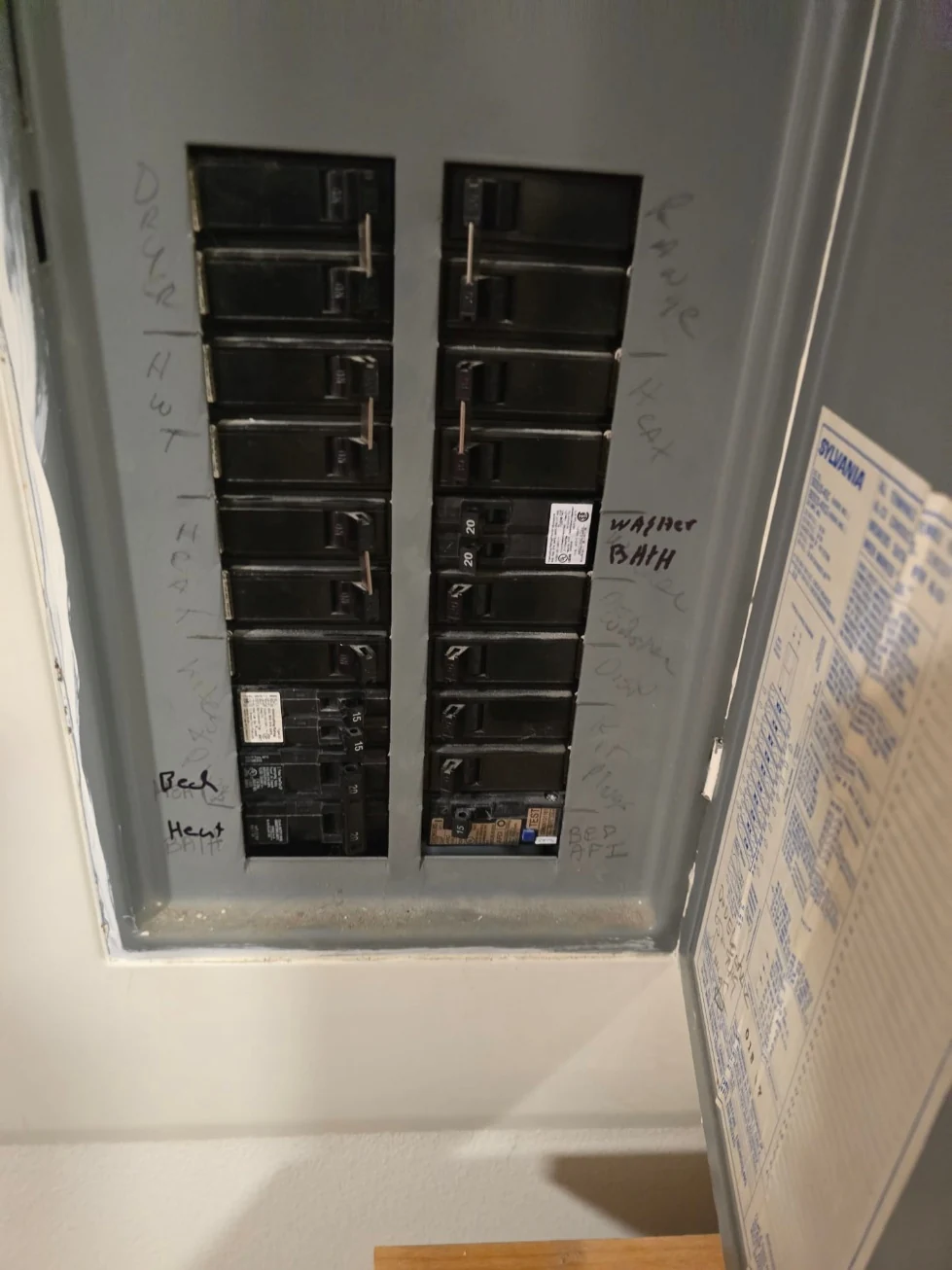
The existing panel with the breaker arrangement used for the heater circuit.
For a homeowner, the important point is that the wiring work and the heater belong in the same discussion. Before changing a circuit, an electrician needs to establish which devices it serves and whether the conductors and other components are suitable. The work at Mike's panel was part of supplying the new bedroom heater, with the circuit and its protection matched to that installation.
What Changing to 240 Volts Means
Voltage alone doesn't determine how much heat a room gets or what it costs to run the heater. Two resistance heaters with the same wattage, operating for the same length of time, use comparable amounts of electricity even if one is rated for 120 volts and the other for 240. A 1,500-watt heater running continuously for an hour uses about 1.5 kilowatt-hours. The purpose of this circuit change was to supply the selected equipment correctly.
Giving Mike Clearer Temperature Control
We replaced the bedroom and living room thermostats with digital controls. The installation included a King thermostat with a display showing the room temperature and setpoint. That gives the homeowner a clearer way to choose a temperature and see how it compares with the room's current reading.
A thermostat has to be compatible with the heater type, voltage, and electrical load. Its job is to control the equipment; the heater still needs enough capacity for the room and the proper electrical supply. At Mike's house, the thermostat replacements accompanied the bedroom heater and circuit work.
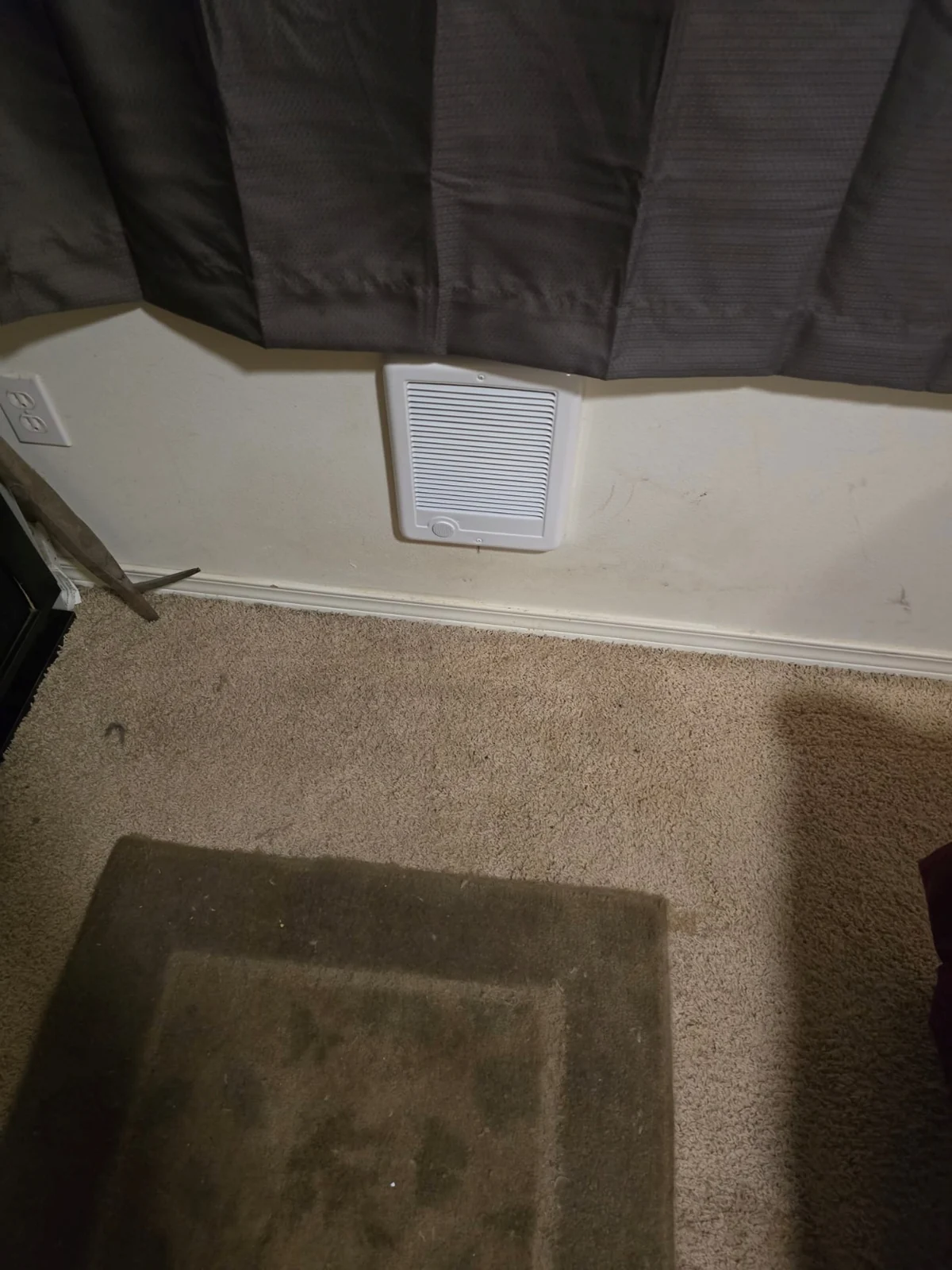
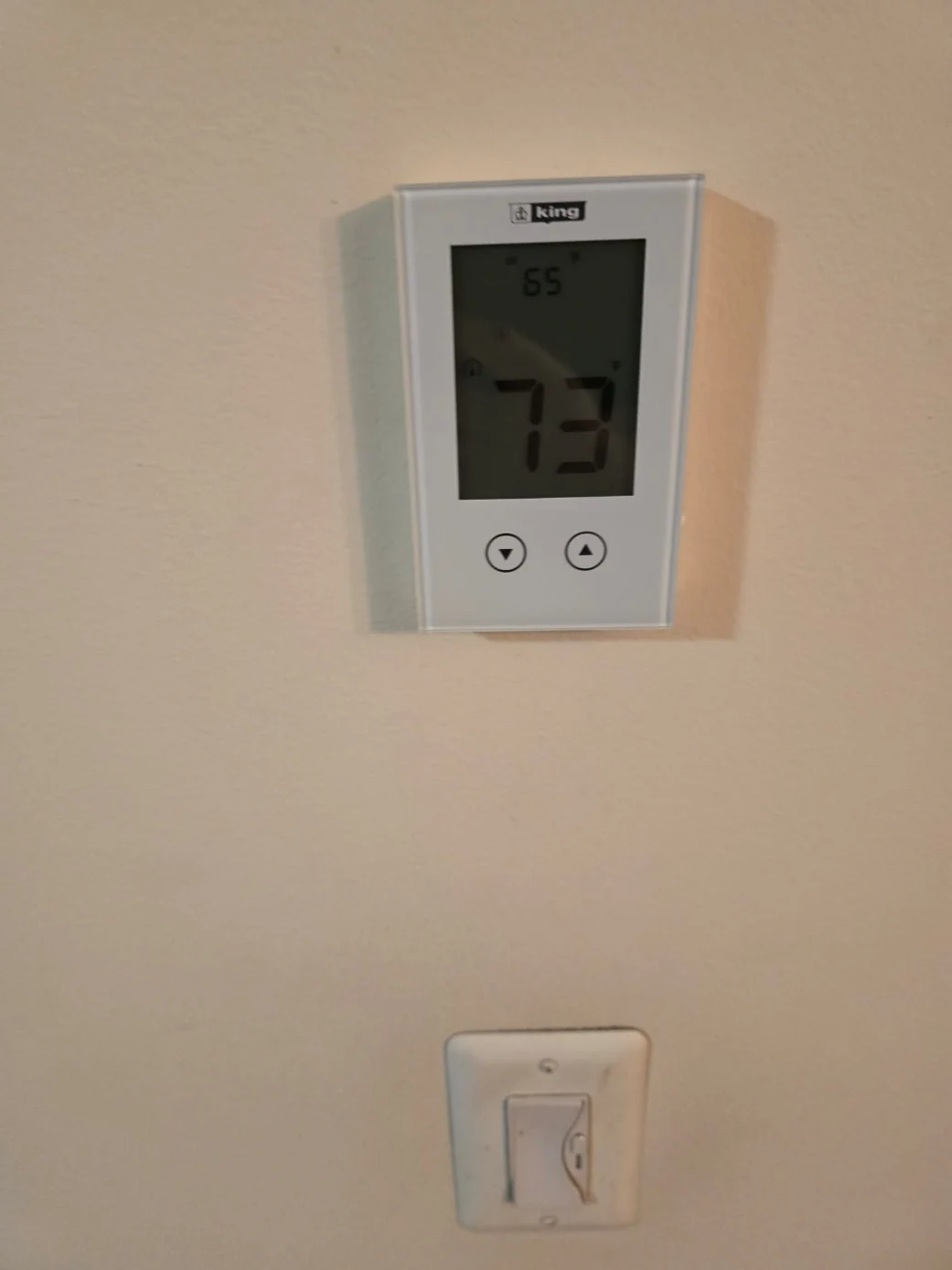
Left: the replacement bedroom wall heater. Right: a new King digital thermostat.
What the Project Cost Covered
The final invoice was $2,275.12 for the completed project. The scope included the bedroom wall heater replacement, conversion of its circuit to 240 volts, the breaker changes, digital thermostats in the bedroom and living room, and a check of the panel connections. Mike approved that combination of equipment and electrical work.
The price of a heater on a store shelf covers one part of a job like this. The installed project also involves determining what needs to change and carrying out that work in the home. In Mike's case, choosing the new heater brought a corresponding requirement for its power supply and breaker. Those items need to be considered together when evaluating the cost.
I want homeowners to feel comfortable asking what each part of an estimate accomplishes. A clear explanation should connect the proposed work to the problem in the house. With this project, the circuit and panel work had a specific purpose: supporting the new bedroom heater.
From the Call to Completion
Mike contacted us on October 20, 2026, and we completed the work on October 22. The project put a new 240-volt heater in the bedroom with a circuit configured to supply it, along with updated temperature controls in the bedroom and living room. The existing electrical panel remained in place with the necessary breaker changes.
Afterward, Mike told us he felt he had made the right choice by choosing Product Air. He specifically appreciated how thorough we were. He had started with uncertainty about his own heater installation and a bedroom heater that no longer warmed the room. Having him trust us with that problem mattered, especially because he was already a customer.
What to Check When New Heaters Leave You Cold
If your home became harder to heat after replacing electric heaters, start by having the equipment ratings and electrical supply checked. The installation history matters. Tell the electrician which heaters were changed, whether any thermostats or breakers were replaced, and when you first noticed the difference. That gives the person troubleshooting the system a much better starting point.
Be specific about the symptoms, too. A heater that blows cool air presents a different question from one that gets warm but cannot bring the room to the set temperature. The assessment needs to consider the electrical supply, controls, heater condition, and the room's heating needs. You can provide useful observations without opening a panel or taking apart energized equipment.
A converted garage deserves particular attention to heat loss. Walls, windows, and the floor affect how much heating the room needs, even when the equipment is working correctly. Around any wall or baseboard heater, curtains and furniture also need to stay clear according to the manufacturer's instructions so air can move freely. These details belong in the discussion when a room is difficult to keep comfortable.
Understanding the Recommendation Before You Approve It
Ask the contractor to connect the findings to the proposed work. What is wrong with the existing heater? Why does the circuit need to change? What will the thermostat replacement accomplish? You should be able to understand those answers without becoming an electrician. The estimate should also make the full scope and total price clear before you decide to proceed.
Mike's project brought together a new bedroom heater, the electrical changes it required, and updated controls. His experience is a useful reminder to look at the whole installation when heating falls short. I want a homeowner to leave that conversation knowing what the work is for and feeling comfortable with the decision they've made.
PLAN YOUR NEXT STEP
Need help with your home comfort?
Explore Product Air’s electrical services or contact the team.
Share this guide