

Dan came back to Product Air with a clear goal: replace his two aging furnaces and water heater before another winter. He had dealt with problems the previous year and was ready to move forward. He wanted to understand his options, including higher-efficiency equipment, and he was clear about keeping a tank-style gas water heater.
After we talked through the choices, Dan decided to keep the same general heating and hot water setup, with new equipment and new warranty coverage. Our team replaced all three appliances, enlarged key duct connections for both heating systems, and added an air scrubber to each system. The invoice totaled $21,940.92.
Two Heating Systems in a Home Built in 2004
Dan's two-story home in Issaquah was built in 2004 and has about 4,300 square feet and five bedrooms. Two Trane XB80 gas furnaces served the house: a horizontal unit in the attic for the upstairs and a vertical downflow unit in the garage for the downstairs. The attic furnace was approximately 20 years old. The existing 75-gallon gas water heater dated to 2004.
Replacing three major appliances together is a substantial decision. Dan's experience with the aging equipment gave him his reason to act. Our job was to help him decide how much of the system he wanted to change and explain what each option would involve.
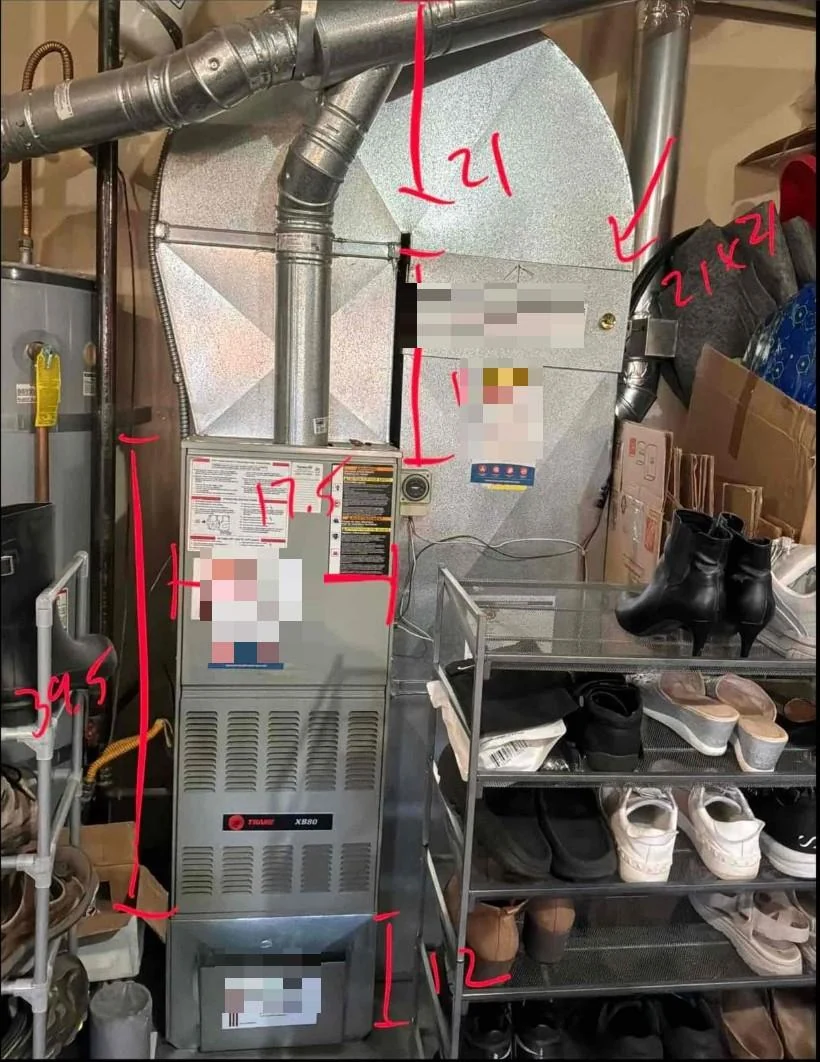
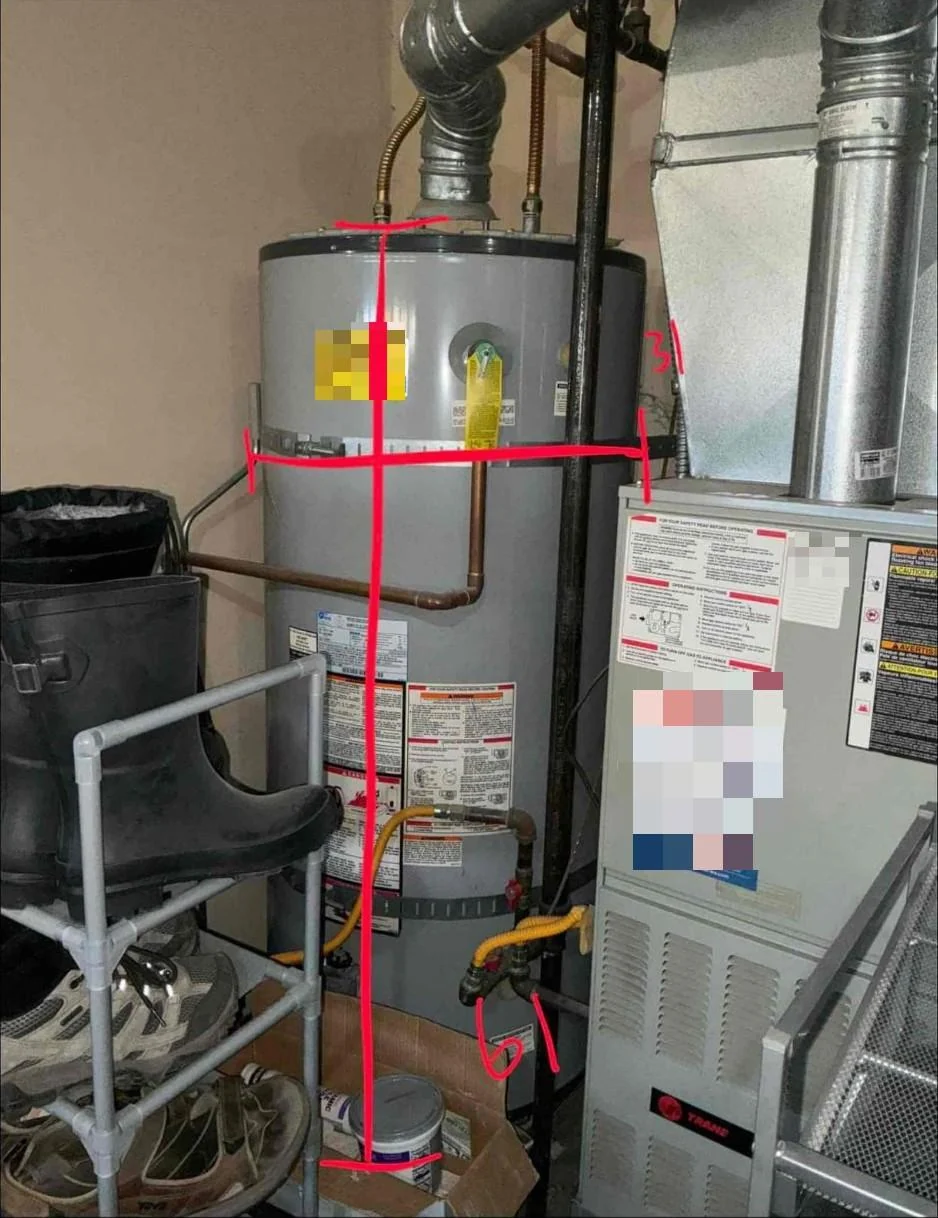
Before replacement: the garage furnace and the old gas water heater, with field measurements marked for planning.
Comparing Efficiency With the Whole Installation in Mind
Dan asked us to compare furnaces in the 80% efficiency range with an option around 95%. Those percentages refer to annual fuel utilization efficiency, or AFUE. A higher rating means more of the fuel's energy becomes usable heat under the rating conditions. It is useful information, but it does not tell a homeowner the full cost of installing the equipment in an existing house.
Moving to a condensing furnace changes installation requirements. The contractor needs to account for venting and condensate drainage, and an attic installation presents different routing and access questions than a garage installation. Where a furnace and a gas water heater share a vent, changing one appliance also requires a look at how the remaining appliance will vent. These details belong in the comparison alongside the equipment price and expected fuel use.
For Dan, the deciding priorities were dependable new equipment and fresh warranty coverage while retaining the type of system he already had. After discussing the options, he chose that approach over a more extensive upgrade. Brandon handled the proposal, and Dan made the decision about the scope he wanted us to carry out.
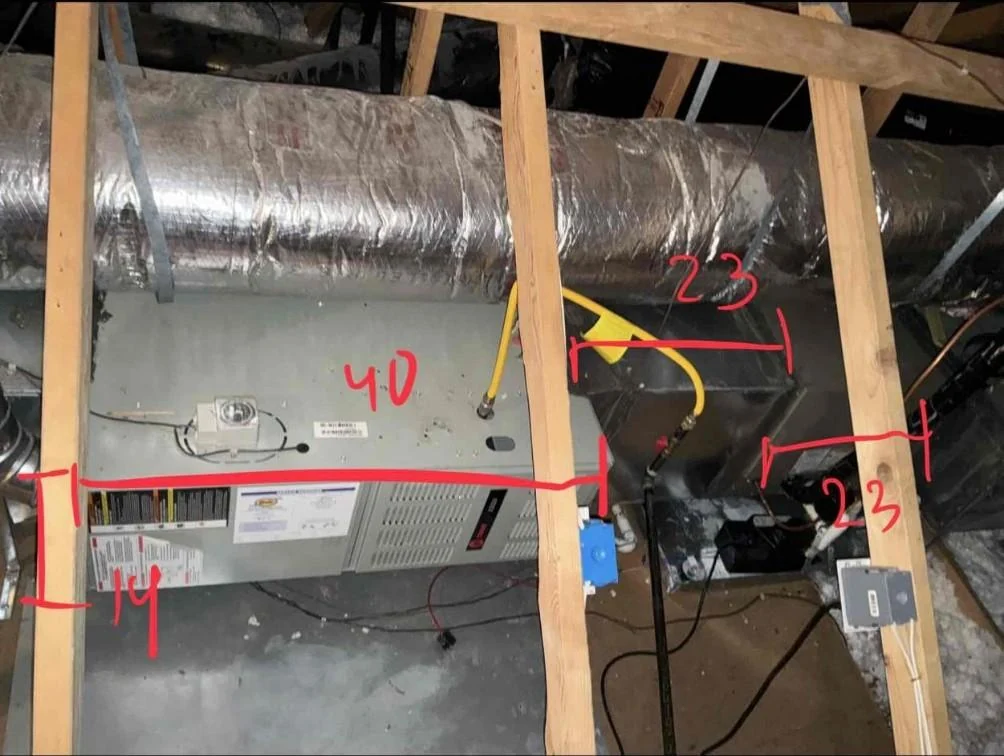
Before replacement: the horizontal furnace in the attic, with measurements used to plan the installation.
Giving Dan Room to Decide
Dan had also spoken with another contractor. He appreciated the transparent, educational approach he found with us. If my own brother were replacing two furnaces and a water heater, I would want him to understand what the added cost of an upgrade would buy and whether it fit his plans for the house. That is how I think about Your Tech Brother From Another Mother. With Dan, it meant explaining the choices and respecting his decision to keep a familiar setup.
Replacing Both Furnaces and Improving the Duct Connections
Our HVAC installation team replaced both furnaces in their existing areas of the house. The upstairs system remained a horizontal installation in the attic, and the downstairs system remained in the garage. We also reused Dan's existing thermostats, keeping the controls he already knew.
The work also addressed the duct connections around the equipment. Upstairs, the crew enlarged the main supply duct, which carries heated air from the furnace to the rooms. Downstairs, they enlarged the main return connection, which brings air back to the furnace to be filtered, heated, and circulated again. These were two different changes serving different parts of the airflow path.
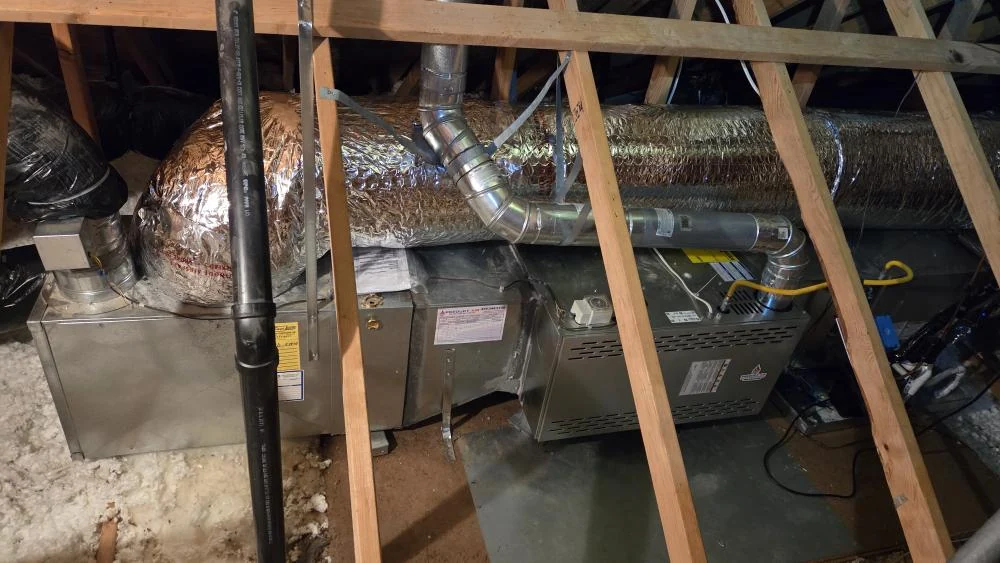
After replacement: the new horizontal attic furnace and the surrounding duct connections.
Ductwork deserves attention during a replacement because a furnace depends on air moving through the entire system. A restriction on either side can affect how the equipment operates and how well it delivers heat. Installing a new furnace gives us an opportunity to assess those connections and make the changes the installation needs.
For a homeowner comparing proposals, this is an important question to ask: what happens to the ductwork around the new unit? A proposal that includes changes to the main supply or return has a different scope from one that only replaces the furnace. In Dan's project, those duct changes were part of the installation he purchased for both systems.
Keeping Gas Hot Water and Replacing the Tank
Dan was clear from the start that he did not want a tankless water heater. We respected that preference and installed a new Rheem gas storage water heater in the garage. His hot water continued to come from a gas-fired tank. Replacing it during the furnace project allowed us to address the aging heating and hot water equipment together.
Choosing a replacement tank calls for a look at household demand, available space, and installation requirements. Tank capacity is only part of that discussion; the first-hour rating helps describe how much hot water a unit can deliver during a period of heavy use. For a family comparing water heaters, that is a useful way to connect equipment specifications to the morning showers and other hot water use the system will need to handle.
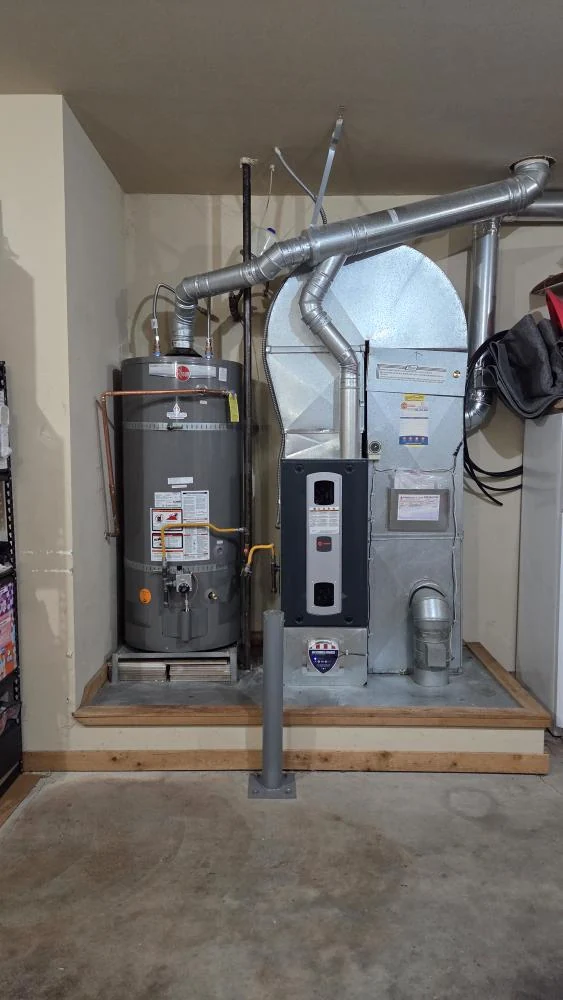
The completed garage installation with the new gas water heater and furnace.
Adding an Air Scrubber to Each System
We also installed air scrubbers on both heating systems. Because the house has separate upstairs and downstairs systems, an accessory installed on one serves the air moving through that system. Dan's scope included a unit on each. I encourage homeowners considering air-cleaning equipment to ask what the specific product is designed to address and how to maintain it. It should be considered alongside regular filtration, ventilation, and control of indoor pollutant sources.
What the Project Invoice Covered
The $21,940.92 invoice covered a coordinated replacement project: two gas furnaces, a gas storage water heater, the larger upstairs main supply ducting, the larger downstairs main return connection, and air scrubbers on both systems. The work involved equipment in two different parts of the house, with separate duct connections and installation conditions to address.
That scope is why I encourage homeowners to compare complete proposals. A price for a single furnace replacement does not describe the same work as Dan's project. Ask which appliances are included, what changes will be made around them, which controls will stay, and what warranty coverage comes with the installation. Those details make the total understandable and give you a fair basis for comparing contractors.
Our office sent Dan a payment link for the deposit. No rebate or financing program was involved in this project.
New Equipment and Warranty Coverage Before Winter
New warranties were part of the value Dan saw in replacing the older equipment. Manufacturer coverage and labor coverage serve different purposes. Product Air provides a five-year labor warranty on installed HVAC equipment; the applicable manufacturer warranties have their own terms. I want homeowners to understand both and keep the written warranty information with their installation paperwork.
We completed the project on October 16, 2026. Dan had new furnaces upstairs and downstairs, a new gas water heater, the agreed duct changes, and air scrubbers on both systems. His response captured the result that mattered most to him: "Thank you for getting me in before the winter is here." He had made the replacement decision on his own schedule and had the work finished before winter arrived.
What Other Homeowners Can Take From This Project
If several appliances in your home are getting older, start by having their condition evaluated individually. A furnace and a water heater being the same age does not automatically mean both need replacement. Ask what can reasonably be repaired, what replacement would accomplish, and whether doing the work together offers a practical advantage. Dan was ready to replace all three; another homeowner may have good reasons to plan the work in stages.
When considering higher efficiency, compare the complete installed cost and the changes your home would need. Look at fuel use, venting, drainage, ductwork, and warranty coverage along with the equipment rating. A recommendation should help you weigh those factors against your budget and how long you expect to keep the system.
For a home with two heating systems, ask the contractor to explain the plan for each one. Dan's upstairs system needed work on the supply side, while the downstairs scope included the return. Understanding those differences helped define a project that renewed the equipment and addressed the surrounding installation. That is the kind of explanation I want a homeowner to have before approving the work.
PLAN YOUR NEXT STEP
Need help with your home comfort?
Explore Product Air’s hvac services or contact the team.
Share this guide