

Your thermostat is set to 70°F, but the house is sitting at 61°F. You can hear the furnace in the utility room, and there's air coming out of the vents, yet you're still wearing a sweatshirt indoors. The same system kept you comfortable last fall, so why isn't it keeping up now?
On a windy November evening in Western Washington, it's easy to blame the weather. Colder temperatures and wind can increase the amount of heat your home needs. But when a furnace stops maintaining a temperature it previously handled, I want to find out what changed before assuming the equipment is too small or needs to be replaced.
Hearing the furnace run doesn't tell us whether it's producing heat or delivering enough of it to your rooms. The problem could be inside the furnace, somewhere in the duct system, or in the way the house holds heat. More than one issue can be involved.
This article focuses on gas furnaces that heat a home through ductwork. If you have a boiler with radiators or baseboard heating, the troubleshooting process is different.
What a running furnace actually tells you
A gas furnace has several components that can make noise before, during, and after a heating cycle. Hearing one of them operate only confirms that part of the system is doing something.
The main blower moves air through the furnace and into your ductwork. If the blower is running without the burners, you'll hear a familiar sound and feel air at the registers, but the system may simply be circulating room-temperature air.
Many modern gas furnaces also have a smaller fan called a draft inducer. It starts before ignition and helps establish the conditions needed to move combustion gases safely through the furnace and venting system. You may hear that motor even when the furnace never completes the startup sequence.
During a normal heating cycle, the thermostat calls for heat, the furnace checks the required operating conditions, the burners ignite, and the controls confirm flame before the system distributes heat through the house. The exact sequence depends on the model. Trane explains how the main blower distributes heated air and why it may continue running after a heating cycle ends.
When you call for service, describing what happens after the sound starts is useful. Does air reach the registers? Does it warm up? Does the furnace keep heating, or does the same startup sound repeat without the room temperature rising?
Even a thermostat displaying "Heat On" usually indicates a request for heat, rather than confirmation that the burners are operating.
Start with what changed since last winter
The age of the furnace matters, but the way the problem developed can tell me more about where to start looking.
Imagine two homes in Everett. One was comfortable at bedtime but had dropped to 58°F by morning. In the other, the owners have spent several weeks noticing weaker airflow, colder bedrooms, and longer heating cycles. That difference changes where I'd start looking.
In the first house, I'd want to know whether the furnace stopped completing its startup or heating cycle. In the second, I'd also investigate gradually restricted airflow, duct problems, and changes in heat loss.
Think back to anything that happened before the house started feeling cold:
- Was the filter replaced with a different size or type?
- Were the thermostat settings or schedule changed?
- Was there a power outage?
- Did furniture get moved in front of a supply register or return grille?
- Were vents closed in unused rooms?
- Was any work done in the attic or crawlspace?
- Did the whole house get cold at once, or did the problem begin in a few rooms?
Weather comparisons need some context, too. Two November days can feel equally damp and chilly while having different outdoor temperatures, wind conditions, and overnight lows.
If the same equipment previously heated the same house under comparable conditions, that gives us a reason to investigate what changed. A cold house alone doesn't establish that you need a larger furnace.
A few safe checks before you call
You can check the normal controls and accessible maintenance items without opening up the gas system or working on electrical components.
Confirm that the thermostat is calling for heat
Make sure the system is set to Heat, then compare the set temperature with the actual room temperature on the display. Check whether a schedule has lowered the setting. If your thermostat uses batteries, look for a low-battery warning.
Check the fan setting separately. With the fan set to On, the blower may circulate air continuously, including between heating cycles. Auto generally lets the system control the blower as needed. Carrier describes how thermostat and fan settings can affect what you feel at the registers.
Changing On to Auto can stop that continuous room-temperature airflow. It doesn't, by itself, fix a furnace that's failing to heat the house to the thermostat setting. If the burners aren't producing heat, changing the fan setting won't repair the underlying problem.
Check the filter if it is intended for homeowner access
Follow the manufacturer's instructions and shut the system off as directed before inspecting an accessible filter. Use the correct size and type, and install it in the proper airflow direction.
Don't run the furnace without a filter as an experiment, and don't choose a replacement simply because it looks easier to blow air through. The filter needs to be appropriate for the system.
Keep the supply and return openings clear
Look beyond the small registers that deliver warm air. The return grilles, which bring air back to the equipment, also need an unobstructed path. A couch, rug, or stack of boxes can interfere with circulation.
These checks should stay straightforward. Gas components, wiring, internal sensors, and safety switches belong in the hands of a qualified technician.
Why the air gets warm and then turns cool
A brief period of blower operation after the burners shut off can be normal. The system is finishing its cycle and distributing heat that's still in the equipment.
It's a different situation when the thermostat is set to 70°F, the house is only 60°F, and the furnace heats briefly before stopping and trying again. The temperature never reaches the setting, even though you keep hearing the system start.
One possible explanation surprises homeowners: the house can be cold because the furnace itself is getting too hot.
If too little air moves across the heat exchanger, the system can't carry heat away properly. The temperature inside the furnace rises, and a high-limit safety control may shut off the burners. The blower may keep running to cool the equipment, so the air reaching the rooms gradually feels cooler while the thermostat is still asking for heat.
Carrier's explanation of furnace short cycling describes how restricted airflow and overheating can interrupt heating cycles.
Ignition, flame sensing, venting, and control problems can also interrupt heat. That is why this pattern doesn't identify a particular failed part on its own. A safety control may be responding correctly to a problem elsewhere in the system.
If switching the furnace off and back on restores heat for a little while, don't turn repeated resets into your heating routine. A restart may temporarily clear a lockout while leaving the cause unchanged. A furnace that repeatedly stops before satisfying the thermostat needs professional diagnosis.
Hot air with weak airflow may not heat the house
Holding your hand over a register tells you something, but it doesn't tell you how much heat is reaching the room.
Think about filling a bathtub with hot water from a faucet that's barely open. The water is hot, but the tub takes a long time to fill. Heating works in a similar way. Your rooms need enough heated air, not just a small stream that feels very warm.
When airflow has become noticeably weaker, I look for restrictions at the filter and return, problems with the blower, and resistance elsewhere in the air path. I also want to know whether air is being lost before it reaches the rooms.
In a home with ducts in the crawlspace, a damaged or disconnected section can send heated air into an area you aren't trying to heat. The furnace may continue operating while the rooms served by that duct stay cold.
Closing most of the other registers to force more air into a cold bedroom can make matters worse. It can increase resistance and reduce overall airflow, which may contribute to the overheating problems described above. The distribution problem needs to be identified before you start changing the way air moves through the house.
When the living room is warm but the bedrooms stay cold
The location of the problem helps narrow the investigation.
If the temperature isn't rising anywhere, I need to check heating performance across the system. If the living room is comfortable while the bedrooms or upstairs remain cold, individual duct runs, return-air paths, and room heat loss deserve closer attention.
For example, imagine a bedroom in Lynnwood that gets noticeably colder whenever the door is closed. That gives a technician a reason to check the return-air path. Air needs a way back to the system after it enters the room, and a closed door can affect that path in some homes.
A bedroom over a garage presents another possibility. It may receive adequate airflow but lose more heat through its floor and other surfaces. If the room used to stay comfortable, I'd want to investigate changes such as disturbed insulation or damaged ductwork before treating its location as the complete explanation.
Thermostat placement matters as well. If the area around the thermostat warms up sooner than the rest of the house, the heating cycle may end while distant rooms are still below a comfortable temperature.
Rather than keep raising the setting, note which rooms are cold, when the difference is most noticeable, and whether doors being open or closed changes anything. Those observations help us decide what to measure.
Why windy weather can expose the problem
Wind can make an existing comfort problem more noticeable in a Western Washington home. Air movement through gaps around windows, doors, and utility penetrations can increase, leaving the heating system with more heat loss to make up.
Still, feeling a draft doesn't tell us the condition of the entire heating system. A cold window surface doesn't necessarily mean outside air is leaking around it, either.
I want to establish that the furnace is producing heat consistently and that the ductwork is delivering it before recommending work on the house itself. Pacific Northwest National Laboratory recommends checking the heating system and ducts before addressing air leakage and other sources of heat loss.
Wind can also expose combustion-air or venting problems in some installations. That requires an inspection of the specific equipment and vent arrangement, rather than an assumption that the weather simply blew something out.
Don't seal every opening near the furnace to stop a draft. Some openings provide ventilation or combustion air and need to remain open. Their purpose should be established before anything is blocked or altered.
What a heating diagnosis should establish
A useful diagnosis should show where the heating process is breaking down and why the proposed repair addresses it.
I check whether the thermostat's call for heat reaches the equipment, whether the furnace completes its startup sequence, and whether it keeps heating as intended. Airflow and heat delivery are part of that same investigation.
One important measurement is temperature rise, which is the difference between the air temperature entering the furnace and the air temperature leaving it after heating.
For an illustration, suppose the incoming air is 68°F and the outgoing air is 118°F. That's a 50°F temperature rise, but it isn't a universal target. The reading has to be compared with the range specified for that furnace and its operating conditions. Measurements also need to be taken in appropriate locations. Pointing an infrared thermometer at a register measures a surface temperature and doesn't replace this test. HVAC School explains temperature rise and its relationship to airflow.
A technician may also measure static pressure, which helps evaluate the resistance the blower is working against, and inspect the blower and duct system. Depending on the symptoms, the diagnosis may include gas input, combustion, and venting checks.
After a repair, the technician should repeat the relevant checks to verify that the furnace can continue heating reliably.
When the furnace starts working before the technician arrives
Intermittent problems take patience. A furnace operating during a service visit doesn't prove that the overnight failure has gone away.
Stored fault information, the pattern of shutdowns, and your observations can help. Note when the problem occurred, what the thermostat showed, whether air was moving, and what you heard. If the equipment has an externally accessible display or a factory viewing window, a photo of the indication may be useful, provided you can take it safely without removing panels.
You shouldn't have to open the equipment or test electrical circuits to capture a failure.
If the cause hasn't been confirmed, the technician should explain what has been checked, what remains uncertain, and what the next diagnostic step will be. Replacing parts without evidence can leave you paying for work while the original problem continues.
An older furnace may still be worth repairing
Equipment age affects the repair decision, but the condition of the furnace and the actual failure matter, too.
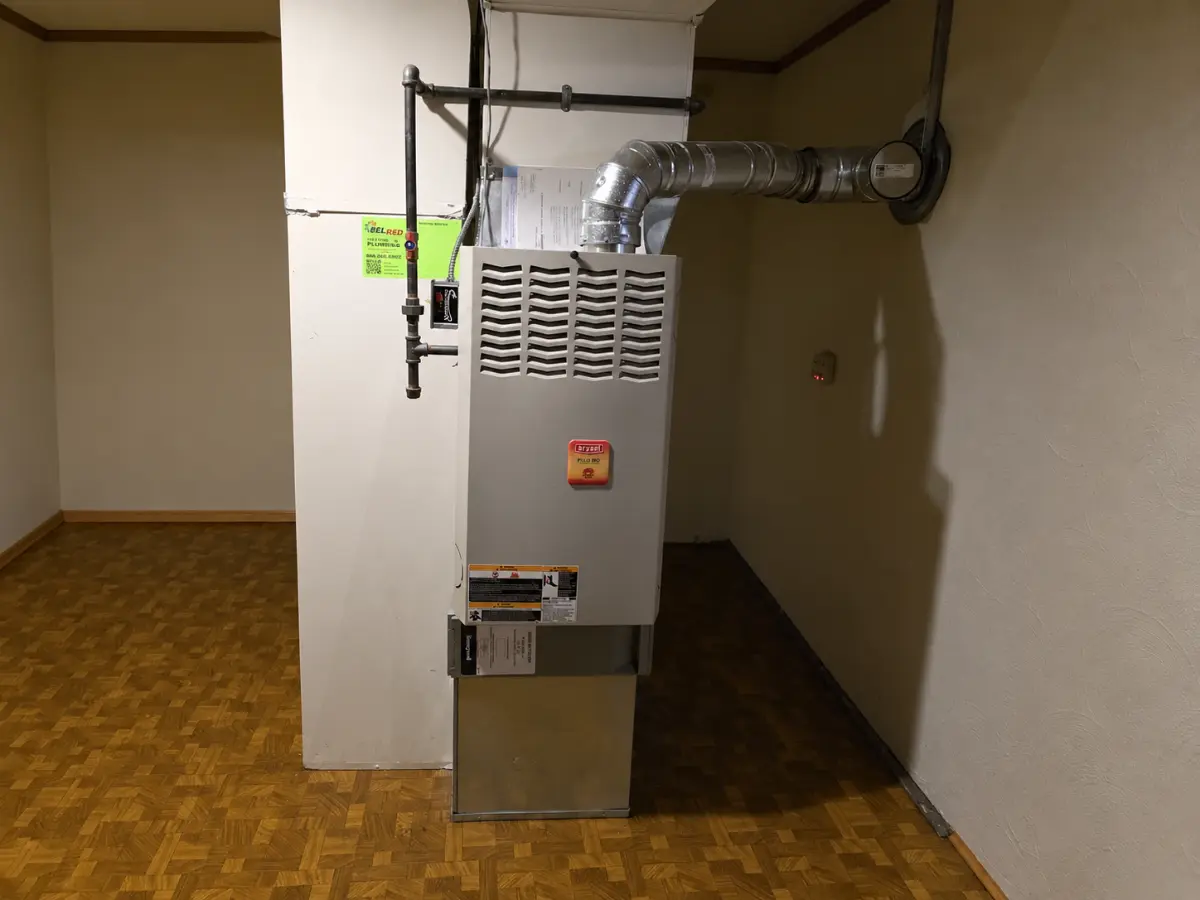
Our team has a useful example from Kirkland. In October 2025, Shaun Hensler diagnosed a Bryant gas furnace manufactured in 2007. The house wasn't warming up, the equipment was attempting to start, and repeated resets weren't resolving the problem.
The failed component was the draft inducer motor. After evaluating the equipment, the homeowner chose a repair, and the replacement restored heating. The details are in Product Air's Kirkland furnace repair case study.
The Kirkland case shows why furnace age alone shouldn't determine whether to repair or replace the equipment. A repair can make sense when a specific component has failed and the rest of the system remains in suitable condition. Extensive damage, expensive repairs, or limited parts availability may favor replacement. We explain the options, warranty coverage, and remaining limitations without promising how many years the furnace will last.
Understand the price and permit requirements before work begins
Before the visit, ask what the service call and diagnostic work include. Before authorizing a repair, review the proposed work, parts, total price, and how any additional work would be approved.
If replacement is recommended, permits and inspections may be part of the project. Redmond specifically lists new and replacement furnaces among the projects requiring an applicable permit. Repairing an individual component can involve different requirements. The scope of work and the authority responsible for your address determine what is needed.
For Product Air projects that require permits, we handle the applicable permit process and documentation. Your proposal should make those responsibilities clear, including any required inspections.
Signs that require immediate action
A loss of heat needs attention, and certain signs require you to focus on getting people to safety before arranging an ordinary service visit.
If you smell gas, get everyone out of the house and call your gas utility's emergency line or 911 from a safe distance. Don't operate light switches, the thermostat, or circuit breakers on your way out. Puget Sound Energy provides these instructions for a suspected gas leak.
If a carbon monoxide alarm sounds, move everyone outside into fresh air and call 911. Carbon monoxide has no smell, so the absence of an odor doesn't establish that the alarm is false. The Washington State Fire Marshal's Office advises homeowners never to ignore a CO alarm.
If you see smoke or fire, leave the house and call 911. Don't continue troubleshooting the furnace in any of these situations.
Staying warm safely while repairs are arranged
If heating can't be restored right away, temporary heat needs to be appropriate for both the house and its electrical system.
Plug a portable electric space heater directly into a suitable, undamaged wall outlet, without an extension cord or power strip. Keep combustible items at least three feet away, and turn the heater off when you leave the room or go to sleep. These precautions are included in the Washington State Fire Marshal's space heater guidance.
Outlets in different parts of a room may share a circuit, so plugging several heaters into separate outlets doesn't necessarily prevent an overload. If a breaker trips, don't keep resetting it to run the same load.
Never use a gas oven or an outdoor grill to heat the house, and never run a generator inside a home or garage.
If you can't maintain a safe indoor temperature, arrange to stay somewhere heated before the house gets colder. That decision deserves particular attention when young children, older adults, or people with health conditions are at home.
Getting your home comfortable again
If the thermostat, accessible filter, and supply and return openings look normal but the house remains cold, schedule a professional diagnosis.
At Product Air Heating, Cooling, and Electric, being your tech brother from another mother means finding the cause before recommending a solution. We check heating performance, airflow, and safety controls to determine what needs attention. Our furnace repair service can help identify whether a repair or another approach makes sense. A brief return of warm air doesn't prove that the underlying problem has been resolved.
PLAN YOUR NEXT STEP
Need help with your home comfort?
Explore Product Air’s heating services or contact the team.
Share this guide