

“Which brand is the best?”
It’s one of the first questions homeowners ask when replacing an air conditioner or heat pump. The answer isn’t as simple as naming a logo.
Brand matters. But installation quality, parts availability, and long-term manufacturer stability matter just as much, especially in Seattle’s climate.
Here’s how to evaluate it correctly.
What Separates a Premium Manufacturer from One That Just Markets Well?
Premium manufacturers don’t just advertise aggressively. They survive long term.
The companies that consistently perform well share a few traits:
- Decades in the market
- Strong distributor networks
- Reliable local parts availability
- Contractor training and support programs
- Responsive customer service
When a manufacturer has been around for years and continues to innovate, it usually means the product works. Companies with weak products rarely last long enough to build serious infrastructure.
Premium brands invest heavily in engineering and supply chains because they know their reputation depends on reliability.
Why Longevity in the Market Matters
HVAC equipment is a 15–20 year investment. That timeline alone makes manufacturer stability critical.
Some brands enter the market aggressively with low prices. But when product failures mount or distribution struggles begin, those companies often disappear.
There are real examples of manufacturers that briefly produced heat pumps, then exited the market. Homeowners who installed those systems later discovered parts were difficult or impossible to source.
When a manufacturer closes, warranty promises don’t mean much.
Established brands with decades of history provide something marketing cannot: security.
Local Parts Availability in Seattle
Parts availability isn’t theoretical. It’s practical.
Imagine it’s 20°F outside and your heat pump stops working. If the required component is available locally, the system can be repaired quickly. If the part must be shipped from across the country or internationally, you may be waiting weeks.
There are situations where homeowners have been told it could take six weeks or longer for a replacement part on a nearly new system.
That’s not a product feature problem. It’s a distribution problem.
In a region like Seattle, where cold snaps can strain systems, local supply chains matter.
Which Components Fail Most Often in Lower-Tier Brands?
When cost is dramatically reduced, something has to give.
In lower-tier equipment, failures often involve:
- Fan motors
- Coils
- Control boards
- Motherboards
- Electronic components
Cutting manufacturing costs frequently means thinner materials, lower-grade electronics, or less rigorous testing.
The upfront savings can be tempting. But over 15 years, repeated service calls erase those savings quickly.
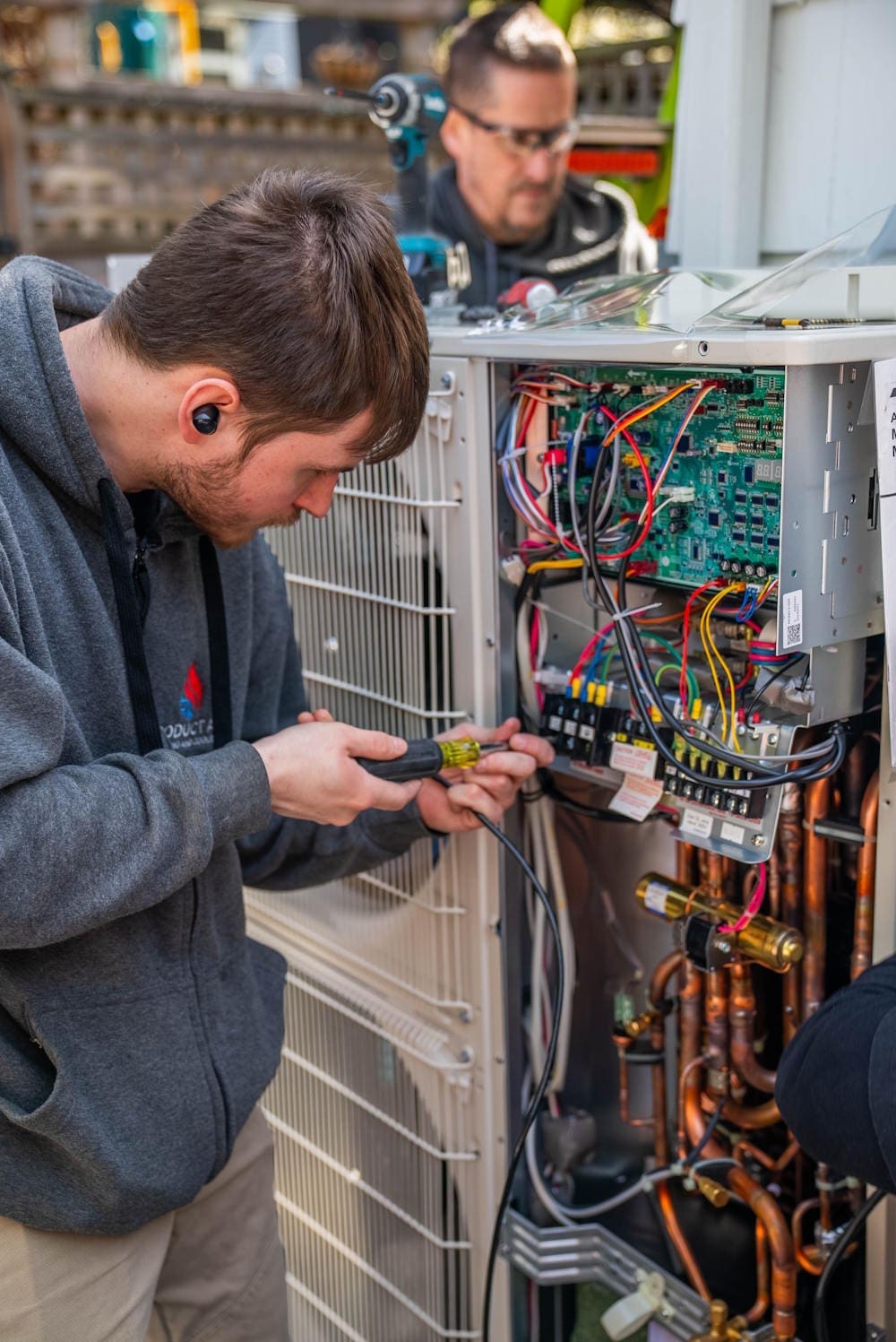
Why Installation Quality Matters More Than the Logo
A premium brand installed poorly will fail.
A mid-tier brand installed properly may perform better than expected.
Installation affects:
- Refrigerant charge
- Electrical connections
- Airflow balance
- Compressor protection
- Long-term durability
Some manufacturers such as Trane require contractors to demonstrate operational stability and experience before authorizing installation rights. That protects both the brand and the homeowner.
Improper installation can shorten compressor life dramatically, regardless of brand.
Brand selection and installation quality should never be separated.
Red Flags That a Brand Prioritizes Sales Over Durability
There are warning signs homeowners should watch for:
- A brand that just entered the U.S. market
- Equipment priced at half the cost of established competitors
- Limited distributor presence in Seattle
- Difficulty reaching manufacturer support
Low pricing alone is not proof of poor quality. But when a system is dramatically cheaper than established brands, it often reflects reduced engineering or weaker supply chains.
In many cases, contractors pushing ultra-low-cost systems are competing on price rather than long-term reliability.
Over time, that strategy tends to surface in service calls.
For Homeowners Staying 15+ Years, What Should Matter Most?
If you plan to remain in your home long term, prioritize:
- Brands with a long market history
- Consistent technological innovation
- Proven performance in cold-climate applications
- Strong regional parts support
- Established contractor networks
Mitsubishi, for example, has built a reputation for cold-climate heat pump technology and consistent innovation. That track record gives homeowners confidence that parts and support will remain available.
Homeowners considering proven cold-climate systems can learn more about our professional heat pump installation services here.
For central cooling projects, we offer AC installation and replacement services.
Brand selection should align with long-term plans, not just initial pricing.
When Manufacturer Claims Don’t Match Field Reality
Every manufacturer publishes performance claims. But field experience ultimately determines truth.
If a brand repeatedly underperforms, the market corrects itself. Companies that cannot deliver on their promises rarely survive long.
When discrepancies appear between marketing and performance, the cause may be:
- Poor installation
- Misapplication of equipment
- Manufacturing defects
- Inadequate support infrastructure
Experienced contractors evaluate patterns across many installations, not just one system.
Over time, trends become clear.
Final Thoughts: Brand Matters, But It’s Not Everything
Choosing the right air conditioner or heat pump brand in Seattle isn’t about picking the most advertised name or the cheapest option.
It’s about stability, parts access, proven engineering, and installation quality.
A reliable manufacturer combined with proper installation creates durability. A weak supply chain or careless install undermines even the strongest brand.
In Seattle’s climate, where systems must perform through damp winters and increasingly warm summers, reliability matters more than marketing.
The best brand for your home is one that will still be supporting you 15 years from now.
PLAN YOUR NEXT STEP
Need help with your home comfort?
Explore Product Air’s heat pumps services or contact the team.
Share this guide