


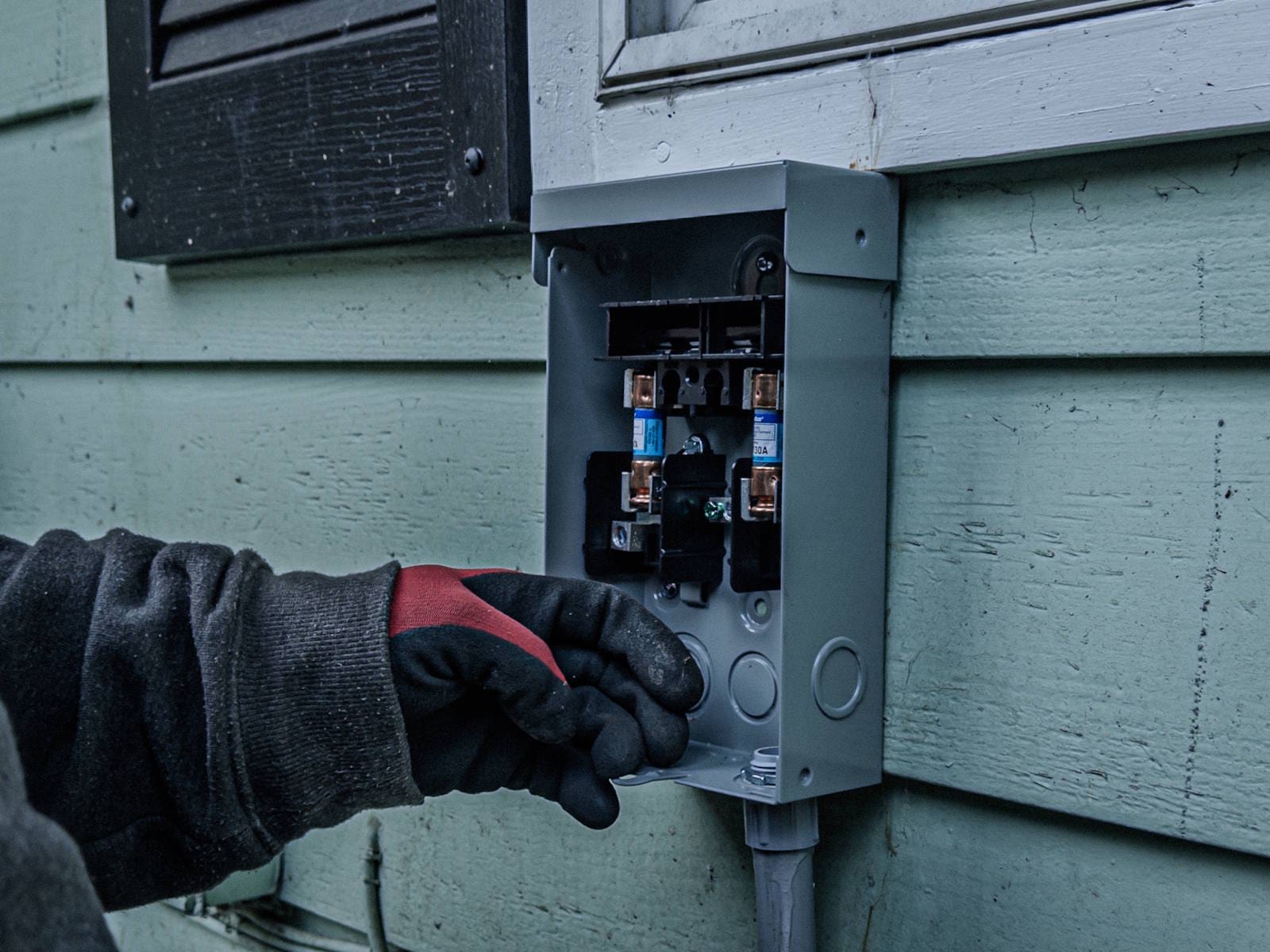
The Call I Get More Often Than Any Other
Not long ago, I was on the phone with a homeowner in Bellevue who had gotten three estimates for an electrical panel upgrade. The first contractor quoted $3,800. The second came in at $2,600. And a third had offered to do the whole job for $1,500 cash, no paperwork.
She was calling us because we were the highest number, and she wanted to understand why.
I get that question often. Often enough that I’ve stopped being surprised by it, and often enough that I’ve worked out a clear answer. Not a pitch. Not “because we’re better than the other guy.”
An actual breakdown of what that price contains, because the gap between $1,500 and $3,800 for what looks like the same job isn’t random, and it isn’t markup for its own sake. Every dollar of that difference has a name.
So I walked her through it. And this is what I told her.
Factor #1: Six Thousand Hours Before the First Solo Job
In Washington State, you cannot legally pick up a tool and call yourself an electrician because you watched videos online and feel confident about wiring. To become a licensed electrician, you have to work a minimum of 6,000 hours, roughly three years, as an apprentice under a licensed lead electrician before you’re eligible to sit for the licensing exam. Every one of those hours is documented. Every one of them is supervised by someone whose own license is on the line if the apprentice does something wrong.
What that means in practice is that by the time one of our licensed technicians shows up at your door, they’ve already spent three years being corrected in the field. Not in a classroom, not on a simulator, on real jobs, in real homes, working next to someone who has done this for decades and has seen every way electrical work can go wrong. That’s how the knowledge actually transfers. Not from a textbook, but from a thousand jobs where something failed, or nearly failed, and someone with more experience was there to catch it before the wall went back up.
When you hire a licensed electrician, you’re not paying for the hour they spend in your home. You’re paying for the years that made that hour reliable.
Factor #2: The Courses, the Exams, and the License: None of It Is Free
Behind the license number on that truck is a real financial investment that the electrician made before they ever worked a job on their own.
Apprenticeship coursework and training programs in Washington typically run anywhere from $2,000 to $6,000 or more over the certification period. The licensing exam costs between $100 and $400. The license itself carries fees. And maintaining that license requires continuing education every three years. It means an additional cost of $300 to $1,000 per cycle depending on the required coursework.
All of that is before tools, before a service vehicle, before insurance, before payroll. Becoming a licensed electrician is a deliberate, costly investment, designed to filter out the people who aren’t serious about doing this correctly. And the people who made that investment, who spent real money and real years to earn the right to work independently, need to recover it somewhere. It’s in the price, because where else would it be?
Factor #3: The Code Changes Every Three Years Because Fires Happen
Getting licensed doesn’t end the education. In Washington, licensed electricians are required to complete continuing education every three years to maintain their license. Not as a formality.
Not as a box to check. Because the National Electrical Code is a living document that gets revised on a regular cycle, and it gets revised for a specific reason: fires happen, failures happen, investigations determine what went wrong, and the code changes to prevent the next one.
The electrician who got licensed in 2012 and hasn’t kept up with continuing education may be wiring your home to standards the industry has since moved past, because an investigation into a house fire somewhere in this country revealed that those standards weren’t sufficient. The code update happened. The professional who isn’t keeping up doesn’t know about it.
Everyone on our team takes those classes. That costs money every three years, because staying current costs money. It’s built into what we charge, because staying current is part of what you’re actually paying for.
Factor #4: Permits and Inspections: Your Legal Record for the Life of the Home
When we quote a panel upgrade, an EV charger installation, or a new circuit, the permit is part of the price. In Western Washington, those fees vary by jurisdiction and scope. A minor electrical permit runs roughly $75 to $200. A panel upgrade permit typically runs $120 to $400 or more. Major rewiring in a full remodel can go higher. Those fees are real, and they’re part of why a licensed contractor’s quote looks larger than a handyman’s quote on paper.
But here’s what a permit actually is. It’s not a fee we pay so that someone can stamp our paperwork. It’s the creation of an official record, attached to your property, that says a third party, an inspector employed by the jurisdiction, independent of us, came to your home and verified that the work was done correctly. That record follows the house for the life of the property.
When we finish electrical work at your home, we call the inspector, schedule the inspection, and don’t close the job until it passes. That adds time. It adds cost. And it produces something with real value to you in ways that aren’t visible until you need them.
If something goes wrong with electrical work done without permits (a fire, a short circuit, an insurance claim), the first thing the insurance company does is look at the paperwork. If the work isn’t permitted, their position is straightforward: unpermitted work was done on this home, that work contributed to this loss, and the claim is very difficult to support. The same problem surfaces at resale.
When you sell a home in Washington, panel upgrades, EV charger installations, and new circuits need to be on record. If they’re not, a buyer’s lender can require corrections as a condition of the loan, which puts you in the position of paying to redo work you already paid someone to do, on a timeline set by your closing date.
The permit isn’t overhead. It’s proof that the work was done. Without it, the risk of what happens next sits entirely with you.
Factor #5: The Equipment We Use Has a Stamp. There’s a Reason for That.
The parts and materials in a licensed electrical job are not the same as the parts in a cheap job, even when the components look identical on the surface.
In the United States, electrical equipment is certified through nationally recognized testing laboratories and marked with approval stamps confirming the product has been tested and determined safe for professional installation. When we buy materials such as breakers, wire, conduit fittings, load centers, we buy through verified professional suppliers. For electrical materials, that means suppliers like Platt Electric, where the sourcing is traceable and the products are what they’re represented to be.
A breaker that looks right and fits the panel slot but isn’t certified for that specific panel is a component that hasn’t been tested for that combination. A wire that’s undersized for the load it’s carrying, bought cheap because the gauge looked close enough, will overheat under load. The breaker that was supposed to protect it won’t trip, because it wasn’t designed to protect that wire. The wire melts inside the wall. The breaker sees nothing wrong.
We’ve described exactly how that sequence ends in our article on electrical fires in Washington. We’ve seen it in the field more than once. We don’t guess on gauge. We don’t cut corners on certification. The right materials cost more than the wrong ones, and using anything else isn’t a way to save money. It’s a way to transfer risk into the walls of someone’s home.
Factor #6: If We Make a Mistake, It’s Our Problem. Not Yours.
Licensed electrical contractors in Washington carry liability insurance, bonding, and workers’ compensation. These aren’t optional. They’re required and they’re expensive. General liability coverage for a contractor of our size runs several thousand dollars per year. Workers’ compensation adds significantly. Commercial auto insurance for our service vehicles adds more.
None of that appears as a named line item on your estimate. But it’s in the price, because it has to be.
A company that’s properly insured and bonded is a company where, if something goes wrong, there’s a legal and financial mechanism for making it right. The liability is ours. If an installation fails, if a connection was wrong, if something we touched causes a problem, we are legally responsible for that outcome, and we have the coverage to back it up.
A handyman working without a license doesn’t carry commercial liability insurance. If they make a mistake (the wrong wire gauge, a connection that works fine for six months and then doesn’t), you may have no legal recourse. The person who did the work may be unreachable. The insurance company may point to the unpermitted, unlicensed work and decline the claim. The responsibility lands on the homeowner, because the homeowner made the choice to hire someone who wasn’t carrying the legal structure to stand behind the job.
We stand behind our work. That’s not a phrase on a website. It’s a commitment built into the price and the way we operate. That’s what “Your Tech Brother From Another Mother” actually means when something goes wrong and we handle it, the way a brother would.
Factor #7: When We Pull Up to Your Home, We Already Have What We Need
There’s a version of a job I’ve heard described by customers more times than I can count. The technician arrives, starts work, realizes he’s missing a specific fitting or a length of wire in the right gauge. He drives to the nearest supply store. He comes back. Twenty minutes later, he realizes he needs something else. Back to the store.
What was scheduled as a four-hour job stretches into a second day. The homeowner has rearranged their schedule twice. The root of the problem isn’t that the technician was careless . It’s that the operation behind them was never built to prevent it.
At Product Air, job prep happens the afternoon before, not the morning of. We go through the next day’s schedule, review what each job requires, and our technicians restock from our warehouses in Marysville and Seattle before they leave. Our vans are organized as mobile warehouses: not tools thrown in the back of a truck, but labeled inventory, tracked, checked against a list before anyone drives to a customer’s home.
When we show up, we show up with what the job requires. That level of operational discipline costs money to build and maintain. It’s part of what you pay for when you hire a professional electrical contractor in Seattle and the benefit to you is a job that gets done in the window it was scheduled for, without your day being reorganized around someone else’s supply run.
Factor #8: What the $1,500 Quote Is Actually Going to Cost You
There’s a case I keep coming back to when this conversation comes up.
We were called to a home in Mukilteo for what the homeowner described as a routine maintenance visit.
When I opened the panel, I found two categories of problems: wiring the homeowners had done themselves over the years, and a second set of circuits run by an HVAC contractor who had the right license to install the equipment but not the right license to do the electrical work. Both had been done without permits. The homeowner was planning to sell.
The correction estimate was $5,000. He signed without negotiating, not because he was comfortable with that number, but because the alternative, a panel that wouldn’t pass inspection and a house that couldn’t close, was more expensive. The $5,000 was the price of the money saved earlier in that home’s history.
That story isn’t unusual. It’s a pattern. The $1,500 quote doesn’t disappear when you take it. It becomes the foundation of everything built on top of it (every circuit, every future inspection, every insurance claim) and when that foundation was done without a license, without a permit, and with undersized materials, the cost of correcting it is always higher than the cost of doing it right the first time.
So Why Does It Cost More to Hire a Licensed Electrician in Seattle? What You Don’t Get With the Cheaper Bid
I don’t tell customers not to compare prices. Comparing estimates is reasonable, and I’d do the same thing. What I do tell them is to compare what the prices actually include.
A licensed contractor’s quote contains training that took years and cost real money. It contains permits that create a legal record attached to your property. It contains an inspection that confirms the work independently. It contains certified materials from verified suppliers. It contains insurance that transfers the liability off you and onto us. It contains the operational infrastructure to show up prepared and finish the job in a single day.
A handyman’s quote contains none of those things. It contains labor, and usually less of it than you’d expect.
What that means over time is a different calculation than the one that looks obvious when the estimates are on the kitchen table. If the work is never inspected again and nothing ever fails, maybe the difference never surfaces. But electrical work doesn’t stay hidden forever. It gets looked at when the house sells. It gets examined when something fails. It gets scrutinized when an insurance claim is filed. And at every one of those moments, the question isn’t how much you paid. It’s whether the work was done correctly, by someone licensed to do it, under a permit, verified by an inspector.
If the answer is yes, you have documentation for all of it. If the answer is no, you have a problem that someone needs to solve at a price that reflects the urgency of undoing what someone else did wrong.
Why This Matters More in 2026 Than It Did Twenty Years Ago
Western Washington homes are getting older, and the electrical demands on them keep growing. Heat pumps. EV chargers. Whole-home battery systems. Induction ranges. Panels designed forty years ago for a fraction of today’s load, now being asked to carry circuits they were never built for. Cutting corners on electrical work in 2026 carries different consequences than cutting corners in 1986, because the systems are more complex and the margin for imprecision is narrower than it was when most of these panels were installed.
Electrical panels don’t forgive imprecision. They hold it, quietly, inside the wall, until they don’t.
That’s why we charge what we charge. Not because we feel like it. Because the work we do requires it.
— Serge Nikolin, Co-Founder, Product Air Heating, Cooling and Electric
Marysville · Issaquah · Seattle · Western Washington
PLAN YOUR NEXT STEP
Need help with your home comfort?
Explore Product Air’s electrical services or contact the team.
Share this guide