

Location: 125th Drive Northeast corridor, Lake Stevens, WA 98258
Call Date: March 20, 2026
First Visit: March 23, 2026
Project Completion: April 1, 2026
Lead Technician: Luis, Department of Energy–certified technician, 25+ years in the trade
System Before: Nordyne gas furnace, 28 years old, single-stage
System After: Mitsubishi Hyper Heat Ultra Quiet SUZAK36NLHZ outdoor unit (3-ton, modulating/variable-speed) + Mitsubishi SVZAP36NL communicating air handler
Final Project Cost: $21,000.01 (financed at 0% APR for 12 months through GreenSky)
Why Did This Lake Stevens Family Replace Their 28-Year-Old Furnace?
Terbinos called Product Air’s Marysville office on March 20, 2026, and the conversation wasn’t complicated. The previous winter had been hard on the house: the old furnace had struggled to keep up, and the family had decided, somewhere around January or February, that they were not going to gamble on it making it through another one. There was no failure to point to, no specific night the heat went out. There was just a system that had finally made itself impossible to ignore, in a house Terbinos found through a Google search for HVAC companies near Lake Stevens.
That search is worth pausing on, because it tells you something about how this job went from the start. Terbinos was a new customer, no history with Product Air, no referral from a neighbor. No other contractor had been out to the house first. There was nothing to undo, no previous estimate to argue against, no bad experience to repair trust from. It was a clean slate: a homeowner who had decided the furnace’s time was up, and a search result that put Product Air in front of them at the right moment.
What Terbinos wanted, in their own words as relayed through the visit, was reliable heat. Not the cheapest system, not the most efficient on paper. Reliable. That single word ended up shaping almost everything about how the estimate was built and which option got chosen three weeks later.
What Problems Does a 28-Year-Old Furnace Typically Have?
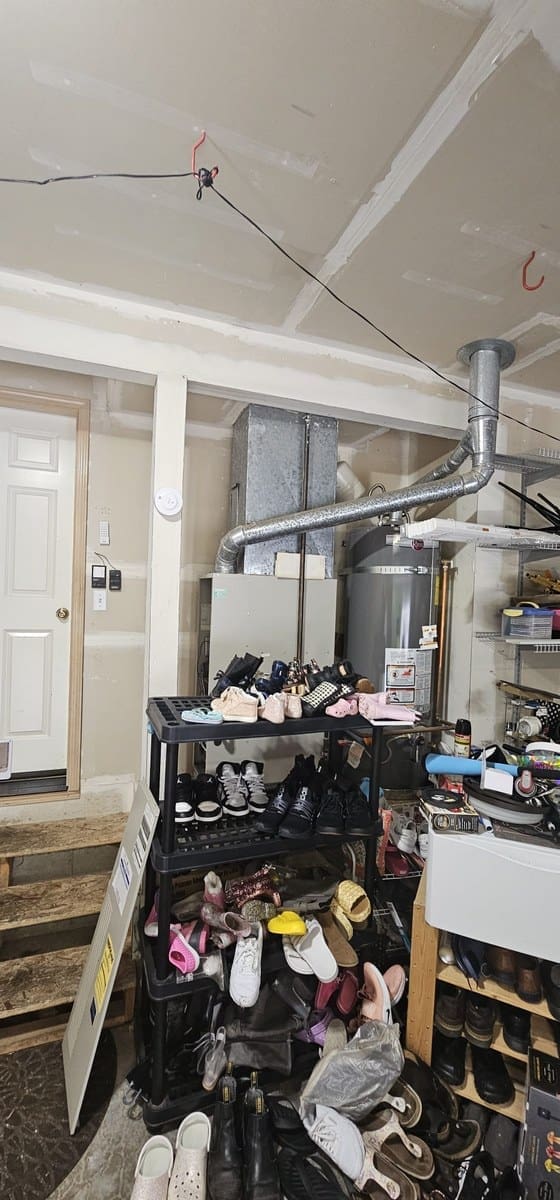
The home sits in the 1001–1199 block of 125th Drive Northeast, a two-story, four-bedroom house built in 1998 and sized at 2,563 square feet. Do the arithmetic on that build date and the furnace’s age lines up exactly: a Nordyne gas furnace that had been heating the house since the day it was framed, 28 years old by the time Luis walked through the door on March 23.
A single-stage gas furnace at 28 years old is not a mystery to a technician who has seen thousands of them. It runs in exactly one mode, full output or off, which means every cold morning starts with a hard blast of heat and every satisfied thermostat ends with an abrupt shutdown. Over almost three decades that kind of duty cycle takes a toll that doesn’t always show up as a single dramatic failure. It shows up as a heat exchanger carrying the metal fatigue of thousands of those on-off cycles, a blower motor working harder than it did a decade ago to move the same air, and a system that takes longer to recover heat after every setback than it used to. None of that is the kind of thing a homeowner can diagnose from the living room. It’s exactly the kind of thing that adds up to “we had issues with it the winter prior” without ever producing a single moment dramatic enough to call an emergency.
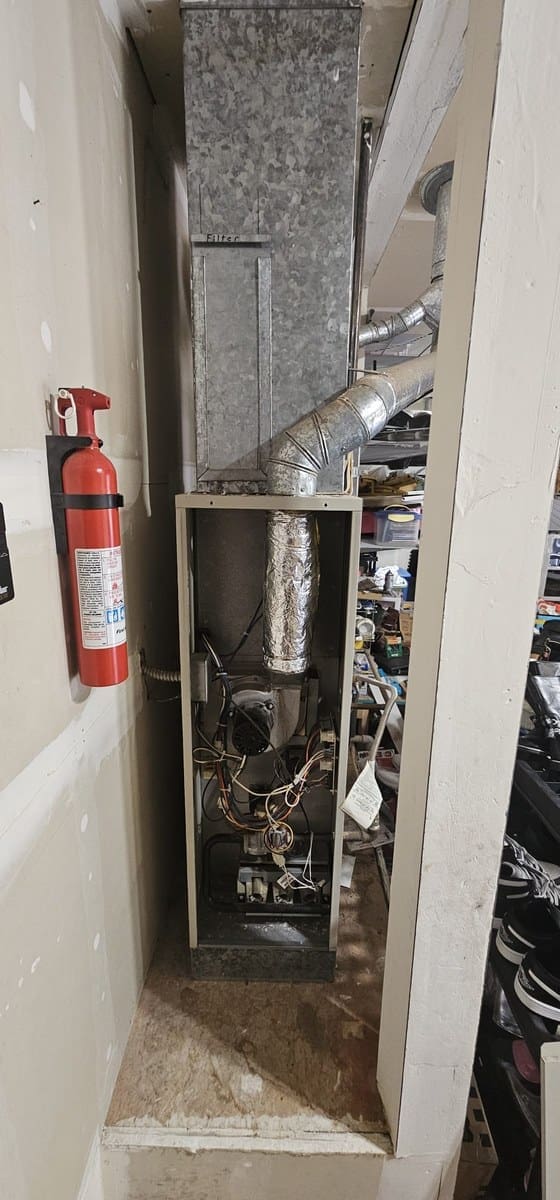
Luis’s read on the equipment matched what almost any technician would find walking into a 1998 home that has never had its original furnace touched: a unit that had earned its retirement, with no single catastrophic point of failure but every sign of a system running on accumulated wear rather than reserve capacity. There was no carbon monoxide alarm history, no gas smell, nothing that turned this into an emergency call. It was simply a furnace that had quietly become the kind of system you stop trusting before it actually quits on you, which is the smarter time to replace one in the first place.
Why Did the Homeowners Choose Mitsubishi’s Platinum Plus Heat Pump?
Luis didn’t lead with equipment. He led with questions. “We asked questions that are important to people,” he said about the visit. “Is this your forever home? What comfort levels are you trying to achieve? Are you financing, or planning to pay by check?” Those three questions, asked in that order, tell you almost everything you need to know before you ever open a price sheet, and
Luis built four options around the answers.
All four options were full system replacements, Mitsubishi-based, the equipment ranging from a capable mid-tier ducted heat pump up through the Hyper Heat Ultra Quiet variable-speed system at the top of the catalog:
Silver Replacement: standard Mitsubishi ducted heat pump and air handler, sized for the home’s 2,563 square feet: $17,224.34
Gold Replacement: upgraded Mitsubishi ducted system with improved part-load efficiency: $19,847.99
Platinum Replacement: higher-capacity Mitsubishi Hyper Heat system, single-stage air handler: $20,843.17
Platinum Plus Replacement: Mitsubishi Hyper Heat Ultra Quiet 3-ton SUZAK36NLHZ outdoor unit paired with the SVZAP36NL modulating, communicating air handler: $21,000.01
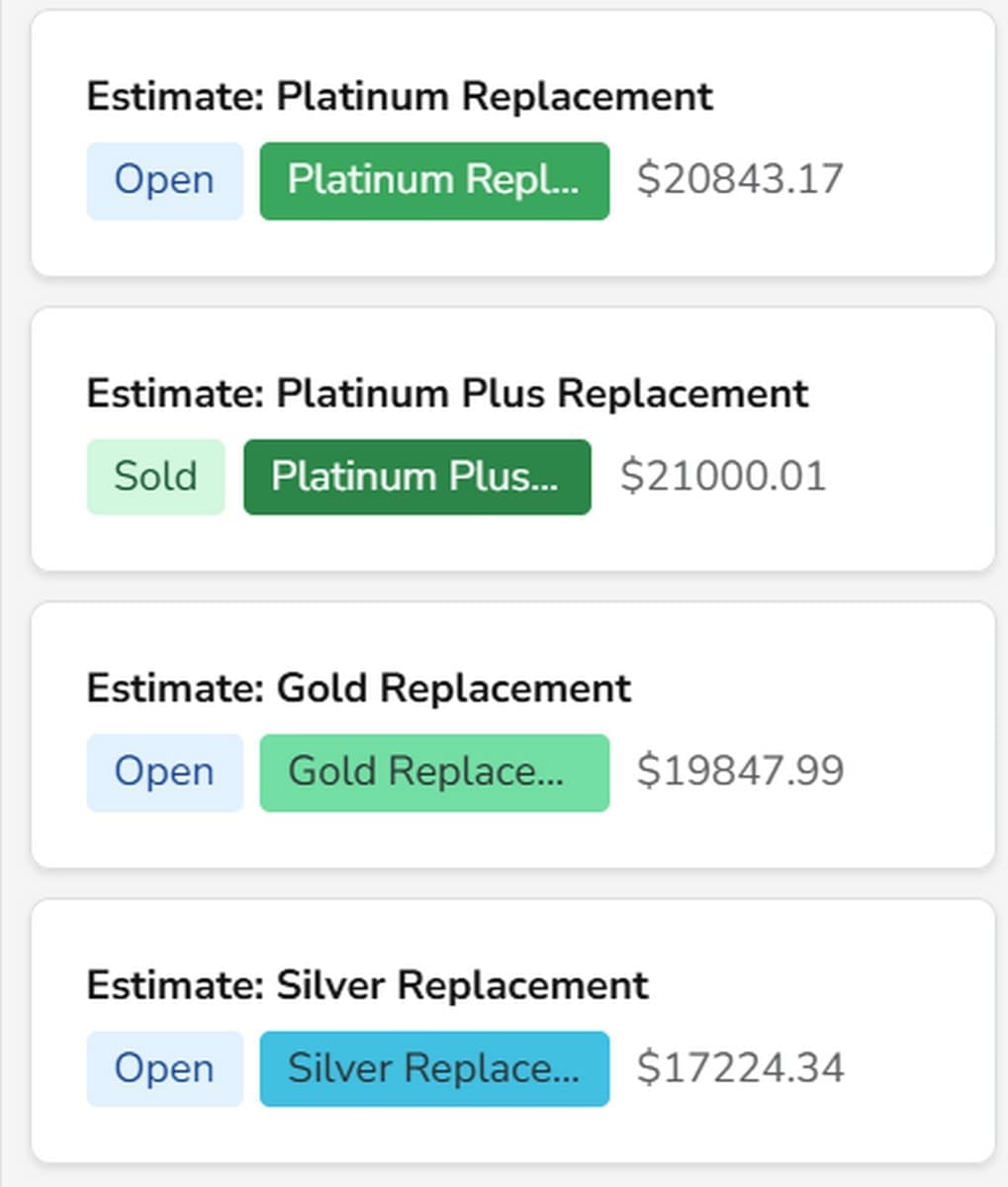
The four-option estimate presented to the homeowner, Silver through Platinum Plus, with Platinum Plus marked Sold at $21,000.01.
“All of these options are tailored to your needs and your future goals for the home,” Luis told them. “The slight differences become the performance and track record of the product. Mitsubishi is by far the best unit in performance and durability.” He didn’t lean on the price gap between Silver and Platinum Plus, which was less than $3,800 across four tiers, smaller than most homeowners expect once they see the numbers side by side. He let the family see what each tier actually bought them.
Terbinos chose Platinum Plus, the full electric Mitsubishi heat pump system at the top of the range, without much hesitation. After a winter spent watching a 28-year-old furnace fall further behind, “reliable” had stopped being an abstract word on a wish list and started being the only criterion that mattered. The communicating, variable-speed system was the version of reliability that came with the least uncertainty attached to it, and that was worth the difference between tiers.
Is Mitsubishi Hyper Heat Worth It in Western Washington?
Homeowners across Western Washington tend to assume that skipping straight to the top of an equipment lineup is a sign of being oversold. Sometimes it is. In this case, the math behind the decision is straightforward enough to walk through honestly, and it has nothing to do with marketing.
The difference between Mitsubishi’s mid-tier ducted systems and the Hyper Heat Ultra Quiet line isn’t really about ceiling temperature performance in Seattle’s relatively mild climate. It’s about how the system behaves on an ordinary Tuesday. A single-stage or two-stage heat pump runs at fixed output levels and cycles between them, which means the house swings slightly above and slightly below the setpoint all day. A fully modulating, communicating system like the SUZAK36NLHZ paired with the SVZAP36NL air handler reads the load in the house continuously and adjusts compressor speed in small increments rather than jumping between fixed stages. The practical result is a house that holds a setpoint within a degree rather than three, with the equipment running quieter because it’s rarely working at full output, and the family inside who never has to think about it because there’s nothing dramatic happening at the thermostat to notice.
That kind of system also carries weight on the equipment side that a homeowner planning to live in a house for decades, not years, should care about. Product Air’s status as a Mitsubishi Diamond Elite Contractor extends a 12-year manufacturer warranty on equipment installed at that tier, two years longer than the standard 10-year warranty most brands offer, and that extension is tied directly to the contractor’s certification level, not something every installer in the area can offer regardless of the equipment they sell.
Rebates also factor into this math, even when they don’t fully explain it. The federal Section 25C tax credit, which once let homeowners claim up to 30 percent of a heat pump installation against their tax liability, expired on January 1, 2026, and is no longer part of the calculation for any 2026 installation. With that credit gone, manufacturer promotions and utility rebates carry more relative weight than they did even a year earlier. Lake Stevens sits in Snohomish County, served by Snohomish PUD, whose 2026 heat pump rebate programs reward full electric heat pump conversions specifically, the category this installation falls into as a complete Mitsubishi electric system with no gas backup. The rebate that actually applied to this job was Mitsubishi’s spring manufacturer promotion, not a utility program, which is a reminder that the rebate landscape shifts by season as much as by zip code, and the right move is always to ask what’s live at the moment of the estimate rather than what was advertised months earlier.
None of that is the reason Terbinos chose Platinum Plus. They chose it because they wanted a system they wouldn’t have to think about, and the variable-speed, communicating tier is the version of a Mitsubishi heat pump built specifically to disappear into the background of a household’s daily life.
What Went Into the House on 125th Drive Northeast
The system installed at the Terbinos home pairs a Mitsubishi SUZAK36NLHZ Hyper Heat Ultra Quiet outdoor unit, a 3-ton, 36,000 BTU side-discharge condenser, with the SVZAP36NL air handler, a modulating, variable-speed, communicating indoor unit that talks continuously with the outdoor compressor rather than simply receiving on/off signals. Where the old Nordyne furnace reacted to the thermostat in binary terms, full output or nothing, the new system studies the home’s actual heating and cooling pattern throughout the day and modulates its output to match it in real time. That single difference is what turns “the furnace struggled last winter” into a non-issue, and it’s also what hands the family central air conditioning for a Western Washington summer for the first time in the house’s 28-year history.
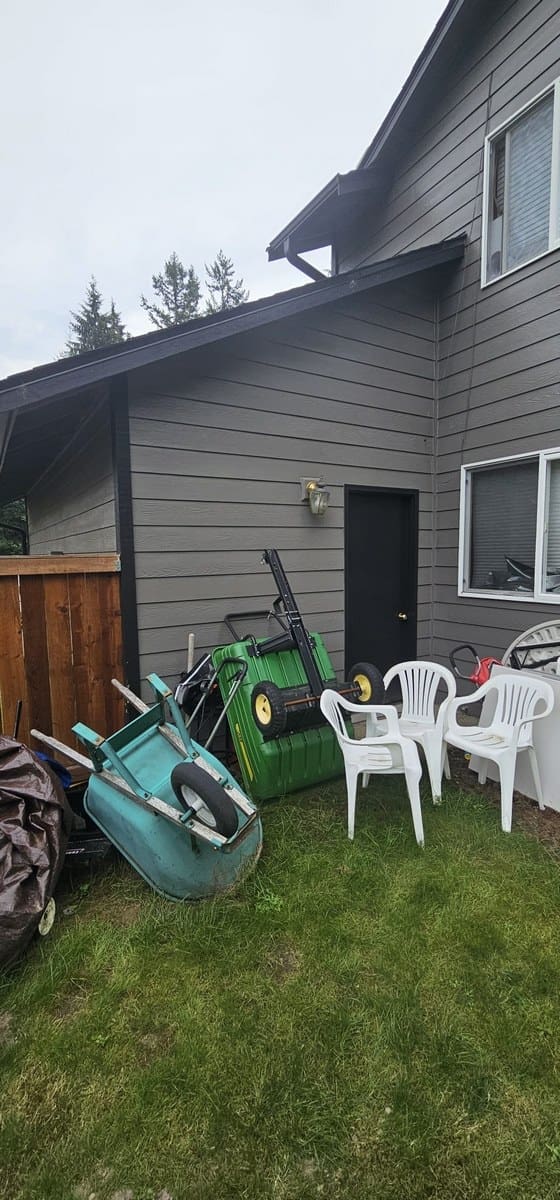
The outdoor unit went onto a new concrete pad on the side of the house, set against the gray siding with a clean refrigerant line run back to the air handler.
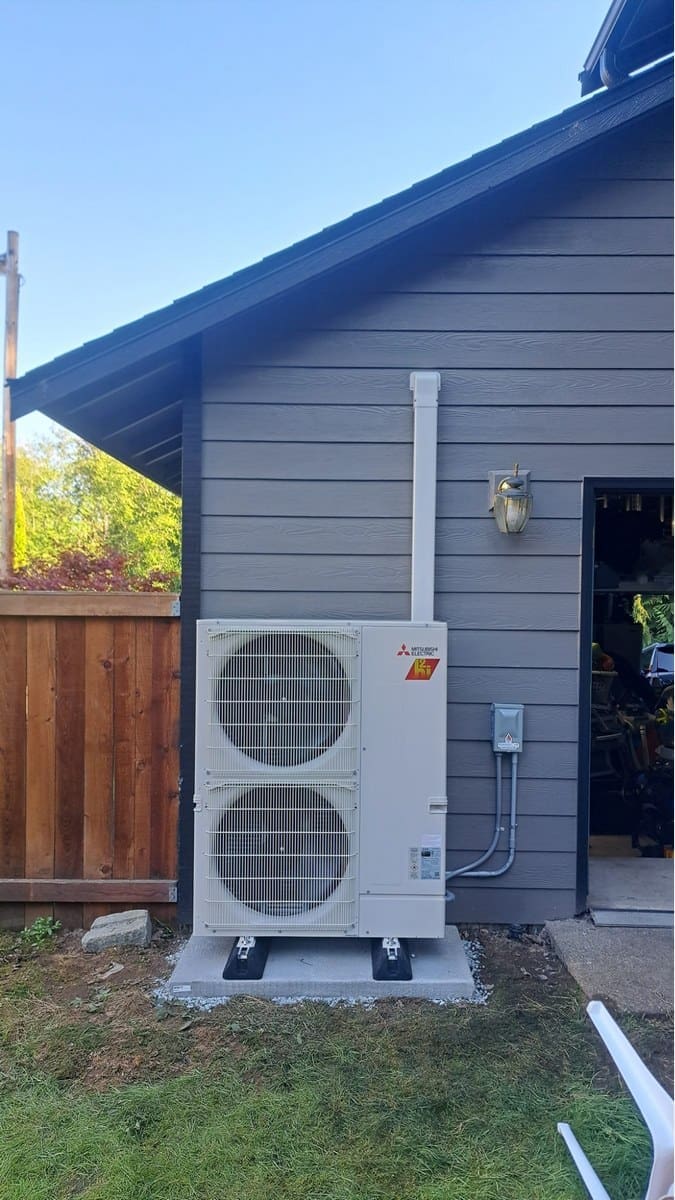
The completed Mitsubishi Hyper Heat Ultra Quiet outdoor unit, installed and running, Lake Stevens, WA 98258.
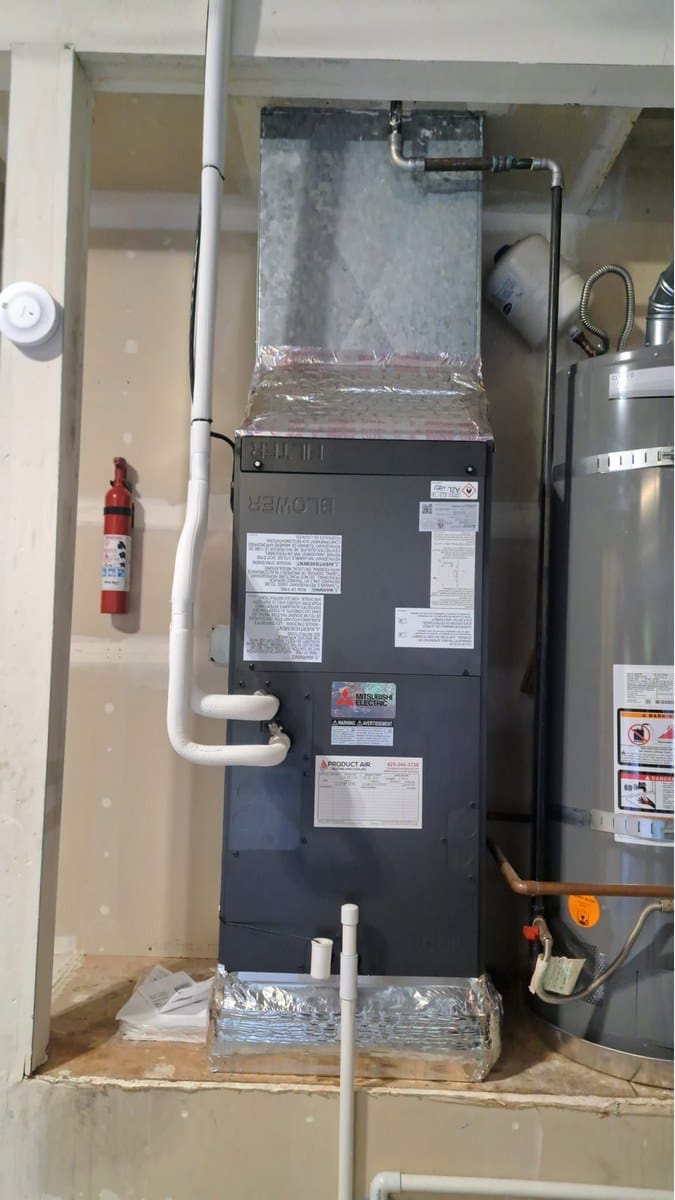
Inside, the SVZAP36NL air handler replaced the old furnace in the same utility space, tied into the home’s existing ductwork and positioned next to the water heater.
| Component | Detail |
| Outdoor Heat Pump | Mitsubishi Hyper Heat Ultra Quiet, 3-ton/36,000 BTU, side-discharge, modulating/variable-speed |
| Outdoor Unit Model Number | SUZAK36NLHZ |
| Indoor Air Handler | Mitsubishi communicating, modulating/variable-speed, electric |
| Air Handler Model Number | SVZAP36NL |
| System Type | Full electric heat pump, no gas backup |
| Manufacturer Warranty | 12 years (Mitsubishi Diamond Elite Contractor installation) |
| Product Air Labor Warranty | 5 years |
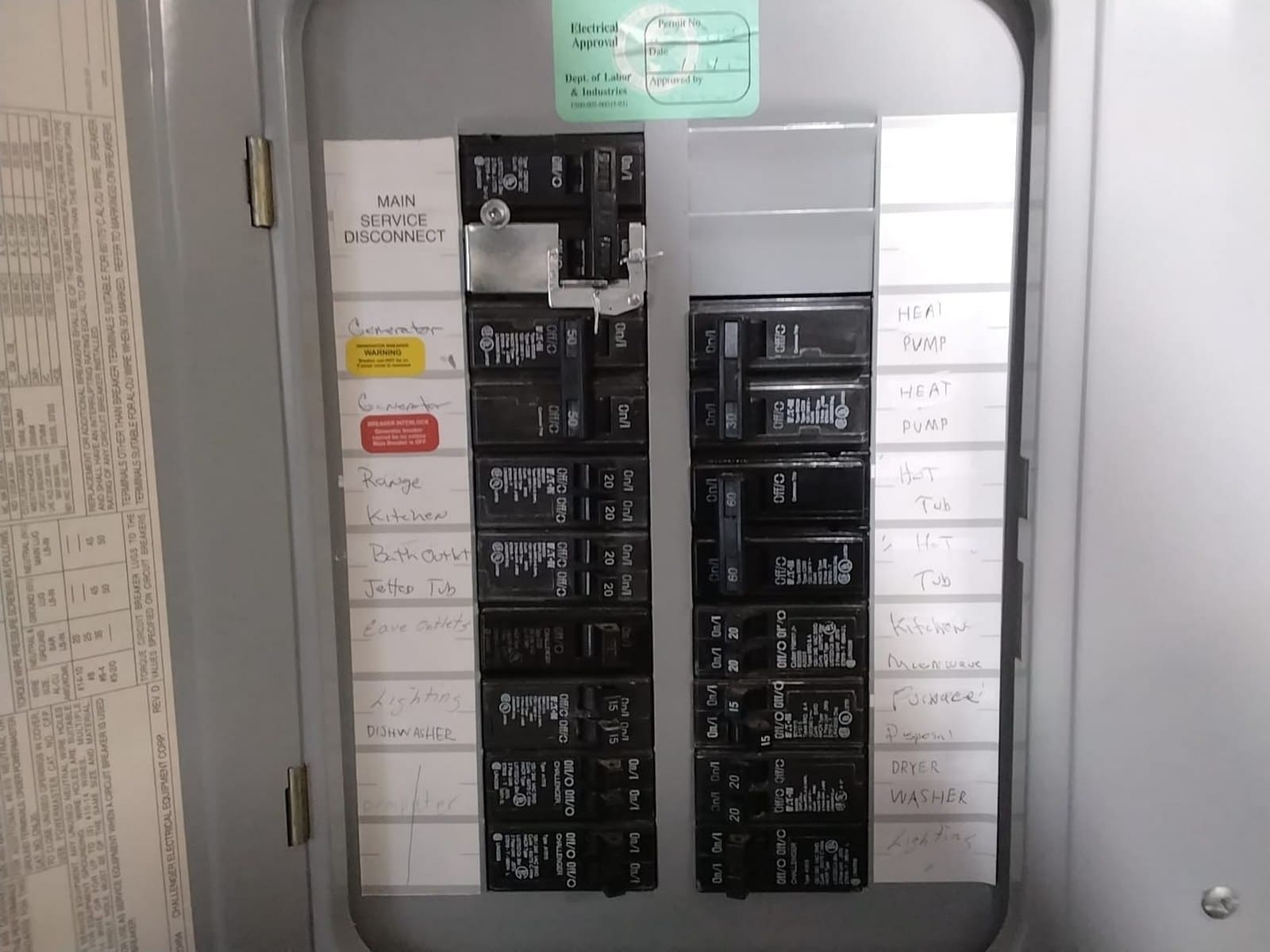
The electrical side of the job was smaller in scope but no less necessary. The home’s panel was in good working order, hand-labeled and organized by a previous owner or electrician, but it had no circuits built for a heat pump system.
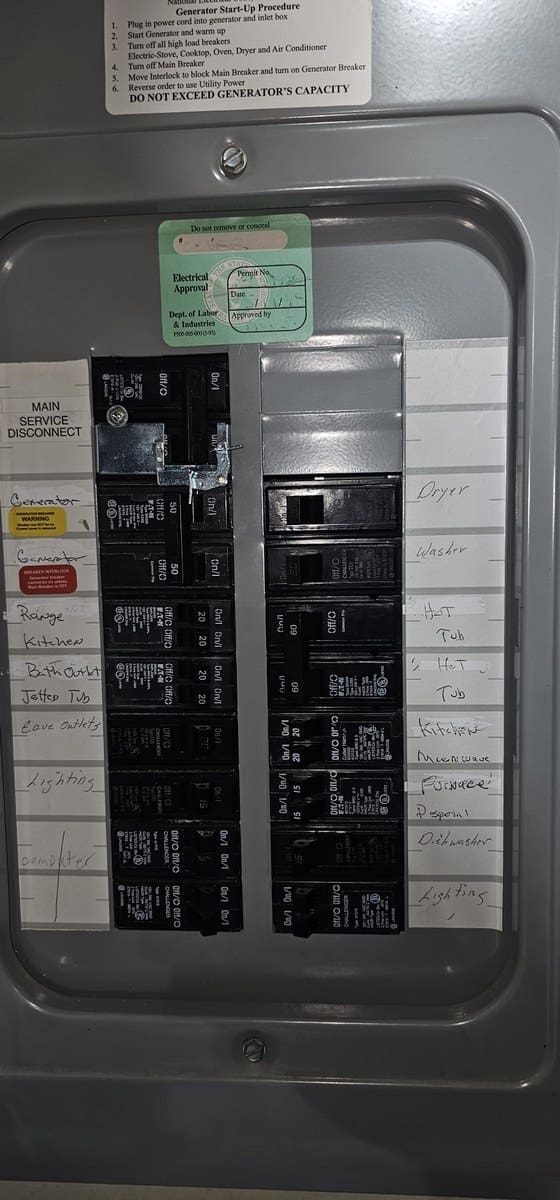
Two electricians spent four hours on site adding two new double-pole breakers, one feeding the outdoor condenser and one feeding the air handler’s electric components, each clearly labeled for whoever opens that panel next.
How Long Did the Installation Take? A Single Day for HVAC, an Afternoon for Electrical, a Morning for Sign-Off
Work began on April 1, 2026, and the schedule held to the kind of clean, single-day sequence Product Air builds toward whenever the scope allows it. Two HVAC technicians handled the removal of the 28-year-old Nordyne furnace, the placement of the new outdoor unit on its pad, the line-set run, and the air handler installation inside, all completed within the day. Two electricians worked in parallel for roughly four hours, running the new circuits from the main panel to the equipment and labeling the breakers for future reference.
Permitting ran through Product Air’s office the same way it does on every job: our team pulled the mechanical, refrigeration, and electrical permits required for a heat pump conversion in Snohomish County, a process that typically takes four to 24 hours once the application is filed. Seattle-area permit costs for a project of this scope generally run between $149 and $500 depending on declared project value, and the homeowner never has to manage any part of that process directly. Inspection sign-off followed the next morning, closing out a job that ran from first visit to final approval in under two weeks.
How Much Did This Heat Pump Installation Cost? And Where Did the Rebate Come From?
Base price of the Platinum Plus system, before rebate and before tax, came to $20,263.18. A Mitsubishi spring manufacturer promotion took $1,050.00 off that number, bringing the subtotal to $19,213.18. With Washington state and Snohomish County sales tax applied, the final contracted price came to $21,000.01, matching the figure marked Sold on the estimate.
| Program | Amount |
| Mitsubishi Spring Promotion Rebate | $1,050.00 |
| Total Rebates | $1,050.00 |
Base price (before rebate, before tax): $20,263.18
Final cost after rebate, before tax: $19,213.18
Total contracted price (with tax): $21,000.01
No Snohomish PUD or other utility rebate was applied to this job. The federal 25C tax credit, which would have applied to a system like this in prior years, expired on January 1, 2026, and was not available for this installation. The only incentive on the table was the manufacturer’s own seasonal promotion, which Product Air applied directly to the quote before Terbinos ever signed anything.
The family financed the project through GreenSky at 0% APR for 12 months, no interest if paid within the term, spreading a $21,000 investment across a year without adding a dollar to the total as long as the balance clears on schedule.
What the Next Fifteen to Twenty Years Look Like
A Mitsubishi system installed by a Diamond Elite Contractor and maintained on a regular schedule carries an expected service life of 15 to 20 years in Western Washington’s climate, which puts the Terbinos family on a timeline that comfortably outlasts the 28 years the old Nordyne furnace managed before it needed Luis’s visit in the first place. The difference in day-to-day operation is not subtle: a single-stage furnace that used to run in hard, full-output bursts has been replaced by a system that reads the home continuously and adjusts in small increments, holding a setpoint instead of chasing one.
Homeowners who move from an aging gas furnace to a heat pump in this region consistently report utility bills dropping somewhere between 20 and 50 percent, and that range comes from real households, not a manufacturer’s marketing copy. For a family that never had central air conditioning in 28 years of owning the house, the addition of full electric cooling changes what a Western Washington summer feels like on the second floor, a change the old single-stage furnace was never built to provide at any price. The 12-year manufacturer warranty, extended specifically through Product Air’s Diamond Elite certification, covers the equipment; the 5-year labor warranty covers the installation itself, with no fine print attached to either.
Terbinos has been happy with the system since the day it went in, and is already looking forward to the one-year maintenance check-up that comes with it. What stuck with them most, by their own account, was how streamlined the entire process turned out to be: a call on March 20, a visit three days later, four written options instead of a single take-it-or-leave-it number, and a system running in the house by April 1.
Key Takeaways
- A single-stage gas furnace running for 28 years typically shows accumulated wear in the heat exchanger and blower motor rather than a single dramatic failure, which is why “we had issues with it last winter” is often the clearest signal that a furnace is near the end of its service life.
- A four-tier estimate that ranges from a standard Mitsubishi ducted system to a Hyper Heat Ultra Quiet variable-speed system can span less than $3,800 in Western Washington, which is often a smaller gap than homeowners expect once they see the full lineup side by side.
- A fully modulating, communicating heat pump and air handler, like the Mitsubishi SUZAK36NLHZ paired with the SVZAP36NL, adjusts compressor output continuously rather than cycling between fixed stages, which is the difference homeowners actually feel day to day, not the SEER2 number on the spec sheet.
- Product Air’s status as a Mitsubishi Diamond Elite Contractor extends the manufacturer warranty on qualifying equipment to 12 years, two years beyond the standard 10-year warranty most installers can offer.
- The federal Section 25C tax credit expired on January 1, 2026, which means manufacturer seasonal promotions and utility programs now carry more weight in the total cost of a 2026 heat pump installation than they did the year before.
- A standard full-system heat pump replacement with new electrical circuits can be completed in a single day by two HVAC technicians and two electricians working in parallel, with permit sign-off following the next morning.
Why This Job Looked the Way It Did
Product Air Heating, Cooling and Electric serves homeowners across Marysville, Lake Stevens, Issaquah, Seattle, and the rest of Western Washington, and every estimate we write follows the same principle regardless of which tier a family ultimately chooses: lay out the real options, explain what each one actually buys, and let the homeowner decide without pressure. Terbinos didn’t need to be talked into the top of the lineup. They needed to understand what it would buy them after a winter that had already made the decision for them in every way but the paperwork.
— Serge Nikolin, Co-Founder, Product Air Heating, Cooling and Electric
Marysville · Issaquah · Seattle · Western Washington
PLAN YOUR NEXT STEP
Need help with your home comfort?
Explore Product Air’s heat pumps services or contact the team.
Share this guide