


You had a heat pump installed over the summer, learned your way around the thermostat, and settled into a comfortable routine. Then the fall winds arrived, along with a question you may not have asked during installation: if the power goes out overnight, or stays out for several days, how will we keep the house warm?
For most families, the goal is straightforward. You want warm bedrooms, a working refrigerator, charged phones, and the option to stay home while the utility restores service.
For a family preparing for a long winter outage, my first recommendation is a generator. Properly sized and connected, it can supply the heat pump and the other equipment you need, with fuel providing a way to keep producing electricity as the outage continues.
Home batteries can also support heating, and an existing solar installation may be useful as part of that system. The important differences become clear when you look at how much power your home needs and how long you want it to run.
Why I recommend starting with a generator
Your heat pump needs electricity whenever the house needs heat, including overnight and through days of rainy weather. A generator produces that electricity from fuel, so you have a way to keep it running beyond the energy you could store before an outage.
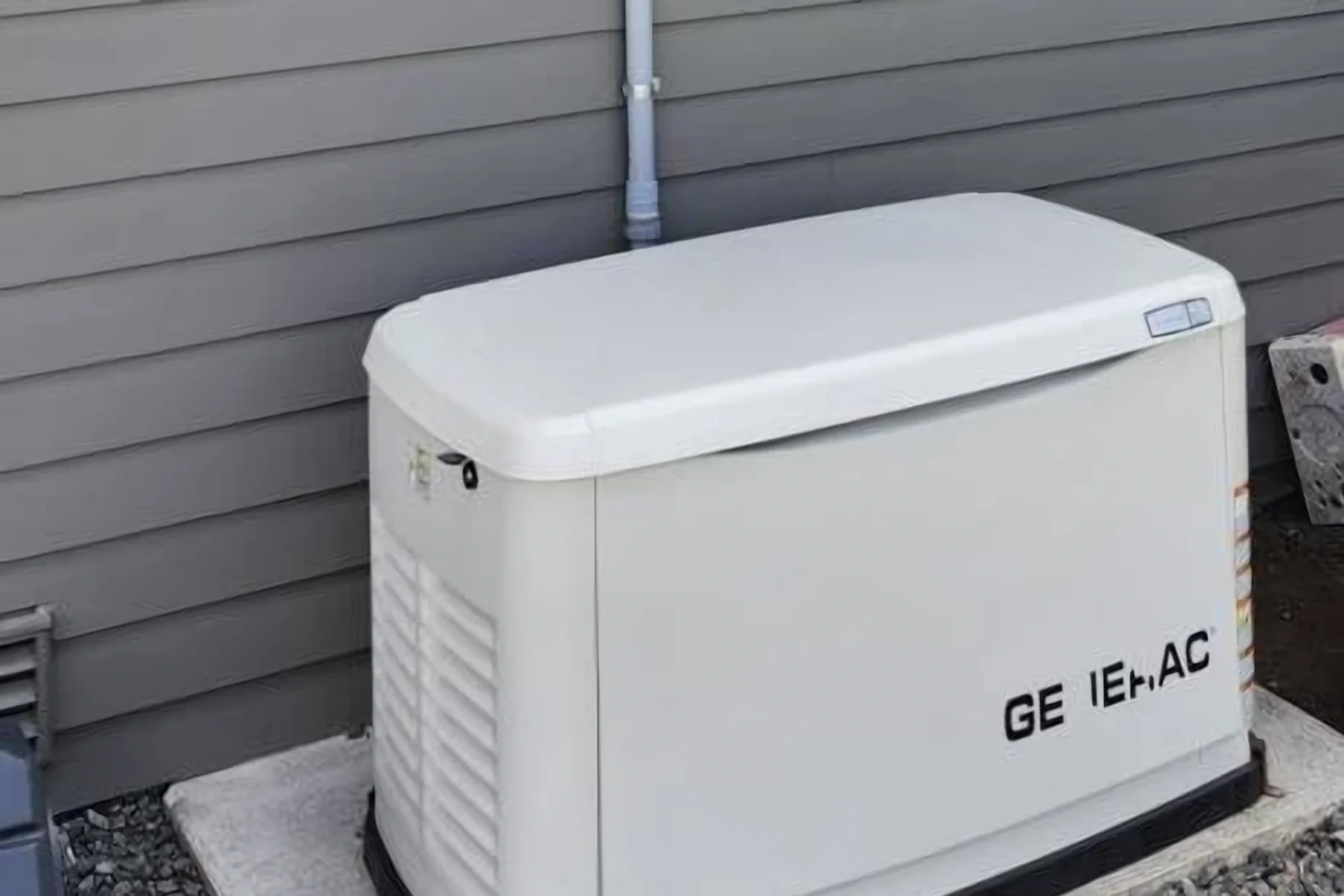
A permanently installed standby generator can run on natural gas or propane. Natural gas avoids the need to store the entire fuel supply on your property, although the generator still depends on gas service. With propane, runtime depends on the fuel in the tank and the generator’s consumption.
Maintenance remains part of ownership. A standby generator needs regular checks and service, including any maintenance required during extended operation. Generac’s homeowner guide explains fuel options, installation, and ongoing care.
I would start the conversation with an automatic standby system. When utility power fails, it starts the engine and transfers the connected circuits to backup power. There is a delay while the generator starts and the transfer takes place, but you do not have to go outside in the middle of the night to set it up.
A suitable portable generator can also run heating equipment through a connection prepared by an electrician. The homeowner usually has to position it outdoors, start it, and follow the required switching procedure.
In Western Washington, that means planning a safe operating location and following the manufacturer’s instructions for protection from rain. Never run a portable generator in a garage, even with the door open. The Washington State Department of Health recommends keeping portable generators at least 20 feet from buildings and away from windows, doors, and vents. A permanent standby unit has its own placement requirements under the manufacturer’s instructions and local rules.
For a home standby generator, I would compare Generac and KOHLER. We would choose models around your heating equipment and the appliances your family wants available, then check fuel supply, installation conditions, and service support. That gives us specific options to discuss, with clear differences in cost and capability.
For a closer look at automatic transfer switches, generator sizing, fuel supply, and installation requirements, see our guide to whole-house generators for Western Washington homes.
What your heat pump needs to keep heating
Before sizing backup power, I need the model numbers for the outdoor and indoor equipment. Those tell us what the system requires, and we then check how it is actually wired.
Some heat pumps supply power to their indoor units through the outdoor unit. Others have an air handler on a separate circuit. All the components needed for heating, including the controls, have to receive power.
We also check for supplemental electric heat. If it is installed, it can add a substantial load when it comes on. Sizing a generator or battery system around the compressor alone could leave you short of power in another operating mode. Mitsubishi Electric describes generator and battery backup options, with the source selected for the equipment it will serve.
Breaker rating describes circuit protection; sizing backup power also requires a load calculation.
Knowing that you have a three-ton heat pump is not enough, either. Tonnage describes the equipment’s heating or cooling capacity. Backup power sizing depends on electrical demand, startup requirements, and the rest of the system.
When each floor has its own heat pump
Suppose your two-story home has a separate system for each floor, and you want to keep both the downstairs living space and upstairs bedrooms heated. Both heat pumps belong in the calculation, and the backup wiring needs to serve both systems.
If your family is comfortable using mainly one floor during an outage, we can discuss a different operating plan. Turning off the other system will not necessarily cut energy use in half, though. Heat moves between floors, and the system that stays on may have more work to do.
I would agree on settings for both floors ahead of time, taking the layout, plumbing locations, and your family’s needs into account. Do not switch off the breaker for supplemental heat just to save battery charge. First, we need to establish what that heat does for your particular system.
When home batteries make sense
Home batteries are worth considering if you want automatic backup without an engine or exhaust. You do not need solar panels to use them. A battery can charge from the utility grid and hold that energy for an outage, as Tesla explains for Powerwall installations without solar.
That can be a convenient option for a family trying to get through an evening and overnight outage. The amount of time it will cover needs to be calculated before you buy.
Two specifications matter here: power in kW and stored energy in kWh. Power tells you how much equipment the system can support at once. Stored energy helps determine how long it can keep doing that.
Power determines which loads can run at once, while stored energy determines runtime.
Here is a hypothetical example. If the batteries can deliver 30 kWh to your home after accounting for losses and unavailable reserve, an average total load of 2 kW would use that energy in about 15 hours. Being able to start a heat pump does not tell you whether the batteries can keep it heating through the night.
What three days of battery backup would require
Three days is possible with enough storage, but I would not promise it without calculating the demand.
If heating and the appliances you plan to use consume 30 kWh per day, they need 90 kWh over three days. At 50 kWh per day, the same period requires 150 kWh. These are examples, not averages for Western Washington homes. Equipment sizing also has to account for losses and the reserve you need to keep available.
When a product advertises several days of home backup, check which appliances are included. Lights, a refrigerator, and internet equipment can run much longer than those same loads plus winter heating. Tesla’s battery sizing guidance makes that distinction as well.
If this is your first winter with a heat pump, you may not have useful cold-weather consumption records yet. We would start with the equipment and the house’s heating needs, then refine the estimate as actual measurements become available. Last winter’s bills from a house heated by your old furnace do not automatically describe what the new system will use.
Battery systems to compare
Tesla Powerwall 3 is one permanent installation option. Its U.S. specifications list 13.5 kWh of nominal energy and output configurations up to 11.5 kW. The number of units and their configuration depend on the design.
EcoFlow DELTA Pro Ultra and Anker SOLIX F3800 Plus offer expandable systems with equipment for connecting home circuits. Compare the complete installation, including any additional batteries and compatible transfer or control equipment.
Before buying, ask the installer to put the backed-up appliances, available energy, and estimated heating runtime in the proposal, along with the winter conditions used for that estimate.
If you already have solar panels
An existing solar installation may be able to work with battery storage during an outage, but panels on the roof do not automatically keep a home powered when the grid goes down. The equipment must support operation without the grid.
With a compatible design, solar production can supply household loads and recharge the batteries. Tesla’s system integration guidance explains how compatibility depends on the equipment already installed.
For a Western Washington winter, I would look at production on comparable winter days and also calculate what happens during a stretch with very little solar generation. Summer production does not tell us how much heating the system can support through a cloudy winter storm.
Existing panels can contribute useful energy. We still need to establish how long the house can stay warm when their output is low.
What a whole home connection actually lets you use
To run a heat pump, backup power must connect to the home’s electrical system through appropriate transfer equipment. That equipment isolates the backed-up circuits from the utility grid and provides the required switching between sources.
Never try to power household wiring by plugging a generator into a wall outlet. Backfeeding can put utility crews and other people at risk, as Snohomish County PUD explains.
The design can serve the whole home or selected circuits. A heat pump can be one of those selected circuits, along with the refrigerator, lighting, and essential outlets.
A circuit being connected does not mean the system can supply every connected load simultaneously.
A generator may be connected to the whole house and comfortably support the heating, yet still be overloaded if the electric oven, dryer, and EV charger all come on together. Load management can temporarily limit lower-priority equipment so heating stays available. Generac discusses this approach in its sizing guide.
Agree on those priorities before installation so everyone in the household knows what they can use during an outage.
Combining batteries with a generator
You can consider batteries for shorter outages and a generator for an extended loss of utility power. Before choosing that combination, establish whether the generator will only supply the home or will also charge the batteries.
In the arrangement Tesla describes, Powerwall does not charge from the generator. Anker F3800 Plus supports generator charging with the required equipment and operating limitations.
I would discuss this combination with a family that wants battery convenience for brief outages and generator support when an outage lasts longer. If a suitable generator already covers everything you need, we should be able to explain what adding batteries would do for you before asking you to spend more.
What should happen before the first outage
Compare installed prices for the same appliances and a clear runtime goal. For example, you might want heating on both floors, refrigeration, lighting, and internet access while agreeing to postpone laundry and EV charging.
A generator proposal should include installation, transfer equipment, fuel connections, permits, and startup. A battery proposal should cover the complete system and its connection to your home. Discuss maintenance and operating limits alongside the purchase price.
Have a licensed electrical contractor who works with the selected equipment handle the electrical connection. An HVAC professional should verify the heating requirements and confirm that the heat pump operates correctly on backup power.
This electrical work requires permitting and inspection in Washington. When a contractor performs the work, that contractor must obtain the permit for it. The permitting authority depends on your address and may be Washington L&I or the appropriate local jurisdiction.
After installation, the system needs to be tested through the transfer to backup, operation of the heating and other required circuits, and return to utility power. I want to know that the heat pump is actually delivering heat. A lit thermostat screen does not establish that.
A short test does not prove three days of runtime, either. It demonstrates operation under the conditions at the time. Energy use during a test at 50°F outside cannot simply be carried over to a 25°F night.
Before the job is finished, you should understand what happens automatically, what you need to do, where to check system status, and who to call if something goes wrong.
Where I would start with your home
Gather the model numbers for your heating equipment and describe what your family needs. You might say, “We want to stay home for two days, keep both floors heated, and use the refrigerator, lights, and internet.”
That gives us a useful starting point. For extended winter outages, I recommend starting with a generator, then evaluating whether batteries or a combined system would better suit your needs.
At Product Air Heating, Cooling, and Electric, we work on heating systems and install standby generators, so we can discuss those parts of the project together. If you have a particular battery system in mind, mention the make and model when you contact us so we can confirm whether we can perform that work.
When I say we are your tech brothers from another mother, I mean taking the time to understand what your family needs and explaining the options honestly. You should know what will run, how long you can expect it to run, and what additional capability you are paying for. We can work through those decisions while the house is warm and you have time to choose.
PLAN YOUR NEXT STEP
Need help with your home comfort?
Explore Product Air’s electrical services or contact the team.
Share this guide