


Location: Sammamish, WA
GMB Profile: Issaquah
Call Date: March 16, 2026
First Visit: March 18, 2026
Project Completion: March 19, 2026
Customer: Alexandra
Technician: Luis
Total Project Cost: $838
The Call: Mold and Moisture in the Crawl Space
On March 16th, Alexandra called with a concern that no homeowner wants to ignore: moisture and signs of mold in the crawl space.
She had already contacted a restoration company to evaluate the situation. Their assessment identified excess condensation accumulating under the home, and they traced the source back to the HVAC system.
They recommended contacting a heat pump professional.
That’s when she called Product Air.
First Visit: March 18th (Confirm the Source)
When technician Luis arrived on site, the first step was to listen.
Alexandra explained what she had observed: visible condensation in the crawl space, moisture buildup, and early mold formation. She was understandably worried about long-term damage to the structure and indoor air quality.
The goal is always the same: be the tech brother from another mother.
That means:
- Understand the concern fully
- Inspect carefully
- Educate clearly
- Avoid overcomplicating the solution
Luis began with a full inspection of the heat pump system, focusing specifically on the condensate management components.
Understanding Heat Pump Condensation
Heat pumps remove moisture from the air as part of normal operation, especially during cooling cycles and in moderate, damp climates like Sammamish.
When warm air passes over a cold evaporator coil, moisture condenses into water. That water must be directed safely away from the system through a condensate drain line.
If condensate is not routed properly, several problems can occur:
- Water accumulation in crawl spaces
- Elevated humidity
- Mold growth
- Wood rots over time
- Structural moisture damage
Condensation itself is not the problem.
Improper drainage is.
The Diagnosis: Improper Condensate Routing
After tracing the drain system, Luis confirmed the issue.
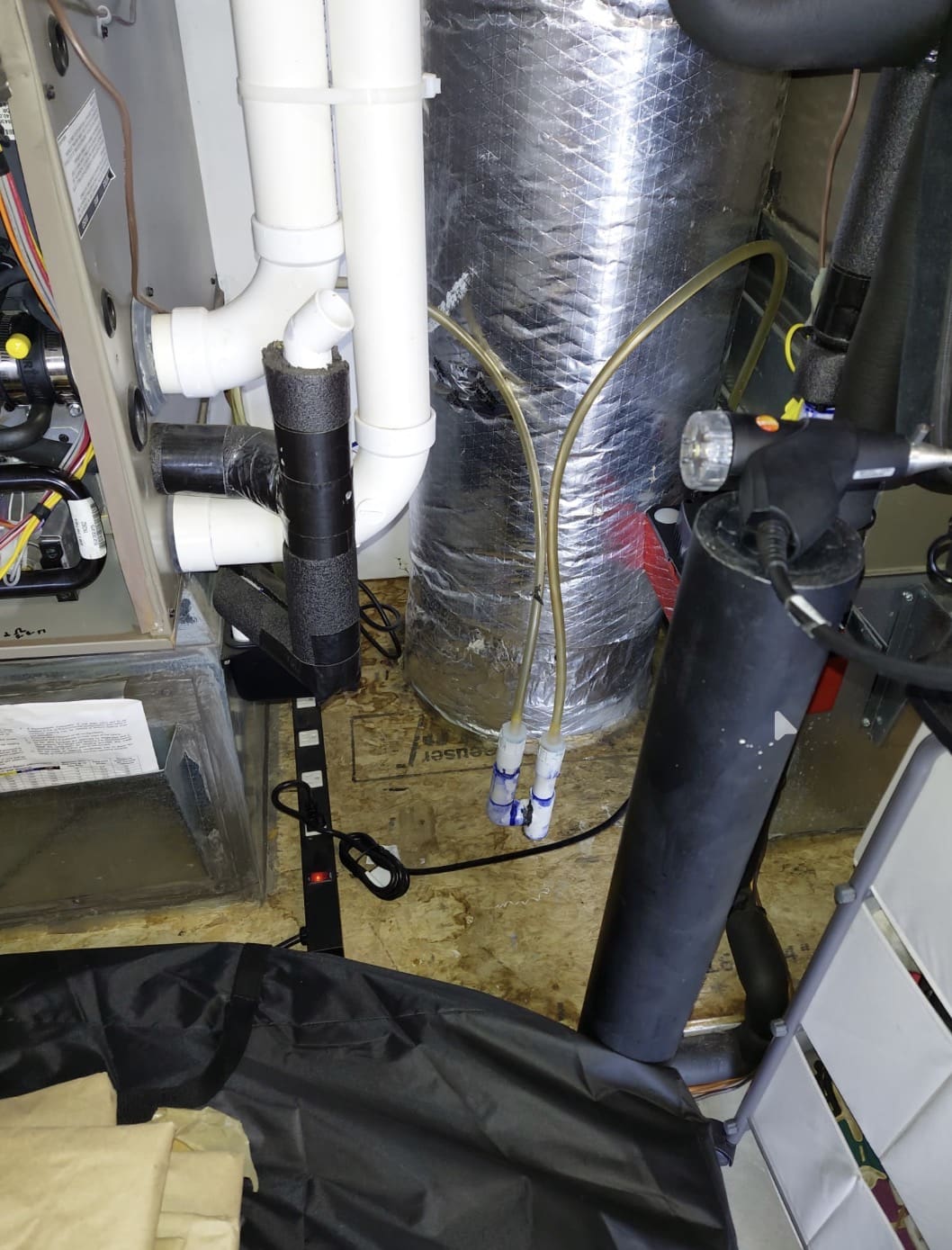
The condensate line was discharging in a way that allowed moisture to accumulate in the crawl space rather than being directed safely to the exterior.
There was no catastrophic system failure — the heat pump itself was functioning correctly.
But drainage design still matters.
In damp Pacific Northwest climates, even small drainage oversights can create long-term moisture issues.
Luis walked Alexandra through what was happening step by step. He showed her where the condensate line terminated and explained how moisture was collecting beneath the home.
No alarmism. Just facts.
The Solution: Reroute to the Exterior
The recommended solution was straightforward:
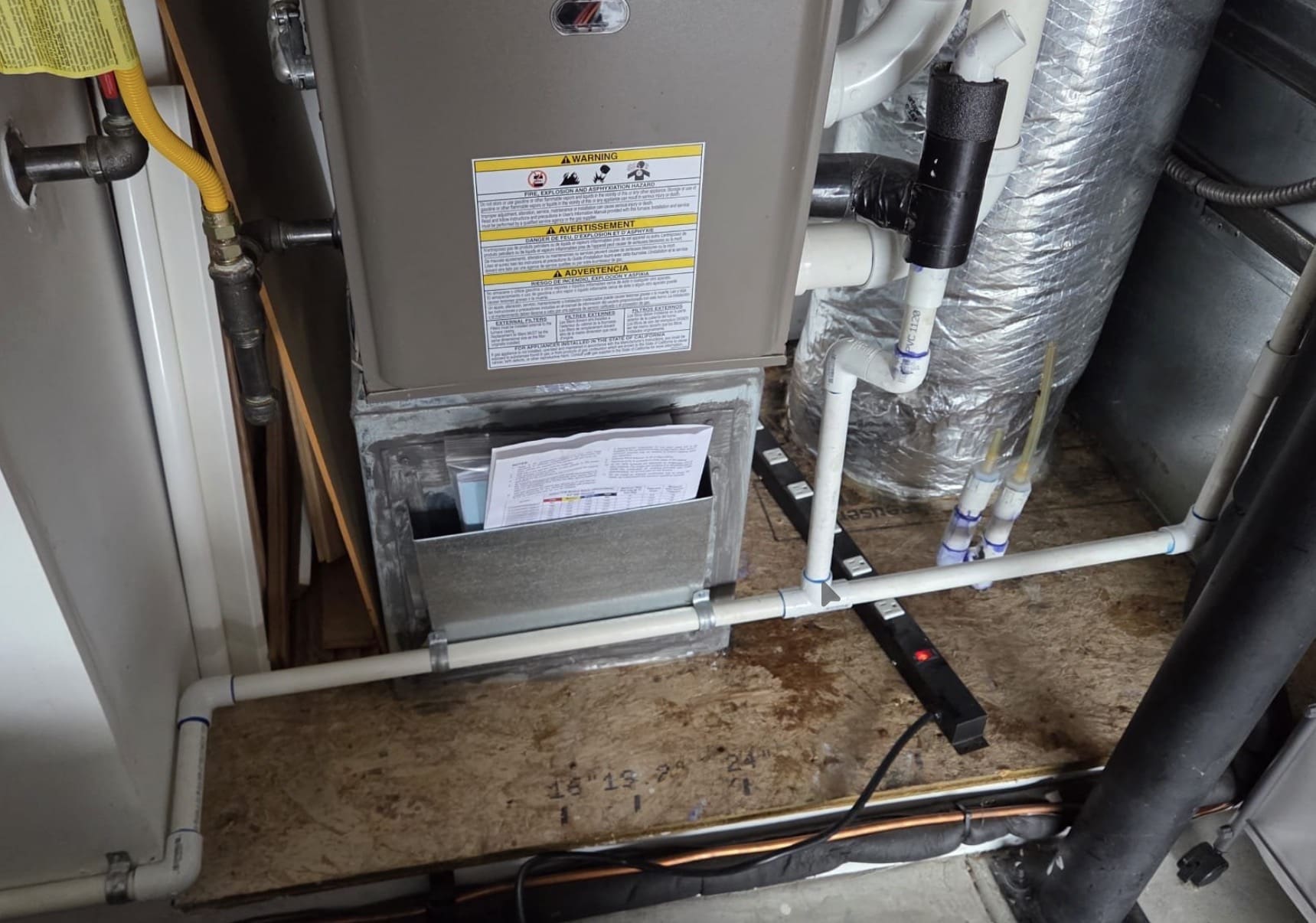
Run a new condensate drain line to the exterior of the home, ensuring proper slope and termination according to best practices.
This would:
- Prevent crawl space discharge
- Eliminate ongoing moisture buildup
- Reduce mold risk
- Protect structural components
Because the issue was caught relatively early, the correction was simple and contained.
Luis explained the repair clearly, including:
- How the new routing would work
- Why proper slope matters
- Where the discharge point would be placed
- How would this protect the crawl space long-term
Alexandra appreciated the clarity.
The Decision: Move Forward Immediately
After reviewing the option, Alexandra chose to proceed.
The repair was scheduled quickly, with completion on March 19th: just one day after the initial diagnostic visit.
Total project cost: $838.
In the context of potential crawl space mold remediation and structural moisture repair, that is a preventative investment.
The Repair: March 19th
The work included:
- Installation of a new condensate drain line
- Proper slope adjustment for gravity drainage
- Secure exterior termination
- Final inspection and operational verification
Luis ensured the drainage system functioned properly before leaving the site.
No more moisture discharging under the home.
No more ongoing accumulation.
Why This Case Matters
Crawl space moisture problems are often treated as insulation or foundation issues.
But HVAC condensate is a common contributing factor, especially in homes where drainage was not properly designed or routed during original installation.
In moderate marine climates like Sammamish:
- Humidity is present much of the year
- Heat pumps operate frequently
- Condensate production is consistent
Proper drainage design is not optional.
It’s foundational to protecting the home.
Key Takeaways
- Heat pump condensation is normal — improper drainage is not.
- Crawl space moisture can originate from HVAC systems.
- Early detection helps prevent expensive remediation.
- Simple corrections can protect long-term structural health.
- Education helps homeowners understand what’s happening behind the scenes.
The Real Outcome
By March 19th, Alexandra’s crawl space was no longer receiving ongoing moisture from the heat pump system.
The mold concern could now be addressed without continued water exposure.
Most importantly, she understood exactly what had happened and why the solution worked.
That’s the difference between patching symptoms and solving the source.
PLAN YOUR NEXT STEP
Need help with your home comfort?
Explore Product Air’s heat pumps services or contact the team.
Share this guide