

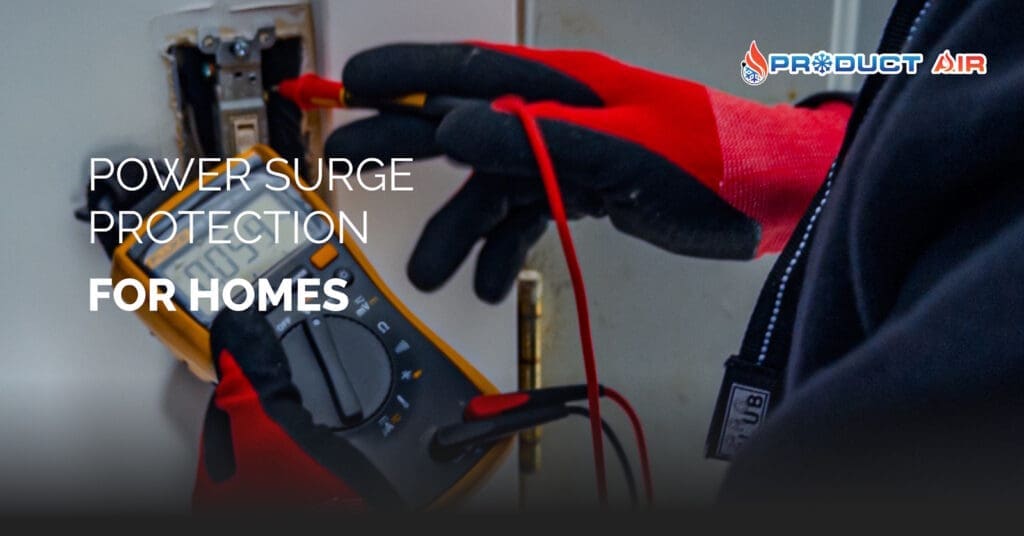
Most homeowners think of power surges as rare events: something caused by a major storm or a utility issue miles away. In reality, damaging power surges happen far more often, especially in modern homes across Western Washington.
“Surges happen quite a bit,” says Sergey Nikolin, co-founder of Product Air Heating, Cooling, and Electric. “With EV chargers, heat pumps, and all the smart appliances people have now, the electrical demand on homes is much higher than it used to be.”
That demand makes today’s homes more vulnerable and the damage isn’t always obvious right away.
What a Power Surge Really Is
A power surge is a sudden spike in voltage that travels through your home’s electrical system. Some surges are dramatic: sparks, tripped breakers, or equipment shutting off instantly. Those are rare.
More often, surges are smaller. They pass through quietly, stressing sensitive electronics without causing immediate failure.
“These smaller surges don’t always announce themselves,” Sergey explains. “But they chip away at control boards over time.”
Where Most Surges Come From
Storms and utility issues do cause surges, but they’re not the only source. Many surges are triggered closer to home.
Large appliances cycling on and off, EV chargers pulling heavy loads, or HVAC systems starting up can all contribute. When demand changes suddenly, voltage can spike.
Sergey compares it to flooding. “Something has to trigger it. It could be nature, or it could be man-made. But once it starts moving down the line, everything connected is exposed.”
Why You Often Don’t Notice the Damage Right Away
One of the biggest misconceptions is that if everything still works, nothing was harmed.
That’s rarely true.
Modern appliances rely on delicate electronic control boards. TVs, refrigerators, dishwashers, and heat pumps are often the first to suffer damage, even if they don’t fail immediately.
“The appliances are the end of the line,” Sergey says. “The wiring can handle a surge short-term, but the electronics usually take the hit.”
Months later, that dishwasher stops responding. Or the TV won’t power on. The original cause is long forgotten.
What Whole-Home Surge Protection Does
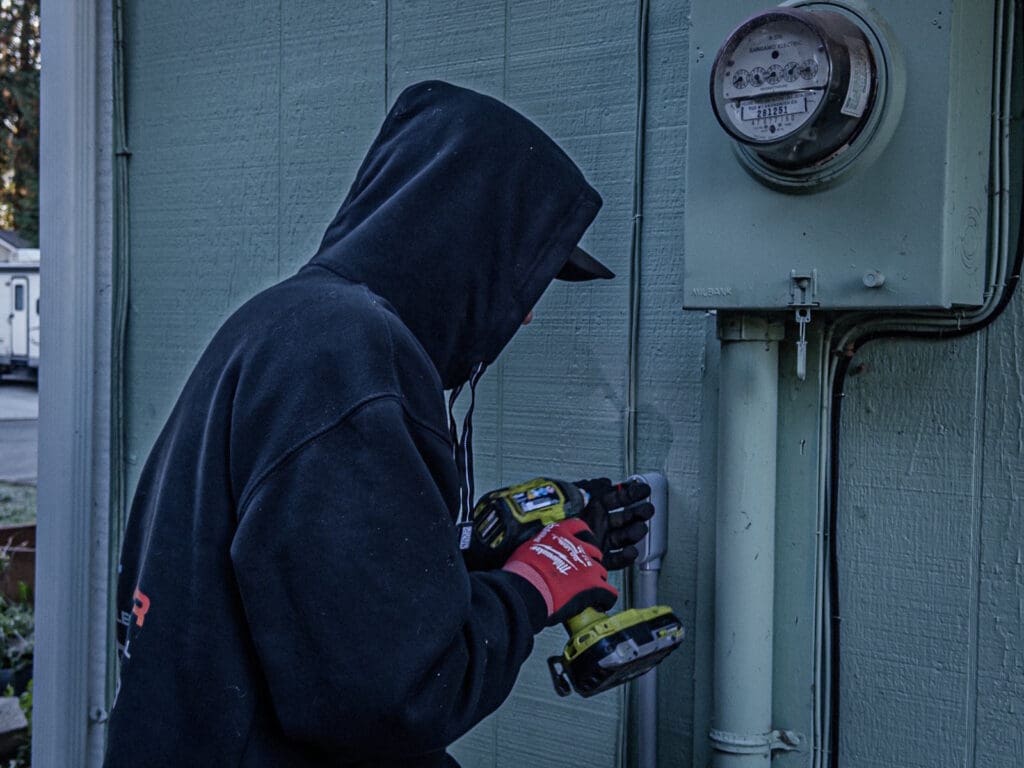
Professional electrical services in Washington often recommend whole-home surge protection as part of a panel upgrade.
Instead of protecting a single device, it shields the entire house.
Its job is simple: absorb excess voltage and redirect it safely before it reaches appliances.
This type of protection helps safeguard:
- TVs and home electronics
- Refrigerators and kitchen appliances
- Heat pumps and HVAC systems
- EV chargers and smart home equipment
“It absorbs the shock,” Sergey explains. “That’s the biggest difference.”
Why Plug-In Surge Protectors Fall Short
Plug-in surge protectors aren’t useless but they’re limited.
They protect one device at a time and only after the surge has already entered the home. They also have much lower capacity than panel-installed systems.
“Plug-ins are not as strong,” Sergey says. “And they can’t protect what’s already upstream.”
Think of them as a last line of defense, not the main one.
The Cost Comparison Homeowners Overlook
Whole-home surge protection is a relatively small, one-time investment. Replacing damaged electronics is not.
Sergey has seen expensive TVs fail overnight. Appliances with fried control boards. HVAC systems that suddenly need costly repairs.
“When a surge happens, whatever is turned on at that moment has the highest chance of getting damaged,” he says.
That’s often enough to make the math obvious.
When Surge Protection Makes the Most Sense
Surge protection is especially important for homes with:
- EV chargers
- Heat pumps or electric HVAC systems
- Multiple smart appliances
- Recent electrical upgrades on older panels
As homes rely more on electricity, protection becomes part of basic planning, not an upgrade for edge cases.
A Practical Way to Protect a Modern Home
Power surges aren’t rare anymore. They’re a side effect of how modern homes work.
Protecting against them doesn’t require fear or urgency, just a realistic look at how much electronics cost and how easily they can be damaged.
“People have a lot of money tied up in their appliances now,” Sergey says. “Surge protection is just a smart way to protect that investment.”
For homeowners in Western Washington, it’s one of the simplest steps toward long-term electrical reliability.