

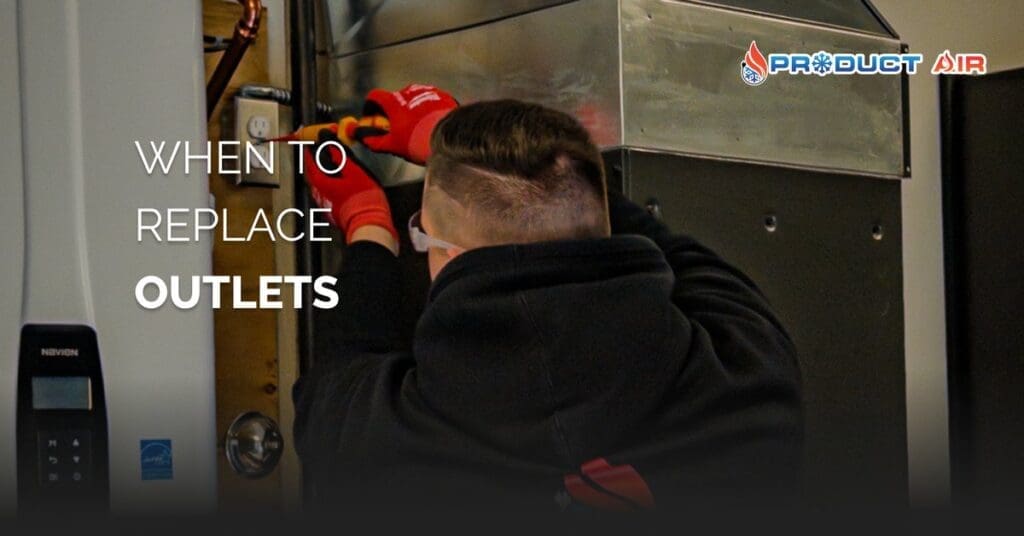
Most homeowners don’t think much about outlets and switches. If the lights turn on and the plug works, it feels like there’s nothing to worry about.
According to Sergey Nikolin, co-founder of Product Air Heating, Cooling, and Electric, LLC, that assumption causes more problems than almost anything else he sees in homes.
“A lot of people treat electricity like it’s permanent,” Sergey says. “They think it gets installed once and it’s good forever. That’s just not how it works.”
Why Age Matters More Than People Realize
In many Western Washington homes, outlets and switches are original. That means some are 20, 30, even 40 years old, especially in older houses and apartments.
The issue is that electrical components don’t fail all at once. They wear down slowly, inside the wall, where nobody can see it.
Metal contacts loosen. Protective coatings dry out. Insulation gets brittle. Everything still “works,” but not the way it’s supposed to.
“That’s why we recommend electrical maintenance,” Sergey explains. “Not because something is broken but because you want to know what condition it’s actually in.”
So… How Long Are Outlets and Switches Supposed to Last?
Most outlets and switches are designed to last about 15 to 20 years.
After that point, the risk starts to increase. Not always immediately. But enough that ignoring it becomes a gamble.
“We’ve seen 25-year-old systems still running fine,” Sergey says. “And we’ve seen 10-year-old ones in terrible shape. The difference is usually wear and usage, not luck.”
Warning Signs People Often Ignore
Electrical problems usually give clues. They’re just subtle.
Some of the most common signs Sergey sees homeowners brush off include:
- faint crackling or buzzing sounds
- outlets that feel warm to the touch
- small shocks when unplugging cords
- breakers that trip “once in a while”
“If you hear noise or feel heat, that’s not normal,” Sergey says. “That’s your system telling you something is wrong.”
Why Worn-Out Outlets Can Start Fires
An outlet works best when metal contacts press firmly against the plug. Over time, those contacts loosen.
Less contact means more resistance.
More resistance means heat.
“That heat builds up slowly,” Sergey explains. “And it doesn’t have to look dramatic to be dangerous.”
As the metal degrades, it can arc. That arcing pits the surface, increases resistance even more, and eventually melts plastic or damages the wiring behind the wall.
This is how many electrical fires actually start quietly.
Modern Appliances Are Hard on Old Wiring
Older homes were never designed for today’s electrical demand.
Space heaters, air fryers, hair dryers, EV chargers, and portable AC units draw far more power than what older wiring systems were built to handle.
“The older the home, the fewer safety codes existed at the time,” Sergey says. “Modern devices can overwhelm that infrastructure.”
That’s why electricians regularly find melted outlets and damaged wires behind walls that look perfectly fine from the outside.
The Power Strip and Adapter Problem
Plug adapters and power strips are another common issue.
They’re convenient but they’re often misused.
High-load devices like heaters should never be plugged into adapters or extension-style outlets.
“It comes down to wire size,” Sergey explains. “If the wiring can’t handle that load, it heats up. That’s how things melt.”
Many appliances actually warn against this in the instructions. However, most people never read them.
Why Outlet Replacement Isn’t as Simple as It Looks
Swapping an outlet looks easy on YouTube. In reality, it’s one of the most common ways people get hurt working on their homes.
Panels are often mislabeled. Circuits get modified over time. Turning off a breaker doesn’t always mean the power is truly off.
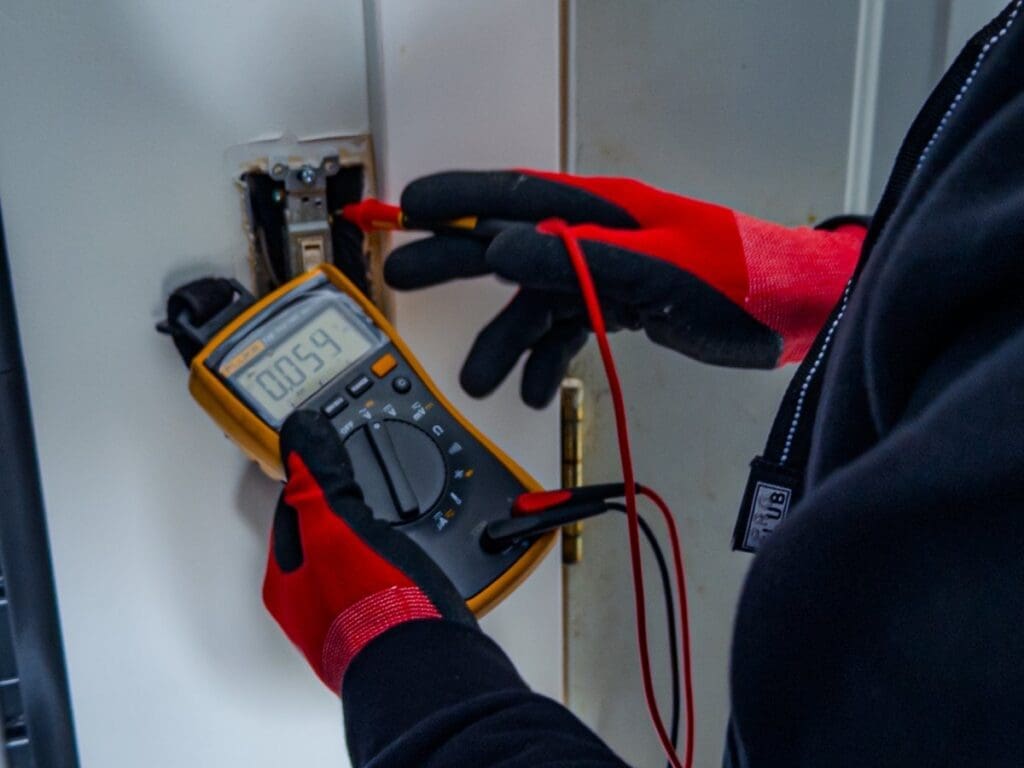
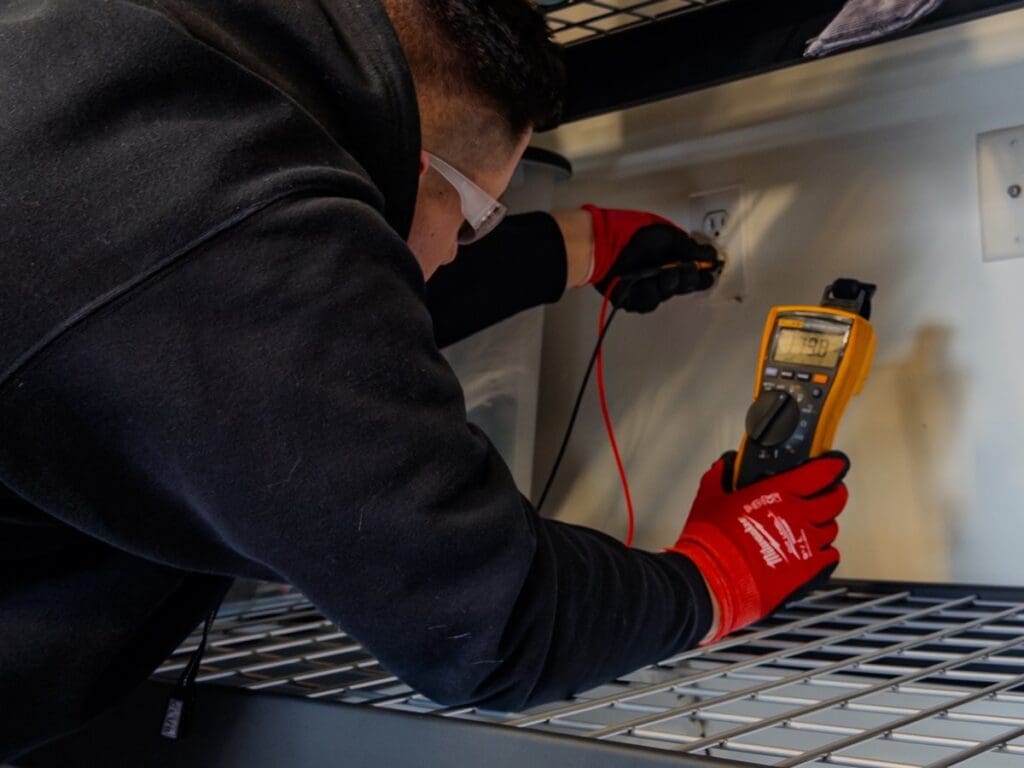
“Our electricians carry voltage probes for a reason,” Sergey says. “Without proper tools, you can get shocked and that can affect your heart.”
This risk is higher in older homes, where grounding and wiring layouts may not match modern standards.
Why Annual Electrical Checkups Make Sense
Regular electrical maintenance helps catch small problems before they become expensive or dangerous.
A basic inspection usually includes:
- checking outlets and switches
- inspecting the electrical panel
- looking for heat buildup or oxidation
- identifying outdated or overloaded circuits
“For a relatively small cost, you’re buying peace of mind,” Sergey says. “You know your home is safe.”
The Takeaway
Electrical systems don’t usually fail suddenly. They wear out quietly.
If your home is older, if you use modern appliances, or if your outlets haven’t been touched in decades, it’s worth taking a closer look.
“Just because something works doesn’t mean it’s safe,” Sergey says.
And when it comes to electricity, that difference matters.
Concerned about your outlets, switches, or wiring?
Product Air Heating, Cooling, and Electrical serves homeowners across Snohomish, King, Island, and Skagit counties as local electricians in Washington, providing professional electrical inspections and upgrades. Call (425) 344-3738 to schedule an evaluation.