

It’s one of the first questions homeowners ask:
How much will I actually save?
With electricity costs rising and winter heating bills climbing across Western Washington, more families are considering switching from baseboard or older electric systems to heat pumps. The savings can be significant but they depend on what you’re replacing and how the system is installed.
Energy-efficient systems do cost more upfront. However, I’ve personally seen systems we install cut bills by as much as 60%.
What Is a Realistic Savings Range?
For homeowners switching from electric resistance heating such as baseboard heat or older electric furnaces, savings are often dramatic.
I see this quite often. People switch from electrical heat, especially in the winter when they’re running it hard. They have bills of up to $1,000, and they get a heat pump installed and cut it down to $400.
That’s roughly a 60% reduction during peak heating months.
Homes replacing older gas furnaces or less efficient HVAC systems may see more moderate savings (often 20–40%), depending on insulation, equipment selection, and usage habits.
The biggest savings typically occur when replacing:
- Electric baseboard heating
- Older electric furnaces
- Outdated resistance heating systems
Those systems generate heat directly through resistance, which is inherently inefficient compared to modern heat pump technology.
Why Heat Pumps Are More Efficient
The difference comes down to how the system produces heat.
Electric resistance systems create heat. Heat pumps move heat.
It moves energy around and can reverse it either way.
Instead of generating heat through electrical resistance, a heat pump extracts existing heat energy from outdoor air (even in colder temperatures) and transfers it inside. In summer, it reverses the process to provide cooling.
That transfer process requires significantly less energy than creating heat from scratch.
Based on my experience, traditional baseboard heating is outdated and offers poor efficiency. While gas furnaces and older electric systems are still common throughout Washington, they are generally “on the more expensive side to run” compared to modern heat pumps.
Why Heat Pumps Perform Well in Western Washington
Climate matters.
Western Washington’s mild, damp winters are well-suited for heat pump technology. Extreme sub-zero temperatures are rare, and most winter days fall within an efficient operating range.
As I often say, “Our climate is ideal for heat pumps. Mitsubishi is bulletproof for our climate. There’s nothing better for cold snaps.”
Cold snaps still happen, but modern systems are built for them.
Because the region experiences long shoulder seasons (cool, but not freezing) heat pumps can operate at lower speeds for extended periods. That steady operation improves efficiency and reduces cycling stress.
Why Some Homeowners Don’t See the Savings They Expect
Heat pumps are efficient but only when used correctly.
One of the most common mistakes is constantly adjusting the thermostat.
“If you’re constantly playing with your set points,” Sergey explains, “some people think they should lower the temperature 10–15 degrees at night. A balanced home actually produces the best efficiency.”
Modern inverter-driven systems are designed to operate proactively, not reactively. Large temperature swings force the system to ramp up aggressively to recover, which increases energy use.
Consistency delivers better results.
Installation quality is another major factor.
I’ve been in homes where people invested $20,000–$30,000 in a system and we had to ‘Let’s replace it,’ because it was installed incorrectly.
Improper sizing, poor airflow design, and incorrect setup can erase expected savings.
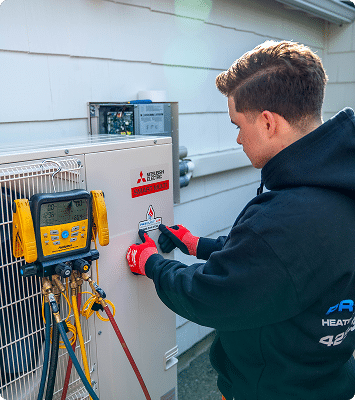
If you want your system to deliver the efficiency it was designed for, professional heat pump installation is critical. It covers everything from load calculations to commissioning.
Maintenance also plays a role.
The difference between a system lasting 10 years versus 25 is often how often you replace your air filter.
Restricted airflow increases electrical draw and reduces efficiency over time. Annual service protects both performance and warranty coverage.
Beyond Electricity Savings
Lower monthly bills are only part of the financial picture.
Washington State currently offers rebates for qualifying Energy Star systems. In many cases around $2,000 for a qualifying heat pump installation.
Heat pumps also eliminate the need for a separate air conditioning system, an increasingly important benefit as regional summers grow warmer.
Our summers are getting warmer. With a heat pump, you have both heating and cooling.
That dual-function design reduces equipment redundancy and long-term maintenance costs.
Additionally, efficient electrification reduces risk during outages. Maintaining stable indoor temperatures helps protect plumbing, reduce moisture issues, and prevent costly damage.
So… Is It Worth It?
For many homeowners in Western Washington, especially those using electric resistance heat, the answer is yes.
When properly installed and maintained, heat pumps consistently reduce monthly utility bills. In some cases, those savings reach 50–60%.
Energy efficient systems do cost upfront more. But we’ve seen bills cut in half.
The key is realistic expectations, correct installation, and steady operation.
Heat pumps aren’t theoretical efficiency. They’re measurable savings when done right.