


The electrical panel is often described as the heart of a home and for good reason. Every outlet, appliance, heating system, and modern convenience depends on it. Yet for many homeowners, the panel is installed once and then forgotten.
“That’s the biggest misconception,” says Sergey Nikolin, co-founder of Product Air Heating, Cooling, and Electric, LLC. “Just like a furnace is the heart of heating, the panel is the heart of everything electrical that supports the house.”
When panels are ignored, small issues can quietly turn into serious fire risks.
Why Panel Condition Matters for Fire Prevention
Electrical panels are built around one core principle: electricity must flow smoothly with minimal resistance. Inside the panel, connections are treated with conductivity gel to improve performance and protect metal components from oxidation.
Over time, if a panel is not maintained, that protection dries out.
“When it oxidizes, it creates resistance,” Sergey explains. “And resistance creates heat.”
Heat buildup inside a panel is one of the leading contributors to electrical fires. The danger isn’t always obvious from the outside, which is why professional inspection matters.
What Electrical Panel Maintenance Actually Does
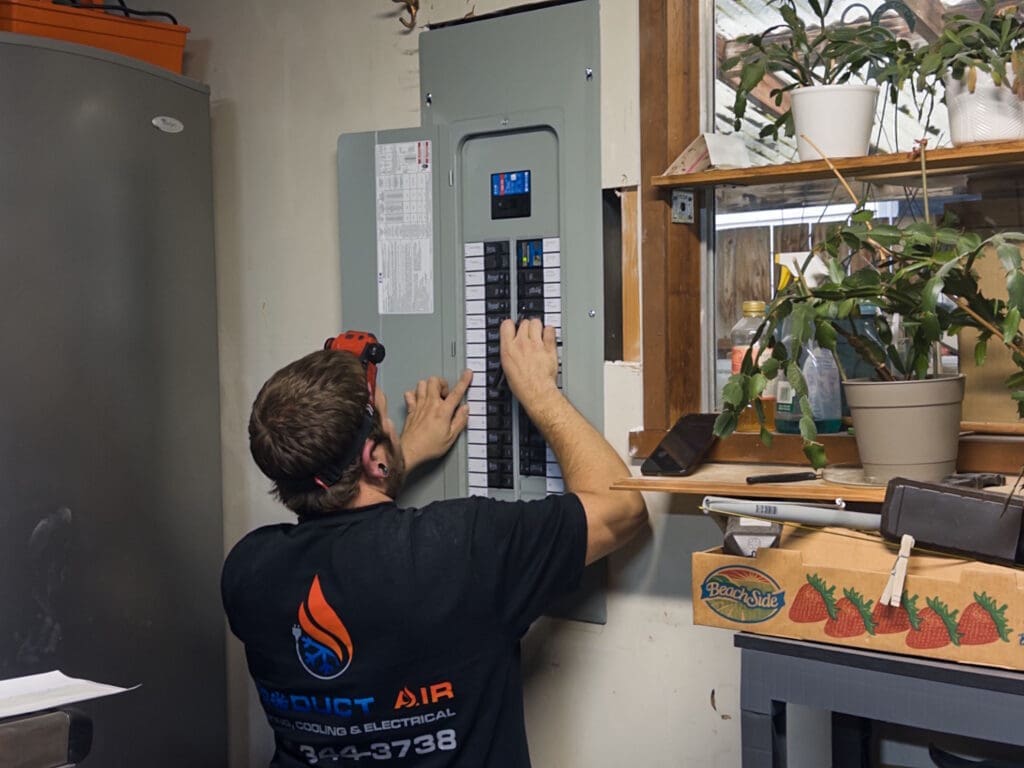
Panel maintenance isn’t about tightening a screw and leaving. A proper inspection looks for early signs of overheating and deterioration before they become hazards.
At Product Air, technicians use:
- Temperature guns to check breaker heat
- Thermal cameras to identify hot spots
- Visual inspection of bus bars and connections
- Checks for discoloration, corrosion, or loose components
“We’re looking for issues before they turn into fires,” Sergey says. “If you catch it early, you prevent bigger problems.”
Warning Signs Homeowners Should Never Ignore
Electrical panels usually give warnings before failing. Homeowners should take immediate action if they notice:
- Crackling or buzzing sounds from the panel
- Sparks or visible smoke
- Burning smells
- Breakers that trip repeatedly
“If you’re seeing or hearing any of that, it needs to be looked at,” Sergey says.
These are not nuisances. They’re indicators of heat, resistance, or overload inside the system.
Flickering Lights: Minor Issue or Major Clue?
Flickering lights can have multiple causes: loose fixtures, failing bulbs, or utility issues. But they can also point back to the panel.
“Flickering can be a lot of things,” Sergey explains. “But the panel can absolutely be one of them.”
Because the cause isn’t always obvious, flickering lights should be evaluated rather than dismissed, especially if they’re persistent or affect multiple areas of the home.
Why Resetting Breakers Isn’t a Solution
One of the most common and dangerous misunderstandings is how breakers work.
“The breaker is there to protect the wire,” Sergey says. “It trips because something is drawing more amperage than it should.”
Repeatedly resetting a breaker doesn’t fix the problem. It masks it.
Even worse, some homeowners or DIY installers try to “solve” tripping by installing a larger breaker. That can overload wiring that isn’t rated for higher current and create fire risk inside the walls.
“That’s how fires start,” Sergey explains.
How DIY Electrical Work Creates Hidden Risks
Product Air frequently sees electrical issues tied to unplanned additions or DIY modifications.
“We see a lot of people adding things to panels,” Sergey says. “Then they call us because power keeps going out.”
Common triggers include:
- EV charger installations
- Additional circuits
- Garage or basement upgrades
Before adding anything, professionals perform a load calculation to determine whether the panel has enough capacity to safely support new demand.
“We calculate the total house demand to verify the panel can support the demand,” Sergey says. “That’s critical.”
Why Older Panels Struggle With Modern Homes
Many older panels were never designed to handle today’s electrical loads.
Modern homes often include:
- Heat pumps
- Electric ranges and dryers
- Car chargers
- Increased electronics and appliances
“A lot of older panels just don’t have the capacity,” Sergey explains. “They weren’t built for electrification.”
When demand exceeds capacity, panels overheat, breakers fail, and fire risk increases.
Proactive Panel Replacement as Fire Prevention
Maintenance is the first line of defense. But when panels have been ignored for too long, replacement can become the safer option.
“If oxidation builds up over time, it creates resistance,” Sergey says. “And that heat doesn’t go away.”
Proactive replacement:
- Eliminates deteriorated components
- Supports modern electrical demand
- Reduces overheating risk
- Improves overall safety
Upgrading for convenience and prevention is sometimes the best call. It’s not just about preventing failure, but ensuring long-term safety and reliability.
Panels, Insurance, and Home Inspections
Certain panels are widely known in the industry as unsafe or recalled. These often come up during insurance inspections or home sales.
“Some panels have a history of problems,” Sergey says. “They shouldn’t be installed.”
While most homeowners don’t encounter this unless prompted by an inspection, rentals and home sales frequently bring panel issues to light.
The Bottom Line: Electrical Fires Are Preventable
Most panel-related fires don’t happen without warning. They develop slowly from heat, resistance, and neglect.
Regular inspection, professional assessment, and proactive action make a measurable difference.
“The key is catching it early,” Sergey says. “That’s how you protect your home and your family.”
Concerned about your electrical panel?
As local electrical contractors serving Washington state, Product Air Heating, Cooling, and Electrical, LLC helps homeowners across Snohomish, King, Island, and Skagit counties maintain safer, more reliable electrical systems.Call (425) 344-3738 to schedule an evaluation.