


On February 25th at 8:00 AM, Product Air Heating, Cooling, and Electric received a call from Richard T., a homeowner in Marysville, Washington. Richard had recently purchased his home and within the first few weeks found himself facing something no new homeowner ever wants to deal with: the heating system had stopped working. The night before, the equipment had been making loud noises, and the garage smelled like burning electrical wiring. By morning, the house was cold.
Marysville, WA (Snohomish County)
The call was immediately classified as an emergency — and not just because the equipment had failed. In February in Washington State, nighttime temperatures consistently drop below freezing. If we hadn’t resolved the problem that same day, Richard’s family would have spent another night without heat. That was simply not an option for us.
First Visit: Full System Diagnostic by a Licensed Technician
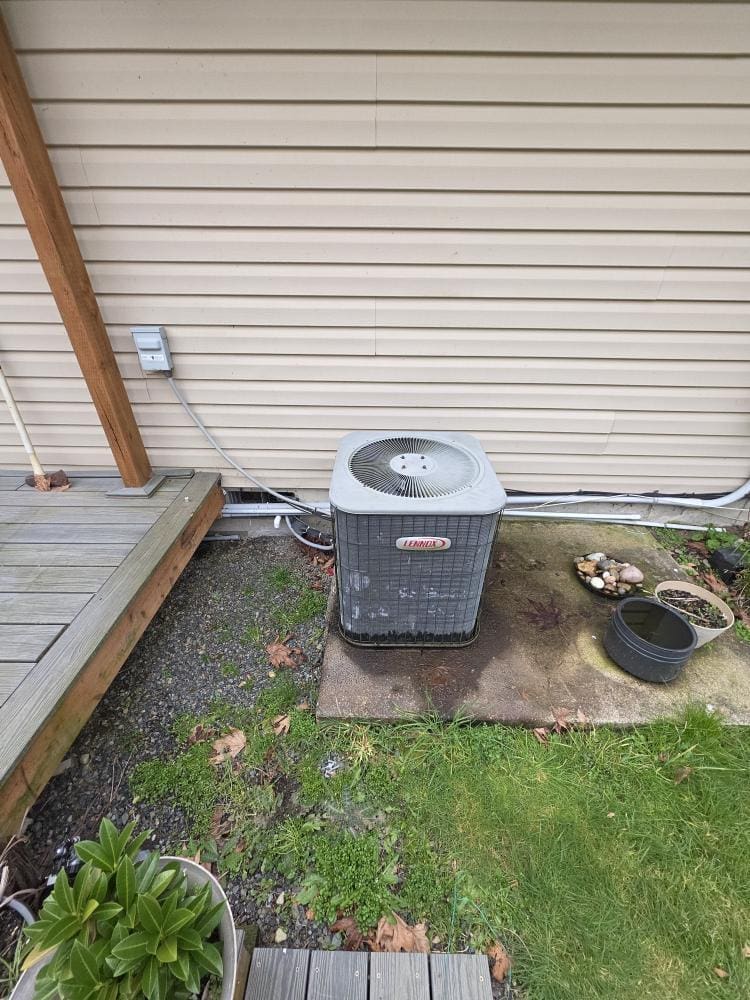
[PHOTO 4 — Old Lennox outdoor unit before replacement]
That same day, licensed HVAC technician Eli Nikolin arrived on site. The objective was clear from the start: not a quick patch job, but a complete professional diagnostic of the entire home’s mechanical system. You can only offer a client a solution that actually works when you understand the full picture — not just the symptom in front of you, but everything that’s been building beneath the surface.
The Smell of Burning Electrical Wiring Is Always a Red Flag
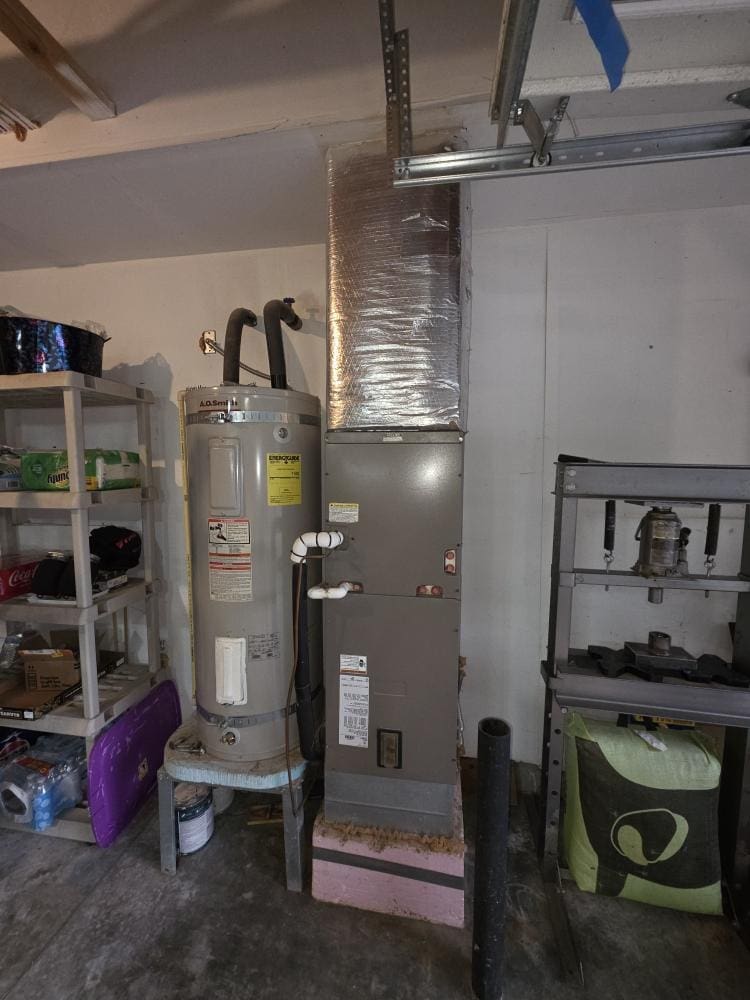
[PHOTO 3 — Old air handler and A.O. Smith water heater in the garage before replacement]
When Eli walked into the garage, he immediately caught the smell of burning wiring — the exact same smell Richard had described during the call. In HVAC systems, that smell has a very specific origin: either damaged electrical wiring or a failing electric motor. Neither one is a coincidence, and neither one goes away on its own.
This isn’t just a matter of discomfort. It’s a warning sign of a real threat.
Sergey Nikolin, Founder of Product Air Heating, Cooling, and Electric:
“When a client tells us they’re smelling burning wiring and hearing unusual sounds from their system — that’s a red alert for us. Cases like this are always an emergency call, no exceptions, no delays. An electrical fault in an HVAC system is a direct threat to the fire safety of the home. Richard and his family were lucky: the circuit breaker tripped and cut the power. That’s what prevented things from getting much worse. If that breaker hadn’t done its job in time — the outcome could have been completely different. A house fire isn’t an abstract risk. It’s a very real scenario when symptoms like these are ignored.”
What the Full Diagnostic Revealed
The inspection gave us a clear picture — one that any experienced technician would immediately recognize.
The Lennox heat pump was 17 years old. Components showed clear signs of electrical burnout, with visible wear across every major part of the system. Per industry standards, the average service life of a heat pump in this class is no more than 10–15 years. This system had been running well past its rated lifespan — and based on its condition, without any regular professional maintenance throughout its entire service life.
One important clarification: modern inverter-driven systems of the latest generation, when properly and consistently maintained, can last longer. But this was equipment from 17 years ago, built to the standards of a completely different era in the HVAC industry.
Eli then inspected the A.O. Smith water heater — it was right there in the same garage. The installation date matched the heat pump exactly. Same age. And, as you can imagine, the same condition — for the exact same reason: zero regular professional maintenance over the entire lifespan of the equipment.
Eli Nikolin, Licensed HVAC Technician:
“When I’m looking at a 17-year-old system with signs of electrical failure, I’m not asking myself ‘what broke?’ I’m asking ‘what hasn’t broken yet — but will?’ Those are fundamentally different questions, and they lead to fundamentally different solutions. The first question leads you to a repair. The second question leads you to the right answer for the client and their family.”
An Honest Conversation: The Client Deserves to See Everything Firsthand
Richard stayed right alongside the technician throughout the entire diagnostic — from the very first inspection to the final assessment. For us, that’s not a coincidence or a courtesy. It’s a principle we follow on every single job. The client should see exactly what’s happening with their own eyes, not receive a summary after the fact. Trust is built on transparency — there’s no other way to build it.
Once the diagnostic was complete and the full picture was clear, Eli suggested taking a break. He and Richard sat down, had a cup of coffee, and talked through the situation calmly — no rush, no pressure, no agenda.
The first question Eli asked Richard was simple:
“Richard, how long are you planning to live in this house?”
The answer was straightforward: twenty years, maybe more. This was a home he’d bought for his family — a long-term commitment.
With that answer in mind, Eli laid out every option — honestly and without sugarcoating anything.
Option one — repair the current failure. Technically doable. But a 17-year-old system that has never been properly serviced and shows clear signs of electrical burnout isn’t a story about one broken part. It’s a story about equipment that has used up its lifespan. The likelihood of additional failures in other components was extremely high. Not “possibly” — high.
Richard asked a direct question: “Eli, does fixing the current problem guarantee me and my family that nothing else is going to break?”
Eli Nikolin:
“I gave him an honest answer: no, it doesn’t. Our position as a company is to never push anything on a client. We’re not in the business of selling for the sake of selling. We work on mechanical systems, and our reputation is built on long-term relationships with people — not one-time transactions. If a repair is the right answer, we recommend a repair. In Richard’s case, the right answer was replacement. I said that clearly, explained why, and let him make the decision himself.”
Option two — full system replacement. Solve the problem once, and solve it for good. Select equipment sized and specified for this particular home, this particular family, and the specific climate of Snohomish County. Walk away with a new system backed by a manufacturer’s warranty and a rated service life of 15–20 years.
Richard listened, weighed his options, and said:
“Eli, I’m planning to live in this house for a long time. I don’t want problems with it. Let’s replace everything — new.”
From there, they selected the equipment together. The goal was quality solutions in the mid-range price category — no overpaying for a brand name, but no compromises on reliability either. Eli put together a complete estimate on the spot.
Out of respect for Richard, we’re not disclosing the exact project cost — but for general reference: a full heat pump replacement including removal of the old equipment and installation of the new system, plus a complete water heater replacement, all labor and materials included, will run a homeowner between $16,000 and $20,000, depending on the home’s configuration and the specific equipment selected.
Emergency Installation: The Crew On Site That Same Day
Once the plan was agreed upon, Eli called in the installation crew. The team arrived on site within a few hours — with a complete set of new equipment pulled directly from Product Air’s own warehouse. No waiting on deliveries, no coordinating with distributors. Everything needed was already there.
The crew got straight to work: removal of the old equipment and installation of the new ran simultaneously, efficiently, without a minute wasted.
Outside the house:
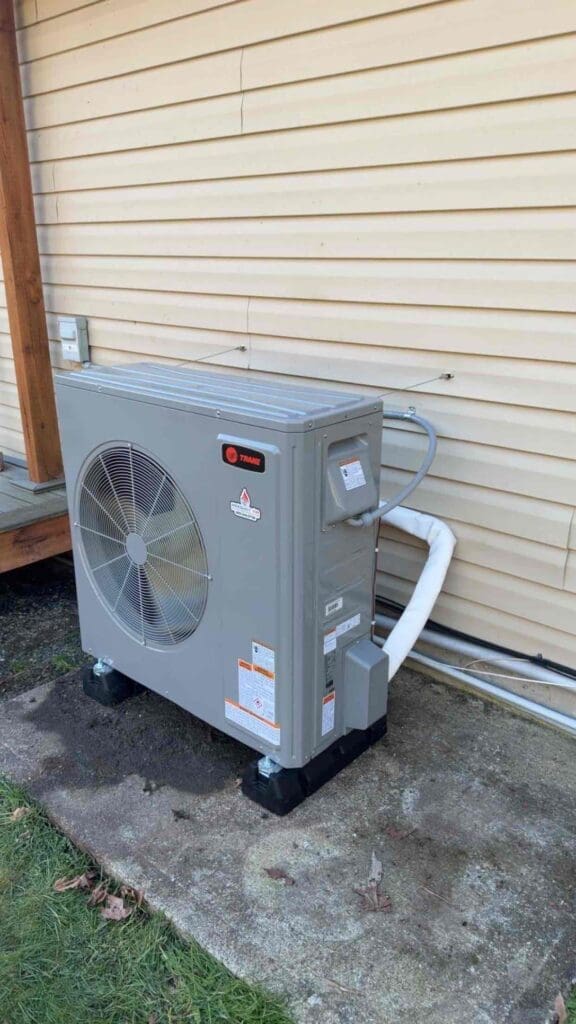
[PHOTO 4 — Old Lennox outdoor unit before replacement] [PHOTO 1 — New Trane outdoor unit after installation]
The old Lennox outdoor unit was fully removed from its pad alongside the house. In its place, a new Trane heat pump was installed — mounted on vibration-isolating pads, with all connections made professionally and to code. The brand and model were selected based on the home’s square footage, its thermal characteristics, and the climate conditions specific to Snohomish County. In our region, where winters can be unforgiving, getting the capacity right isn’t a formality — it’s an engineering requirement.
Inside the garage:
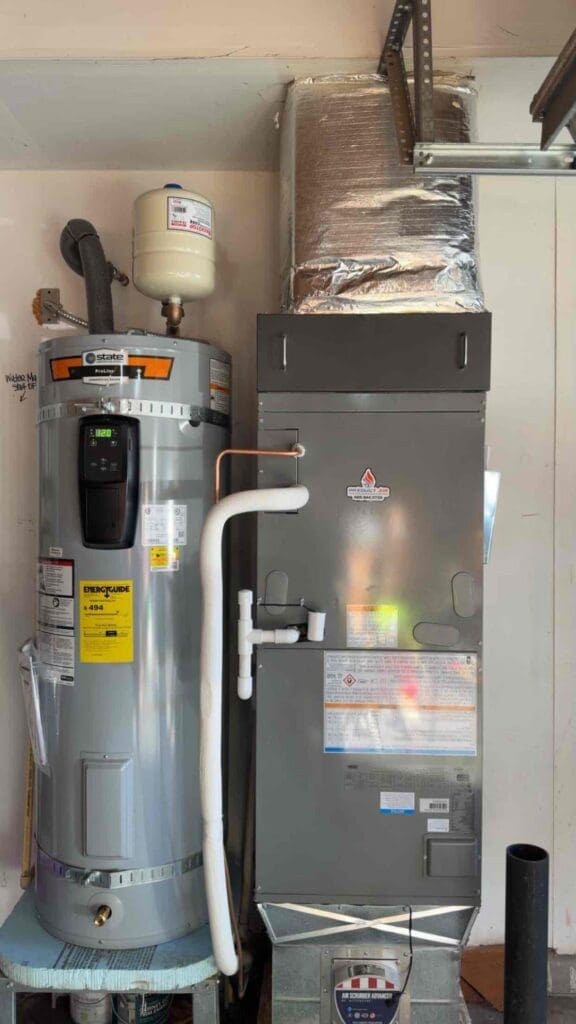
[PHOTO 3 — Old air handler and A.O. Smith water heater before replacement] [PHOTO 2 — New State ProLine water heater and air handler after installation]
At the same time, the old air handler and the aging A.O. Smith water heater in the garage were both removed. A new air handler and a new State ProLine water heater were installed in their place. The work was done cleanly and completely — no temporary fixes, no “we’ll finish that later.” On the air handler cabinet, a Product Air sticker with the company’s phone number.
That sticker isn’t just a record of completed work. It’s a direct reminder for Richard of exactly who to call when it’s time for scheduled maintenance. Though we’ll be reaching out ourselves — proactively, before it’s ever needed.
Results
Eli Nikolin:
“The real result of our work is always the person on the other end. Richard and his family didn’t spend a single additional night without heat. The call came in at 8 in the morning — by evening the house was warm, the hot water was running, and the system was operating exactly as it should. That’s what an emergency call means to us: not just showing up and taking a look, but showing up, figuring it out, and getting it done — same day.”
For the next 15–20 years, Richard will live in this home without heating or hot water issues — provided the system receives regular maintenance. He knows that. And Product Air Heating, Cooling, and Electric will make sure he doesn’t forget.
Could This Have Been Avoided? A Note for Anyone Buying a Home on the Secondary Market
Yes. And it’s something everyone considering a home purchase today needs to know.
Sergey Nikolin, Founder of Product Air Heating, Cooling, and Electric:
“Before you sign a purchase agreement, always check the age of the HVAC system and the water heater. Under Washington State law, the seller is required to provide the buyer with a Seller’s Disclosure — a document that must state the age and condition of the home’s major mechanical systems. If the heating system is 10 years old or older, that’s not a reason to walk away from the purchase — but it is absolutely a reason to have a serious conversation with the seller. Before closing, not after.”
In American real estate, the condition of an HVAC system is a standard subject of negotiation. A buyer who discovers equipment at or beyond the end of its service life has every right to request:
- A price reduction — according to U.S. real estate professionals, homes with aging HVAC systems in competitive markets typically sell for $3,000–$8,000 less than comparable homes with newer equipment
- A seller’s credit — a cash concession at closing that the buyer applies toward equipment replacement
- Replacement by the seller prior to handing over the keys
- A Home Warranty — coverage for the first year of ownership that includes HVAC and water heater failures
If the seller refuses to consider any of these options — that’s information too, and it’s worth factoring into your decision. Replacing a heating system and water heater starts at $16,000 and up. If the equipment in the home is more than 10 years old, that cost should be part of your budget planning from day one.
Richard bought his home without knowing the real condition of its mechanical systems. The system failed within weeks of moving in. He handled the situation with the help of Product Air Heating, Cooling, and Electric — and now has reliable new equipment for the next two decades.