


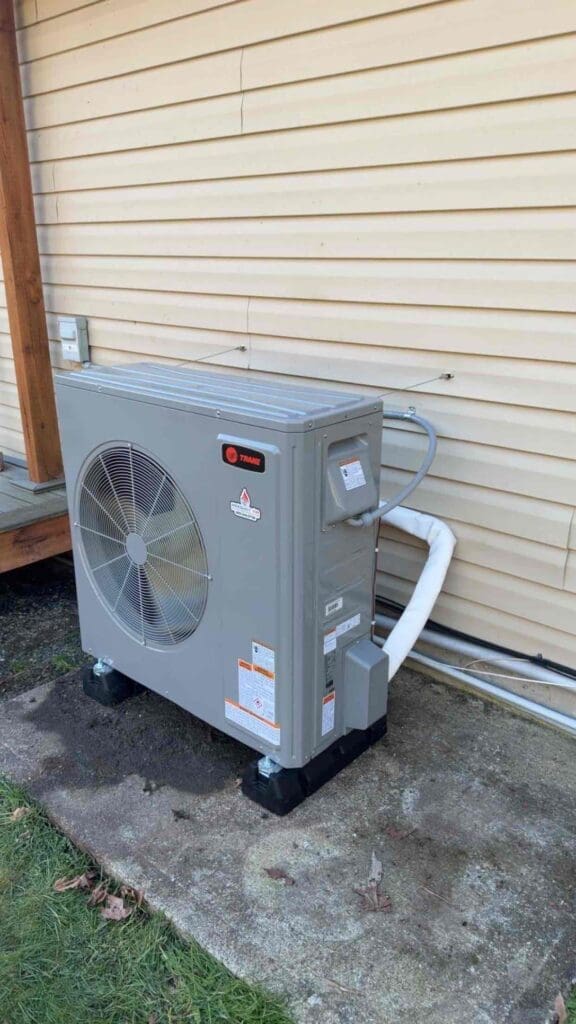
For decades, most homes in Western Washington relied on two separate systems: a furnace for heating and, if needed, an air conditioner for summer.
Today, more homeowners are choosing one system that does both.
A heat pump is often called a 2-in-1 solution because it provides both high-efficiency heating and cooling in a single unit. However, this isn’t simply about convenience. It’s about performance, comfort, and long-term efficiency.
“A heat pump moves energy around and it can reverse it either way,” says Sergey Nikolin, co-founder of Product Air Heating, Cooling, and Electric.
That reversible design is what makes it different.
How One System Handles Two Seasons
In cooling mode, a heat pump works just like central air conditioning. It removes heat from inside your home and transfers it outdoors.
In heating mode, it reverses that process. Instead of creating heat through combustion or electrical resistance, it pulls heat energy from the outside air and transfers it inside.
“It works like central AC,” Sergey explains. “But it heats in the winter.”
That ability to move heat instead of generate it is what makes the system efficient in both directions.
You’re not installing two machines. You’re installing one engineered system designed to operate year-round.
Efficiency in Heating vs. Cooling
In Western Washington, cooling is often considered a luxury. Summers are warming. However, extreme heat is still limited compared to other regions.
Heating, however, runs for months.
And this is where heat pumps stand out.
“In the winter it’s a lot more efficient than gas 80% furnace or electric heat,” Sergey says.
Traditional electric baseboard heat is especially inefficient. It generates warmth through resistance, essentially converting electricity directly into heat. That process uses significantly more energy than transferring heat.
Sergey describes baseboard heating as “outdated” and notes it offers “poor efficiency.”
When evaluating heating efficiency, homeowners should look at the HSPF rating (Heating Seasonal Performance Factor). The higher the number, the more efficiently the system converts electricity into usable heat over the season.
In cooling mode, heat pumps perform similarly to modern air conditioners. However, in heating mode, especially in Western Washington’s climate, they often outperform older systems by a wide margin.
Built for Western Washington’s Climate
Heat pumps perform best in moderate climates, which makes the Puget Sound region ideal.
The area’s mild, damp winters allow heat pumps to operate efficiently for most of the season without extreme strain.
“Our climate is ideal for heat pumps,” Sergey says.
Even during occasional cold snaps, modern systems are built to maintain output.
“Mitsubishi is bulletproof for our climate,” he adds. “There’s nothing better for cold snaps.”
In addition to heating and cooling, heat pumps help manage humidity. That’s particularly valuable in Western Washington, where moisture control affects comfort just as much as temperature.
During summer, cooling mode naturally removes excess humidity. In shoulder seasons, steady operation maintains a balanced indoor environment.
A Different Kind of Comfort
Traditional HVAC systems operate in an on/off cycle. The temperature drops, the furnace kicks on. It overshoots slightly, shuts off, and waits for the next call.
That reactive pattern creates temperature swings.
Modern heat pumps operate differently.
“They work proactive versus reactive,” Sergey explains.
Instead of blasting at full capacity and shutting down, inverter-driven systems adjust their output. They increase or decrease speed to maintain a steady temperature.
This creates what Sergey calls a “well-balanced climate in the house.”
Because temperatures remain consistent, many homeowners find they’re comfortable at slightly lower thermostat settings, which can further reduce energy use.
Who Is the Ideal Homeowner for a 2-in-1 System?
Heat pumps aren’t limited to a specific type of household.
“The ideal customer is anybody looking to improve their home quality of living,” Sergey says. “And potentially add air conditioning in the future.”
Heat pumps are especially attractive for homeowners who:
- Have older furnaces or air handlers
- Use electric baseboard heating
- Don’t currently have air conditioning
- Want more stable indoor comfort
- Are considering electrification upgrades
Because the system provides both heating and cooling, it eliminates the need to install separate equipment later.
As summers continue to warm, that flexibility becomes increasingly valuable.
The Thermostat Myth
One common misconception affects efficiency more than most homeowners realize.
Many people believe lowering the thermostat 10–15 degrees at night will save money.
“With a heat pump, a balanced home actually produces the best efficiency,” Sergey says.
Large temperature setbacks force the system to work harder to recover. That recovery period draws more power than maintaining a steady set point.
Constantly adjusting the thermostat creates unnecessary stress on the equipment.
Consistency wins.
Installation Still Matters
A heat pump replaces both your furnace and your air conditioner. That makes proper design and installation critical.
Sizing, airflow, refrigerant charge, and commissioning all affect how well the system performs in both heating and cooling modes.
If you’re considering a dual-function system, professional heat pump installation ensures the equipment is engineered correctly for your home and climate.
A 2-in-1 system only performs like one when it’s installed properly.
One System. Year-Round Comfort.
A heat pump isn’t just a piece of equipment. It’s a shift in how your home is conditioned.
Heating and cooling in one system.
Efficient in both modes.
Designed for Western Washington’s climate.
Built to maintain steady, balanced comfort.
“A heat pump works really well for a person that wants a well-balanced climate in their house,” Sergey says.
For many homeowners, that balance in temperature, efficiency, and simplicity is exactly the point.
For decades, most homes in Western Washington relied on two separate systems: a furnace for heating and, if needed, an air conditioner for summer.
Today, more homeowners are choosing one system that does both.
A heat pump is often called a 2-in-1 solution because it provides both high-efficiency heating and cooling in a single unit. However, this isn’t simply about convenience. It’s about performance, comfort, and long-term efficiency.
“A heat pump moves energy around and it can reverse it either way,” says Sergey Nikolin, co-founder of Product Air Heating, Cooling, and Electric.
That reversible design is what makes it different.
How One System Handles Two Seasons
In cooling mode, a heat pump works just like central air conditioning. It removes heat from inside your home and transfers it outdoors.
In heating mode, it reverses that process. Instead of creating heat through combustion or electrical resistance, it pulls heat energy from the outside air and transfers it inside.
“It works like central AC,” Sergey explains. “But it heats in the winter.”
That ability to move heat instead of generate it is what makes the system efficient in both directions.
You’re not installing two machines. You’re installing one engineered system designed to operate year-round.
Efficiency in Heating vs. Cooling
In Western Washington, cooling is often considered a luxury. Summers are warming. However, extreme heat is still limited compared to other regions.
Heating, however, runs for months.
And this is where heat pumps stand out.
“In the winter it’s a lot more efficient than gas 80% furnace or electric heat,” Sergey says.
Traditional electric baseboard heat is especially inefficient. It generates warmth through resistance, essentially converting electricity directly into heat. That process uses significantly more energy than transferring heat.
Sergey describes baseboard heating as “outdated” and notes it offers “poor efficiency.”
When evaluating heating efficiency, homeowners should look at the HSPF rating (Heating Seasonal Performance Factor). The higher the number, the more efficiently the system converts electricity into usable heat over the season.
In cooling mode, heat pumps perform similarly to modern air conditioners. However, in heating mode, especially in Western Washington’s climate, they often outperform older systems by a wide margin.
Built for Western Washington’s Climate
Heat pumps perform best in moderate climates, which makes the Puget Sound region ideal.
The area’s mild, damp winters allow heat pumps to operate efficiently for most of the season without extreme strain.
“Our climate is ideal for heat pumps,” Sergey says.
Even during occasional cold snaps, modern systems are built to maintain output.
“Mitsubishi is bulletproof for our climate,” he adds. “There’s nothing better for cold snaps.”
In addition to heating and cooling, heat pumps help manage humidity. That’s particularly valuable in Western Washington, where moisture control affects comfort just as much as temperature.
During summer, cooling mode naturally removes excess humidity. In shoulder seasons, steady operation maintains a balanced indoor environment.
A Different Kind of Comfort
Traditional HVAC systems operate in an on/off cycle. The temperature drops, the furnace kicks on. It overshoots slightly, shuts off, and waits for the next call.
That reactive pattern creates temperature swings.
Modern heat pumps operate differently.
“They work proactive versus reactive,” Sergey explains.
Instead of blasting at full capacity and shutting down, inverter-driven systems adjust their output. They increase or decrease speed to maintain a steady temperature.
This creates what Sergey calls a “well-balanced climate in the house.”
Because temperatures remain consistent, many homeowners find they’re comfortable at slightly lower thermostat settings, which can further reduce energy use.
Who Is the Ideal Homeowner for a 2-in-1 System?
Heat pumps aren’t limited to a specific type of household.
“The ideal customer is anybody looking to improve their home quality of living,” Sergey says. “And potentially add air conditioning in the future.”
Heat pumps are especially attractive for homeowners who:
- Have older furnaces or air handlers
- Use electric baseboard heating
- Don’t currently have air conditioning
- Want more stable indoor comfort
- Are considering electrification upgrades
Because the system provides both heating and cooling, it eliminates the need to install separate equipment later.
As summers continue to warm, that flexibility becomes increasingly valuable.
The Thermostat Myth
One common misconception affects efficiency more than most homeowners realize.
Many people believe lowering the thermostat 10–15 degrees at night will save money.
“With a heat pump, a balanced home actually produces the best efficiency,” Sergey says.
Large temperature setbacks force the system to work harder to recover. That recovery period draws more power than maintaining a steady set point.
Constantly adjusting the thermostat creates unnecessary stress on the equipment.
Consistency wins.
Installation Still Matters
A heat pump replaces both your furnace and your air conditioner. That makes proper design and installation critical.
Sizing, airflow, refrigerant charge, and commissioning all affect how well the system performs in both heating and cooling modes.
If you’re considering a dual-function system, professional heat pump installation ensures the equipment is engineered correctly for your home and climate.
A 2-in-1 system only performs like one when it’s installed properly.
One System. Year-Round Comfort.
A heat pump isn’t just a piece of equipment. It’s a shift in how your home is conditioned.
Heating and cooling in one system.
Efficient in both modes.
Designed for Western Washington’s climate.
Built to maintain steady, balanced comfort.
“A heat pump works really well for a person that wants a well-balanced climate in their house,” Sergey says.
For many homeowners, that balance in temperature, efficiency, and simplicity is exactly the point.