

Choosing a heating system in Western Washington isn’t as simple as picking the biggest or most expensive option. Our climate is mild, damp, and changing. Summers are getting warmer. Energy costs are rising. And many homeowners are being asked to move away from gas.
So what system is actually best?
According to Sergey Nikolin, co-founder of Product Air Heating, Cooling, and Electric, the answer always starts with the homeowner.
“Our goal is to serve the community and each person individually,” Sergey says. “Every home is different. Some people don’t like air blowing on their feet. Some care a lot about air filtration. Some want the lowest possible bill. Others want the best comfort. We build systems around those goals.”
That philosophy shapes how Product Air approaches every home.
Why There’s No One-Size-Fits-All System
Two homes on the same street can need completely different systems. Family size, allergies, pets, insulation, layout, and budget all matter.
“We don’t walk in and say, ‘This is the best system for you,’” Sergey says. “We ask what you’re trying to achieve. Then we create that system together.”
That approach matters even more in Western Washington, where weather and energy policies are shifting quickly.
How Washington’s Climate Affects Heating Choices
Winters here are usually mild but damp. That’s important because it makes certain systems more efficient than others. At the same time, summers are getting hotter.
“Our summers are getting warmer,” Sergey says. “People are adding air conditioning now.”
That combination has pushed many homeowners toward systems that can do both heating and cooling.
Why Heat Pumps Are Becoming the Go-To Option
In today’s Washington climate, heat pumps are often the most practical solution.
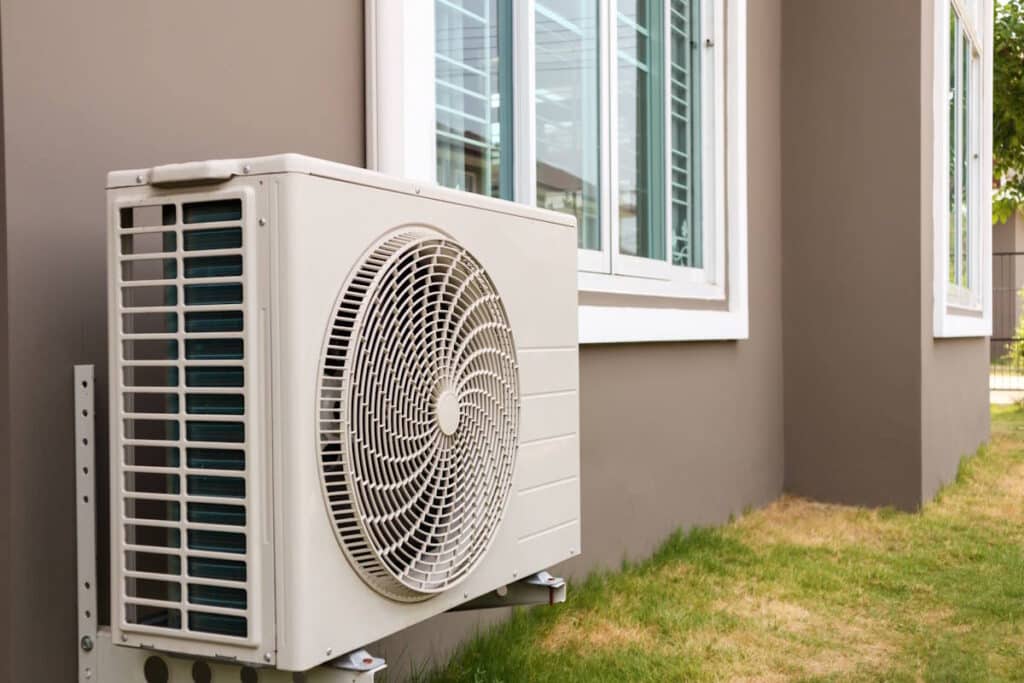
A heat pump works like an air conditioner in summer and a heater in winter. It moves heat instead of creating it, which makes it far more efficient than traditional electric heating. It also avoids gas, which is becoming more expensive and less supported by the state.
“Most of Washington is still on gas furnaces or electric heat,” Sergey explains. “Gas is going up in cost. Electric heat is expensive to run. And the state is pushing to move away from gas.”
For homeowners planning to add both heating and cooling, heat pumps make financial sense.
“If you’re looking to add a furnace and air conditioning, I recommend a heat pump,” Sergey says. “You get both, and you save on the bills.”
“Over time, certain equipment proves itself in our climate,” Sergey adds. “The system we end up installing most often is the Mitsubishi heat pump. It’s bulletproof for Western Washington. It handles the moisture, the mild winters, and the summer cooling really well.”
Upfront Cost vs. Long-Term Value
Heat pumps usually cost more to install than a basic gas furnace. That’s something Product Air is honest about.
“A gas furnace has a lower upfront cost,” Sergey says. “Heat pumps cost more to install.”
But that cost comes with benefits: lower monthly energy bills, better comfort, and a cleaner energy footprint.
“Heat pumps are great for people who want to be more energy-efficient, have balanced comfort, and be a little greener,” Sergey says.
There are also ultra-high-efficiency systems on the market that cost much more. Product Air doesn’t push those unless they truly fit the homeowner’s goals.
“We don’t sell six-figure systems to people who don’t need them,” Sergey says.
What About Older Homes?
Older homes make up a large part of Western Washington’s housing stock, and they often need a different approach.
“If a home has electric heat and only wants cooling in the living room, I’d recommend a ductless unit,” Sergey says. “If they want even comfort throughout the house, I’d recommend a central system. If they want zoning, I’d recommend ductless.”
In other words, the house itself doesn’t decide. The homeowner’s goals do.
Ductless vs. Central Systems
Central systems use ductwork to heat and cool the entire home evenly. Ductless systems use wall-mounted units to heat and cool specific rooms or zones.
Both can be powered by heat pumps. The difference is how the air is delivered.
“Ductless is great for zoning,” Sergey explains. “Central is better when you want everything even.”
For apartments and condos, ductless systems are often the only realistic option.
“HOAs, panel sizes, and access all limit what apartments can do,” Sergey says. “Most of the time, they get ductless systems.”
What About Radiant Floors and Baseboard Heating?
Radiant floor heating can be very comfortable, but it’s expensive and not common in this area.
“We’ve done it,” Sergey says. “But it’s more of a luxury comfort system.”
Baseboard heaters, on the other hand, are being removed in many homes.
“They’re outdated and inefficient,” Sergey says. “Everybody just rips them out.”
How Product Air Helps Homeowners Choose
What makes Product Air different is not the equipment. It’s the process.
“We sit down with the homeowner,” Sergey says. “We talk about their family, their pets, their allergies, their budget, and their comfort goals.”
Only after that does Product Air design a system.
“You know your home and your family better than anyone,” he says. “We just help you build the right system around that.”
The Bottom Line
There is no single best heating system for every home. But in Western Washington’s mild, damp, and warming climate, heat pumps offer the most flexibility, efficiency, and long-term value for most homeowners.
“The best system is the one that fits your goals,” Sergey says. “And we’re here to help you find it.”
Need help choosing a heating system for your home?
Product Air Heating, Cooling, and Electric serves homeowners across Snohomish, King, Island, and Skagit counties. We offer heat pumps, ductless systems, central systems, and custom solutions built around your needs.Call (425) 344-3738 to schedule a consultation.